
The federal tax credit is gone, but solar panel incentives aren't. See every real rebate, exemption, and program left in California, Texas, Florida, Illinois, and Connecticut.
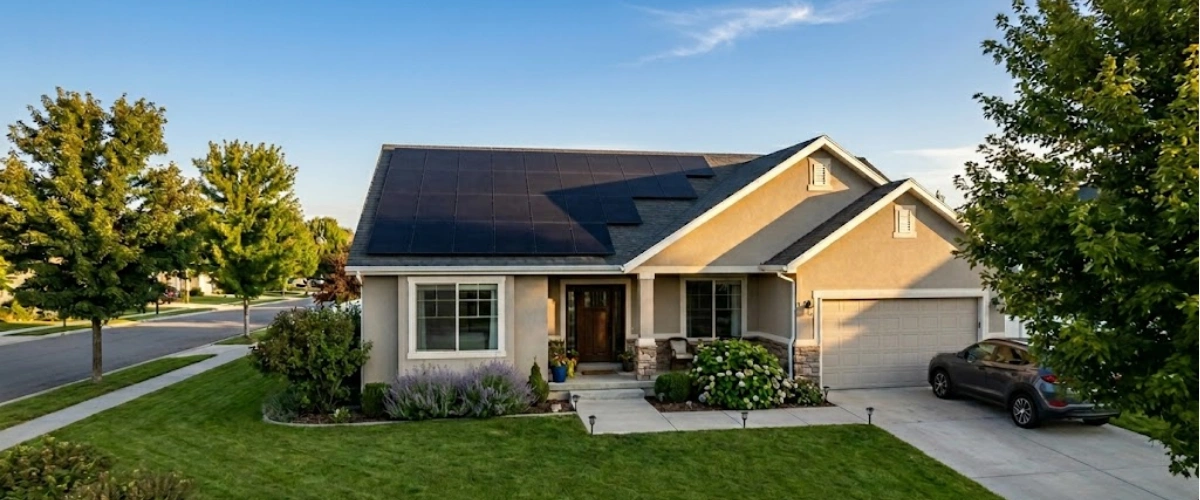
If you've been putting off going solar because you thought the savings window had closed, you're not alone. A lot of homeowners in California, Texas, Florida, Illinois, and Connecticut are asking the same thing right now — some searching for the federal tax credit, others searching for a government grant for solar panels, assuming that's what it always was.
Here's the clarification worth making up front: there has never been a federal cash grant for residential solar. What people have been calling a "grant" was the 30% federal tax credit, and that expired December 31, 2025. But solar panel incentives haven't disappeared — state and utility-level programs that function the same way, covering cost upfront instead of refunding it later, are still very active. Here's the clear, state-by-state breakdown of what's real in 2026.
The Residential Clean Energy Credit, commonly known as the 30% federal solar tax credit, expired on December 31, 2025. If you installed and owned your solar system before that date, you could still claim it on your return. For new installations in 2026, that option is off the table for homeowners who purchase their systems outright.
This is a significant shift, and it's causing a lot of confusion. Some solar companies are still marketing the 30% credit as if it's available, so it's not uncommon for homeowners to buy or finance their own system in 2026 without realizing it.
Not in the way most people mean it. There is no direct federal cash grant that pays homeowners to install solar — that idea mostly comes from confusion with the tax credit, which reduced what you owed the IRS rather than handing out cash. Now that the credit is gone, the closest things to an actual grant are state and utility programs that cover cost upfront instead of through a rebate later:
None of these are labeled "grants" officially, but functionally, they're the 2026 answer to that search.
The good news is that the federal credit was never the only reason solar made financial sense. Utility bills are rising in every state US Power serves, and state programs have stepped up to fill the gap.
The incentives that remain, including battery rebates, net energy metering, property tax exemptions, and state-level programs, address the real pain point: your monthly electricity bill. For most homeowners, those ongoing savings far outweigh a one-time credit worth a 25-year system lifespan.
California replaced traditional net metering with Net Billing (NEM 3.0) in April 2023. Under the old system, you received close to the full retail rate for every kilowatt-hour you sent back to the grid, roughly $0.30 to $0.35/kWh. Under NEM 3.0, that average export credit dropped to around $0.05/kWh, depending on the utility and time of export.
That change fundamentally shifted the math on solar in California. Exporting excess power is no longer very profitable. Storing it and using it yourself, especially during the 4pm to 9pm peak window when utility rates can hit $0.40 to $0.55/kWh, is now the strategy that maximizes your savings. Learn more about are batteries worth it for solar in California right now.
California's Self-Generation Incentive Program (SGIP) remains one of the most valuable battery storage incentives in the country, but access to the standard rebate has dropped as of early 2026. The program is now primarily available through the Residential Solar and Storage Equity (RSSE) category, which targets households at or below 80% of the Area Median Income (AMI) or those in disadvantaged or high-outage-risk communities.
For qualifying households in disadvantaged communities, SGIP's Equity Resiliency tier can offer up to $1,000 per kWh of battery capacity, which can cover a significant portion of installation costs. If you think you might qualify, it's worth verifying your eligibility before paying out of pocket, since SGIP reservations must be made before installation.
California's Active Solar Energy System Exclusion is available for systems installed before January 1, 2027, meaning there's still time to benefit. Under this program, adding solar panels to your home does not trigger a property tax reassessment, so your tax bill won't go up even though your home value increases.
California also offers the Demand Side Grid Support (DSGS) program, which pays battery owners up to $150 per year for allowing their stored energy to support the grid during high-demand events.
Texas doesn't offer a statewide cash rebate for solar, and there's no state income tax that solar savings could offset in the first place. But the foundation for solar savings in the Lone Star State is still solid.
The most reliable benefit is the statewide property tax exemption for solar equipment. Texas Tax Code Section 11.27 exempts the added home value from property taxes when you add solar panels to your home. That means you get the full home value increase that solar adds without paying higher property taxes on it year after year. It's automatic, requires no application, and applies across the state.
Local utility programs are where Texas solar panel incentives get specific, and the Austin Energy solar rebate is the clearest example. It pays up to $2,500 to customers who install a qualifying solar battery and complete a solar education course. In the deregulated areas of Texas served by ERCOT, homeowners can shop for Retail Electric Providers (REPs) that offer solar buyback plans, rates that vary by REP and by season, so it pays to compare before you lock in your long-term rate. Learn more about the best solar battery for Texas homes to maximize those rebates.
Because the federal residential tax credit is unavailable to homeowners who purchase systems in 2026, third-party leases and Power Purchase Agreements (PPAs) with solar companies are worth a look. In these arrangements, a third-party company owns the system, claims any applicable commercial tax credits, and passes savings to you through lower monthly payments. This isn't the right fit for everyone, but it's a legitimate option worth discussing with a licensed consultant.
Florida homeowners have something that California lost: full retail net metering. Major investor-owned utilities including Florida Power and Light (FPL), Duke Energy Florida, Tampa Electric (TECO), and Florida Public Utilities credit solar exports at the full retail electricity rate, roughly $0.13 to $0.15/kWh for FPL customers.
This means that every kilowatt-hour your panels produce that you don't use gets credited nearly dollar for dollar. For homeowners with well-sized systems, this can dramatically shrink or eliminate monthly electricity bills.
Florida offers two meaningful tax protections for solar homeowners. First, installing solar panels does not increase your home's assessed value for property tax purposes, so the added value from your system is excluded from your tax assessment. Second, solar equipment is exempt from Florida's state sales tax, which directly reduces your upfront installation cost.
There are no statewide cash rebates in Florida beyond these exemptions, but combined with strong net metering and the state's abundant sunshine, Florida remains one of the most financially attractive states for solar in 2026.
Illinois runs one of the most generous solar incentive programs in the country through Illinois Shines (the Adjustable Block Program). Under this program, homeowners receive a payment based on the Solar Renewable Energy Credits (SRECs) their system is projected to produce over 15 years, typically paid as a lump sum about a year after installation.
For a typical 8.5 kW system, that payment can range from approximately $11,000 to $15,000. The program is administered through Approved Vendors, so your installer needs to be program-certified. Block 6 pricing remains active in 2026, though rates decline as blocks fill, making sooner a better time than later.
If you're a ComEd or Ameren customer, you can receive an upfront rebate of $300 per kilowatt of solar and $300 per kilowatt-hour of battery storage. For a 5 kW system with a 10 kWh battery, that adds up to $4,500 in direct rebates. Systems must include a qualifying smart inverter to be eligible.
Like California and Texas, Illinois doesn't reassess higher property taxes after a solar installation. Under Illinois law, solar systems are assessed the same way conventional heating and cooling systems are, meaning they don't meaningfully increase your taxable property value.
For income-qualified households at or below 80% of the Area Median Income, Illinois Solar for All (ILSFA) can make solar accessible with no upfront cost and guaranteed bill savings. For eligible Chicago-area residents, a single-person household qualifies with income under approximately $65,000.
Connecticut's RRES program buys your solar production directly through long-term contracts with the state's utilities, giving homeowners predictable, locked-in payments for the energy their system generates, no need to navigate a separate net metering rate.
Connecticut waives sales tax on solar equipment and installation, and exempts the added home value from property tax assessments, so going solar doesn't raise your tax bill even as it raises your home's value.
The Connecticut Green Bank offers low-interest financing options that make it easier to cover upfront costs without waiting on savings to build, making CT one of the more homeowner-friendly states in the Northeast for solar adoption.
Incentive programs reduce your upfront cost, but the quality of your installation determines your savings for the next 25 years. US Power is California's exclusive QCells partner, meaning American-made panels come at factory-direct pricing that typically runs 15 to 20% below what you'd pay through other installers. Explore what goes into a full residential installation with US Power.
Every system comes backed by a 25-year comprehensive warranty that covers your panels, workmanship, and performance. That's not three separate warranties, it's one unified guarantee.
Navigating programs like SGIP, Illinois Shines, and utility rebate applications can be genuinely complicated. Deadlines, funding limits, income qualification requirements, and pre-installation reservation rules vary by program and by utility. Knowing how to avoid overpriced solar quotes is the first step toward protecting your investment.
US Power's CSLB licensed consultants do this work alongside you, at no cost during your free consultation. They identify which programs you qualify for, handle the paperwork, and build your system around your bill history and energy goals, not around a one-size-fits-all sales pitch.
The most important thing to understand about 2026 solar incentives is that they're not one-size-fits-all. Your savings depend on which utility serves you, your income level, whether you add battery storage, and the programs currently active in your area.
In California, a homeowner who qualifies for SGIP's Equity Resiliency tier and pairs it with the DSGS enrollment program can offset a significant portion of their system cost. In Illinois, stacking Illinois Shines payments with ComEd's distributed generation rebate and a property tax exemption can bring payback down to just a few years. Review all available solar financing options to find what fits your budget and goals.
Knowing which incentives apply to your household, and applying in the right order, is where a knowledgeable installer makes the biggest difference.
Solar incentive programs change based on funding availability and policy updates. California's property tax exclusion ends for new installations after January 1, 2027, Illinois Shines block pricing declines as blocks fill, and SGIP reservations operate on a waitlist.
Waiting doesn't improve your options, it narrows them. And meanwhile, utility rates continue rising across all five states. Understanding the hidden costs that can impact your solar savings is essential before you sign anything.
The incentive landscape has changed in 2026, but solar savings are still very real. The key is knowing exactly which programs apply to your home, your utility, and your financial situation, and acting before funding runs out or deadlines pass.
US Power makes that process simple. With transparent pricing, no hidden fees, and 215+ five-star reviews from homeowners across California, Texas, Florida, Illinois, and Connecticut, US Power is built for exactly this moment. Book your free consultation today and find out what you can actually save.\


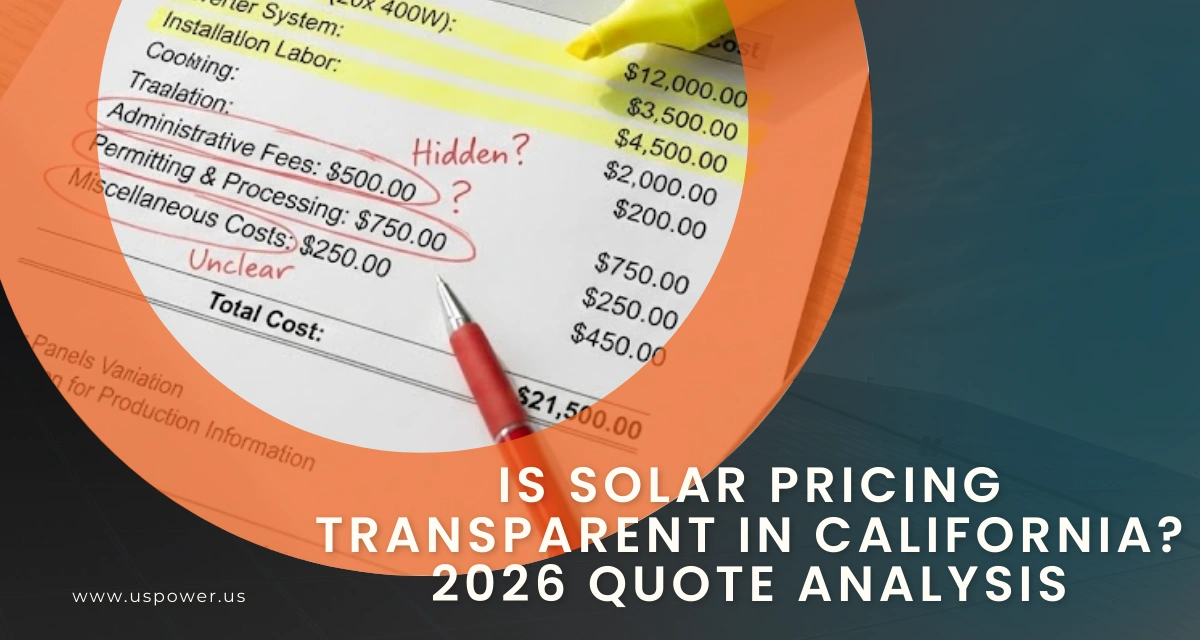
Three quotes. Same house. $15,000 difference. No explanation why. You should worry.
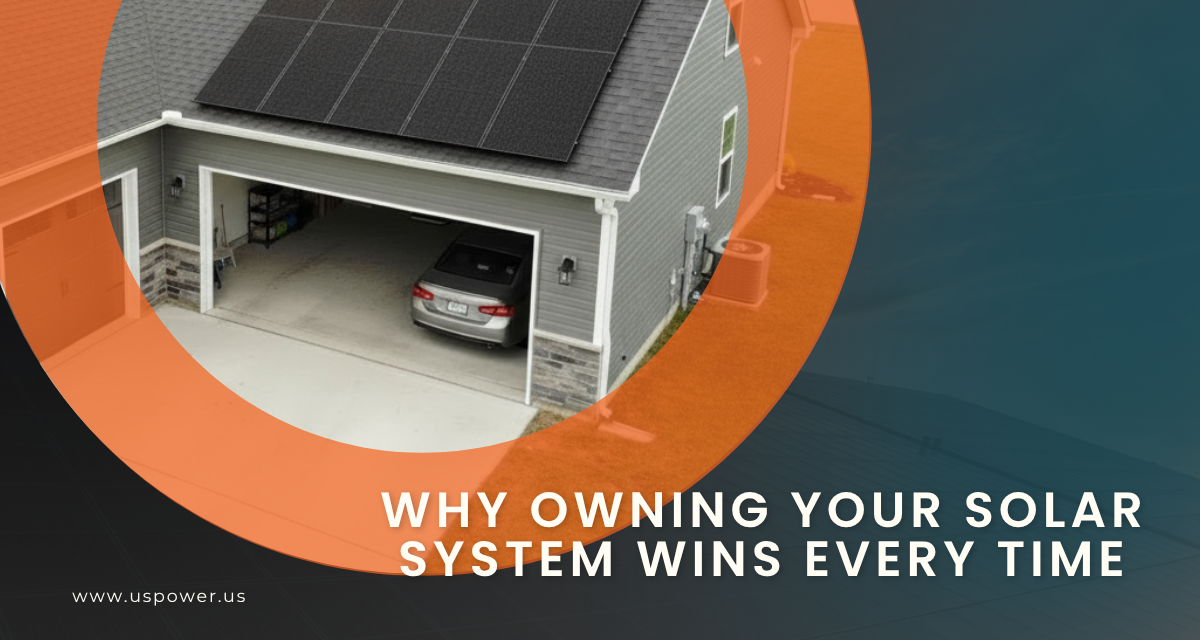
Stop renting power—own it with Qcells solar panels + battery through US Power.
Refinancing your home? Here is exactly what happens to your solar loan first.








Copyright © 2026 US Power - Axia by QCells. All Rights Reserved.
Get an instant solar estimate using satellite!