

California homeowners pay some of the highest electricity rates in the country — and a wrong panel angle makes it worse. Get the exact tilt angles for Los Angeles, San Diego, San Francisco, and Sacramento — plus how proper placement can boost solar output by up to 20%.
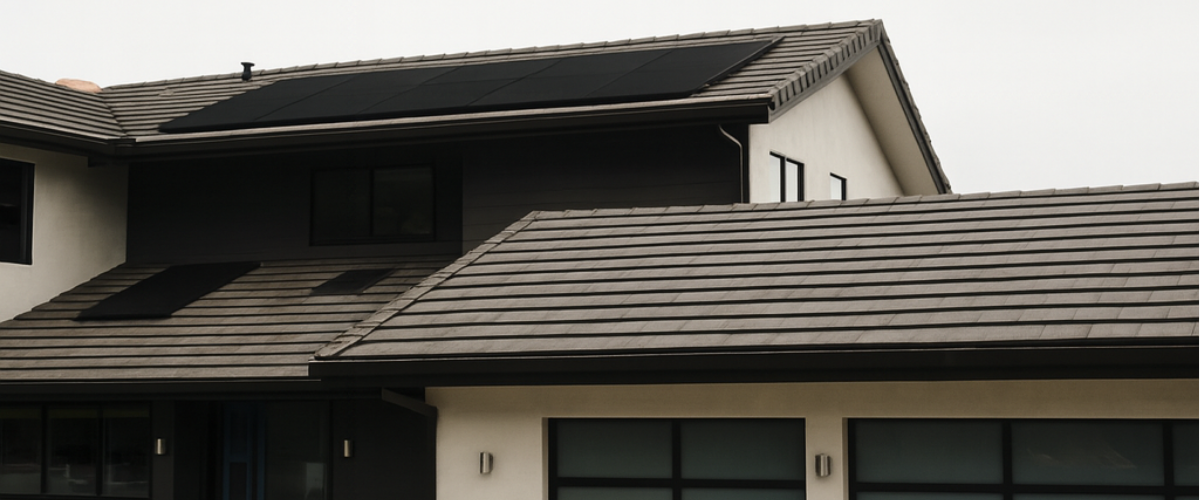
You switched to solar to escape California's skyrocketing electricity bills. But if your panels aren't angled correctly, you could be leaving hundreds of dollars in potential savings unrealized every single year.
Most homeowners assume that once solar panels are installed, they're automatically producing at peak capacity. That's not always true. The tilt angle of your panels directly controls how much sunlight they capture — and in California, where SCE customers saw a 12.9% rate increase in 2026 and SDG&E rates are approaching $0.40 per kWh, every kilowatt-hour counts.
Getting your panel angle right isn't a technical detail to leave to chance. It's one of the most impactful decisions in your entire solar installation.
Understanding how solar panels work to generate power makes the angle question much clearer. Solar panels convert sunlight into electricity through photovoltaic cells — but only when light hits at the right angle does energy conversion peak.
Think of it like holding a book in sunlight to read it. Tilt it toward the light and the page brightens immediately. The same principle governs your solar panels.
When sunlight strikes a solar panel at a perpendicular angle, it delivers maximum energy per square inch. The further from perpendicular, the more energy scatters and is lost.
The reliable rule of thumb across the U.S.: set your panel tilt angle equal to your location's latitude for the best year-round fixed output. For most California cities, that means a tilt between 19° and 38° depending on how far north you are.
Tilt is only half the equation. Your panels also need to face the right direction. In the northern hemisphere — including all of California — south-facing panels capture the most sunlight throughout the day.
East- or west-facing panels can still generate meaningful power, but they typically produce around 20% less energy than south-facing installations. On a $300 monthly SCE bill, that's a significant gap in savings.
California stretches over 800 miles from north to south, so optimal tilt angles vary considerably by region. You can also find the perfect solar tilt angle using professional solar design tools — the same tools every US Power consultant uses before recommending a system.
Los Angeles sits at approximately 34° latitude, making the ideal fixed panel tilt around 34°. For seasonal optimization, Southern California homeowners can drop to about 19° in summer when the sun is high, then increase to 49° in winter to compensate for the lower sun angle.
With SCE rates now averaging $0.34–$0.38 per kWh during peak hours, maximizing output from every panel is more financially meaningful than ever.
San Diego's latitude of approximately 33° puts the optimal fixed tilt at around 30° year-round. The city's exceptional sunshine — among the most in the entire state — means even a slightly off-angle installation still produces well. But a properly optimized system in San Diego, where SDG&E rates approach $0.40/kWh, can translate to hundreds of extra dollars in annual savings.
San Francisco sits at roughly 37–38° latitude, pushing the ideal fixed tilt to around 22–23° when accounting for the latitude-minus-15° formula for fixed installations. Bay Area homeowners should also factor in the region's frequent marine layer, which means every degree of optimization matters more when cloud cover already reduces peak production hours.
Sacramento sits at roughly 38° latitude, with an ideal fixed tilt of around 32°. The Central Valley's consistent sunshine gives Sacramento homeowners one of the strongest solar ROI cases in the state — especially relevant as PG&E rates have climbed over 101% in the past decade.
Here's what most California homeowners don't realize: your roof doesn't need to match the optimal solar angle for your system to perform extremely well.
Professional mounting systems can tilt your panels independently of your roof's natural pitch. Even if your roof faces east-west or has a shallow slope, an experienced installer can position panels to capture far more sunlight than a flat installation would allow.
If you have a flat roof, solar panel tilt on a flat roof is straightforward with ballasted racking systems that hold panels at the optimal angle without penetrating the roof surface. These systems are increasingly common on California homes with flat or low-pitched roofs and work especially well in the mild Southern California climate.
Before focusing on panel angle, make sure to verify your roof compatibility for solar installation. Age, roofing material, and structural condition all affect what mounting options are available — and a licensed installer should always assess this before any system design is finalized.
You should also measure sun exposure for your roof to map out shading from trees, chimneys, neighboring structures, or hillsides. Even a perfectly angled panel dramatically underperforms when shaded during peak production hours.
Solar tracking systems automatically rotate panels throughout the day to follow the sun's path. It sounds like the ideal solution — but for most California homeowners, it's rarely the right one.
Tracking systems add mechanical complexity, significantly higher upfront cost, and ongoing maintenance. A well-designed fixed-tilt system captures the vast majority of available solar energy at a fraction of the cost and with zero moving parts.
Adjusting your tilt twice a year — if your racking allows it — can increase annual production by up to 15%. For most homeowners, optimizing a fixed angle from the start, combined with quality panels, delivers the best long-term return.
Panel quality determines how much energy you capture at any given angle. A high-efficiency panel at a slightly imperfect tilt will consistently outperform a low-grade panel pointed perfectly.
US Power is California's exclusive QCells partner. QCells solar panel performance consistently exceeds industry averages in real-world California conditions, including the heat and seasonal variation that homeowners experience across a 25-year system life.
US Power sources QCells panels directly from the manufacturer, which means California homeowners pay 15–20% below typical market rates. That's not a promotional discount — it's the structural savings from eliminating distributors entirely.
American-made QCells panels carry some of the strongest performance ratings in the industry, maintaining efficiency even in the intense heat that can cause lower-quality panels to lose measurable output.
Angle optimization is a 25-year investment. You need panels that perform for decades, not just a few seasons.
US Power backs every California installation with a 25-year comprehensive warranty covering panels, workmanship, and performance. Backed by solar panel warranties that protect your investment, you're fully protected if anything underperforms across your system's entire lifespan.
The financial payoff of getting your panel angle right compounds over time. A 10–15% efficiency boost from correct tilt multiplies across every year of your system's life.
A typical Southern California homeowner spending $280/month on SCE can learn how much solar panels save in California over 25 years — factoring in ongoing rate increases — amounts to $90,000–$120,000 in avoided utility costs. A properly angled system maximizes every dollar of that return.
California homeowners have meaningful financial incentives available right now:
The best angle for solar panels in California isn't a universal number — it's a precise calculation based on your city's latitude, your roof's pitch and orientation, shading conditions, and your household's energy needs.
Getting that right from the start means more kilowatt-hours, a faster payback, and more money staying in your household instead of going to SCE, PG&E, or SDG&E. California rates have risen over 32% since 2014 and show no signs of reversing. The homeowners who act now are the ones who lock in today's system costs against tomorrow's higher utility bills.


The 30% solar credit didn't disappear. It just moved to a different kind of contract.
Your neighbors are breaking even faster than their installer predicted. Here's why.

Your utility may already be paying for your solar battery. Here's the truth.








Copyright © 2026 US Power - Axia by QCells. All Rights Reserved.
Get an instant solar estimate using satellite!