

This guide explains how to size a system, whether batteries matter for night EV charging, and why US Power’s QCells installs are built for real-world savings.
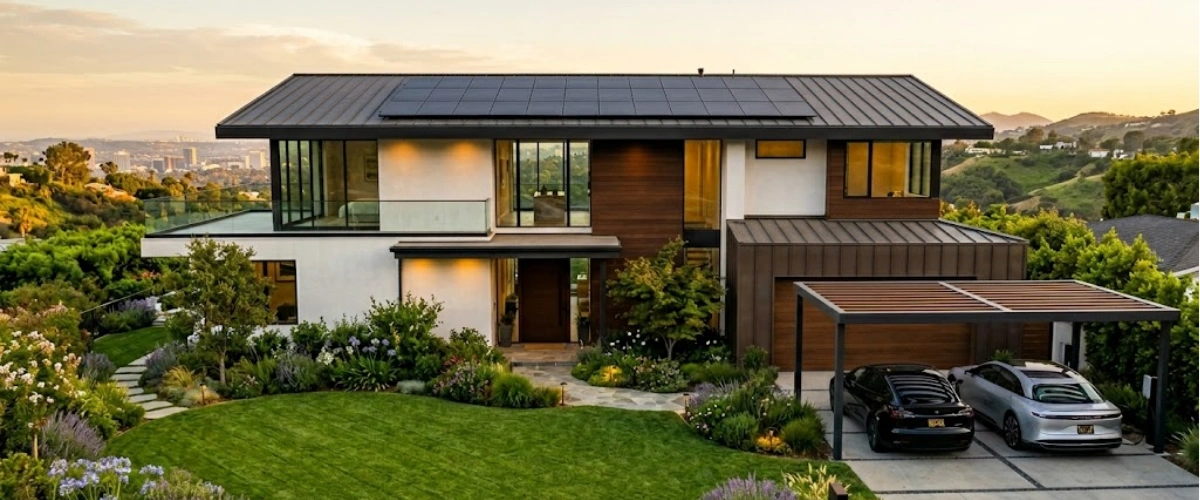
If your electric bill keeps climbing, solar may feel like the obvious fix, but the right system size is what determines real savings. The answer is not whether your EV charges at night; it is whether your solar system matches your yearly usage and your utility plan.
For many homeowners in California, Texas, Florida, and Illinois, the bigger question is how much of your load solar should cover now and how much flexibility you need later. That is where panel count, batteries, and rate design all matter.
A solar system should be sized around annual kilowatt-hour use, not around when you happen to charge your car. If your home uses about 12,000 kWh a year, a 20-panel system may be a reasonable starting point depending on panel wattage and local sun conditions.
Once you add EVs, the yearly number changes. That is why examples like 20 panels, 26 panels, and 29 panels are really shorthand for different household load levels, not fixed rules.
Solar panels make electricity during the day, but that energy still helps offset what you use at night through the grid. If you charge your EV at 9 PM, your solar array can still reduce your bill across the month or year, depending on your utility plan.
If you want a fast estimate of what that means for your home, try the solar calculator. It helps translate usage into system size before you even talk to a consultant.
In California, the billing setup matters even more because new systems are under NEM 3.0, which gives lower export credits than earlier net metering rules. That means the system design should focus more on self-consumption and battery strategy.
Two 10 kWh Enphase batteries may not fully cover two EVs charging overnight, especially if each vehicle drives about 50 miles a day. Batteries are helpful, but they are not a magic substitute for enough solar production or for a smart charging plan.
For homeowners comparing NEM 3.0 battery benefits, the main issue is timing. Batteries let you hold on to daytime solar and use it after sunset instead of exporting it for a weaker credit.
If your main goal is lowering annual electricity costs, solar alone may still make sense. If your goal includes backup power, time-shifting, or maximizing self-use during peak hours, batteries become more valuable.
The right choice depends on your rate plan, outage risk, and how much of your load happens after sunset. In other words, batteries solve a different problem than panel count.
The panel counts you mentioned line up with increasing annual usage: 12,000 kWh without EVs, 13,000 kWh with one EV, and 14,000 kWh with two EVs. That is a useful framework because it ties the system to the load instead of to a guess.
If your EVs are mostly charged at night, 20 panels may still be enough for the home alone, but not necessarily for the full household plus driving. The safer approach is to size for total yearly consumption and then decide whether batteries or smarter charging control the rest.
If you want a deeper walkthrough, see how to size solar. It pairs the usage math with roof and utility considerations so the final design is not undersized.
California homeowners under NEM 3.0 often benefit more from oversized self-consumption than from exporting extra power. In Texas, Florida, and Illinois, the math can still work well, but local rate structures and available incentives vary.
That is why two homes with the same bill can need different system sizes. Roof shape, sun exposure, appliance load, and EV mileage all affect the final design.
If you are trying to compare home load with EV demand, a right-sized solar system is the real goal, not simply the biggest one you can fit on the roof.
US Power’s QCells-focused approach gives homeowners a simpler path to durable equipment and factory-direct pricing. That matters because solar buyers do not just want a lower number; they want a system that works reliably for decades.
US Power also emphasizes transparent pricing, CSLB-licensed consultants, and a 25-year comprehensive warranty. Those details help reduce the fear of hidden fees or rushed sales pitches.
If you want to understand the equipment side, read about QCells panels. It is a useful trust signal when comparing brands and installer packages.
A lot can happen between your first quote and PTO, especially when utility approvals take time. US Power’s 3- to 4-week installation timeline after approval gives homeowners a clearer path from decision to progress.
That speed matters when rates are still moving and people want to lock in savings sooner rather than later. It also helps when appointment calendars fill quickly in busy solar seasons.
If you want to see whether your home is a fit, start with the solar calculator before requesting a proposal.
Even without the old federal tax credit, solar can still make sense when utility rates are high and you use a lot of power. The core value now comes from lowering your monthly bill and protecting yourself from future rate increases.
That is why system design matters more than ever. A poorly sized system can disappoint, while a well-matched system can still deliver strong long-term value.
Before signing anything, compare:
Those details tell you more than a headline price. They also help you avoid the “zero bill” promises that sound good but leave out important context.
If you are deciding between 20, 26, or 29 panels, start with your annual energy use and your EV mileage, not the time of day you charge. Then decide whether batteries are needed for backup, evening load, or California’s lower export credits.
For homeowners who want a cleaner answer and a system designed around real numbers, US Power offers licensed guidance, QCells equipment, and a simple next step. That is the fastest way to move from guesswork to a plan that fits your home.


Finish your stalled solar project fast with US Power + QCells’ factory-direct panels.
Solar was supposed to mean you have $0 bills. So why are you still getting charged?
Qcells has become one of the most recognized names in residential solar, talk to us.









Copyright © 2026 US Power - Axia by QCells. All Rights Reserved.
Get an instant solar estimate using satellite!