

Worried about losing your NEM 2.0 benefits? Discover how to safely add solar capacity, the critical 10% rule, and smarter alternatives like batteries—without triggering NEM 3.0.
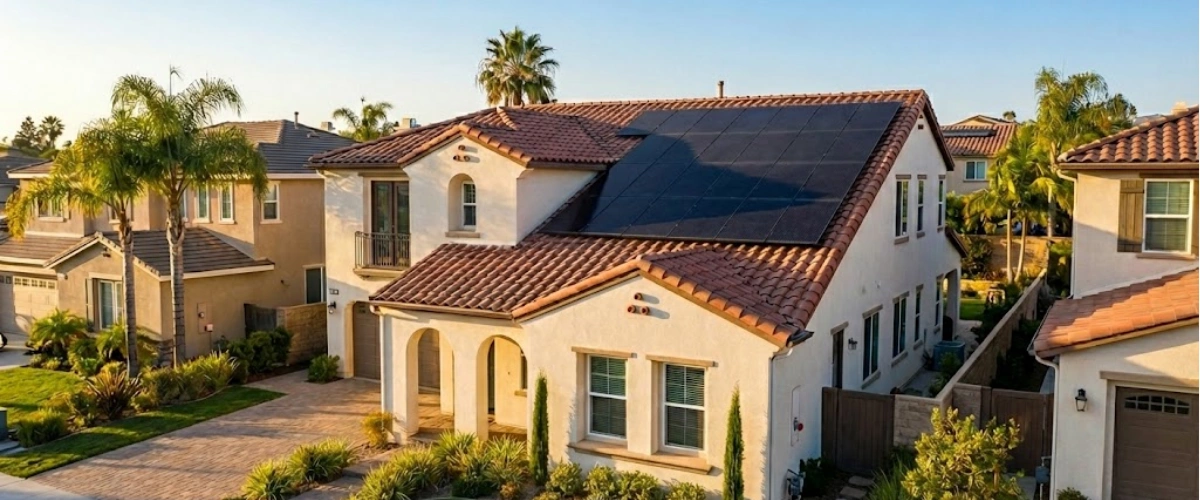
Yes, but carefully. Adding capacity beyond the allowed limit, known as the 10% rule, can trigger NEM 3.0, so stay within it. Batteries are a smarter alternative, and unauthorized changes can void your agreement.
You installed solar panels back in 2018 under California's NEM 2.0 program. Your system has been working beautifully, cutting your SCE bills dramatically. But now your family's electricity needs have changed—maybe you bought an electric vehicle, switched to a heat pump, or your spouse started working from home. Your solar production no longer covers your usage like it used to.
The obvious solution seems simple: just add a few more panels, right? But if you're on NEM 2.0, you're facing a terrifying question that keeps Southern California homeowners up at night: Can you expand your solar system without losing your grandfathered NEM 2.0 status and getting forced onto the far less favorable NEM 3.0 rates?
The short answer is yes—but only if you follow very specific rules. Make one mistake with your utility paperwork, exceed the allowed capacity limits, or work with an installer who doesn't understand NEM 2.0 compliance, and you could lose benefits worth tens of thousands of dollars over the life of your system.
Let's be clear about what's at stake. Under NEM 2.0, which ended for new customers in April 2023, you receive full retail credit for the excess solar energy you send back to the grid. If you export a kilowatt-hour during the day when you're not home, SCE credits you the full retail rate—typically 30-50 cents per kWh depending on your rate plan.
Under NEM 3.0, that same exported kilowatt-hour might only be worth 5-10 cents. The difference is staggering. A homeowner in Pasadena with a 10kW system could see their annual savings drop from $2,500 under NEM 2.0 to just $800 under NEM 3.0—a loss of $1,700 per year, or over $40,000 across a 25-year system lifespan.
This is why Southern California homeowners with NEM 2.0 systems guard their status like gold. And it's why the question "can I add more panels?" comes with so much anxiety. One Los Angeles homeowner we spoke with postponed adding capacity for two years because three different solar companies gave her conflicting information about whether it would affect her NEM 2.0 status.
The fear is justified. SCE and other California utilities actively look for reasons to move customers off NEM 2.0 and onto NEM 3.0. If you file improper paperwork or exceed capacity limits, they won't give you a warning—they'll simply switch you. And once you're on NEM 3.0, there's no going back.
Learn more about what happens if you switch to NEM 3.0 and why the rate differences are so dramatic.
Here's the critical rule every NEM 2.0 homeowner needs to understand: California allows you to expand your existing system by up to 10% of your original system size OR 1 kilowatt (kW), whichever is LESS, without losing your NEM 2.0 status.
Let's break down what this actually means with real examples:
Example 1: Small System
Example 2: Medium System
Example 3: Large System
Notice the pattern: No matter how large your existing system is, you can never add more than 1 kW under NEM 2.0 expansion rules. And if your system is smaller than 10 kW, you're limited to even less.
For many Southern California homeowners, this limitation is frustrating. A homeowner in Sherman Oaks told us his true-up bill jumped from $400 to $1,800 after buying a Tesla Model Y. He wanted to add 3 kW of panels to offset the EV charging, but his 9.6 kW existing system only qualified for a 0.96 kW expansion—barely enough to cover two months of EV charging.
For a deeper dive into the technical requirements, read our NEM 2.0 comprehensive guide.
The demand for expansion isn't random. Southern California homeowners are facing a perfect storm of factors that are increasing their electricity consumption:
Heat Pump Adoption: With California's push toward electrification and natural gas restrictions in new construction, many homeowners are replacing gas furnaces and water heaters with electric heat pumps. A typical heat pump water heater can add 2,000-3,000 kWh per year to your electricity usage.
Electric Vehicle Charging: An EV can easily add 3,000-6,000 kWh annually to your household consumption. That's equivalent to adding another entire household's worth of electricity usage. Many homeowners who installed solar before buying an EV are now discovering their systems are undersized.
Work-From-Home Patterns: Remote work has fundamentally changed household electricity patterns. Homes that were empty 9-5 on weekdays are now running air conditioning, computers, and appliances all day long. One Ventura County homeowner saw her summer bills jump $120/month after her husband started working remotely full-time.
Rising SCE Rates: Even if your usage hasn't changed, Southern California electricity rates keep rising, making every kilowatt-hour you don't offset with solar more expensive. SCE rates have increased over 50% since 2020, and analysts project continued increases through 2030.
Aging System Production: Solar panels degrade at approximately 0.5% per year. A system installed in 2018 is now producing about 3-4% less power than when it was new. For a 10 kW system, that's 300-400 watts of lost capacity—exactly what many homeowners want to add back.
If you've determined that expansion makes sense for your situation, here's the process you must follow to protect your NEM 2.0 status:
Pull out your original interconnection agreement from SCE, PG&E, or your utility. You need the exact system size in kilowatts that was approved. Don't guess, don't estimate, and don't trust your memory. One homeowner in Orange County assumed his system was 8 kW based on what the salesperson told him in 2019, but his interconnection paperwork showed 8.64 kW—a difference that changed his expansion allowance.
Take your original system size and multiply by 0.10 (10%). If the result is greater than 1.0 kW, your maximum expansion is 1.0 kW. If it's less, that smaller number is your limit.
This is where most DIY attempts fail. You cannot simply add panels and notify your utility after the fact. You must file a formal modification request with your utility before any work begins. This typically requires:
The utility will review your modification request and issue an approval letter. This process typically takes 4-8 weeks with SCE, though it can be longer during busy periods.
This is not a project for general electricians or inexperienced solar companies. You need a CSLB-licensed solar contractor who has successfully completed NEM 2.0 expansions and understands the specific paperwork requirements. A single mistake on the utility forms can trigger a review that results in you being moved to NEM 3.0.
Our guide on how to stay net metered in 2025 while increasing solar capacity provides additional technical details on this process.
Many Southern California homes with solar installed in 2016-2020 are already at their electrical panel's maximum busbar capacity. California's National Electrical Code (NEC) requires that the combined rating of all breakers on your main service panel not exceed 120% of the panel's rating.
For a standard 200-amp panel, this means your total breaker capacity cannot exceed 240 amps. If your solar system is already using a 40-amp breaker and you're trying to add more capacity, you may discover there's literally no room on your panel for additional solar.
There is a workaround: installing a Power Control System (PCS). This is specialized equipment that uses current transformers to monitor the power flowing through your electrical service in real-time. The PCS can dynamically limit your solar system's output to ensure you never exceed the busbar rating, even with additional panels installed.
Learn more about Power Control Systems for solar and how they enable compliant expansions.
A PCS typically costs $1,500-$3,000 installed and allows you to add solar capacity beyond what your panel's busbar rating would normally permit. However, you still cannot exceed the NEM 2.0 expansion limits (10%/1kW). The PCS just solves the electrical panel limitation, not the utility interconnection restriction.
One Riverside homeowner we worked with used this solution to add 960 watts to his 9.6 kW system. His 200-amp panel was already maxed out, but by installing a PCS and filing the proper modification paperwork with SCE, he successfully expanded while maintaining NEM 2.0 status.
Here's a reality check that many homeowners don't consider: if you can only add 1 kW of panels, that's only about 4-5 kWh of additional daily production. Depending on Southern California's solar production patterns, that might translate to just $300-$500 in additional annual savings.
Compare that to adding battery storage to your existing system. Discover how solar batteries can maximize your savings by allowing you to:
Capture Excess Production: If your existing panels are producing energy during the day that you're not using, a battery stores it for evening use when electricity rates are highest. Many NEM 2.0 homeowners discover they're already exporting 30-40% of their production back to the grid—production they could be storing and using themselves.
Time-Shift Your Usage: With a battery, you can charge it during off-peak hours (midnight-6am) when electricity is cheapest, then discharge during peak hours (4-9pm) when rates are highest. This strategy, called "load shifting," can save NEM 2.0 customers an additional $400-$800 annually without adding a single panel.
Provide Backup Power: Unlike panel expansion, batteries give you resilience during power outages. Southern California's increasing wildfire-related public safety power shutoffs mean backup power is becoming essential, not optional.
Qualify for SGIP Rebates: California's Self-Generation Incentive Program offers substantial rebates for battery installations—sometimes covering 25-40% of the battery cost. Panel expansion doesn't qualify for these incentives.
A homeowner in Thousand Oaks compared the options: adding 1 kW of panels ($2,500 installed) would save her about $350/year. Adding a 10 kWh battery ($8,000 after SGIP rebates) would save $650/year while also providing backup power. She chose the battery.
For a detailed comparison, read our analysis on whether you should expand your solar panels or add a battery.
At US Power, we've worked with dozens of Southern California homeowners facing this exact dilemma. Our approach prioritizes protecting your NEM 2.0 status above everything else, because we understand what's at stake.
Here's what sets our process apart:
Complete Utility Document Review: Before recommending any solution, we pull your original interconnection agreement and verify your exact system specifications. We've caught errors where homeowners had incorrect information about their own systems that would have caused compliance issues.
Multiple Solution Analysis: We don't assume panel expansion is the right answer. Our CSLB-licensed consultants analyze panel expansion, battery addition, and even complete system replacement to determine which option provides the best financial return for your specific situation.
Guaranteed Paperwork Accuracy: We prepare and submit all utility modification paperwork ourselves. Our team has relationships with interconnection departments at SCE, PG&E, and other California utilities, and we know exactly what documentation they require. We guarantee your NEM 2.0 status will be protected.
3-4 Week Installation Timeline: Once we receive utility approval for your modification, we complete the physical installation in 3-4 weeks. Our exclusive partnership with QCells means we have American-made panels in stock and ready to ship—no waiting months for equipment.
Factory-Direct QCells Pricing: As QCells' exclusive partner in Southern California, we offer factory-direct pricing that's typically 15-20% below market rates. For a small expansion project, this price difference often covers the cost of proper permitting and compliance work.
One thing we won't do: pressure you into a solution that doesn't make sense. If adding 0.8 kW of panels will only save you $300/year but a battery would save $700/year with backup power, we'll tell you that honestly. Learn more about How to Choose a Solar Company in Los Angeles that prioritizes your financial interests, not their commission.
Let's address the option nobody wants to talk about: sometimes the best financial decision is to abandon your existing system and install a completely new, larger system under NEM 3.0—especially if paired with sufficient battery storage.
This sounds crazy to homeowners who've been told NEM 3.0 is terrible. And for solar-only systems, it usually is. But NEM 3.0 was specifically designed to incentivize solar-plus-storage systems. With a properly sized battery, a NEM 3.0 system can achieve 95-100% bill offset and qualify for current battery incentives.
Consider this scenario: A homeowner in Los Angeles has an 8 kW system from 2019 under NEM 2.0. She wants to add 5 kW more capacity to cover a new EV and heat pump, but she's limited to 0.8 kW expansion. Her options:
Option 1: Add 0.8 kW under NEM 2.0
Option 2: Add 10 kWh battery to existing system (NEM 2.0)
Option 3: Remove existing system, install 13 kW + 20 kWh battery under NEM 3.0
The math isn't always straightforward, which is why a detailed financial analysis specific to your situation is essential. US Power provides this analysis for free during your consultation.
Your NEM 2.0 status is one of the most valuable energy assets a Southern California homeowner can have. With retail rate credits worth 5-8 times what NEM 3.0 offers, protecting that status should be your top priority when considering any system modifications.
The good news is that expansion is possible if done correctly. The 10%/1kW rule gives most homeowners at least some room to add capacity. But the better news is that expansion isn't your only option—battery storage often provides better financial returns while preserving your NEM 2.0 benefits and adding backup power security.
The worst decision you can make is rushing into expansion without understanding the rules, working with an inexperienced installer, or filing improper paperwork with your utility. Take the time to analyze all your options with a company that specializes in NEM 2.0 compliance.
US Power has successfully guided over 100 Southern California homeowners through this exact decision, protecting every single client's NEM 2.0 status while maximizing their savings. Whether you need a small expansion, battery integration, or a complete system evaluation, our CSLB-licensed team provides the expertise and support you deserve.


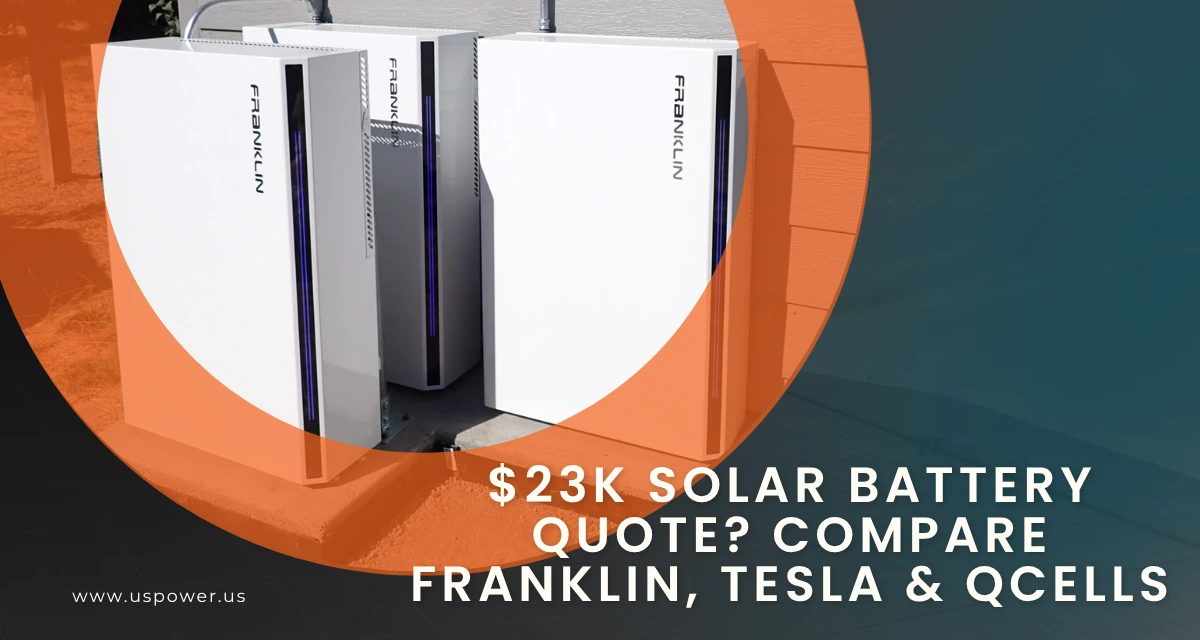
Is $23K a fair price for a home battery? compare quotes and incentives in SoCal.

Learn strategies to finance solar and get the most savings on your investment.
Electricity bills hitting record highs? You're not imagining it—here's why.









Copyright © 2026 US Power - Axia by QCells. All Rights Reserved.
Get an instant solar estimate using satellite!