

"Overproducing solar energy? Stop wasting it. Here's what SoCal homeowners do.
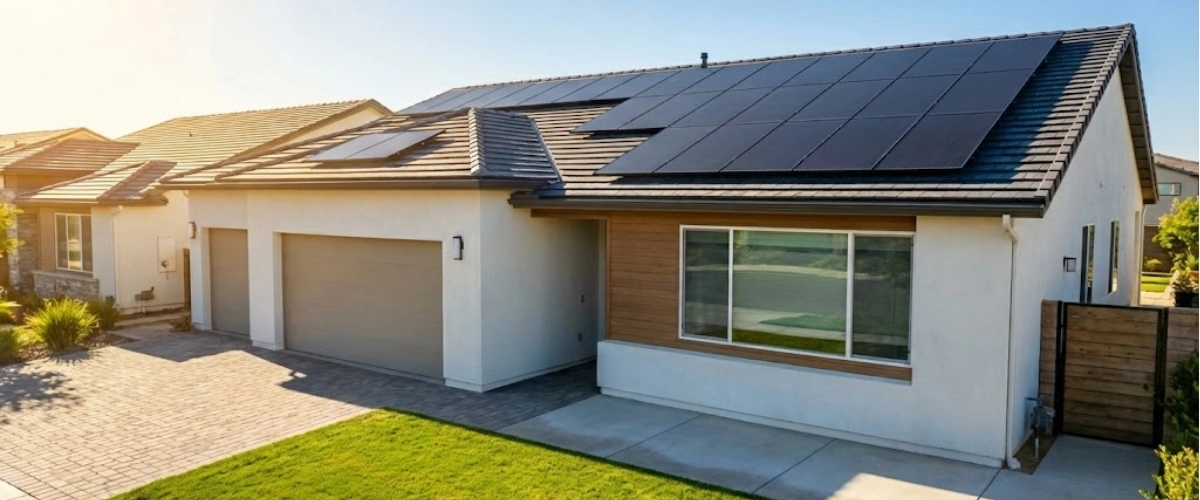
If your solar overproduces, a home battery lets you store extra energy for evening use instead of wasting it. Southern California batteries typically range from $10,000 to $20,000 installed, depending on capacity.
Your solar panels are doing their job — maybe too well. If you're generating more electricity than your home can use and wondering where all that free energy is going, you're not alone. Thousands of Southern California homeowners face the same situation every sunny day.
Under how NEM 3.0 changed the math for solar in California, sending excess power back to the grid pays you far less than it used to. That means wasted solar energy is now wasted money — and most homeowners don't realize it until they see their annual true-up bill.
The good news? There are smarter ways to use every kilowatt your panels produce. This guide breaks down exactly what Southern California homeowners can do when solar production exceeds their home's daily needs.
Before April 2023, California's NEM 2.0 program gave solar owners near-retail credit for every kilowatt-hour they sent to the grid. If you produced more than you used, your meter ran backward and your utility bill shrank accordingly.
NEM 3.0 changed that. Today, SCE and PG&E customers who export excess solar receive export rates as low as 2–8 cents per kWh — a fraction of the 25–45 cents per kWh they pay when buying power back at peak times. Your solar system is essentially selling low and buying high.
If your panels regularly overproduce, you're generating electricity that either sits on the grid for minimal credit or gets clipped by your inverter entirely. Neither outcome works in your favor. The real value of solar today comes from using the power you produce — not selling it back.
That's why solar battery storage options have become essential for maximizing the ROI of any solar system in Southern California. Storage turns excess daytime production into usable energy for evenings and peak-rate hours.
A home battery system is the most effective upgrade for overproducing solar owners. Instead of exporting that midday surplus at low grid rates, your battery absorbs it and discharges it during the evening — when SCE's time-of-use rates are at their highest.
A properly sized battery can store 10–20 kWh per day, which covers most households through an entire peak-rate window. Over time, that self-consumed energy adds up to thousands in annual utility savings that grid export never would.
One of the best ways to absorb excess solar production is to charge your EV with solar during peak production hours. A Level 2 home charger draws 7–11 kW — enough to fully consume what many overproducing systems generate mid-morning through mid-afternoon.
With California EV charging costs rising, fueling your car on free solar power is a real and growing advantage. Some Los Angeles homeowners are saving $150–$300/month by pairing rooftop solar with their daily EV charge. See how to size solar panels and batteries for EV owners for maximum benefit.
A heated pool or spa is one of the highest-consumption loads you can add to a Southern California home. Electric pool heaters and heat pumps can draw 3–7 kW continuously, making them ideal for soaking up excess solar production. Solar pool heating in Los Angeles is a popular upgrade for homeowners who want comfort and efficiency without rising utility costs.
Run your pool heater during solar peak hours (10 AM–3 PM) and you'll shift that load entirely onto free energy. For homeowners with existing pools, this alone can eliminate a $100–$200/month electricity line item.
Your top appliances that use the most electricity — dishwasher, washer/dryer, electric oven — are best run during peak solar hours. Scheduling these during the day instead of evenings means your solar system powers them directly rather than importing grid electricity at premium rates.
Smart home controllers and programmable timers make this easy to automate. Many homeowners see a 15–25% reduction in grid imports simply by shifting their laundry and dishwasher cycles to midday.
If your monitoring app consistently shows high export during the day while your battery (if you have one) stays at 100%, your system may be larger than your current consumption requires. Other signs include minimal reduction in your annual true-up bill despite high production numbers.
Understanding the right solar system size for your home is critical before installation — and equally important if you're evaluating an existing system.
If you're planning to add an EV, pool, or HVAC upgrade in the next 1–3 years, extra solar capacity today is a smart hedge. Your load will eventually catch up with production, and you'll be glad you sized up. The issue arises when excess energy has nowhere useful to go — and that's where battery storage or load shifting fills the gap.
Many solar complaints stem from systems that were oversized to maximize installer profit, not homeowner savings. US Power's CSLB-licensed consultants analyze your actual 12-month usage history before recommending a system size. The goal is to match your real consumption — with room for planned upgrades — not inflate panel counts.
As the exclusive QCells partner in Southern California, US Power delivers properly sized solar systems using American-made panels at factory-direct pricing — typically 15–20% below market rate.
Every US Power system comes with a 25-year comprehensive warranty covering panels, workmanship, and performance. And because we control our supply chain through the QCells factory-direct relationship, most installations reach Permission to Operate (PTO) within 3–4 weeks of approval — not months.
With 180+ five-star Google reviews across Los Angeles, Orange County, Ventura, San Bernardino, and Riverside counties, US Power has built its reputation on installations that deliver what they promise.
Under NEM 3.0's lower export rates, every kilowatt-hour you store and use yourself is worth far more than what the grid will pay you for it. A well-sized battery system effectively makes your home its own mini-grid — charging during the day on free solar and powering your home through peak-rate evenings.
California's SGIP rebate program can reduce battery costs by $150–$1,000+ per kWh depending on income eligibility, making storage significantly more accessible for Southern California homeowners in 2026.
Before NEM 3.0, solar-only systems made excellent financial sense. Today, without a battery, you're effectively donating your best production hours to the grid at bargain rates. For most new installations in the SCE and PG&E service territories, solar paired with battery storage is the only configuration that delivers maximum bill reduction.
Excess solar production isn't a failure — it's an opportunity. But under NEM 3.0, that opportunity only pays off if you're using the energy yourself. Whether you add battery storage, charge an EV, heat a pool, or simply shift your appliance schedule to daytime hours, every step toward self-consumption adds real dollars back to your pocket.
Southern California homeowners who act now — before utility rates climb further — are locking in the strongest long-term returns available. US Power is ready to help you design a system that matches your life, your home, and your energy goals.
Ready to stop wasting free solar energy? Schedule your free consultation and talk to a CSLB-licensed consultant today.


A complete guide to solar panels and batteries for Southern California homeowners.
Safeguard your roof warranty during solar installation. Work with US Power!

Learn methods to accurately measure sunlight for optimal solar panel placement.









Copyright © 2026 US Power - Axia by QCells. All Rights Reserved.
Get an instant solar estimate using satellite!