

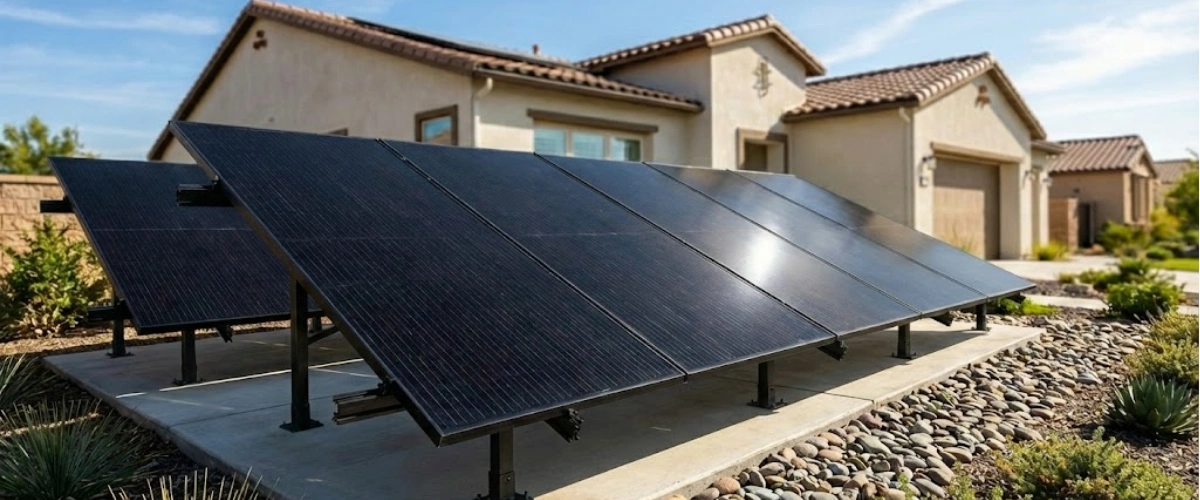
Thinking about installing solar panels in your backyard instead of on your roof? Ground mount solar offers unique advantages for Southern California homeowners—especially if your roof needs replacement soon.
You've been putting off solar for months—maybe even years. The roof needs replacing soon, and every solar company told you the same thing: "Fix the roof first, then we'll install the panels."
But here's the problem. Roof replacement costs $15,000 to $25,000 in Southern California. Solar installation adds another $20,000 to $35,000. And with the federal tax credit gone as of December 31, 2025, you're watching potential savings disappear while utility bills keep climbing.
What if there was another option? Ground mount solar panels let you skip the roof replacement entirely and start generating clean energy in your backyard within weeks. For homeowners facing rising SCE electricity rates, this alternative installation method is gaining serious attention across Los Angeles, Orange County, Ventura, San Bernardino, and Riverside counties.
But ground mount isn't for everyone. The upfront costs run about 51% higher than rooftop systems, permitting can be more complex, and you'll sacrifice yard space. So when does it actually make sense?
Ground mount solar panels work best in specific situations—and Southern California homeowners are increasingly discovering they check multiple boxes.
The average asphalt shingle roof in Southern California lasts 15-20 years. If yours is approaching that mark, you're facing a tough choice: replace it now and delay solar, or install panels on an aging roof and pay to remove and reinstall them in 5-10 years.
That removal and reinstallation typically costs $3,000 to $8,000 depending on system size. For many homeowners, the math points toward ground mount as the smarter long-term investment. You avoid roof penetrations entirely, skip the removal headache, and start saving on electricity bills immediately.
Before making this decision, consider whether you should replace your roof before going solar to understand all your options. But if you're looking at a roof replacement bill anyway, ground mount deserves serious consideration.
Not every Southern California home has ideal roof conditions for solar. Your situation might include:
Ground mount systems eliminate these constraints. You can position panels at the optimal tilt angle (typically 25-35 degrees in Southern California) facing due south for maximum production. This flexibility often translates to 15-25% better energy generation compared to a compromised roof installation.
Want to verify if your roof is suitable for solar panel installation? A professional site assessment can give you definitive answers.
Here's where ground mount gets interesting for Southern California homeowners in planned communities. While the California Solar Rights Act protects your right to install solar, many associations still impose "reasonable restrictions" on panel placement—particularly regarding street visibility.
Ground mount installations in fenced backyards often face fewer aesthetic objections than roof arrays. We'll cover HOA navigation in detail below, but the key takeaway: backyard placement can be your end-run around restrictive architectural committees.
Let's address the elephant in the room: ground mount solar costs more upfront. But "more expensive" doesn't always mean "worse investment."
Based on 2026 EnergySage data, the average ground mount system costs approximately $3.26 per watt compared to $2.16 per watt for rooftop installations—roughly 51% higher.
For a typical 8 kW system serving a Southern California home:
That $8,800 difference comes from:
But wait. Remember that roof replacement we mentioned? If your roof needs work before solar installation:
Roof mount total cost:
Ground mount total cost:
Suddenly ground mount is $9,200 cheaper—and you avoid roof penetrations that could void your new roof warranty.
Even if you don't need immediate roof replacement, consider this: if your roof fails in 10-15 years, you'll pay $3,000-$8,000 to remove and reinstall your rooftop array. Ground mount eliminates this future expense entirely.
Ground mount systems offer practical benefits that offset higher upfront costs:
Easier maintenance: Cleaning panels at ground level takes minutes with a garden hose. No ladder climbing, no roof safety concerns, no $200-$400 professional cleaning fees.
Better cooling: Ground mount panels have superior airflow underneath, keeping them 10-15°F cooler than roof-mounted arrays. Since solar panels lose approximately 0.5% efficiency for every degree above 77°F, this cooling advantage translates to 3-5% higher annual production in Southern California's hot climate.
Optimal positioning: Adjustable tilt angles and perfect south-facing orientation can boost production by 15-25% compared to a compromised roof installation. Over a 25-year system lifespan, that additional generation significantly narrows the cost gap.
If you live in one of Southern California's many HOA-governed communities, you're probably wondering: "Will my HOA even allow this?"
The California Solar Rights Act (Civil Code 714 and 714.1) provides strong protections for homeowners installing solar energy systems. Here's what matters:
HOAs cannot:
HOAs can:
The key word: reasonable. If your HOA demands changes that significantly increase costs or tank your system's performance, they're likely violating state law.
Here's the strategic advantage: ground mount systems in fenced backyards typically face minimal pushback. Most HOA architectural committees focus on street-facing aesthetics. If your backyard isn't visible from public areas, approval often sails through.
Smart strategies for HOA approval:
For detailed guidance on HOA solar rights in California, review the comprehensive information on HOA restrictions and California Solar Rights Act protections.
Beyond your HOA, local building departments impose their own rules. Many Southern California jurisdictions require ground mount arrays to maintain specific setbacks from property lines—typically 5 to 30 feet depending on the city.
Los Angeles County, for example, generally requires 10-foot side setbacks and 20-foot rear setbacks for structures over a certain height. Orange County varies by city, with some municipalities treating ground mount solar as "appliances" (minimal setbacks) and others as "structures" (significant setbacks).
This is where working with an experienced local installer becomes critical. US Power's team navigates these requirements daily across Southern California jurisdictions.
Ground mount solar requires the same core permits as rooftop installations—building and electrical—but with additional considerations that vary widely across Southern California jurisdictions.
Your building permit verifies that your ground mount structure can withstand local wind loads, soil conditions, and seismic activity. California's updated 2025 Energy Code (effective January 1, 2026) maintains these requirements:
Required documentation:
Many Southern California cities now use automated permitting platforms like SolarAPP+ or Symbium for residential solar. However, ground mount installations often still require manual plan review because they're treated as "structures" rather than "roof-mounted equipment."
Expected timeline: 2-4 weeks for plan review in most jurisdictions, though some cities like Los Angeles can take 6-8 weeks during busy periods.
The electrical permit covers your system's connection to your home's electrical panel and the utility grid. This process is identical whether you install ground mount or rooftop solar—with one exception.
Ground mount installations require:
The trenching requirement adds 1-2 days to installation but creates a cleaner, more protected electrical connection compared to rooftop conduit runs.
If your property uses a septic system (common in rural areas of San Bernardino, Riverside, and Ventura counties), you'll need Department of Environmental Health approval before installing ground mount solar. Arrays must maintain minimum distances from septic tanks and leach fields—typically 10 feet.
For detailed permitting guidance specific to California, see our step-by-step resource on How to Get a Solar Permit for Your Home in California.
Southern California homeowners installing solar after April 2023 fall under NEM 3.0—a billing structure that dramatically changed solar economics. Understanding how NEM 3.0 affects ground mount systems is crucial for maximizing your investment.
Under the old NEM 2.0 system, excess solar production exported to the grid earned you credits worth nearly full retail electricity rates—around $0.30-$0.40 per kWh for SCE customers.
NEM 3.0 slashed export credits to $0.05-$0.08 per kWh during most hours. That 75-85% reduction means sending solar energy to the grid during the day barely moves your savings needle.
The new strategy: Store daytime solar production in batteries and use it during expensive evening hours (4-9 PM) when SCE charges peak rates of $0.50-$0.65 per kWh.
Ground mount installations pair exceptionally well with battery storage for several reasons:
Easier future expansion: Adding more panels to a ground mount array is straightforward compared to finding additional roof space. As your energy needs grow (hello, electric vehicle), you can expand capacity without major complications.
Centralized equipment placement: Many homeowners locate their inverter and battery system near their ground mount array, reducing wire runs and simplifying maintenance access.
Optimized production timing: Ground mount's superior orientation captures maximum midday production—exactly when you want to charge batteries for evening use.
To understand the full financial picture of battery pairing under NEM 3.0, explore How Solar Batteries Can Maximize Your Savings.
Not all ground mount solar installations deliver equal results. The quality of your panels, racking system, and installer expertise directly impacts your 25-year return on investment.
US Power's exclusive partnership with QCells gives Southern California homeowners access to American-made solar panels engineered for our unique climate challenges:
Superior heat tolerance: QCells' Q.ANTUM technology maintains higher efficiency in temperatures exceeding 100°F—common during Southern California summers. While competing panels lose 15-20% efficiency in extreme heat, QCells panels typically lose only 10-12%.
Santa Ana wind resilience: QCells panels meet the highest wind rating standards (over 140 mph in testing), crucial for areas prone to Santa Ana wind events. Ground mount installations face different wind loads than rooftop arrays, and QCells' engineering accounts for these variables.
25-year comprehensive warranty: Unlike competitors who split coverage between panel manufacturers and installers, US Power provides a single 25-year warranty covering panels, workmanship, and performance—backed by both QCells and US Power's CSLB license.
Learn more about why QCells is the smartest home solar choice and why it matters for long-term reliability.
As QCells' exclusive residential partner in Southern California, US Power eliminates distributor markups that other installers must pass to customers. This factory-direct model typically saves homeowners 15-20% compared to market rates.
For ground mount systems, this pricing advantage becomes even more significant. That $26,080 system from a typical installer might cost $22,000-$23,000 through US Power—narrowing the cost gap with rooftop installations while delivering superior long-term performance.
While many solar companies quote 8-12 week timelines, US Power consistently delivers Permission to Operate (PTO) in 3-4 weeks after permit approval. For ground mount installations, this speed advantage stems from:
Ground mount solar represents a significant investment, and choosing the wrong installer can cost you thousands in poor performance, permit delays, or future repairs.
Local permitting expertise: Ground mount permits vary dramatically by jurisdiction. Your installer should have a proven track record in your specific city or county. Ask for references from nearby homeowners with ground mount systems.
CSLB licensing: California requires solar contractors to hold a C-46 (Solar Contractor) or C-10 (Electrical Contractor) license. Verify your installer's license status at cslb.ca.gov. Unlicensed installers put your warranty and property at risk.
Soil and foundation experience: Ground mount stability depends on proper foundation design. Ask potential installers how they assess soil conditions and what foundation methods they use for different soil types common in Southern California.
Manufacturer relationships: Direct relationships with panel manufacturers (like US Power's QCells partnership) typically mean better warranty support, faster equipment replacement, and lower costs compared to installers using distributors.
For comprehensive guidance on evaluating solar companies, read how to choose a solar company in Los Angeles.
Ground mount solar isn't the default choice for most Southern California homeowners—but for the right situations, it's often the smarter long-term investment.
Ground mount makes sense if you:
Stick with roof mount if you:
The decision ultimately comes down to your specific property conditions, financial timeline, and long-term plans. That's why professional assessment is crucial—and why US Power offers free, no-obligation consultations that give you honest recommendations, not just a sales pitch.
Ready to explore whether ground mount solar is right for your Southern California home? US Power's CSLB-licensed consultants provide honest, transparent assessments backed by 180+ five-star Google reviews. Get your free consultation today—virtual or on-site, whatever works best for your schedule.


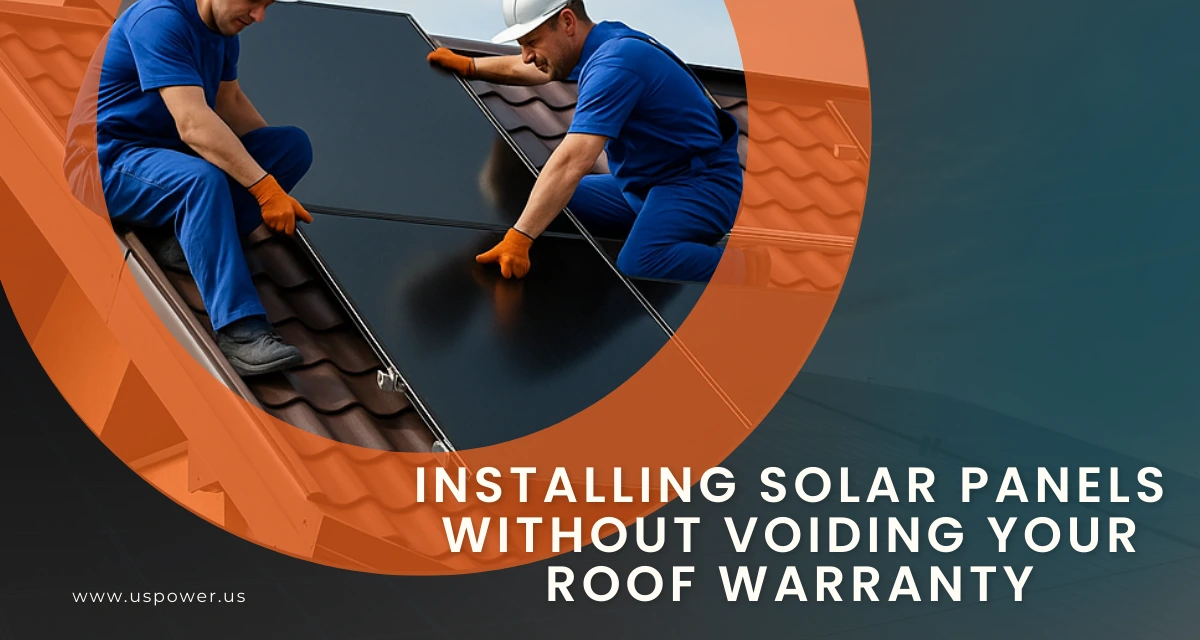
Safeguard your roof warranty during solar installation. Work with US Power!

Rising bills vs. solar promises—see what the numbers actually say to homeowners.

You're being charged double what solar actually costs. Work with legit solar company.








¿Estás listo para ser dueño de tu poder? ¡Llámenos hoy mismo!
818-650-8010Contractor License #: 1144368

Derechos de autor © 2025 US POWER | Energía solar y techosUS Power - Axia by QCells. All Rights Reserved.
¡Obtenga una estimación solar instantánea usando el satélite!