

California legalized balcony solar when Gov. Newsom signed SB 868 on September 30, 2026, capping plug-in kits at 1,200 watts. Homeowners can save about $540 a year at most. Here is what it costs, when you can buy, and why rooftop solar saves more.
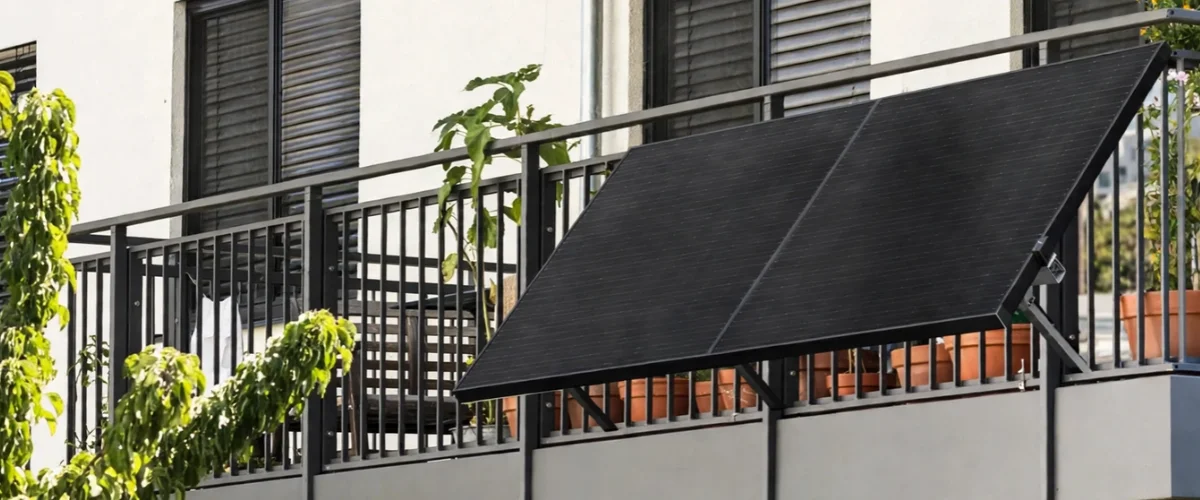
Balcony solar is legal in California under SB 868, signed September 30, 2026. Plug-in systems are capped at 1,200 watts, must be lab certified, and take effect January 1, 2027. Kits cost about $300 to $2,200.
You have seen the photos: a small solar panel zip-tied to an apartment balcony, a cord running to a wall outlet. In Germany, that is a normal sight. As of September 30, 2026, it is about to be legal in California too.
Here is what balcony solar is, what California's new law allows, what a kit costs and saves, and when a full rooftop system is the better move for your home.
Balcony solar, also called plug-in solar, is a small panel system that connects to a standard 120-volt wall outlet. The power flows into your home and runs whatever is on, such as your refrigerator, router, lights or a window air conditioner. There is no roof work, no electrician for the basic setup and, under the new law, no utility interconnection application.
Gov. Gavin Newsom signed SB 868, the Plug and Play Solar Act, on September 30, 2026. The bill came from state Sen. Scott Wiener and passed the Legislature with bipartisan support. California is now the tenth state to legalize balcony solar.
The law sets four main rules for balcony solar in California:
For comparison, 1,200 watts is roughly three or four standard rooftop panels. A typical US Power home system is 6 kW, five times larger.
The law takes effect on January 1, 2027. The utility interconnection exemption ends on January 1, 2030, a sunset added late in the process with language utilities asked for. The Legislature can remove it, and advocates expect lawmakers to revisit it before 2030.
Plug-in kits sold in the United States run from about $300 to $2,200, depending on size, according to KQED's October 2026 reporting. The low end buys a single 400-watt panel setup. The high end buys a system near the 1,200-watt cap.
A $1,500 kit at 1,200 watts costs $1.25 per watt. October 2026 California data puts a full rooftop system at about $2.52 per watt before incentives. Plug-in solar looks cheaper per watt, and it is, because you skip the roof work, permitting and labor. Our California solar cost guide shows where the rooftop dollars go.
Kits with a certification that meets the new rules are not on shelves yet. Expect higher prices at first, since only a few products qualify.
The honest answer is a few hundred dollars a year. Sen. Wiener estimates a household can cut its annual bill by about $400. The Environmental Working Group estimates a 400-watt system covers about 14% of an apartment's energy use. Advocates say a small apartment could save up to $500 a year. Those are advocate figures, so check the math against your own bill.
Here is our estimate for a full 1,200-watt system in Southern California:
That last number depends on use. Plug-in solar only saves money while something in your home is drawing power. A home that is empty all day uses less of the output, so your real savings will be lower. Run your own usage through the US Power solar calculator to see what a larger system would produce for your home.
Not a kit that meets California's new rules. KQED reports that today's plug-in products do not yet qualify, so anyone who installs one now must register it as rooftop solar with the utility. Compliant models are expected on sale in spring to mid-2027.
California requires the whole system to be certified, not only each part. UL has one plug-in solar certification today, and some versions still call for an electrician to install, which defeats the plug-and-play idea. Advocates expect the standard to add true do-it-yourself systems as soon as 2027. Until then, do not buy an uncertified kit online and plug it in. It may breach your utility rules and your insurance terms.
PG&E and SDG&E opposed the bill. They cited safety and a worry that costs shift to customers who do not have solar. Labor unions for firefighters and PG&E employees also opposed it at first, then went neutral once code requirements were added. Those requirements are why the shutoff feature and lab certification are in the law, and they are why you should expect certified kits to cost more than the cheapest imports.
Balcony solar fits people who cannot put solar on a roof. That includes:
It fits less well if you want to wipe out a $300 monthly bill. A 1,200-watt cap covers a slice of your use, not the whole load. The buy versus lease guide for 2026 explains the full-size options for homeowners.
Balcony solar and a rooftop system solve different problems. Think of balcony solar as a starter and a rooftop system as the full fix.
A 6 kW rooftop system makes about 9,300 kWh a year in Southern California, which is roughly six times the output of a maximum balcony kit. At SCE's rate, that is around $1,675 a year in first-year savings under NEM 3.0, based on our cost guide's assumptions. Rooftop solar typically pays back in 7 to 11 years in California and then saves for the 25-year life of the warranty and beyond.
Under NEM 3.0, California utilities pay only about 3.7 to 4.6 cents per kWh for exported solar. Balcony solar avoids that problem by design, since it is sized to be used inside your home. A rooftop system has to deal with it. That is why we pair most rooftop systems with a battery, which stores midday power for the 4 to 9 PM peak. Our guide to small solar systems under NEM 3.0 covers right-sizing, and our NEM 3.0 explainer covers the export rules.
Look for the UL listing or an equivalent national lab mark on the whole system, not only the panel. Ask the seller to confirm the product meets SB 868, and keep the receipt.
A 1,200-watt system pushes about 10 amps onto the circuit it plugs into. Use a dedicated or lightly loaded outlet, and have an electrician look at older wiring.
Renters should get written approval before anything is mounted on a balcony rail. HOAs may have rules on balcony appearance and wind loading. Written permission protects your deposit.
If you own your home and pay a high electric bill, rooftop solar does more for you. Three signs it is time:
California also excludes new solar from your property tax assessment for systems completed before January 1, 2027, which makes timing matter. Read the details in California's solar property tax exemption after 2026, and see the current solar incentives list for 2026. For storage, see our solar battery cost guide.
Balcony solar is a real, legal option in California from January 1, 2027, capped at 1,200 watts and certified by a national testing lab. It can save a few hundred dollars a year, and it fits renters best. It will not replace a full rooftop system for a homeowner with a large bill.
If you own your home, US Power starts every consultation with a real 12-month bill analysis, so you see the exact size and savings before you decide. We install American-made Qcells panels from Dalton, Georgia, at factory-direct Qcells pricing that runs 15% to 20% below market, with a 25-year comprehensive warranty and a typical 3 to 4 week path to PTO. To see what rooftop solar would save you compared with a balcony kit, book your free 12-month bill analysis.
Balcony solar gets you started, and the right system gets you off the rate hikes.



EcoRecycle integrates recycling with U.S. solar panel production. Learn the benefits.

The real 30% Federal Solar Tax Credit deadline isn't what most people think.

AI growth is fueling grid stress—see how solar can help balance California’s energy.









Copyright © 2026 US Power - Axia by Qcells. All Rights Reserved.
Get an instant solar estimate using satellite!