

Solar quotes in California can swing wildly — sometimes by $20,000 or more for the same size system. Here's what's driving those differences and how to protect yourself.
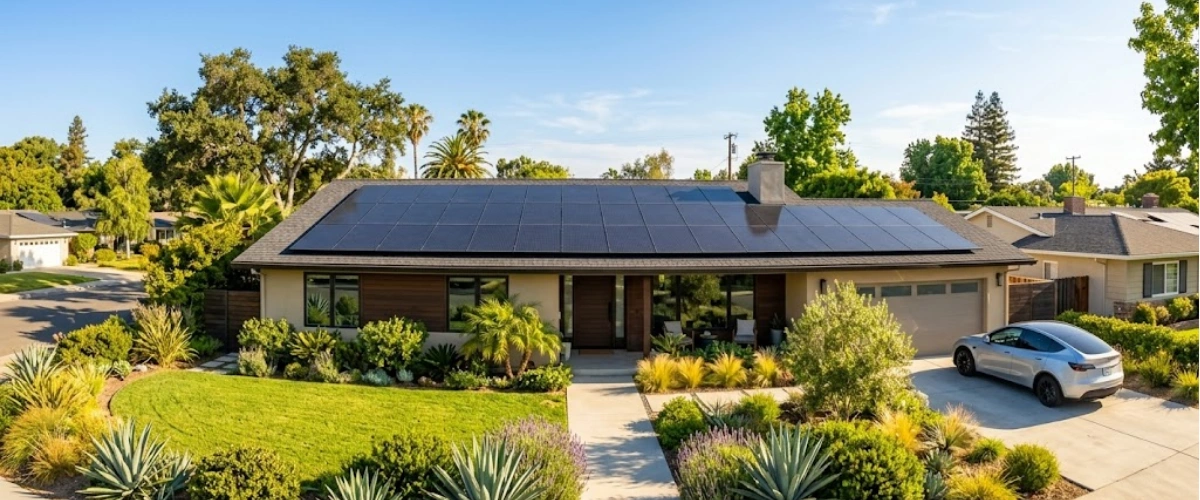
Solar quotes in California can differ by $20,000 or more for the same size system. This guide explains what drives those differences and how to protect yourself when comparing installers.
A California homeowner recently shared his experience online: one company quoted him $90,000 for a solar and battery system. Another company quoted $75,000 for a larger, more capable setup. Same home. Completely different numbers.
This isn't unusual. Solar quotes in California can vary by $15,000 to $30,000 for similar systems — and most homeowners have no idea why. With SCE rates up nearly 13% since late 2025 and PG&E rates more than doubling over the past decade, going solar is one of the smartest financial moves you can make right now. But only if you don't overpay.
This guide breaks down what drives solar pricing in 2026, what a fair quote actually looks like, and how to protect yourself from inflated proposals.
Southern California Edison implemented a rate increase of approximately 13% in late 2025. For a household using 500 kWh per month, that meant monthly bills jumping from $171 to over $193 — and that's before summer peaks. SCE's average residential rate now sits at roughly $0.353 per kWh, among the highest in the nation.
PG&E's story is even more striking. Rates have more than doubled over the past decade, rising over 100% since 2015. The driver isn't waste — it's wildfire mitigation, grid hardening, and infrastructure upgrades that regulators require utilities to pass directly to customers.
A 6% rate hike on a $100 bill is $6. A 6% hike on a $250 bill is $15. That's the math California homeowners are living with today — each new increase builds on an already elevated base, making every bump feel more painful than the last.
The long-term trajectory is clear. Why electricity bills are so high in Southern California comes down to structural costs that won't disappear — meaning the urgency to take control of your energy bill has never been higher.
Not all solar panels are the same, and neither are the companies installing them. A quote can look cheap because it uses off-brand panels with shorter warranties, lower efficiency ratings, or components that underperform in California's heat. A higher quote might include American-made panels backed by a 25-year comprehensive warranty — which is a very different product.
Understanding why some solar quotes cost more than others in California starts with the equipment tier. Premium panels from brands like QCells, which are manufactured in the U.S. and carry a 25-year performance guarantee, cost more upfront — but save more over time and carry far less risk of mid-life failure.
Large national solar companies often run aggressive door-to-door sales teams with high commission structures. Those commissions get built into your quote — sometimes adding $5,000 to $10,000 to the final price without adding any value to the system itself.
Smaller local companies with lower overhead, factory-direct pricing relationships, and licensed in-house consultants can offer the same or better equipment at 15–20% below market rates.
Multi-structure installs, roofs without attic access, long conduit runs, and panel orientation all affect price legitimately. A barn-and-home installation with panels on different roof faces and underground conduit runs will cost more than a simple south-facing roof on a single structure — and rightfully so. What matters is that you understand exactly what you're paying for and why.
For a typical California home needing a 7–10 kW system, a fair 2026 price range lands between $18,000 and $30,000 before any state or local incentives. Larger systems with battery storage — like a 12–15 kW system paired with a home battery — will run $30,000 to $50,000 depending on battery capacity and complexity.
If you're getting a quote significantly above those ranges, it's worth asking specifically what's driving the premium. Legitimate cost drivers include high-efficiency panels, comprehensive warranties, complex roof situations, and battery integration. Inflated cost drivers include excessive sales commissions and unnecessary upsells.
Knowing how to compare solar quotes in California means looking beyond the bottom line — evaluating what's included in the system, who's installing it, and what protections you have after the install is complete.
A fair solar proposal should always clearly specify: the panel brand and model, the inverter type, the warranty terms (separate for equipment, workmanship, and performance), the installation timeline, and the total cost with no hidden fees. Review 5 essential elements every solar quote should include before you sign anything.
If a quote is missing any of these, that's a red flag — not a reason to trust the company more because they "kept it simple."
Watch out for high-pressure tactics, vague equipment descriptions, and quotes that drop dramatically the moment you hesitate. These are classic signs of a sales-driven company rather than a quality-driven installer. Knowing the 5 red flags when choosing a solar company in California can save you tens of thousands of dollars.
California's Net Energy Metering 3.0 policy changed the economics of solar significantly. Export credits — what you earn when you send excess power to the grid — are now time-based rather than flat-rate. That means the same amount of exported solar power earns you much less than it used to, unless you export during peak hours (4–9 PM).
A home battery changes this equation entirely. Instead of exporting cheap midday power at low credit rates, you store it and use it during the expensive evening peak window. This is why batteries are worth it for solar in California in a way they weren't before 2023.
A quality home battery adds roughly $10,000 to $15,000 to a solar installation, depending on capacity and brand. For most California homeowners, the payback period on a battery under NEM 3.0 is 5–7 years — faster than it was under the old net metering rules, precisely because the evening rate savings are so significant.
US Power is California's exclusive QCells installation partner. That relationship means panels come direct from the factory at 15–20% below what most installers pay their distributors. That savings gets passed directly to you — not absorbed as margin.
QCells panels are American-made, rated among the highest-efficiency residential panels available, and backed by a 25-year comprehensive warranty that covers the panels themselves, workmanship, and performance. That's not three separate warranties — it's one unified guarantee that protects your investment for a quarter century.
Most California solar companies are quoting 6–12 week installation timelines in 2026. US Power consistently delivers in 3–4 weeks from approval to install, with how long solar panel installation takes in California often being one of the biggest surprises for new customers. Every week of delay is another week paying full utility rates.
Every US Power consultant is CSLB-licensed — meaning you're working with a credentialed professional, not a commissioned salesperson. There are no hidden fees, no pressure tactics, and no surprise costs at signing. What you see in your proposal is what you pay.
Installation quality matters as much as equipment quality. Ask your installer specifically how they handle roof penetrations, what flashing method they use, and whether the racking system is compatible with your roof material. A good installer will answer these questions in detail without hesitation. Avoid common solar installation mistakes California homeowners make by asking the hard questions upfront.
Every legitimate California solar installation requires permits, utility approval, and a final inspection before you receive Permission to Operate (PTO). This process adds 2–4 weeks after installation — but it's non-negotiable and protects you legally and financially. Any company that suggests skipping or rushing permitting is a company to avoid.
The homeowner who got a $90,000 quote and found a better $75,000 option for a larger system did exactly what every California homeowner should do: compare carefully and ask hard questions. The gap between a fair solar quote and an inflated one can fund a family vacation every year for a decade.
With SCE and PG&E rates rising year after year, the savings from going solar compound over time — every rate hike makes your fixed-cost solar system look smarter. US Power gives you the fastest path to those savings: American-made QCells panels, factory-direct pricing, and an installation timeline that gets you generating power before your next utility bill arrives.
Don't pay more than you have to — for electricity or for solar.


%20Thumbnail.png)
Avoid delays & damage—learn how to protect your solar investment with US Power.
Your SCE bill is confusing. Let's fix that — starting with understanding kW vs. kWh.

Optimize your solar panel angle to capture maximum sunlight and solar savings.







Copyright © 2026 US Power - Axia by QCells. All Rights Reserved.
Get an instant solar estimate using satellite!