

Wondering if home battery backup is worth the cost in 2026? Homeowners in Texas, California, and Florida weigh in — and the answer might surprise you. Here's what the data and real experiences say before you decide.
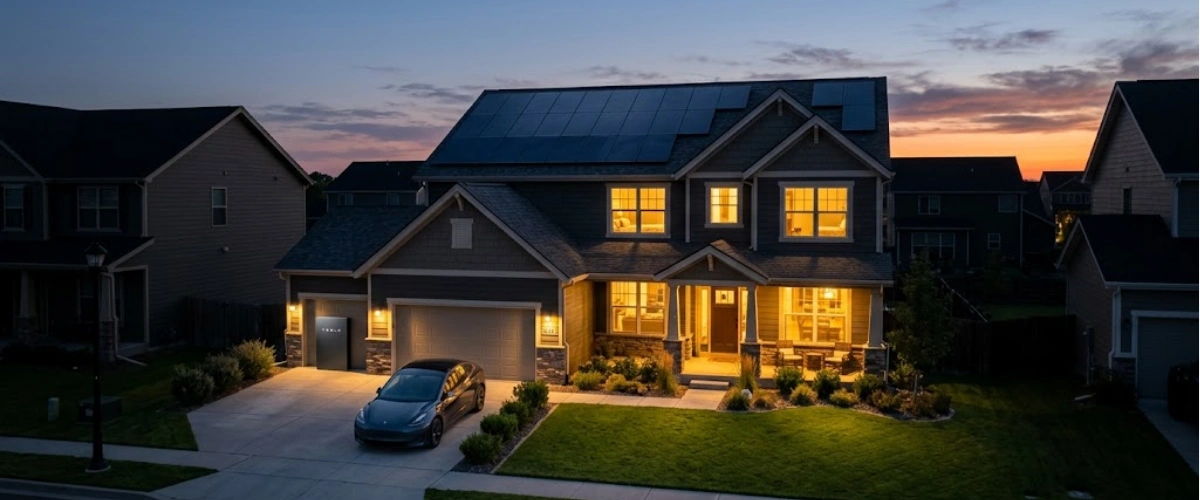
The lights flickered. Then they went out. And your solar panels — sitting right there on your roof, soaking up sunlight — did absolutely nothing.
That's the reality most homeowners don't realize until it's too late. Grid-tied solar systems automatically shut down during outages for safety reasons. Without battery storage, you're just as powerless as your neighbor who has no panels at all.
So the question isn't really if a battery is worth it. The real question is: how much battery do you actually need, and will it pay off? In 2026, with electricity rates climbing fast and grid reliability getting worse in Texas, California, and Florida, that decision has never mattered more.
Texas homeowners already know this firsthand. When Winter Storm Uri hit in 2021, 4.5 million homes lost power for an average of 42 hours. ERCOT's reserve margin has dropped to a projected 10.1% in 2026 — well below the 15% safety standard — while energy demand is expected to nearly double by 2030 driven by AI data centers and industrial growth.
Florida isn't much better during hurricane season. Outages can stretch from hours to days. In California, solar batteries worth it in California has become one of the most searched questions among homeowners, with Public Safety Power Shutoffs (PSPS) remaining a constant threat in wildfire zones — and NEM 3.0 fundamentally changing how solar exports are valued.
The average U.S. residential electricity price has risen roughly 30% since 2020, climbing from about 13¢ per kWh to 17–18¢ per kWh nationally. In California, PG&E customers now pay around 38¢ per kWh on average. In Texas, rates range from 14–19¢ per kWh — with further increases expected.
Every year you wait is another year you're paying a utility company that keeps raising its rates. A battery doesn't just protect you from outages. It protects you from that.
Many homeowners picture whole-home backup as a seamless experience — the power goes out and nothing changes. And for many, that's exactly what happens. One homeowner in Florida described losing power at 4AM on Christmas Day and getting it back 15 hours later, all while running well pumps, water pressure pumps, and the central furnace — using only about 30% of a 30 kWh battery system while getting 8 kW of solar recharge during the day.
The key word, though, is behavior. Understanding how long a solar battery powers your home depends on what you're actually running. Most people who love their whole-home systems aren't running everything at once. They skip EV charging during outages, raise the thermostat a couple of degrees, and delay the dryer. The freedom to choose what to run is the real benefit — not running everything simultaneously without thinking about it.
If your area rarely loses power for more than a few hours, a smaller battery covering your essentials — refrigerator, lights, internet, and a window AC unit — can cost significantly less and still deliver meaningful protection. Choosing the right backup for your home comes down to honestly assessing your outage history, your household's medical or work-from-home needs, and your budget.
The homeowners who tend to regret their system aren't the ones who went whole-home. They're usually the ones who oversized without accounting for HVAC inrush current, or who undersized and ran out of power during a multi-day outage. Sizing correctly from the start is the single most important decision you'll make.
The most practical sizing tip from experienced solar homeowners: pull your utility data and look at your 5–10 PM usage window. Most homes draw 3–5 kW on average during that period. A battery sized to cover that window — roughly 13–20 kWh — handles your peak evening load while keeping enough reserve for an overnight outage.
In California under NEM 3.0, the math is even cleaner. Solar and battery systems during grid failures work best when the battery charges from your panels during the day and discharges during the evening peak window — cutting your bill instead of selling cheap energy back to the grid at NEM 3.0's lower export rates.
One of the most common mistakes homeowners make is not accounting for HVAC inrush current — the power spike that happens when a compressor starts up. A battery system rated for your average load may still trip when the AC kicks on.
Solutions include adding a soft-start device to your HVAC, choosing a variable-speed inverter-driven unit (which ramps up gradually instead of surging), or selecting a battery inverter with sufficient surge capacity. These details matter. An experienced installer will check your HVAC specs before sizing your system — a warning sign of a rushed installation is when they don't.
For most Texas homes with 3–4 bedrooms and regular HVAC use, a 20–30 kWh battery system provides reliable overnight backup plus protection during ERCOT grid events. In Florida, where hurricane outages can run 2–3 days, whole-house battery storage for long-term blackouts often means pairing a 20–30 kWh battery with a generator to cover extended outages. In California wildfire zones, battery sizing often starts at 10 kWh minimum for essentials, with 20+ kWh recommended if you have an EV or central HVAC.
Most solar companies buy panels through a distribution chain, marking up the cost at each step. US Power is an exclusive QCells partner with factory-direct pricing — which typically runs 15–20% below market rate. You're getting American-made panels at the same price a large commercial buyer would pay, without paying a distributor's profit margin on top.
That pricing difference matters when you're adding battery storage. Understanding solar battery costs upfront helps you budget realistically — and factory-direct pricing means more of your budget goes toward the right battery size, instead of being eaten up by panel markups.
Most solar warranties are fragmented: one term for panels, a shorter one for the inverter, and often nothing meaningful in writing for workmanship. US Power's 25-year comprehensive warranty covers all three under a single policy. If anything underperforms or fails, one call resolves it — no finger-pointing between manufacturers and installers.
That's especially valuable for battery systems, where proper installation directly affects how the system handles surge loads, generator integration, and outage switching.
From signed contract to Permission to Operate, US Power's typical installation takes 3–4 weeks — significantly faster than the industry average. The team handles permitting, interconnection paperwork, and utility coordination so you're not waiting months for your system to turn on.
With the federal residential tax credit expired as of December 31, 2025, California's Self-Generation Incentive Program (SGIP) is now the state's most significant remaining battery storage incentive. Qualifying homeowners — particularly those in high fire-threat districts, low-income households, or customers with medical baseline needs — can receive rebates of up to $1,000 per kWh of battery capacity installed. Learn more about how to qualify for SGIP battery rebates in California before the waitlist fills further.
For a standard 10–13.5 kWh battery, that can translate to $8,500–$13,500 in rebates. General market budgets are currently on waitlist, so timing matters. Working with an approved SGIP developer — like US Power — is the fastest way to check your eligibility and secure your spot before funds are allocated.
Texas homeowners in Oncor territory have access to a solar-plus-storage rebate of up to $9,000 in 2026. Critically, the rebate now requires battery storage to qualify — solar-only systems are no longer eligible. The program closes November 30, 2026, or when funding runs out — whichever comes first. Combined with Texas's permanent solar property tax exemption and sales tax exemption on equipment, the savings stack meaningfully.
Florida doesn't offer a statewide battery rebate program, but the financial case for storage is still strong. Storing excess solar energy and discharging it during utility peak hours reduces how much you buy from the grid. With hurricane season making multi-day outages a real risk every year, many Florida homeowners treat battery storage as essential resilience infrastructure — not just a bill reduction tool.
Your electricity bill isn't going down on its own. The grid isn't getting more stable. And your solar panels alone won't keep the lights on when your neighborhood goes dark.
A properly sized home battery backup system solves all three problems at once — cutting your utility costs, protecting you during outages, and making your solar investment work the way it was supposed to. The homeowners who act now lock in today's pricing before rates — and demand for installations — climb further.



The 30% solar credit ends soon — don’t sign blind. We are here to help you switch!

You're being charged double what solar actually costs. Work with legit solar company.
Follow this guide to find a trusted and reliable solar installers in your local area.









Copyright © 2026 US Power - Axia by QCells. All Rights Reserved.
Get an instant solar estimate using satellite!