

The costliest solar mistake is not overpaying, it is signing with a contractor that cannot back the work in year seven. Before you sign a quote in California, Texas, Florida, or Illinois, learn how to vet solar contractors the right way: verify the state license yourself, confirm insurance and bonding, check who backs each warranty, and read the quote line by line. A few hours of homework protects a 25-year decision.
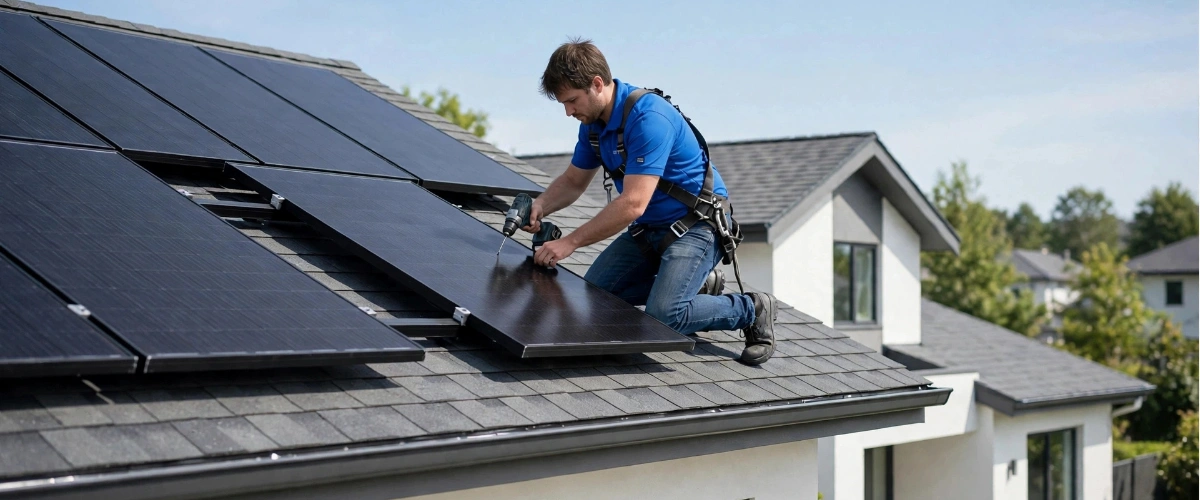
The costliest solar mistake is not paying too much per watt. It is signing with a company that cannot stand behind the work five years later. Panels are a commodity now, but the people installing them are not, and a signature ties you to that company for two decades or more. Most homeowners spend hours comparing prices and almost no time confirming that the business is licensed, insured, and financially sound. That is backwards. This guide walks you through how to vet solar contractors before you sign anything, whether you live in California, Texas, Florida, or Illinois. Do the homework first, because once the contract is signed, your options narrow fast.
The person at your kitchen table is trained to close, not to install. When something goes wrong on your roof in year seven, you will not call them. You will call the company, if the company still exists. That gap between the pitch and the warranty is where homeowners get hurt, and it is exactly why vetting matters.
A solar agreement binds you to a business for 20 to 25 years of production, monitoring, and workmanship coverage. Solar contractors that cut corners on licensing or insurance are the ones most likely to vanish when a claim comes due. You are not just buying panels. You are betting that the company answering the phone in a decade is the same one you signed with today.
Utility bills keep climbing across all four states US Power serves, and that pressure pushes people to sign the first quote that promises relief. Urgency is real, but it is also the tool a weak contractor uses to skip your questions. A legitimate company welcomes a slow, careful vet. A shaky one rushes you past it.
Vetting is not reading a few reviews and trusting your gut. It is verification: confirming, with documents and public records, that a company is who it claims to be. Solar contractors either pass these checks or they do not, and the difference is not a matter of opinion.
Every state regulates who can legally install solar. In California, that is a CSLB license (typically a C-46 solar or C-10 electrical classification). Texas requires a licensed electrician or electrical contractor for the interconnection work. Florida uses state-certified solar or electrical contractor licenses, and Illinois requires a Distributed Generation Installer certification along with local electrical licensing. Ask for the license number, then verify it yourself against the state board. Reputable solar contractors hand it over without hesitation.
A licensed company should carry general liability insurance and workers' compensation, and in most states a surety bond. Ask for a certificate of insurance and confirm it is current. Then ask a question most homeowners forget: who actually performs the install? Some solar contractors subcontract every job to rotating crews they have never trained. That matters, because the people on your roof determine whether your workmanship warranty is ever worth anything.
Here is the process to run before you sign, in order. None of it takes long, and each step eliminates a category of risk that a slick presentation cannot hide.
Do not accept a screenshot. Take the license number and look it up on the state board's public website (CSLB in California, TDLR for the electrical side in Texas, DBPR in Florida, IDFPR in Illinois). Confirm the name matches, the license is active, and there are no unresolved disciplinary actions. This single step filters out a surprising share of solar contractors before you ever discuss price.
Get the certificate of insurance and note who backs each warranty. There are three separate warranties in solar: the panel (manufacturer), the workmanship (installer), and the performance guarantee. Ask who honors each one and for how long. A 25-year number means little if the company issuing it has been in business for two. Understanding real coverage is easier when you see what a strong manufacturer warranty looks like, so review a real example like the 25-year Qcells warranty coverage before you compare offers.
Volume and recency matter more than a perfect score. Look for a long track record of installs, not a handful of glowing five-star posts from the same month. Ask for references from jobs completed two or three years ago, since that is when workmanship problems surface. A company with something to prove, like US Power's 200+ five-star reviews built over years, will point you to them gladly.
A bad contractor is the most expensive part of any system.
Overpaying by a few thousand dollars stings, but a failed install or a vanished warranty can cost you the whole investment. Ask US Power about factory-direct pricing and flexible financing options that a properly vetted company can actually stand behind. Compare a real quote
When you run the checklist above on US Power, everything verifies. That is the point of building the company this way, and it is why homeowners across four states keep choosing it over the fly-by-night operators the industry is known for.
US Power's consultants are CSLB-licensed, not commission-only closers borrowed for the season. As an exclusive Qcells partner, US Power sells American-made Qcells panels at factory-direct pricing that typically lands 15 to 20 percent below market. The savings come from cutting the middleman, not from cutting the corners that get other solar contractors in trouble.
Every install carries a 25-year comprehensive warranty covering panels, workmanship, and performance, and the panel side is backed by a Tier 1 American manufacturer through the exclusive Qcells partnership. Add a 3 to 4 week installation timeline after approval and transparent pricing with no hidden fees, and each item on your vetting checklist has a clear, verifiable answer.
Vetting the company and vetting its quote go together. Once you trust that solar contractors are licensed and insured, the document they hand you is the next thing to scrutinize, because a clean company can still write a vague contract.
A trustworthy quote itemizes the panel model and count, the inverter, any battery, the workmanship warranty term, and the total price with no floating "fees to be determined." If the salesperson made a promise out loud, find it in writing. For a full breakdown of what a complete quote contains, see what a complete solar quote should include before you sign.
The vetting process itself is a test. A contractor who answers license and warranty questions plainly is showing you how they will handle a service call later. One who deflects is telling you the same thing. If you want a sense of the warning signs, watch for these solar installer red flags as you go.
Vetting a solar contractor is not about distrust. It is about protecting a 25-year decision with a few hours of verification up front. Confirm the license against the state board, get the insurance certificate, learn who backs each Qcells warranty, and read the quote line by line. Solar contractors that pass every check are the ones still standing when you need them. The homework is small next to the cost of getting it wrong, so do it before you sign, not after.



Save more with affordable and smart solar financing or cash option with US Power.
Most homeowners put $0 down on solar, but a small down payment can still pay off.
Here’s what California homeowners can expect when switching to solar with US Power.







Copyright © 2026 US Power - Axia by QCells. All Rights Reserved.
Get an instant solar estimate using satellite!