

Went solar but still paying SCE hundreds per month? You're not alone. Discover why California homeowners with NEM 3.0 face unexpected bills—and how to fix undersized systems for real savings.
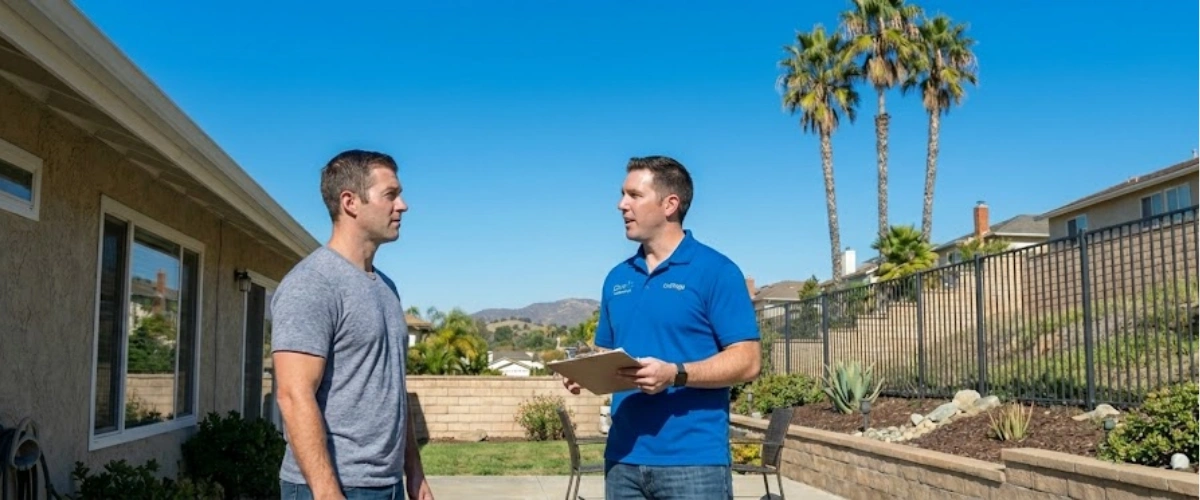
Solar homes always pay a minimum monthly connection charge of about $10 to $16. If your bill is higher, your system may be undersized or your usage may have grown, which can often be corrected.
You installed solar panels two years ago. The first year felt amazing—you generated more than you used, even got a small credit back from SCE. But this year? Different story.
You're using "too much energy" (or so you're told), and now you're staring at a $90 bill from Southern California Edison for "excess usage." You thought solar meant freedom from electric bills. Instead, you're still paying—and confused about why.
If this sounds familiar, you're not alone. Thousands of California homeowners are discovering their solar systems don't cover what they thought they would. Here's why it happens—and what you can actually do about it.
The promise of solar is simple: generate your own electricity, slash your utility bills, maybe even get paid back for excess energy. But the reality under California's NEM 3.0 rules is more complicated than most homeowners realize.
Here's what's actually happening.
Most solar companies size systems based on your annual average consumption. They look at 12 months of bills, calculate your daily average, and design a system to match that number.
The problem? Life doesn't happen in averages.
You use more energy in summer (air conditioning) and winter (heating, shorter days, less sunlight). You have cloudy weeks, like the marine layer that blankets coastal Southern California during "June Gloom." You might have added an electric vehicle since installation. Or your family grew, your work-from-home setup expanded, or you started running the AC more often because SCE's rates make you dread every degree.
When solar companies design for "average," they're setting you up to underproduce during the months that matter most. That's when you start pulling from the grid—and paying SCE for every kilowatt-hour over what your panels generate.
If you installed solar after April 2023, you're on California's Net Energy Metering 3.0 program. And battery storage is essential under NEM 3.0 because of one critical change: export credits dropped by 75%.
Under the old NEM 2.0 rules, you got retail-rate credit for excess solar sent back to the grid. If SCE charged you 34 cents per kWh, they credited you 34 cents per kWh for your solar exports.
Now? You get roughly 8 cents per kWh for daytime exports—and even less during midday when everyone's solar is producing. Meanwhile, you're still paying 34+ cents per kWh when you draw from the grid at night.
This isn't a 1:1 exchange anymore. You need to generate four times as much during the day just to break even on nighttime usage. Without battery storage, your excess daytime solar is essentially being sold at a loss.
Here's what that looks like in practice: You generate 230 kWh in a month. You use 385 kWh. That 155 kWh difference? You're paying full retail rate for it—even though you're exporting plenty of solar during the day. The credits just don't cover what you owe.
Solar panels perform best in direct sunlight. But Southern California has seasonal quirks that reduce output more than many homeowners expect.
Summer surprises: Wildfire smoke from inland fires reduces panel efficiency. Marine layer clouds linger for weeks in coastal areas like Ventura and Orange County. Even brief cloud cover cuts production by 50-80%.
Winter challenges: Shorter days mean fewer peak sun hours. December and January see 40% less solar production than July, but your energy usage stays high (or increases) due to heating, holiday lights, and more indoor time.
One homeowner in Riverside told us: "I thought I'd be fine year-round. But we had two weeks in winter where wildfire smoke blocked the sun, and our panels basically stopped working. That month, we owed SCE $120."
If your system was sized without accounting for seasonal dips, you'll face bills during the low-production months—and those bills add up fast.
Here's where it gets frustrating: Even if you're generating solar, you're not just paying for the energy shortfall. You're also paying delivery charges that solar credits don't cover.
Your SCE bill has two components:
When you export solar, you get credits for the supply charge only. But when you draw from the grid, you pay both supply and delivery charges.
This asymmetry means you have to generate roughly twice as much solar just to offset what you use during non-solar hours. It's not a fair trade—and it's by design. Utilities still need to fund grid maintenance, so they shifted costs onto delivery fees that solar can't offset.
One Los Angeles homeowner put it this way: "I generate 200 kWh and use 250 kWh. I thought I'd only pay for the 50 kWh difference. Instead, I'm paying for 50 kWh of supply plus delivery charges on all 250 kWh. My bill was $90 instead of $15."
Even if your solar covered 100% of your energy usage, you'd still owe SCE a monthly connection fee (typically $10-16). But when you're undersized, you're paying:
These charges stack quickly. What you thought would be a $15 minimum bill becomes $90—or more—during high-usage months.
Your solar system was sized based on past usage. But life changes—and often, energy consumption increases without you realizing it.
Added an EV since going solar? That's likely the culprit.
Charging a Tesla Model 3 at home adds roughly 300-400 kWh per month to your energy usage. If your solar system was sized before you bought the EV, it's now dramatically undersized.
Electric vehicle charging costs can add $100+ per month to your SCE bill if your solar isn't designed to cover charging. Many homeowners don't realize their "free" solar charging is actually pulling from the grid at full retail rates.
Beyond EVs, here are common reasons your energy usage has increased since installation:
Each of these individually seems small. But combined, they can add 20-30% to your monthly consumption—pushing your undersized system even further behind.
If you're stuck with high bills after going solar, you have options. Some are immediate fixes; others require investment. Here's what actually works.
This is the single most effective solution for NEM 3.0 homeowners. Batteries let you store excess daytime solar and use it at night—avoiding the 75% value loss from exporting to SCE at reduced rates.
With a properly sized battery (10-15 kWh for most homes), you can:
Cost: $8,000-$15,000 installed, depending on capacity. Payback period is typically 6-8 years under current SCE rates.
If your roof has space and your system is undersized, adding more panels can help. But there's a catch: you'll need to go through the Permission to Operate process again, which adds time and permitting costs.
When this makes sense:
When it doesn't:
Adding panels without batteries under NEM 3.0 is like filling a leaky bucket. You'll generate more, but you won't capture the value.
While you evaluate long-term solutions, you can cut bills immediately by reducing usage during high-cost hours.
Smart strategies:
These won't solve an undersized system, but they can cut your monthly bill by 15-25% while you plan next steps.
Many homeowners don't actually know if their system is undersized—or if there's a technical issue causing underperformance.
What a proper audit checks:
If your system is underperforming due to a fixable issue (shading, dirty panels, inverter problems), that's a quick win. If it's genuinely undersized, the audit will show exactly how much capacity you need to add.
This is where working with the right solar partner from the start makes all the difference.
At US Power, we don't size systems based on "average usage." We design for real life—including seasonal swings, future growth, and NEM 3.0 realities.
1. Load analysis beyond the bills
We ask about EVs, home offices, planned additions, and lifestyle changes. We factor in summer AC peaks and winter heating. We design for your actual life, not an average.
2. NEM 3.0-specific design
Under NEM 3.0, battery storage is essential for maximizing ROI. We size solar + battery together from day one, so you capture 100% of your solar's value instead of exporting at 75% loss.
3. QCells American-made panels with superior performance
Our exclusive partnership with QCells means factory-direct pricing on the highest-efficiency panels available. More power per square foot = better performance during cloudy weeks and shorter winter days.
4. Transparent projections
We show you exactly what to expect: monthly production estimates, worst-case scenarios, and how your bill will look under different usage patterns. No surprises.
5. 25-year comprehensive warranty
Panels, workmanship, and performance—all covered. If your system underperforms due to design or installation issues, we fix it. No excuses.
Our Google reviews tell the story: homeowners who went solar with US Power aren't complaining about high bills two years later. They're posting about $8 monthly SCE minimums and selling excess power back even in winter.
Here's what one Orange County homeowner said:
"Other companies wanted to give us just enough panels to cover 80% of our usage. US Power sized it for 110% plus added a battery. Best decision we made. Our SCE bill is $11/month and we're covered even during June gloom."
That's the difference between "average" sizing and real-life design.
If you're stuck with an undersized system from another installer, you might be wondering: should I have gone solar at all?
The answer is yes—if it's done right.
The pros and cons of going solar in California haven't changed. Solar still offers the best long-term ROI against rising SCE rates. But the design matters more than ever under NEM 3.0.
The problem isn't solar—it's undersized systems designed for a net metering program that no longer exists. If you're currently paying high bills, it's because your system wasn't built for today's rules.
The good news? It's fixable.
If you're paying $50+ per month to SCE after going solar, something's wrong. Either your system is undersized, or there's a performance issue—both are fixable.
Here's what to do next:
1. Request your last 12 months of production data from your installer
Compare what your system is generating vs. what was promised. If there's a gap, you may have a warranty claim.
2. Pull your SCE bills for the same period
Look at your usage patterns by month. Are there specific months where you're pulling heavily from the grid? That tells you if the problem is seasonal or year-round.
3. Schedule a free solar consultation with US Power
We'll review your system design, production data, and usage—then show you exactly what's causing the shortfall and how much it would cost to fix (battery add-on, panel expansion, or both).
4. Calculate the ROI on upgrades
If you're paying $90/month to SCE now, that's $1,080/year. A $12,000 battery investment pays itself off in 11 years—and with SCE rates rising 5-7% annually, likely much sooner.
Don't let an undersized system cost you thousands over the next decade. Get it audited, get it fixed, and start capturing the savings you were promised.
You didn't go solar to keep paying high electric bills. If your system isn't performing as promised, it's time to figure out why—and fix it.
SCE rates are rising 5-7% per year. Every month you wait is another $90+ that could have gone toward a battery or system expansion that actually solves the problem.
US Power specializes in helping Southern California homeowners with undersized or underperforming solar systems. We'll audit your setup, show you exactly what's wrong, and give you a clear path to real savings—no more surprises on your SCE bill.


Your home solar project delayed? Here's what to do before the deadline passes.

Save on CA electricity bills with solar panels, batteries, and smart energy use.

Panels need storage and smart tech to meet rising energy needs and grid demands.







Copyright © 2026 US Power - Axia by QCells. All Rights Reserved.
Get an instant solar estimate using satellite!