

Homeowners across Texas, Florida, California, and Illinois are watching their electric bills creep higher every year — and 2026 is no different. Utilities are approving multi-billion-dollar rate hikes, data centers are driving up grid demand, and your monthly bill has no ceiling. The good news? Solar lets you stop paying whatever your utility decides to charge and lock in a predictable rate instead. This guide shows you the real numbers — and what to do about them.
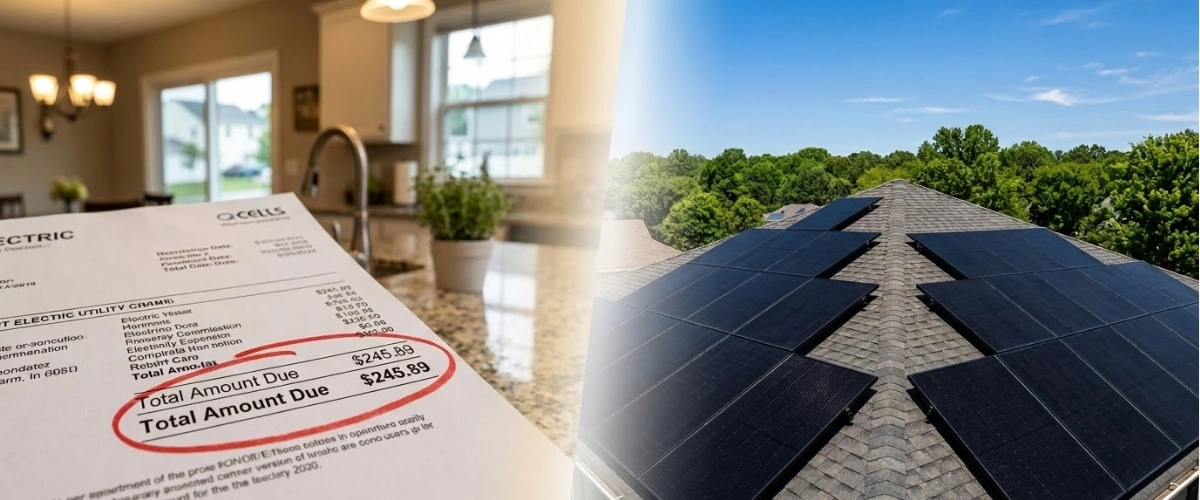
You ran the numbers. You projected your electric bill 10, 15, maybe 20 years into the future — and then you wished you hadn't.
You're not alone. Homeowners across Texas, Florida, California, and Illinois are doing the same math and getting the same uncomfortable result: at current rate increase trends, what costs you $250 a month today could cost $500 or more by the mid-2030s. And that's a conservative estimate.
The problem isn't just that rates are rising. It's that they keep rising — with no end in sight, no cap, and no warning before it hits your bill. This post breaks down what's actually happening with utility costs in 2026 and, more importantly, how homeowners are choosing to stop the bleeding.
Electricity rates in the US have increased by roughly 32% since 2014. That's more than inflation, more than wage growth, and more than most homeowners budgeted for when they bought their homes. If you want to understand why electricity bills keep climbing, the answer isn't one thing — it's several forces working at once.
Infrastructure upgrades, wildfire mitigation costs, storm recovery charges, and increasing energy demand from AI data centers are all being passed directly to you, the residential ratepayer. You didn't ask for any of it. But you're paying for all of it.
In California, PG&E customers have seen electricity rates jump more than 100% over the last decade. A new Base Services Charge is being added in March 2026, restructuring how your bill is calculated with a fixed monthly fee on top of your usage.
In Florida, the PSC approved what critics are calling the largest electric rate increase in US history — a $7 billion, four-year plan from Florida Power & Light (FPL). From 2020 to 2026, FPL residential bills have increased by 45%. And more hikes are locked in through 2029.
In Illinois, a record 830% spike in a PJM capacity auction — driven largely by data center energy demand — sent ComEd bills surging roughly 10–15% higher than the year before. The Citizens Utility Board warned that elevated prices could persist for years.
In Texas, deregulated electricity means rates shift constantly with market conditions. Extreme weather events — like winter freeze events — can cause sudden, massive price spikes with no cap protecting you.
[INTERNAL LINK 2 HERE — "rising electricity costs in Southern California" → uspowersolar.com/blog/rising-electricity-costs-southern-california-2026]
These aren't projections. This is what homeowners are paying today:
Beyond the base rate, your bill likely includes delivery charges, infrastructure surcharges, storm recovery fees, and in some states, fuel adjustment charges. These line items often increase independently of your actual energy rate. One homeowner in the Reddit discussion this post was inspired by noted that his bill had effectively doubled in six years — going from $180 to nearly $300 per month — despite no major change in his household's energy use.
When you install solar, you stop being 100% dependent on your utility for electricity. You generate your own power during the day and either use it directly or send the excess back to the grid for a credit. The result? Your utility bill drops — often dramatically.
[INTERNAL LINK 3 HERE — "how much solar panels can save you" → uspowersolar.com/blog/how-much-money-do-solar-panels-save-in-2025]
The analogy that resonates with a lot of homeowners: think of it like locking in a mortgage rate. Instead of renting electricity from your utility at whatever price they set, you're pre-paying for decades of power at a predictable fixed rate. One Florida homeowner in the discussion that inspired this article put it perfectly: "We knew what we were spending on solar, and now our electric bill is fixed."
Savings vary depending on your system size, roof orientation, local utility rates, and how much electricity you use. But in high-rate markets like California, Texas, Florida, and Illinois, homeowners with properly sized solar systems often see their utility bills drop by 70–100% for the electricity generation portion of their bill.
Delivery charges and grid connection fees will still appear on your statement — but the core cost of the electricity you consume can be dramatically reduced or eliminated.
Under programs like California's NEM 3.0, solar panels alone may not give you the full savings picture. When you export excess solar energy to the grid, you receive less credit than you used to under older net metering rules. That's where battery storage changes the equation entirely.
[INTERNAL LINK 4 HERE — "solar battery storage and your savings" → uspowersolar.com/blog/how-solar-batteries-can-maximize-your-savings]
A battery lets you store the solar energy you generate during the day and use it in the evening — during what utilities call "peak hours," when electricity from the grid costs the most. Instead of buying expensive power at 6 PM, you draw from your own battery.
Homeowners who run air conditioning heavily, have electric vehicles, or live in areas with frequent outages get the biggest benefit from pairing solar with battery storage. If you're in Texas and experienced a freeze event, or in Florida and lost power after a hurricane, you already know what grid dependency costs. A battery backup gives you energy security on top of savings.
Most solar companies buy panels from distributors, mark them up, and pass that cost to you. US Power works differently. As an exclusive QCells partner with factory-direct pricing, homeowners get American-made, high-efficiency panels at 15–20% below typical market pricing — without the markups baked into most quotes.
[INTERNAL LINK 5 HERE — "why QCells panels lead the market" → uspowersolar.com/blog/why-qcells-is-the-smartest-home-solar-choice-in-2025]
QCells manufactures their panels in the United States and holds a Tier 1 status from S&P Global. These aren't panels you'll be replacing in 10 years — they come with a 25-year comprehensive warranty covering panels, workmanship, and performance.
One of the most common complaints homeowners have about other solar companies is the wait. Permits get delayed. Inspections get rescheduled. You don't start saving for months.
[INTERNAL LINK 6 HERE — "how to choose the right solar company" → uspowersolar.com/blog/how-to-choose-a-solar-company-in-los-angeles]
US Power's CSLB-licensed consultants manage the entire process — from permitting to installation to grid interconnection — with a 3–4 week timeline after approval. With 200+ five-star Google reviews and a track record of transparent pricing with no hidden fees, the experience matches the promise.
The federal 30% Investment Tax Credit ended on December 31, 2025. But that doesn't mean going solar in 2026 is less worthwhile — it means your focus should shift to other financial levers.
In California, the Self-Generation Incentive Program (SGIP) still offers rebates for qualifying battery storage systems. Property owners also benefit from the California Solar Property Tax Exclusion, which means your home's assessed value won't go up just because you added solar.
In Texas, no state income tax means the value of your utility bill savings goes further. Several local utilities also offer rebate programs for solar installation — worth checking with your provider directly.
In Florida, a state sales tax exemption on solar equipment is still in effect in 2026, reducing your upfront system cost. Florida also offers a property tax exemption for the added value that solar brings to your home.
In Illinois, the Adjustable Block Program (ABP) provides Solar Renewable Energy Credits (SRECs) to homeowners who generate solar power, creating an ongoing income stream on top of utility savings.
Your electric bill today is not what it will be in five years. The evidence from 2026 is clear: FPL locked in a $7 billion rate increase through 2029. ComEd prices are sitting roughly 47% above where they were a year ago. California rates have more than doubled since 2015.
The homeowners who acted — who stopped waiting for the "perfect time" — are the ones paying near-zero utility bills while their neighbors absorb another round of rate hikes.
Solar isn't a bet on the future. It's a response to a trend that's already happening. US Power makes it easy to get started: factory-direct QCells pricing, a 25-year warranty, and a 3–4 week installation timeline after approval. Book your free consultation today and find out exactly what you'd save.


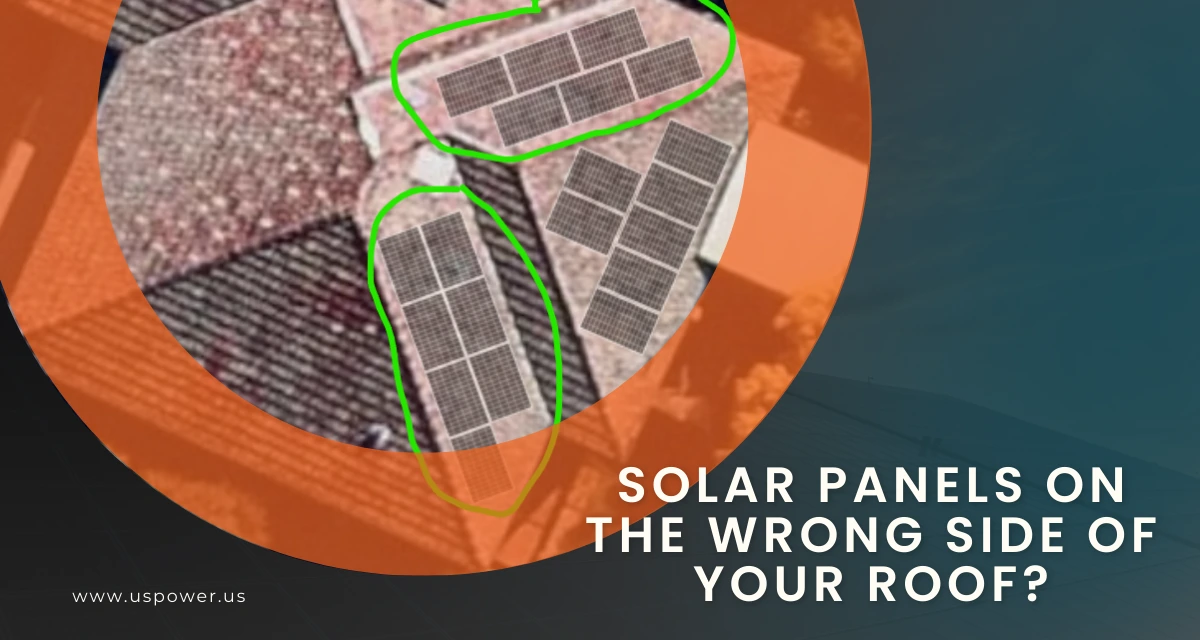
Your home solar panels aren't where you planned. Here's when that's actually fine.

Save on CA electricity bills with solar panels, batteries, and smart energy use.
Rising bills vs. solar promises—see what the numbers actually say to homeowners.








¿Estás listo para ser dueño de tu poder? ¡Llámenos hoy mismo!
818-650-8010Contractor License #: 1144368
Derechos de autor © 2025 US POWER | Energía solar y techosUS Power - Axia by QCells. All Rights Reserved.
¡Obtenga una estimación solar instantánea usando el satélite!