
How to actually tell which LA solar company deserves your business in 2026.
Look for a valid license, a clear track record, and transparent quotes. Verify any installer's license number on the CSLB website, since legitimate companies provide it without hesitation.
Every solar company in Los Angeles claims to be the best one. That is not helpful when you are the one comparing quotes, trying to figure out which installer will actually show up for the next 25 years, not just the sales call.
This guide compares 5 solar companies in Los Angeles for 2026 on pricing model, warranty, and service area, explains how LADWP and SCE customers should compare differently, and breaks down what separated the companies on this list. Since the federal homeowner tax credit ended in 2025, we also note where pricing reflects a prepaid lease vs. a cash purchase. Check your local service area once you know what to look for.
Los Angeles electricity rates have climbed steadily for years, and 2026 has not slowed that trend. Whether you are on SCE or LADWP, your bill is likely higher than it was two years ago, and it is not leveling off on its own. That urgency is exactly why so many solar companies are competing for your attention right now, which means more inconsistent quotes and more homeowners signing contracts they do not fully understand.
Two LA homeowners with nearly identical roofs can receive quotes that differ by thousands of dollars for the same size system. Before you compare bids, it helps to understand solar installation cost in California generally, since the gap usually comes down to who owns the supply chain, how experienced the install crew is, and whether the warranty is backed by the manufacturer, the installer, or both.
5 Solar Companies in Los Angeles Compared: Pricing, Warranty, and Service Area
Rankings below reflect verified Google review volume and rating, licensing, warranty structure, and service area within LA County as of 2026. This is a residential focused list based on publicly available information as of June 2026.
US Power is an exclusive factory direct partner for Qcells, meaning American-made panels reach LA homeowners without a reseller markup. With 200+ Google reviews at a 5.0 rating, CSLB licensed consultants, and a 25-year Qcells performance and product warranty plus a separate workmanship warranty from US Power, it is the strongest all-around pick for homeowners who want price transparency and a single point of accountability. For homeowners who want the value of the federal incentive in 2026, our prepaid lease option through US Power + Axia by Qcells builds the commercial federal credit into a lower upfront lease price.
Best for: Homeowners who want factory direct pricing without giving up warranty coverage or local support.
Sunrun is the largest residential solar provider in the country by installs, with a strong presence across LA County and financing options spanning cash, loan, lease, and PPA. It's a fit for homeowners who value scale, brand longevity, and payment flexibility over a boutique, high-touch sales process.
Best for: Homeowners who want a nationally established name with multiple ways to pay for their system.
3. AWS Solar: Best for Online Estimates
AWS Solar, based in Sun Valley, holds a 4.9 rating across 84 reviews and offers online estimate tools alongside onsite consultations. It is a reasonable option for homeowners who want to run initial numbers before committing to an in-home appointment.
Best for: Homeowners who want to self-serve a rough estimate before talking to a consultant.
OC Solar has built out detailed public guidance on LADWP's separate net metering and interconnection rules, which matters for homeowners inside LA city limits. It carries strong third-party recognition and a wide service footprint across Southern California.
Best for: LADWP customers who want an installer that clearly explains how municipal utility rules differ from SCE's.
SunPower was a long-recognized brand for high-efficiency panels. The original SunPower Corporation filed for bankruptcy in August 2024 and its assets were acquired. Systems are now sold and installed by separate dealers under the SunPower brand name. Homeowners considering SunPower-branded equipment in 2026 should confirm in writing who is the current local installer and who backs the warranty.
Best for: Homeowners drawn to the SunPower panel technology who have verified current local support.
The single biggest factor in comparing solar companies in LA is not the company at all. It is your utility. If you live inside city limits, you are served by LADWP, a municipal utility that sets its own solar rules independent of the state's Net Billing Tariff (NEM 3.0). Everywhere else in the metro area, you are likely on SCE, which follows NEM 3.0 export rates. A strong installer should be able to explain LADWP solar rules clearly, without treating your project the same way they would treat an SCE customer's.
Before comparing price, confirm the basics. Is the company CSLB licensed? Does the warranty cover the panels, the workmanship, and the system's performance, or just one of the three? Are the crews employees, or subcontractors hired for the day? Understanding what actually makes a dealer top rated means checking licensing databases, warranty documents, and real installation photos, not just testimonials on a homepage.
Many solar companies in Los Angeles do not manufacture or supply their own panels. They resell equipment sourced through a middleman, and that markup gets passed to you. Understanding how factory direct pricing works helps explain why two quotes for the same panel brand can differ so much.
National solar brands also often route LA customers through a call center, then hand the project to a local subcontractor for install. That handoff is where communication tends to break down. Companies with in-house local crews typically manage permitting, inspection, and post-install support faster.
The best companies will also walk you through whether NEM 3.0 makes a battery worth it for your specific usage pattern, rather than defaulting to a battery on every quote.
US Power's factory direct Qcells partnership is a big part of why dealer quality actually matters more than which brand name is on the panel. Homeowners get American-made panels without paying for a reseller's margin.
US Power carries 215+ five-star Google reviews and CSLB licensed consultants across Los Angeles County. Every install includes a 25-year Qcells warranty on panels plus US Power's workmanship warranty. Typical installation timelines run 3 to 4 weeks after approval. Prepaid lease customers receive the value of the federal commercial credit as a reduced lease price.
The best solar companies in Los Angeles are not the ones with the loudest ads. They are the ones that explain your utility's rules clearly, back their panels with a real warranty, and price transparently without a hidden markup.


Save on energy bills before rates rise in 2026. Go solar now with US Power!
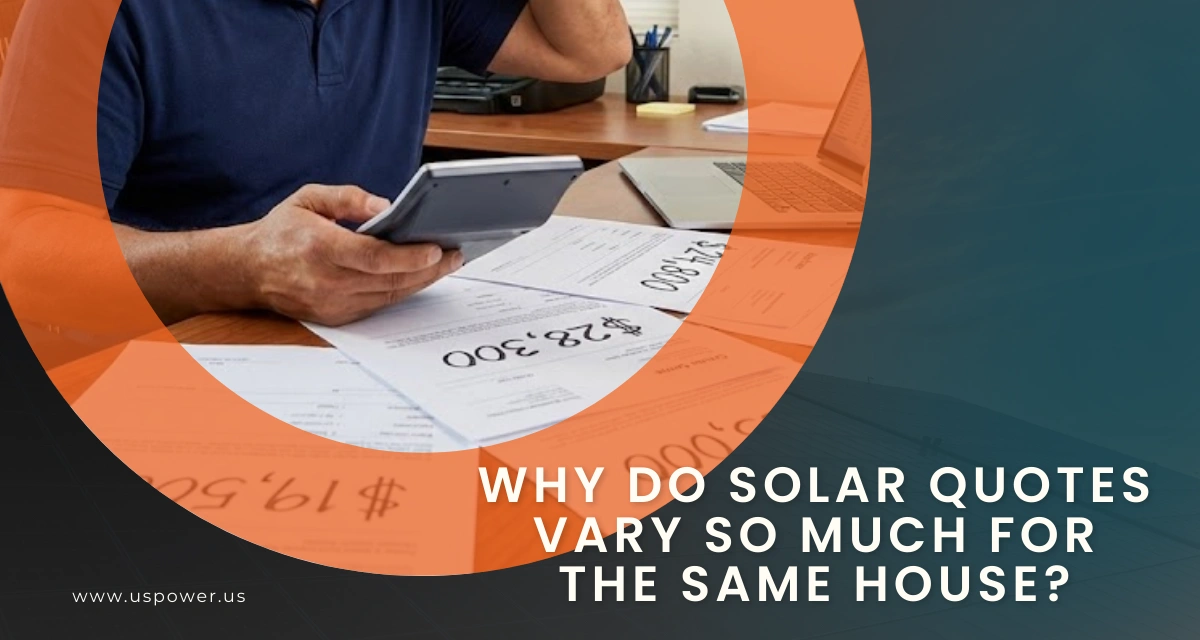
Same house in Southern California. Five quotes. $22,000 price gap. What's going on?

Save on energy and gain shade—here’s why solar carports are trending in SoCal.







Copyright © 2026 US Power - Axia by QCells. All Rights Reserved.
Get an instant solar estimate using satellite!