
Utility rates have climbed more than 100% over the last decade in California and they're not done rising. Under NEM 3.0, solar-only systems leave money on the table during peak hours. Rolling blackouts and wildfire season add urgency. In 2026, more homeowners are pairing solar with battery storage to truly protect their home and their wallet. This guide breaks down the real costs, real savings, and why US Power's factory-direct QCells systems are the smarter choice.
If you went solar expecting to be done worrying about electricity — this article is for you.
California homeowners are paying some of the highest electricity rates in the country. Southern California Edison raised rates by roughly 13% in late 2025. PG&E's rates have more than doubled over the past decade. And under NEM 3.0, the credits you earn for sending solar power back to the grid are a fraction of what they used to be.
So the question isn't just "should I go solar?" anymore. It's: is solar alone actually enough?
For most California homeowners in 2026, the honest answer is no — and here's why.
You're not imagining it. Why electricity bills are so high in Southern California comes down to a brutal combination of factors hitting all at once.
PG&E's residential rates have risen over 100% in the past decade. SCE customers saw a roughly 13% rate increase hit their October 2025 bills — a jump that pushed the average 500 kWh household from $171 to over $193 per month. California's three major utilities — PG&E, SCE, and SDG&E — have all announced ongoing rate adjustments tied to wildfire mitigation costs, grid upgrades, and infrastructure repairs.
These aren't one-time hikes. They're structural. Regulators have approved multi-year rate recovery plans that mean increases will continue stacking year over year through 2028 and beyond.
On top of rising base rates, most California homeowners are on time-of-use (TOU) pricing. That means running your dishwasher, dryer, or AC during peak evening hours — typically 4 to 9 PM — costs significantly more per kilowatt-hour than during off-peak periods.
For solar-only homeowners, this creates an uncomfortable reality: your panels stop producing right when utility rates spike. Without a battery to store the excess power from midday, you're buying expensive grid power during peak hours every single evening.
Going solar still makes sense in California. But NEM 3.0 changes to solar billing have fundamentally changed how much money a panels-only system can save.
Under the old NEM 2.0 rules, California utilities paid homeowners close to retail rates for every kilowatt-hour of excess solar sent back to the grid. Under NEM 3.0 — now called the Net Billing Tariff — those export credits dropped by roughly 75%.
In plain terms: if your panels produce more than your home uses during the day, that extra power is worth far less than it used to be. Solar-only homeowners are essentially giving away their most valuable energy at a steep discount.
A solar-only system still lowers your daytime electricity consumption significantly. It adds real value to your home. It locks in some protection against rising utility costs. And it's less expensive upfront than adding a battery.
For homeowners with consistent daytime energy use — remote workers, families home during the day — solar-only can still deliver solid savings. But for the average working household, the peak-hour problem limits how much a panels-only system can actually do.
A home battery changes the math entirely. Instead of sending cheap midday solar power to the grid at discounted export rates, a battery stores that energy and deploys it during expensive peak hours. How solar batteries maximize your savings comes down to one simple principle: use your own power when it costs the most.
With a battery, your solar system can cover your evening usage — the most expensive hours of the day — without drawing from the grid. This is where solar + storage earns back its higher upfront cost faster than most homeowners expect.
Under NEM 3.0, CPUC analysis has found that solar-plus-storage systems can save homeowners over $136 per month on average, compared to roughly $100 per month for solar-only setups.
This is the piece solar-only systems simply cannot offer.
When the grid goes down — whether from a wildfire, a Public Safety Power Shutoff (PSPS), or summer heat wave overload — a standard solar panel system automatically shuts off. It's a safety requirement. Your panels won't power your home during an outage unless you have a battery backup.
A home battery keeps your lights, refrigerator, and critical devices running for hours — or longer, depending on your battery capacity and usage. For families with medical equipment or young children, that's not a luxury. It's a necessity. Learn more about protecting your home during grid failures.
Southern California has experienced more frequent and longer-duration outages in recent years. Wildfire-related PSPS events can last days, not hours. Without storage, solar homeowners are left just as vulnerable as everyone else.
A battery gives you a meaningful buffer — enough to keep essential appliances running and maintain some sense of normalcy when the neighborhood goes dark.
Let's talk real numbers, because are batteries worth it for solar in California is the question every homeowner eventually asks.
The upfront difference is real. But so is the payback advantage.
California's Self-Generation Incentive Program (SGIP) — which previously offered meaningful cash rebates on battery installations — closed its ratepayer-funded budgets on December 31, 2025. As of now, all General Market, Equity, and Equity Resiliency SGIP budgets are on waitlist-only status for most homeowners.
If you are a low-income household (under 80% of area median income) or live in a Tier 2 or Tier 3 fire-risk zone, it's worth asking your US Power consultant about waitlist options — the Equity Resiliency budget offered up to $1,100 per kWh of battery capacity when active, which could cover the majority of a battery system cost for qualifying households.
For most homeowners in 2026, the financial case for battery storage works without SGIP — driven by NEM 3.0 self-consumption savings, peak-hour bill reduction, and long-term protection against continued rate increases.
With SCE rates now averaging over $0.35 per kWh — and peak hours pushing even higher — every kilowatt-hour your battery covers during the evening has real dollar value. Over a 25-year panel lifespan, the cumulative savings from avoiding peak-rate grid power are substantial.
Not all solar companies are equal — and the difference matters more with a battery system than with panels alone. Sizing a solar + storage system correctly requires expertise in your specific utility's TOU rate structure, your home's load profile, and how your battery should be configured to charge and discharge at the right times.
US Power is California's exclusive QCells partner, which means factory-direct pricing on American-made panels — typically 15–20% below what most installers charge for comparable quality. QCells panels are built to perform in Southern California's heat and sun conditions, with proven efficiency in real-world settings.
Our QCells Q.HOME CORE battery storage guide shows exactly how the Q.HOME CORE integrates with your solar system to maximize self-consumption and backup coverage.
Every US Power installation comes with a 25-year comprehensive warranty covering the panels themselves, our workmanship, and system performance. That's not just a product warranty — it's a commitment that your system will perform as promised for the long haul.
Most solar companies quote 8–12 weeks from contract to Permission to Operate (PTO). US Power consistently delivers in 3–4 weeks — meaning you start saving sooner, and you get protected from the next rate hike faster.
Our CSLB-licensed consultants handle permits, utility coordination, and inspection scheduling, so you're not chasing paperwork or waiting on hold with SCE.
The right answer depends on your priorities and your home's specific situation. Here's a straightforward way to think about it.
Solar-only still delivers meaningful savings and protects you from future rate increases. It's a strong starting point.
For most Southern California families, the evening usage profile alone makes battery storage worth the investment. Add wildfire risk and the long-term rate trajectory, and the case becomes even clearer.
Solar panels are still one of the smartest investments a California homeowner can make in 2026. But the rules have changed. NEM 3.0 has lowered the value of exporting excess power. Rate increases are locked in for years ahead. And rolling blackouts aren't going away.
For most Southern California families, solar plus battery storage isn't the premium option anymore — it's the complete solution. It protects your evenings, your emergencies, and your long-term budget in ways that panels alone simply can't.
US Power makes that solution accessible with factory-direct QCells pricing, a 25-year warranty, and a 3–4 week installation timeline backed by 200+ five-star reviews. If you're ready to stop overpaying SCE or PG&E and start building real energy independence, the next step is a free conversation with a licensed US Power advisor.


Your $400 summer electric bill might have a $0 solution, learn now and act fast.
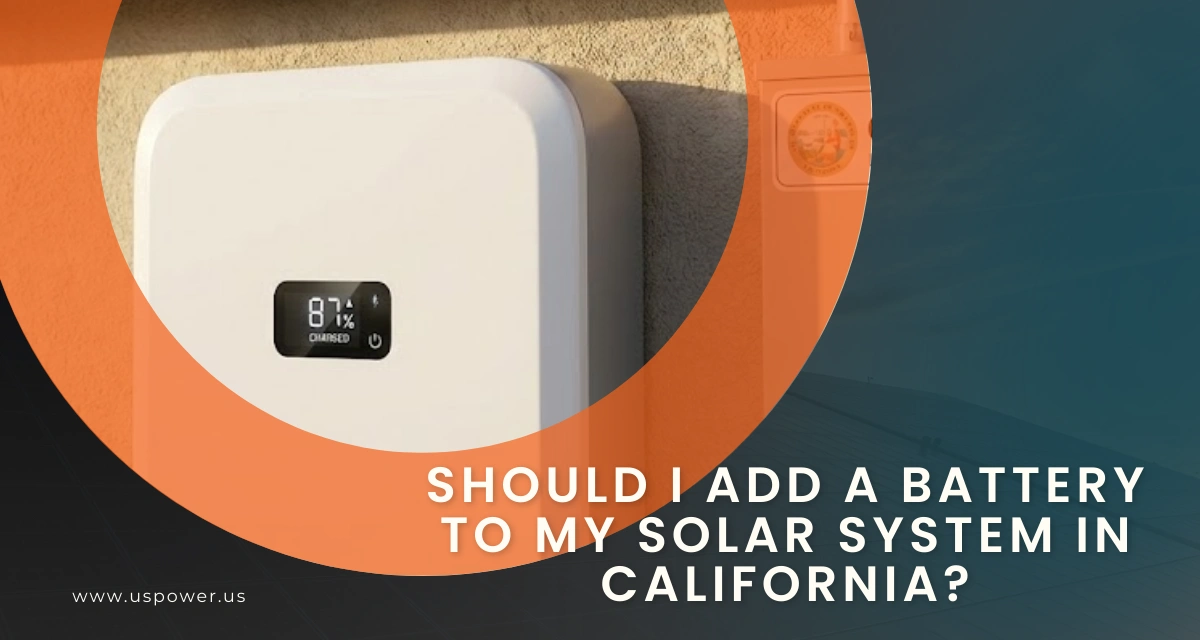
NEM 3.0 changed the game in savings. Is your solar system leaving money on the table?
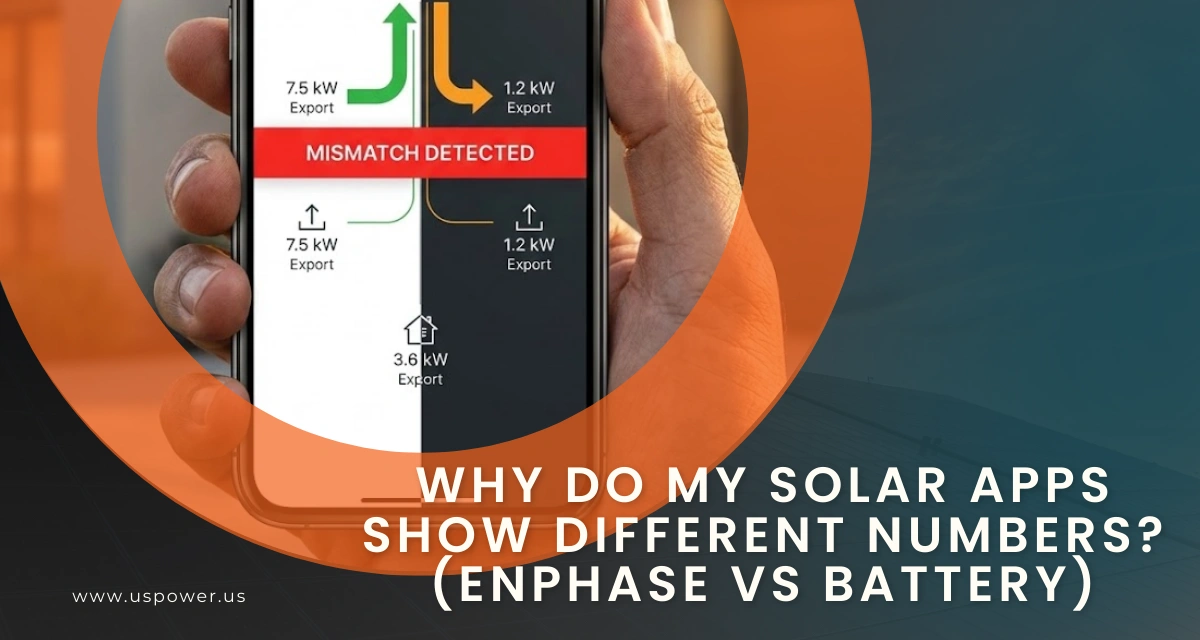
Your apps don't agree on how much solar you're exporting. Here's the real problem.







Copyright © 2026 US Power - Axia by QCells. All Rights Reserved.
Get an instant solar estimate using satellite!