

A home battery saves the most where exported solar earns little. On SCE, one 10 kWh battery cycled daily is worth roughly $900 a year, and about $1,300 on SDG&E. On LADWP or in Florida, where exports still earn retail credit, a battery is mainly backup power. Here is how to tell which you are.

A home battery saves the most where exported solar earns little. On SCE, one 10 kWh battery cycled daily is worth roughly $900 a year; on LADWP or in Florida, it is mainly backup power.
Your solar panels produce the most power at noon, when you are at work and your house barely needs it. By 6 PM, the sun is fading, the AC is running and electricity costs the most. Without a battery, you sell that noon power cheap and buy evening power back at full price.
That gap is where solar battery savings come from, and how big it is depends on where you live. This guide shows what a battery is actually worth in California, Texas, Florida and Illinois, which batteries fit, and how to size one.
A battery stores solar power you would otherwise export and releases it when grid power costs more. You save the difference between what exports earn and what evening power costs, minus about 10% lost in charging and discharging. Tesla lists Powerwall 3 at 89% round-trip efficiency and Enphase lists the IQ Battery 10C at 90%.
The bigger that gap, the more a battery earns. Where utilities credit exports at the full retail rate, the gap is close to zero and a battery is mostly about backup.
SCE and SDG&E time-of-use plans charge the most from 4 to 9 PM, just as solar output drops. A battery charged at midday runs your home through those hours, so you avoid buying power at peak prices.
A battery also keeps key circuits running during outages. That does not show up on your bill, but for many homeowners it is the main reason to buy one.
California leads because of NEM 3.0. SCE and SDG&E now credit most exported solar at about 5 to 8 cents per kWh, while their average residential rates were 34.4 and 45.5 cents per kWh as of June 2026. Every kWh you store instead of export is worth several times more.
Say a battery stores 10 kWh of midday solar that would have been exported at 6 cents, and delivers 9 kWh after losses in the evening.
On SCE, that avoids 9 kWh at 34.4 cents, or $3.10, minus the 60 cents the export would have earned. That is about $2.50 a day, or roughly $900 a year if it cycles daily. On SDG&E at 45.5 cents, the same cycle is worth about $3.50 a day, or roughly $1,300 a year. Peak-hour rates run higher than these averages, so real savings on a time-of-use plan can be larger.
A battery typically costs about $12,000 to $18,000 installed, depending on size and electrical work, so its payback on bill savings alone is long. Its bigger role under NEM 3.0 is making the whole solar system pay off, since solar without storage exports much of its value for pennies. For a deeper look at the numbers, see whether batteries are worth it for solar in California.
In the City of Los Angeles, LADWP still credits exported solar at the retail rate. The export gap is close to zero, so a battery there is mainly for backup during heat waves and wind-driven outages. For an example of how that plays out in the San Fernando Valley, see our guide to top-rated solar panels for Sherman Oaks homeowners.
California's SGIP battery rebate still exists, but the general-market residential budget is waitlisted. Funding now goes mainly to the Equity and Equity Resiliency tiers for income-qualified households, especially in high fire-threat areas with repeat power shutoffs. SGIP covers SCE, PG&E and SDG&E customers, not LADWP or other city utilities.
Outside California, a battery's value depends on how each state credits exported solar and how often the grid goes down.
Texas has no statewide net metering. In deregulated areas, what you earn for exports depends on your retail electricity provider's buyback plan, and many pay well below retail. That makes storing and using your own solar more valuable. Backup matters too: Hurricane Beryl knocked out power to millions of Houston-area customers in July 2024.
Florida law requires net metering at the retail rate, so a battery adds little to monthly savings. Its value in Florida is hurricane backup, keeping the refrigerator, lights, fans and medical devices running when the grid is down for days.
Illinois changed its rules for systems installed from January 1, 2025. New ComEd and Ameren solar customers are credited for exports only on the supply portion of the bill, not delivery. That makes self-consumption more valuable. Both utilities also offer a battery rebate of $300 per kWh for customers who enroll in an hourly pricing plan, according to the Citizens Utility Board. A 10 kWh battery would qualify for about $3,000.
| Battery | Usable capacity | Continuous power | Warranty | Best fit |
|---|---|---|---|---|
| Qcells Q.HOME CORE G3 | 13.1 kWh (expandable to 26.2 kWh) | 7.6 kW | 15 yr or 68 MWh throughput | Qcells systems; whole-home backup |
| Tesla Powerwall 3 | 13.5 kWh | Up to 11.5 kW | 10 yr | Large loads and whole-home backup |
| Enphase IQ Battery 10C | 10.0 kWh | 7.08 kVA | Up to 15 yr or 6,000 cycles | Enphase microinverter systems |
Specs come from each manufacturer's current datasheet. Compare them in more depth in our guide to the best home solar battery in 2026.
Size the battery to your evening use, not your whole day. Look at 12 months of bills or hourly usage data and find how much power you use from 4 to 9 PM on a typical day. A home that uses 10 to 13 kWh in that window can usually cover it with one battery.
EV charging changes the math. If you charge overnight on a super off-peak rate, that power is usually cheaper from the grid than from the battery, so leave it out of your battery sizing. Our guide to buying solar panels in Southern California shows how utility rules shape the whole system design.
Oversizing adds cost that daily cycling will not recover. If you also want whole-home backup, plan for enough power output to start your largest loads, such as a central AC compressor or well pump. Get a first estimate with the US Power solar calculator.
Every US Power consultation starts with a real 12-month bill analysis, so the battery is sized to your actual evening usage and your utility's rules. CSLB-licensed consultants also check your main electrical panel, since some homes need an upgrade to add storage.
A battery is not the right buy for every home. Bill savings are small when your utility still credits exports at the full retail rate, as LADWP and Florida utilities do. They are also small when you use little power in the evening, since there is nothing expensive for the battery to replace.
Other warning signs: a roof that needs replacing soon, a main electrical panel that would need a costly upgrade, or a plan to move within a few years. In those cases, putting the money into a well-sized solar system alone, or waiting, can make more sense. A good installer will tell you when a battery is not worth it.
You do not need new panels to add storage. AC-coupled batteries such as the Q.HOME CORE G3 and Powerwall 3 connect to most existing systems. If you have older net metering, check first. In California, adding a battery generally keeps your existing solar on its original net metering plan, but adding more panels can move you to NEM 3.0.
Set the battery to save stored power for your utility's peak window instead of discharging it as soon as the sun goes down. On SCE and SDG&E, that window is 4 to 9 PM, so a battery that empties by 7 PM leaves the priciest hours uncovered.
Hold back 20% to 30% of capacity during wildfire or hurricane season, so you have power if the grid goes down.
Run the pool pump, dishwasher and EV charger while the sun is out. Every kWh you use directly from the panels is one the battery does not have to store.
Check your battery app during the first few weeks to confirm it charges from solar and discharges during peak hours. Settings from the installer are not always optimized for your rate plan. Our guide to why Southern California electricity bills are so high explains how time-of-use rates work.
Solar battery savings are real where exports earn little: roughly $900 a year per battery on SCE, about $1,300 on SDG&E, and more with Illinois's $300 per kWh rebate. Where exports still earn retail credit, a battery is mainly backup power, and that can be worth it too.
US Power builds every design from your real 12-month bill analysis and offers exclusive factory-direct Qcells pricing, roughly 15-20% below typical market pricing, on panels and Qcells batteries. Every system is backed by a 25-year comprehensive warranty and typically installs in 3 to 4 weeks once the design is approved. More than 200 five-star Google reviews come from homeowners who wanted real numbers, not a sales pitch. To see what a battery would save at your address, book your free 12-month bill analysis.
Store the power you already make. Stop buying it back.


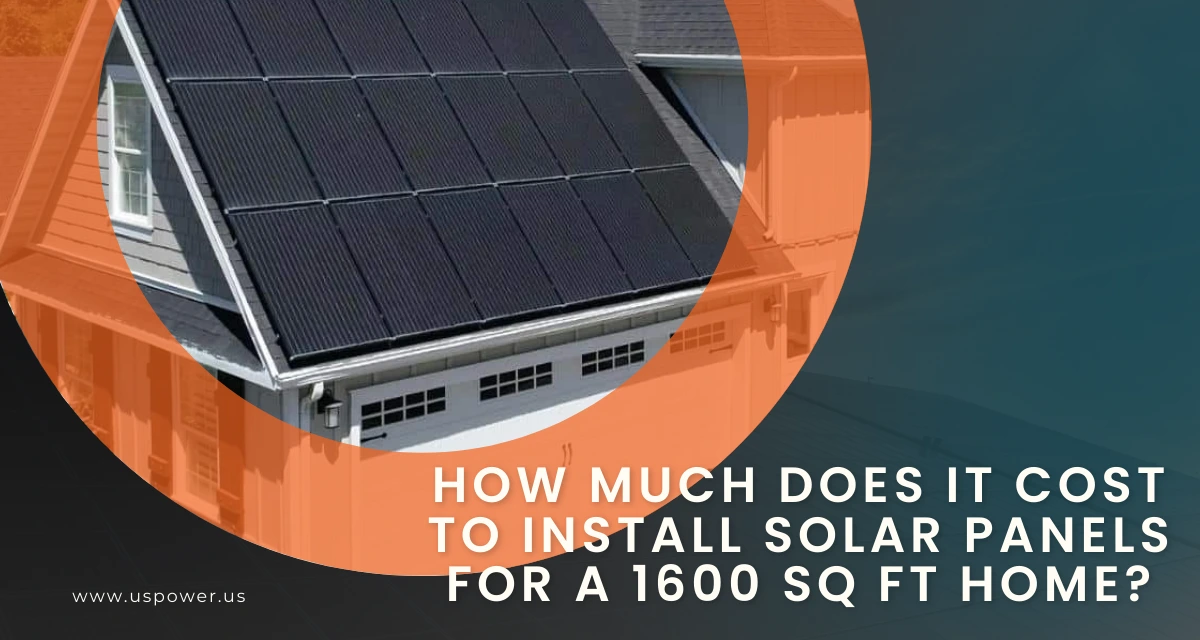
See solar panel costs and savings with US Power for 1,600 sq ft homes in CA.
Real 2026 solar costs by state, no markup, no sales pitch, just the numbers.
Save on energy bills before rates rise in 2026. Go solar now with US Power!









Copyright © 2026 US Power - Axia by QCells. All Rights Reserved.
Get an instant solar estimate using satellite!