

Choosing the right home battery matters more than ever. As a factory-direct Qcells dealer that installs every major battery brand, US Power breaks down what separates the Qcells QHOME Core G3 from the rest of the field, including real specs, warranty terms, and why pairing your battery with your solar panels' own manufacturer changes long-term performance.
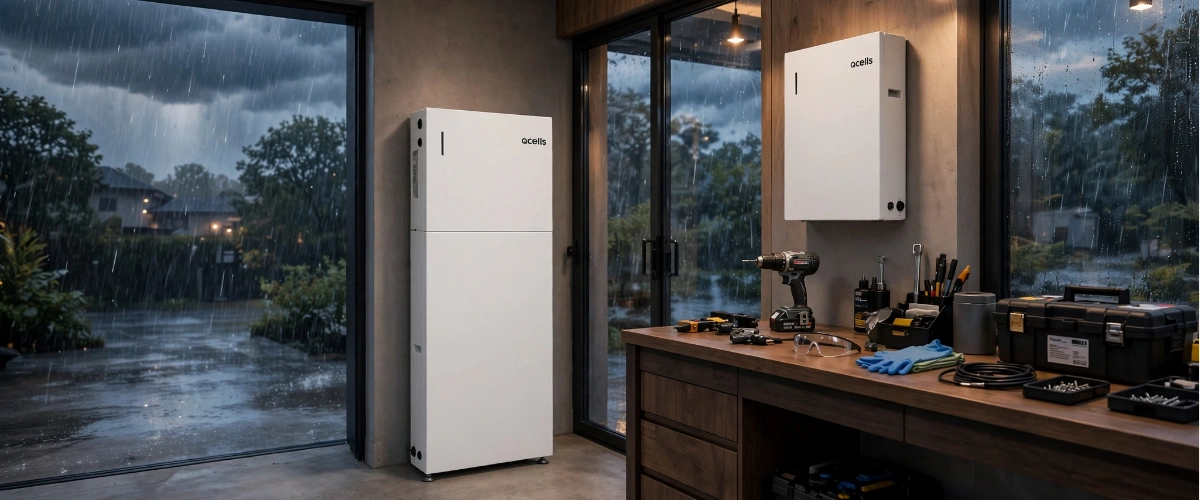
Our top 2026 pick is the Qcells Q.HOME Core G3. It is engineered by the same manufacturer as the solar panels it pairs with, which simplifies warranty coverage and long-term system communication.
Electricity rates keep climbing, and power outages are becoming a bigger part of life for homeowners across California, Texas, Florida, and Illinois. That's made the decision of which home battery to install just as important as the decision to go solar in the first place.
At US Power, we're not guessing at this. We install every major residential battery on the market, so our recommendations come from real installations and real homeowner feedback, not a spec sheet comparison written from the outside looking in. After reviewing performance across our project base, the Qcells QHOME Core G3 has become the battery we recommend most, and here's the thinking behind that.
Homeowners researching batteries today typically come across the same handful of names: Tesla Powerwall 3, Enphase, Franklin WH, and Qcells QHOME Core. All four are legitimate, well-engineered products, and each has genuine strengths depending on what a homeowner is prioritizing, whether that's app design, modular expansion, whole-home backup, or long-term brand history.
What we look at that a spec sheet can't show is how these systems perform once they're actually installed and living on someone's roof and garage wall for years. That's the lens this recommendation comes from.
The QHOME Core G3 is engineered by Qcells, the same company that manufactures the solar panels it's most often installed alongside. That matters more than it might sound. When your panels and your battery come from the same manufacturer, you get one company standing behind the entire system rather than two separate warranties from two separate suppliers.
In practice, that means a 15-year product warranty that's inclusive of a 68 MWh energy throughput warranty, all from one brand, with one point of contact for support.
A single QHOME Core G3 unit delivers 12.46 kWh of usable energy (13.12 kWh total, rated at 95% depth of discharge). For homes that need more, a second unit paired with the Q.HOME HUB G3 extends that to 24.92 kWh usable (26.24 kWh total), so the system can grow with your household's needs instead of locking you into one fixed capacity from day one.
A single unit provides 7.6 kW of power to keep your essential circuits running during an outage, and that scales to 15.2 kW in a two-unit configuration. That's enough to comfortably back up major appliances, not just a handful of outlets and a Wi-Fi router.
The battery cells themselves are LFP (Lithium Iron Phosphate) technology supplied by LG Energy Solution, a global leader in battery cell manufacturing. The unit runs at or below 20 dB(A), quiet enough that most homeowners barely notice it's running, and it's IP65-rated for outdoor durability with wall or floor mounting options depending on your space.
One feature worth calling out: Storm Protect, which monitors incoming severe weather and prepares the system ahead of a potential outage rather than reacting after the power's already out. A well-managed battery can also do more than back up your home. If your utility offers a virtual power plant program, a battery like the QHOME Core G3 may qualify you for extra savings, which our Qcells VPP program guide covers in detail.
Tesla Powerwall 3, Enphase, and Franklin WH each bring real strengths to the table. Tesla's system is known for a sleek design and a widely praised monitoring app. Enphase offers modular batteries that let homeowners start smaller and expand over time. Franklin WH has built a reputation around strong whole-home backup output.
Where these systems typically differ from the QHOME Core G3 is in the supply chain behind them. The battery and the solar panels usually come from two different manufacturers, which means the communication between them, and the warranty coverage behind them, is stitched together across separate companies rather than engineered as one system from the start. For a purchase most homeowners expect to last 20-plus years, that distinction adds up.
If you're deciding between a Qcells system and a non-Qcells battery for panels you already have, our guide on pairing Qcells solar panels with non-Qcells batteries breaks down the compatibility question in more detail.
Think of it like a car's engine and transmission being engineered by the same manufacturer versus bolted together from two different companies. Both can work fine on day one. The difference shows up years down the road, in how well the system communicates internally, how efficiently it manages energy, and how simple it is to get support when something needs attention.
That's the case we make for the QHOME Core G3: not that other batteries are bad, but that a matched solar-and-storage ecosystem from a single global manufacturer tends to hold up better over the long run.
The reason this decision matters right now comes down to two trends homeowners in California, Texas, Florida, and Illinois are all feeling in different ways. Utility rates have been climbing steadily, and depending on your state, that shows up as higher per-kWh charges, new demand-based fees, or shrinking credit for the solar power you send back to the grid. A battery changes that math. Instead of exporting your extra solar production and buying it back later at a higher rate, you store it and use it yourself during the hours when electricity costs the most or when the grid goes down entirely. If you're curious how a battery affects your actual payback timeline, our breakdown of solar payback periods amid rising rates walks through the numbers.
Outages are the second piece. Whether it's a Texas grid strain during extreme heat, a California wildfire-related shutoff, a Florida storm season power loss, or an Illinois winter ice event, more homeowners are treating backup power as a necessity rather than a nice-to-have. A battery sized to actually cover your essential loads, not just a few outlets, is the difference between riding out an outage comfortably and scrambling for a generator and gas cans.
This is also where the capacity numbers matter in a practical sense. A single QHOME Core G3 unit's 7.6 kW of backup output is enough for most households' essential circuits: refrigerator, well pump, medical equipment, home office setup, and general lighting. Larger households or homes with higher backup needs, like a second refrigerator, an EV charger, or central AC on backup power, are where the expandable second unit and its 15.2 kW output start to make sense.
US Power is a factory-direct Qcells dealer, which means every panel and battery we install is sourced directly from Qcells' Dalton, Georgia manufacturing facility. That relationship comes with a 25-year comprehensive warranty on every install, backed by CSLB-licensed installation crews and a typical 2-4 week timeline from signed contract to system activation.
We've earned more than 200 five-star customer reviews, and we were ranked the #1 solar company in Los Angeles for 2025 by Google. We serve homeowners across California, Texas, Florida, and Illinois, and for anyone comparing installers, our guide on what makes a solar dealer top-rated walks through the questions worth asking before you sign anything.
A battery is only as good as the roof and system it's attached to. If your roof is aging or you're not sure it's ready to support a solar and battery install, US Power Roofing handles installations and replacements built to pair with solar from day one. And if you already have panels that need a performance-restoring clean, Power Solar Cleaning keeps your system running at full output.
Not every homeowner wants to purchase a system outright, and that's fine. If ownership isn't the right fit for your situation, our prepaid lease program is worth a look. It's a 25-year program with no credit underwriting required, no property lien, and the option to purchase the system at fair market value starting in year six.
Choosing a home battery is a 20-year decision, and it deserves more than a guess. As a factory-direct Qcells dealer, US Power can walk you through real numbers for your home, including how the QHOME Core G3 fits your household's usage and budget.


Weigh the cost vs. benefit of solar batteries to see if they fit your home.

Learn how solar panels generate savings even when skies are gray and cloudy.
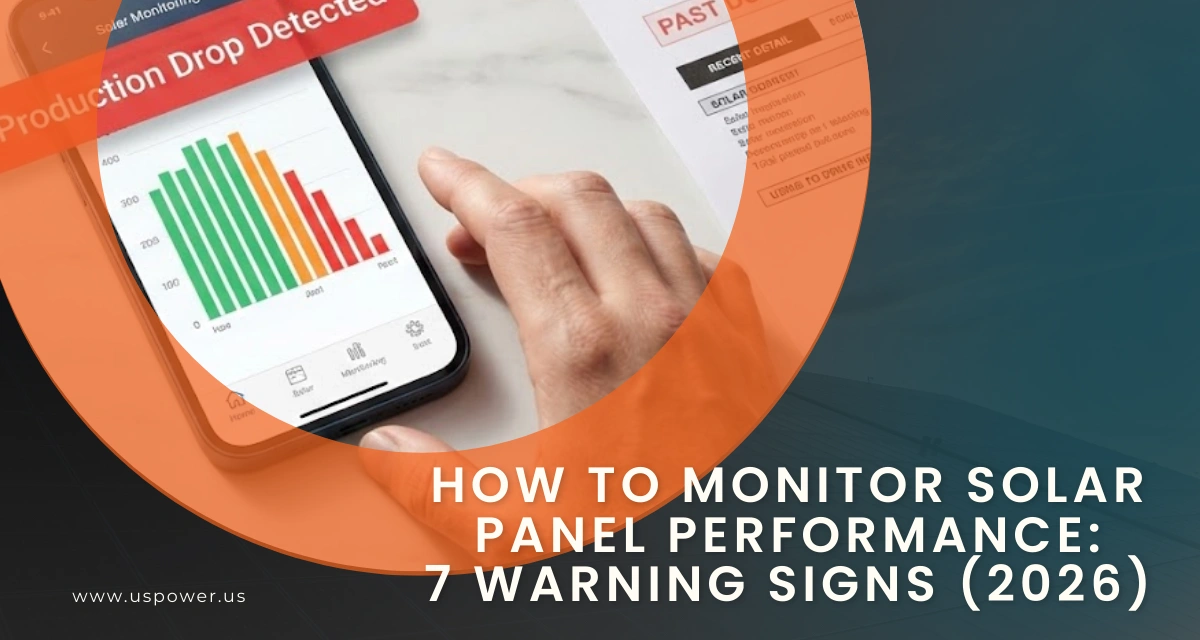
Track these 7 key indicators to ensure your solar system performs optimally.









Copyright © 2026 US Power - Axia by QCells. All Rights Reserved.
Get an instant solar estimate using satellite!