
Your California solar battery can earn you money every year.
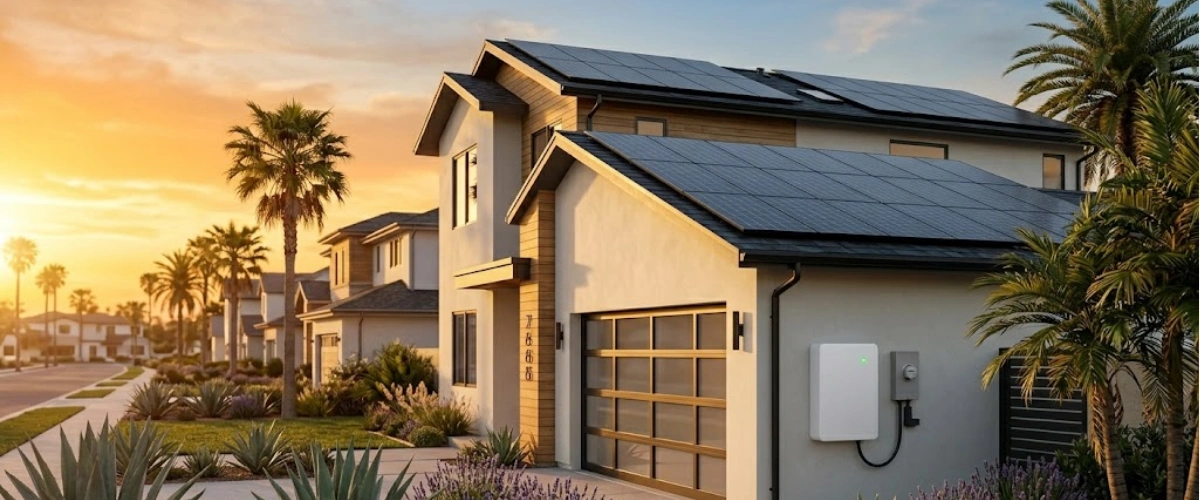
Yes, it can. By enrolling your California solar battery in a Qcells virtual power plant program, you can earn money during grid events, and participation is automatic and hands-free.
You already know your solar panels lower your electricity bill. But what if your battery could earn you money on top of that — every single year — without you doing a single thing?
That's exactly what the Qcells Grid Service (VPP) Program offers California homeowners in 2026. If you have a Q.HOME CORE battery system, you can enroll in a virtual power plant network and receive annual cash rewards just for participating. No extra work. No lifestyle changes. Just your battery doing what it already does — and getting paid for it.
Here's everything you need to know about how it works, what you earn, and why now is the right time to get started.
Most California homeowners with solar batteries are using them the same way: store energy during the day, use it at night to avoid peak rates. That's smart — but it's only half the picture.
Your home battery holds stored energy that the utility grid actually needs during peak demand hours. Between 4 and 9 PM on hot summer days, California's grid gets stretched thin. Utilities scramble to meet demand, and that's exactly when your stored solar power is most valuable.
The problem is, most homeowners never tap into that value. Their battery just sits there, cycling through the same daily routine, while a significant earning opportunity goes unclaimed.
Even with recent rate adjustments, California's electricity costs remain far above the national average. PG&E customers, for example, still pay more than double what most Americans pay per kilowatt-hour. SCE's Solar Billing Plan has reshaped how solar credits work under NEM 3.0, making it even more important to maximize every tool available — including your battery.
That context matters, because the Qcells VPP program was designed for exactly this environment.
VPP stands for Virtual Power Plant. Think of it as a network of thousands of home batteries connected through smart software. When the grid needs support, the program draws a small amount of stored energy from participating homes — collectively delivering the kind of power that once required expensive utility infrastructure.
Once you enroll, Qcells automatically manages your battery during grid events. Each event lasts one to two hours, occurs between 4 and 9 PM, and typically happens one to five times per month from May through October. The total is capped at no more than 35 events per year.
You don't have to do anything. You don't even have to be home. Qcells handles it entirely through your Q.HOME battery's smart connection.
One of the biggest concerns homeowners have is losing control of their own battery. That doesn't happen here. You can set a minimum backup reserve in the Q.HOME app, and Qcells will never discharge below that level. If there's a Public Safety Power Shutoff (PSPS) event, Qcells will not trigger any discharge — your backup power stays protected.
You can also opt out of individual events at any time by adjusting your reserve settings. Understanding how NEM 3.0 changed solar savings is important context here — your existing bill credits for exporting power continue unaffected, even during VPP events.
The rewards are straightforward and tied to your battery size. After enrollment, you receive an upfront eGift card. Then, every year you remain in the program, you receive another annual eGift card — automatically.
Q.HOME CORE CapacityAnnual eGift Card10 kWh$100/year15 kWh$150/year20 kWh$200/year
These rewards come on top of everything else your battery is already doing for you — reducing your evening electricity costs, protecting your home during outages, and maximizing your solar production under NEM 3.0.
When you look at the solar payback period in California, every additional income stream shortens the timeline. A homeowner with a 20 kWh battery earning $200 per year through the VPP program adds $5,000 in total rewards over 25 years — on top of the tens of thousands already saved on electricity bills.
Eligibility is specific, so let's be clear about who qualifies.
You must be a customer of PG&E, SCE, or SDG&E. Community Choice Aggregation (CCA) customers within those territories are also eligible. That covers the vast majority of California homeowners.
You need a Q.HOME CORE energy storage system, and you must own it outright or through a loan. This is important: lease and PPA customers do not qualify for the incentives. This is one of many reasons why PPA vs. financing for solar is such a critical decision — ownership unlocks programs like this one that a lease simply cannot access.
The SGIP (Self-Generation Incentive Program) battery rebate is also compatible with VPP enrollment, so if you've already received SGIP funding, you can still participate.
The 4 to 9 PM window isn't arbitrary. Under time-of-use rate structures across PG&E, SCE, and SDG&E, this is the most expensive period to draw power from the grid. It's also when California's grid is under the most stress.
When your battery sends power to the grid during a VPP event, that energy is worth more than at any other time of day. And as discussed in our breakdown of PG&E solar buyback rates in 2026, the difference between peak and off-peak export credits is significant. The Qcells VPP program layered on top of those dynamics creates a compounding benefit.
Gas-fired peaker plants are one of the main drivers of California's high electricity rates. Every time a virtual power plant like Qcells' replaces a peaker plant event, it reduces the cost pressure on the grid — and on your future bills.
California Senate Bill 913, currently moving through the legislature, would give home batteries greater access to the state's reliability markets. If passed, it could expand earning opportunities for VPP participants significantly. Early enrollees in established programs like Qcells' are best positioned to benefit as these policies evolve.
To participate in the Qcells VPP program, you need the right equipment installed correctly. That's where US Power comes in.
US Power is California's exclusive factory-direct partner for QCells — the manufacturer of the Q.HOME CORE battery system that powers VPP eligibility. Because we source directly from the manufacturer, you get factory-direct pricing that runs 15 to 20 percent below typical market rates. That lower entry cost makes the VPP program's annual rewards even more impactful on your overall ROI.
Every US Power consultant is CSLB-licensed. Every installation comes with a 25-year comprehensive warranty covering panels, workmanship, and performance. And our typical timeline from approval to Permission to Operate (PTO) is just 3 to 4 weeks — faster than most installers in California.
If you're currently evaluating solar financing options in Southern California, the VPP eligibility question should be part of that conversation. A financed system you own qualifies. A leased system or PPA does not. Our CSLB-licensed consultants walk through this with every homeowner during the free consultation — because making the right financing decision now determines what programs you can access for the next 25 years.
Understanding why solar batteries are worth it in California is the foundation. The Qcells VPP program is one of the clearest examples of that value made tangible and recurring.
Your solar battery is already one of the smartest investments in your home. The Qcells Grid Service VPP Program makes it smarter — turning passive storage into an active income stream that pays you back year after year.
With PG&E, SCE, and SDG&E territory eligibility, simple enrollment, full control over your backup reserve, and annual rewards tied directly to your battery size, there's no good reason to leave this program off the table. The only requirement is the right equipment, installed correctly, and owned outright.
That's exactly what US Power provides. Go solar now with US Power and let a CSLB-licensed consultant show you exactly what your home qualifies for — free, with no obligation.


Safeguard your roof warranty during solar installation. Work with US Power!

Get clarity on solar panel sizes, wattage, and roof space requirements for your home.
Before you buy solar, get the facts and save more with expert installation.







Copyright © 2026 US Power - Axia by QCells. All Rights Reserved.
Get an instant solar estimate using satellite!