
NEM 3.0 pays pennies for solar exports. Here's how battery storage fixes that.
If you have checked your PG&E bill after going solar and wondered why you barely got credit for all that energy you sent to the grid, you are not imagining it. California's NEM 3.0 policy pays homeowners as little as $0.01 per kWh for exported solar power, a fraction of what the grid charges you to buy it back.
The frustration is real and it is spreading fast. Homeowners with oversized systems, coastal fog exposure, and winter production shortfalls are all running into the same wall. But here is what most people are not hearing: solar is still one of the smartest financial moves you can make in California in 2026. The strategy has just changed, and the centerpiece of that new strategy is battery storage.
One homeowner in a recent California solar discussion shared a PG&E bill showing 620 kWh exported to the grid with only $6.23 in credits earned. That is roughly a penny per kilowatt-hour. Meanwhile, PG&E charges anywhere from $0.40 to $0.50 per kWh to buy that same power back during peak evening hours.
To understand why this gap exists, you need to know what really happened to rooftop solar in California. Starting in April 2023, California replaced NEM 2.0 with the Net Billing Tariff, now called NEM 3.0. The change gutted export credit values by roughly 70 to 75 percent. What used to earn you $0.35 per kWh is now worth less than a nickel during most daytime hours.
The low export rates are not arbitrary. California's grid now produces more solar electricity than it can consume during peak midday hours. Utilities routinely curtail utility-scale solar projects because supply overwhelms demand. Paying homeowners retail rates for power the grid does not need makes no economic sense from the utility's perspective.
This is why PG&E solar export rates under NEM 3.0 are structured around time of day. Export credits are highest during evening hours when solar is not producing and lowest at noon when it is. The system is designed to push homeowners toward self-consumption rather than grid dependence.
Under NEM 2.0, California operated a true one-to-one exchange. Every kilowatt-hour you sent to the grid came back as a credit worth close to retail rate. Annual true-ups were often zero or very small, and homeowners with well-sized systems essentially used the utility grid as a free battery.
That model is gone. Understanding the full scope of the NEM 2.0 vs NEM 3.0 billing differences is the first step to building a system that works under today's rules. Instead of crediting you at retail rates, NEM 3.0 credits you at what the grid would have paid a wholesale power supplier. That number changes hour by hour and is often below $0.10 per kWh.
If you installed solar before April 2023, you may still be on NEM 2.0 and protected under a grandfather clause. That status is financially valuable enough that protecting it should be a top priority before making any changes to your system. If you installed after April 2023, or are evaluating solar now, NEM 3.0 is your reality. The good news: there is a proven playbook for making it work well.
The math here is direct. If you export a kilowatt-hour to PG&E at $0.05 and then buy it back at $0.45, you lost $0.40 on that transaction. If instead you store that kilowatt-hour in a battery and use it yourself during peak evening hours, you avoided paying $0.45. The battery just made you $0.40 more per kWh than exporting would have.
This is the entire premise of the NEM 3.0 savings strategy. When you see what solar actually costs in California, you'll notice that systems designed for self-consumption have dramatically shorter payback periods than solar-only setups that depend on grid export. Battery storage is the mechanism that makes the math work in your favor.
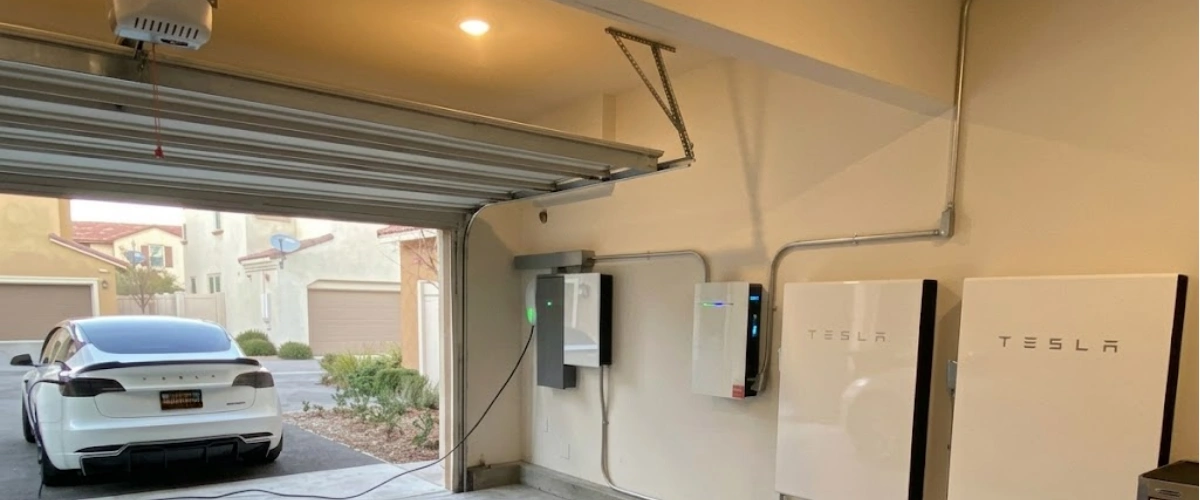
Battery strategy under NEM 3.0 comes down to timing. Charge your battery during peak solar production hours, roughly 10 AM to 3 PM. Discharge it during PG&E's peak billing window from 4 PM to 9 PM so you draw from stored solar instead of paying expensive grid rates. Run high-draw appliances like dishwashers, laundry, and EV chargers during daylight hours whenever your schedule allows.
For a deeper look at which rate plan pairs best with this approach, the breakdown of the best PG&E rate plan for solar owners covers how to match your billing structure to your actual usage patterns and get the most out of every kWh.
A common mistake under NEM 3.0 is oversizing panels without adding proportional storage. If your system produces far more than you can use or store, that surplus goes to the grid at rock-bottom export rates. You paid for generation capacity that earns almost nothing.
Most solar professionals recommend sizing a new NEM 3.0 system to cover roughly 70 to 75 percent of your annual usage and then pairing it with storage. Getting the right solar system size for your home requires reviewing your actual 12-month interval data because when you use power matters just as much as how much you use in total.
Under NEM 2.0, batteries were a smart addition. Under NEM 3.0, they are the core of any system that makes financial sense. Without storage, a solar-only system exports during the day at wholesale prices and buys back at retail rates all evening. That math produces payback periods of 12 to 15 years or longer for most California homeowners.
Add a properly sized battery and you flip the equation. NEM 3.0 systems paired with storage typically see payback periods drop to 6 to 9 years. After that, you generate near-free electricity for another 15 to 18 years under your 25-year panel warranty. California's SGIP program also offers rebates on battery installations, particularly for homes in high-fire-risk areas, which can meaningfully reduce your upfront cost.
Every percentage point you save on your system cost shortens your payback period. US Power's exclusive partnership with QCells delivers American-made QCells panels and factory-direct pricing at 15 to 20 percent below market rates with no distributor markup. Those savings come directly off your total system cost before financing even enters the picture.
With 180+ five-star Google reviews, CSLB-licensed consultants, and a 25-year comprehensive warranty covering panels, workmanship, and performance, US Power is built for long-term accountability. Most installations complete within 3 to 4 weeks after utility approval, one of the fastest timelines available in California.
US Power does not just count panels. Every system is designed around your specific utility rate plan, usage patterns, and NEM 3.0 billing schedule to maximize what you keep rather than what you export. A free QCells solar estimate starts the process, and a CSLB-licensed consultant reviews your actual PG&E bills before recommending anything.
Whether you are comparing solar financing options in California or evaluating a cash purchase timeline, US Power models both scenarios so you can choose the path that works for your budget and goals.
Choosing solar under NEM 3.0 is still one of the strongest financial decisions a California homeowner can make. The key is entering with the right system design, adequate storage capacity, and an installer who understands NEM 3.0 from the ground up, not one still selling systems built for the NEM 2.0 era.
Start by pulling your last 12 months of PG&E bills and finding your total annual kWh usage. That number determines your system size, which in turn drives your battery needs. From there, a consultation with US Power takes about 30 minutes and gives you a real proposal built around your home, not an industry average.
You can also get your free solar quote from Axia or calculate your 2026 solar savings to get a starting point before your consultation. For a full picture of what residential solar installations look like from permit to power-on, US Power walks you through every step.
NEM 3.0 changed the rules, but it did not kill the case for solar in California. It made battery storage the non-negotiable piece of any system worth installing. Homeowners who go in with the right design, the right storage capacity, and the right partner are still building real long-term savings that compound every time PG&E raises rates.
Every month you stay fully on the grid is another month of rising electricity costs you are paying for. US Power's CSLB-licensed consultants are ready to show you exactly what your home qualifies for, at factory-direct QCells pricing with a 25-year warranty backing every panel and every battery.


The real 30% Federal Solar Tax Credit deadline isn't what most people think.

The next solar revolution is coming. But your utility bill can't wait for it.

California solar is shifting—secure savings with 2025’s 30% federal tax credit.







Copyright © 2026 US Power - Axia by QCells. All Rights Reserved.
Get an instant solar estimate using satellite!