
NEM 3.0 paga centavos por las exportaciones de energía solar. Así es como el almacenamiento de la batería soluciona eso.
Si ha revisado su factura de PG&E después de usar energía solar y se ha preguntado por qué apenas obtuvo crédito por toda la energía que envió a la red, no se lo está imaginando. La póliza NEM 3.0 de California paga a los propietarios de viviendas tan poco como 0,01$ por kWh para la energía solar exportada, una fracción de lo que la red le cobra por volver a comprarla.
La frustración es real y se está extendiendo rápidamente. Los propietarios de viviendas con sistemas sobredimensionados, la exposición a la niebla costera y la escasez de producción durante el invierno se topan todos con el mismo muro. Pero esto es lo que la mayoría de la gente no escucha: la energía solar sigue siendo una de las medidas financieras más inteligentes que se pueden tomar en California en 2026. La estrategia acaba de cambiar, y la pieza central de esa nueva estrategia es el almacenamiento en baterías.
En una reciente discusión sobre energía solar en California, un propietario compartió un proyecto de ley de PG&E que muestra 620 kWh exportados a la red con solo 6,23$ en créditos ganados. Eso es aproximadamente un centavo por kilovatio-hora. Mientras tanto, PG&E cobra entre 0,40 y 0,50 dólares por kWh por recuperar esa misma energía durante las horas pico de la noche.
Para entender por qué existe esta brecha, necesita saber lo que realmente pasó con la energía solar en los tejados de California. A partir de abril de 2023, California reemplazó NEM 2.0 por la tarifa de facturación neta, ahora llamada NEM 3.0. El cambio redujo los valores de los créditos a la exportación entre un 70 y un 75 por ciento aproximadamente. Lo que antes te generaba 0,35 dólares por kWh ahora vale menos que una moneda de cinco centavos durante la mayoría de las horas del día.
Las bajas tasas de exportación no son arbitrarias. La red de California ahora produce más electricidad solar de la que puede consumir durante las horas pico del mediodía. Las empresas de servicios públicos restringen rutinariamente los proyectos solares a escala comercial porque la oferta supera a la demanda. Pagar a los propietarios de viviendas tarifas minoristas por la energía que la red no necesita no tiene sentido desde el punto de vista económico desde la perspectiva de la empresa de servicios públicos.
Esta es la razón Tasas de exportación de energía solar de PG&E por debajo de NEM 3.0 se estructuran en función de la hora del día. Los créditos a la exportación son más altos durante las horas de la noche, cuando la energía solar no produce, y más bajos al mediodía, cuando sí. El sistema está diseñado para impulsar a los propietarios hacia el autoconsumo en lugar de la dependencia de la red.
Bajo NEM 2.0, California operaba un verdadero intercambio uno a uno. Cada kilovatio-hora que enviabas a la red se convertía en un crédito con un valor cercano al precio minorista. Las cancelaciones anuales solían ser nulas o muy pequeñas, y los propietarios de viviendas con sistemas de buen tamaño utilizaban básicamente la red eléctrica como batería gratuita.
Ese modelo ya no existe. Comprender el alcance completo del Diferencias de facturación entre NEM 2.0 y NEM 3.0 es el primer paso para construir un sistema que funcione según las reglas actuales. En lugar de acreditarte las tarifas minoristas, NEM 3.0 te acredita lo que la red habría pagado a un proveedor mayorista de energía. Ese número cambia hora tras hora y, con frecuencia, está por debajo de los 0,10 USD por kWh.
Si instalaste energía solar antes de abril de 2023, es posible que sigas usando NEM 2.0 y estés protegido por una cláusula de protección. Ese estatus es lo suficientemente valioso desde el punto de vista financiero como para que su protección sea una prioridad máxima antes de realizar cualquier cambio en su sistema. Si lo instalaste después de abril de 2023 o estás evaluando la energía solar ahora, NEM 3.0 es tu realidad. La buena noticia es que hay un manual probado para hacer que funcione bien.
La matemática aquí es directa. Si exportas un kilovatio-hora a PG&E a 0,05$ y luego lo vuelves a comprar a 0,45$, perdiste 0,40$ en esa transacción. Si, por el contrario, guardas ese kilovatio-hora en una batería y lo utilizas tú mismo durante las horas pico de la noche, evitaste pagar 0,45 USD. La batería acaba de hacer que ganes 0,40$ más por kWh de lo que habría supuesto la exportación.
Esta es toda la premisa de la estrategia de ahorro de NEM 3.0. Cuando tú vea lo que realmente cuesta la energía solar en California, observará que los sistemas diseñados para el autoconsumo tienen períodos de amortización mucho más cortos que los sistemas que solo utilizan energía solar y que dependen de la exportación a la red. El almacenamiento de la batería es el mecanismo que hace que las matemáticas funcionen a tu favor.
La estrategia de la batería en NEM 3.0 se reduce al tiempo. Cargue la batería durante las horas pico de producción solar, aproximadamente de 10:00 a 15:00 horas. Descárguela durante el período de mayor facturación de PG&E, de 4 p. m. a 9 p. m., para aprovechar la energía solar almacenada en lugar de pagar costosas tarifas de red. Haga funcionar los electrodomésticos de alto consumo, como lavaplatos, ropa sucia y cargadores de vehículos eléctricos, durante el día, siempre que su horario lo permita.
Para ver más a fondo qué plan tarifario se adapta mejor a este enfoque, el desglose de el mejor plan tarifario de PG&E para propietarios de energía solar explica cómo adaptar su estructura de facturación a sus patrones de uso reales y aprovechar al máximo cada kWh.
Un error común con NEM 3.0 es sobredimensionar los paneles sin añadir almacenamiento proporcional. Si su sistema produce mucho más de lo que puede usar o almacenar, ese excedente se destina a la red a tasas de exportación bajísimas. Pagó por una capacidad de generación que no genera casi nada.
La mayoría de los profesionales de la energía solar recomiendan dimensionar un nuevo sistema NEM 3.0 para cubrir aproximadamente del 70 al 75 por ciento de su uso anual y luego combinarlo con el almacenamiento. Obtener el tamaño de sistema solar adecuado para su hogar requiere revisar los datos reales de los intervalos de 12 meses, ya que el momento en que se utiliza la energía es tan importante como la cantidad que se consume en total.
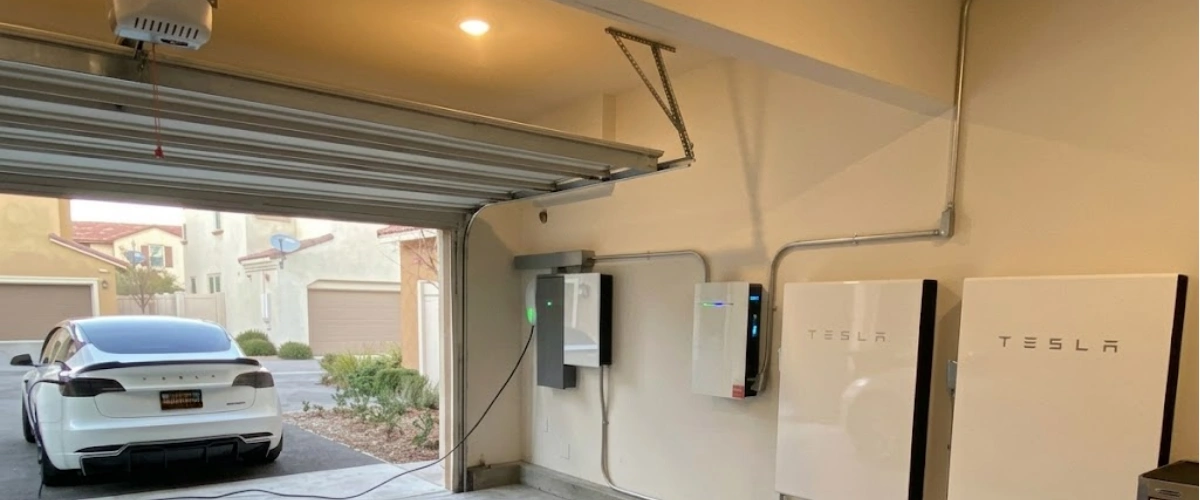
Bajo NEM 2.0, las baterías eran una adición inteligente. Según NEM 3.0, son el núcleo de cualquier sistema que tenga sentido desde el punto de vista financiero. Sin almacenamiento, un sistema que funciona exclusivamente con energía solar exporta durante el día a precios mayoristas y vuelve a comprar a precios minoristas durante toda la noche. Ese cálculo produce períodos de amortización de 12 a 15 años o más para la mayoría de los propietarios de viviendas de California.
Agrega una batería del tamaño adecuado y cambias la ecuación. Los sistemas NEM 3.0 combinados con el almacenamiento suelen reducir los períodos de amortización a entre 6 y 9 años. Después de eso, generas electricidad prácticamente gratis durante otros 15 a 18 años con la garantía de 25 años de tu panel. El programa SGIP de California también ofrece descuentos en las instalaciones de baterías, especialmente para hogares en áreas con alto riesgo de incendio, lo que puede reducir significativamente el costo inicial.
Cada punto porcentual que ahorre en el costo de su sistema acorta su período de amortización. La asociación exclusiva de US Power con QCells ofrece Paneles QCells de fabricación estadounidense y precios directos de fábrica entre un 15 y un 20 por ciento por debajo de los precios del mercado, sin margen de beneficio para el distribuidor. Estos ahorros provienen directamente del costo total del sistema, incluso antes de que la financiación entre en escena.
Con más de 180 reseñas de cinco estrellas en Google, consultores con licencia CSLB y una garantía integral de 25 años que cubre los paneles, la mano de obra y el rendimiento, US Power está diseñada para una responsabilidad a largo plazo. La mayoría de las instalaciones se completan en un plazo de 3 a 4 semanas después de la aprobación de la empresa de servicios públicos, uno de los plazos más rápidos disponibles en California.
US Power no solo cuenta los paneles. Cada sistema está diseñado en función de su plan tarifario de servicios públicos específico, sus patrones de uso y su calendario de facturación de NEM 3.0 para maximizar lo que conserva en lugar de lo que exporta. A estimación solar gratuita de QCells inicia el proceso y un consultor con licencia de la CSLB revisa sus facturas reales de PG&E antes de recomendarle nada.
Ya sea que esté comparando opciones de financiación solar en California O para evaluar un cronograma de compra en efectivo, US Power modela ambos escenarios para que pueda elegir el camino que mejor se adapte a su presupuesto y objetivos.
La elección de la energía solar con NEM 3.0 sigue siendo una de las decisiones financieras más sólidas que puede tomar un propietario de una vivienda en California. La clave está en tener el diseño correcto del sistema, una capacidad de almacenamiento adecuada y un instalador que comprenda NEM 3.0 desde cero, y no que siga vendiendo sistemas diseñados para la era NEM 2.0.
Comience por analizar sus últimos 12 meses de facturas de PG&E y averiguar su consumo total anual de kWh. Ese número determina el tamaño de su sistema, lo que a su vez aumenta sus necesidades de batería. A partir de ahí, una consulta con US Power dura unos 30 minutos y le brinda una propuesta real diseñada para su hogar, no como la media de la industria.
También puedes obtenga su cotización solar gratuita de Axia o calcule sus ahorros solares en 2026 para obtener un punto de partida antes de su consulta. Para obtener una imagen completa de lo que instalaciones solares residenciales Desde el permiso hasta el encendido, US Power lo guía paso a paso.
NEM 3.0 cambió las reglas, pero no acabó con los argumentos a favor de la energía solar en California. Convirtió el almacenamiento en baterías en la pieza no negociable de cualquier sistema que mereciera la pena instalar. Los propietarios de viviendas que optan por el diseño correcto, la capacidad de almacenamiento adecuada y el socio adecuado siguen acumulando ahorros reales a largo plazo que aumentan cada vez que PG&E aumenta las tarifas.
Cada mes que permaneces completamente conectado a la red es otro mes de aumento de los costos de electricidad que estás pagando. Los asesores con licencia CSLB de US Power están listos para mostrarle exactamente para qué requisitos cumple su hogar, a los precios de QCells directamente de fábrica y con una garantía de 25 años que cubre cada panel y cada batería.


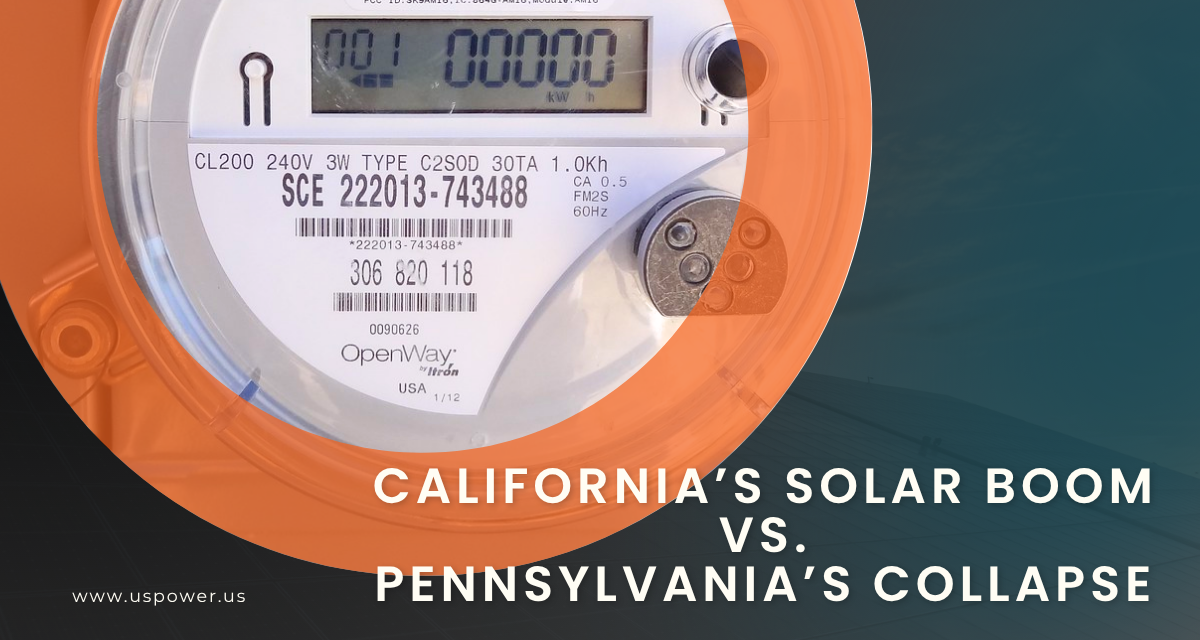
Pennsylvania stumbled on renewables—California’s solar surge must stay strong.

Solar drives half of U.S. power growth in 2025—see why California homes must act now.
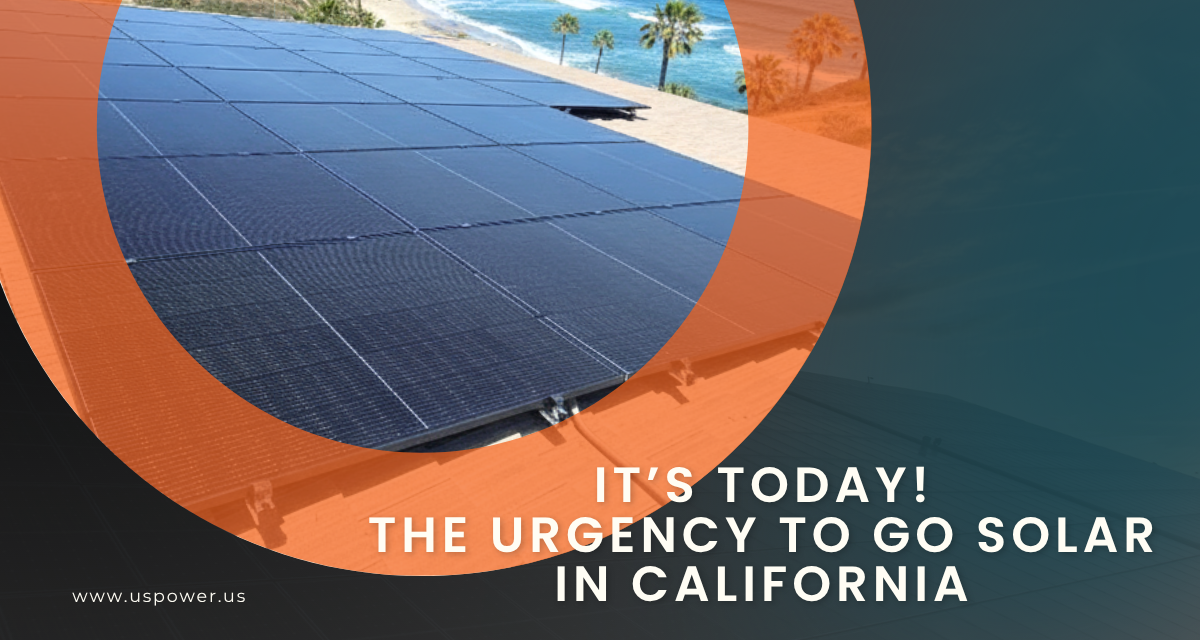
California solar incentives won’t last forever. Claim Your Power. Enjoy Your Savings.






¿Estás listo para ser dueño de tu poder? ¡Llámenos hoy mismo!
818-650-8010Contractor License #: 1144368

Derechos de autor © 2025 US POWER | Energía solar y techosUS Power - Axia by QCells. All Rights Reserved.
¡Obtenga una estimación solar instantánea usando el satélite!