

ERCOT grid fears + rising rates = solar + battery surge in Texas.
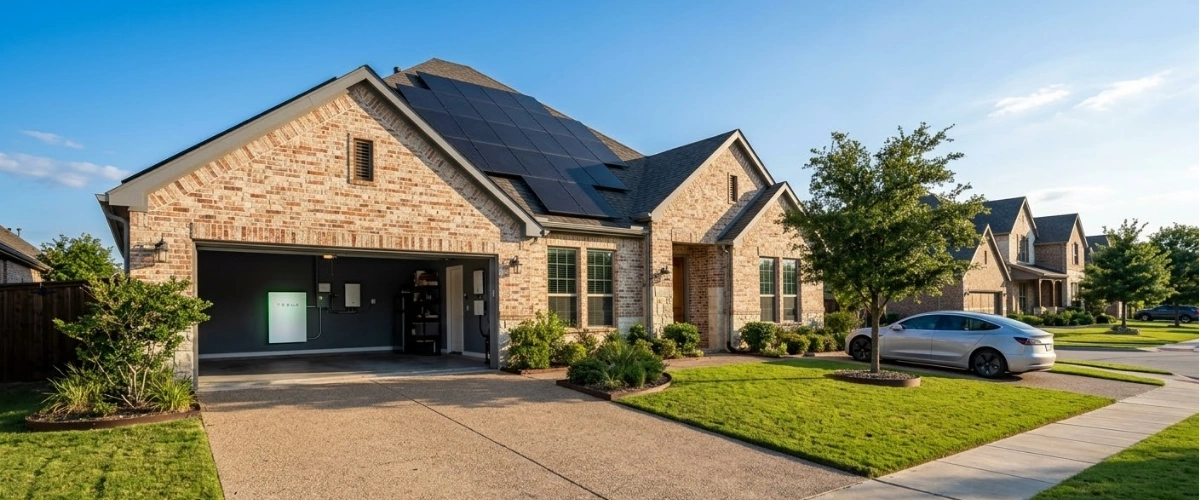
Your electricity bill isn't getting cheaper — and if you live in Texas, you already know it.
Rates across the state have climbed sharply over the past few years, and 2026 is following the same trend. Homeowners in the Dallas-Fort Worth area, Houston, and across the ERCOT grid are paying between 14 and 19 cents per kilowatt-hour today. That's nearly double what Texans were paying just a few years ago.
But here's what's changing: more Texas homeowners aren't just going solar. They're pairing solar panels with battery storage — and for good reason. From Plano to Pearland, homeowners are discovering that a battery doesn't just save money. It changes everything about how your home handles power.
Texas runs its own power grid — ERCOT — and that independence comes with a price. Unlike other states, Texas homeowners are especially exposed to wholesale market swings. When demand spikes during a heat wave or a winter storm, so does your bill.
ERCOT forecasts show electricity demand growing by nearly 9.6% in 2026 alone. AI data centers, cryptocurrency mining, and rapid population growth in the DFW metro are all pulling more power from the same grid. More demand means higher prices — and residential customers are often the ones who absorb the most.
Even if you find a great rate per kilowatt-hour, your monthly bill includes delivery charges from your local utility — Oncor in DFW, CenterPoint in Houston, or AEP Texas in other regions. These charges cover grid maintenance and infrastructure, and they go up whether your energy rate does or not.
One recent study found that residential customers in CenterPoint territory use about 33% of the electricity but pay 49% of transmission costs. You're paying for the grid even when you're not using it.
Here's the simple version: your solar panels generate electricity during the day. Your home uses what it needs. Whatever is left over charges your battery instead of going back to the grid.
Then when the sun goes down — or when grid prices spike — your battery kicks in. You're drawing from power you already generated, not paying retail rates to your utility.
In Texas, where there's no statewide net metering mandate, this matters even more. Sending excess solar back to the grid often earns you very little in return. Keeping it in a battery means you actually use every kilowatt you generate.
Here's a Texas-specific play that real homeowners in Plano and Richardson are already using: pair your solar system with a battery and sign up for a free nights electricity plan.
Plans like these give you zero-cost electricity from roughly 8 PM to 6 AM. During those hours, your battery charges for free from the grid. Your solar charges it the rest of the day. Between the two, many homeowners are landing near-zero monthly bills — without going off-grid at all.
It takes the right system size and the right plan, but it's a real strategy. Not a gimmick.
If you've wondered are solar batteries worth it, Texas is one of the strongest cases in the country for saying yes.
After Winter Storm Uri in 2021, Texas made significant grid improvements. Weatherization standards were tightened and new dispatchable generation was added. But the grid is not immune to extreme weather.
Summer heat waves still drive massive demand spikes. Reserve margins are tightening again as data centers and industrial growth push demand faster than new generation can come online. Battery storage gives your home a buffer — a private backup that runs independently of whether ERCOT is stressed.
Most solar-only systems shut off automatically during a grid outage. That's by design — it protects utility workers on the lines. A battery changes that completely.
How long a solar battery can power your home depends on your system size and how much you're running, but a typical battery backup keeps your essential loads — refrigerator, lights, phone charging, fans — running for 8 to 24 hours. Add solar recharging during the day and you can extend that significantly through multi-day outages.
For Texas homeowners who've lived through ice storms and summer blackouts, that's not a luxury. It's a necessity.
Not every Texas homeowner needs a battery on day one — but more are adding them than ever before. If you're in an area with frequent outages, or if you want to maximize your savings with a free nights plan, a battery should be part of your initial install.
Not sure which backup power option is right for you? The answer usually comes down to two things: how often your area loses power and how much of your home you want to keep running when it does.
A single battery typically covers essential circuits — lights, refrigerator, phone charging, and a few fans. Two batteries, like the Plano homeowner in our source install opted for, give you broader coverage and more flexibility in how you use your stored energy.
Panel quality matters more than most homeowners realize. Not all solar panels perform the same way in Texas heat. You want panels tested for high-temperature performance, not just peak wattage.
Learning how to choose the best solar panels for your home starts with understanding efficiency ratings, warranty terms, and manufacturer backing. A 25-year panel warranty is only as good as the company standing behind it.
US Power is an exclusive QCells partner. QCells panels are American-made, manufactured in Dalton, Georgia — meaning no import exposure, no tariff risk, and no supply chain uncertainty.
Because US Power sources directly from the factory, homeowners get pricing that's 15 to 20% below what most installers charge for comparable panels. That's a real difference on a system that could run $20,000 to $30,000 before incentives.
For anyone exploring solar installation in Texas, factory-direct pricing is one of the most overlooked levers for reducing your payback period.
One of the most common frustrations in solar is waiting. Permitting delays, equipment backlogs, and scheduling issues can stretch a California install to months. Texas is faster — and US Power is faster still.
From approval to permission to operate, most US Power installs in Texas complete in 3 to 4 weeks. The licensed consultants handle permitting, utility coordination, and inspection scheduling so you don't have to chase anyone down.
US Power backs every installation with a 25-year comprehensive warranty covering panels, workmanship, and performance. That means if something underperforms, breaks, or fails within 25 years, it's covered.
Most competitors break this into separate warranties — one for the panels, one for the inverter, one for labor — with different terms and different companies responsible for each. US Power keeps it simple: one warranty, one company, 25 years.
Texas doesn't have statewide solar rebates, but there are meaningful incentives in place for homeowners who act now.
The Texas Solar Property Tax Exemption is one of the most valuable — and least understood — benefits available. When you install solar, your home value increases. Normally that means higher property taxes. Texas exempts 100% of that added value from your tax assessment. On a $22,000 system in the Houston area, that can mean over $500 per year in avoided taxes — adding up to more than $12,000 over 25 years.
Oncor's Residential Solar Program offers rebates for DFW homeowners who install solar paired with battery storage. The rebate amount varies but can reach up to $9,000 for qualifying systems. Austin Energy customers have access to separate rebates and a solar buyback tariff that pays for all energy generated, not just what you export.
Understanding solar panel cost and savings in 2025 helps you benchmark these numbers before you get your first quote.
From your first consultation to the day your system turns on, a residential solar installation with US Power follows a clear, predictable process.
Your licensed consultant starts with your actual electricity bills — not a generic estimate. They design a system sized for your real usage, walk you through panel placement, battery sizing, and utility plan options, then handle every permit and inspection on your behalf. Most Texas homeowners see their system energized within 3 to 4 weeks of approval.
Texas electricity prices are unlikely to return to where they were. ERCOT demand growth, infrastructure surcharges, and natural gas price volatility have permanently shifted the baseline. Homeowners who act now lock in their energy costs while those who wait keep absorbing every new rate increase.
Solar panels with battery storage give you something your utility never will: control. You generate your own power, store what you don't use, and draw from your battery when grid rates are highest. Pair that with the right electricity plan and Texas incentives like the property tax exemption, and the financial case is stronger than most homeowners expect.
US Power makes the process simple. American-made QCells panels, factory-direct pricing, a 25-year warranty, and a 3 to 4 week installation timeline. Your consultation is free — virtual or on-site, no pressure, no hidden fees.
The grid isn't getting more reliable. Your bill isn't getting smaller. But your energy future can look completely different.


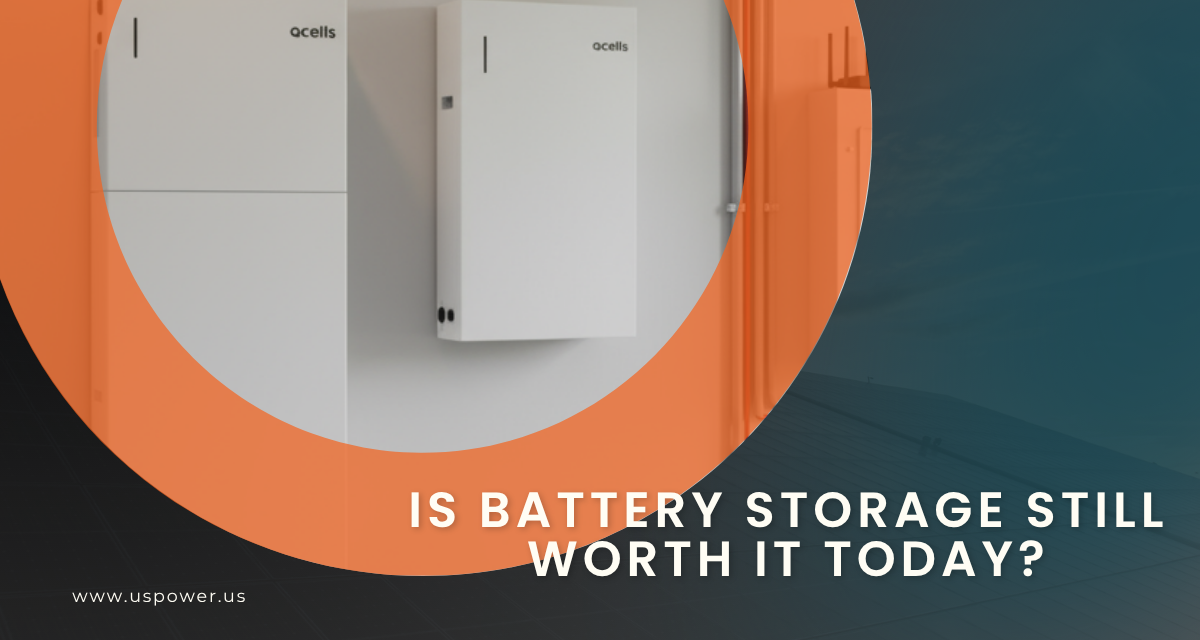
Maximize your 2025 solar ROI with compliant, reliable home battery storage.

Not every battery is built the same way, and not every home needs biggest solar.
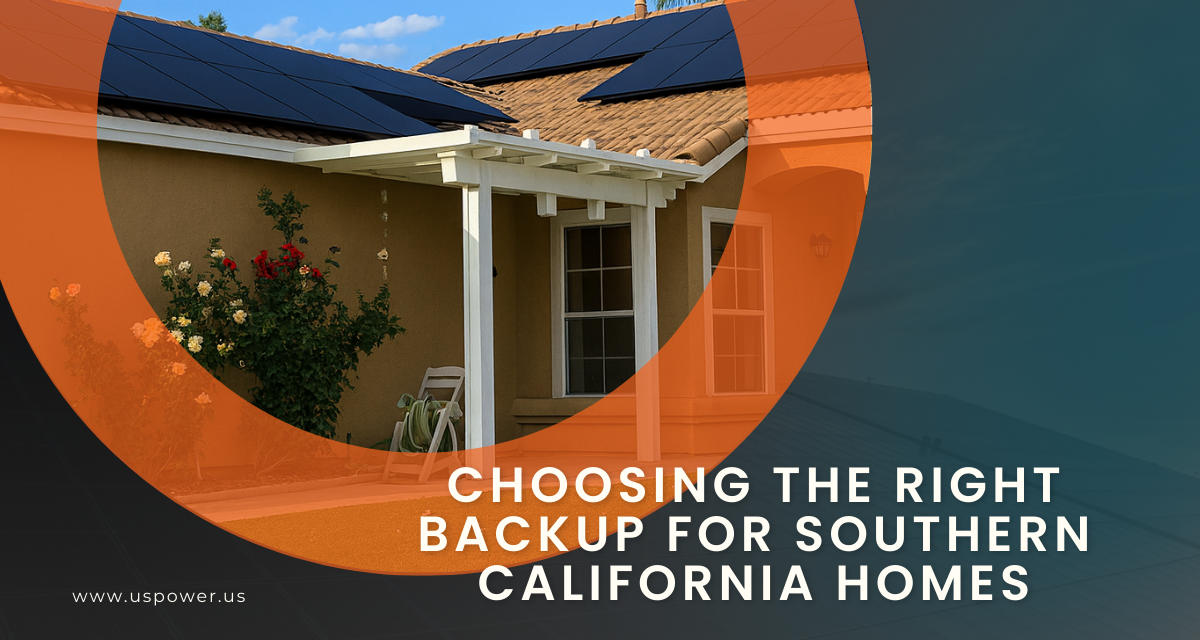
Find the best backup solution to keep your Southern California home powered.









Copyright © 2026 US Power - Axia by QCells. All Rights Reserved.
Get an instant solar estimate using satellite!