

Choosing the best solar panels for your home in 2026 means knowing what separates a system that saves you money from one that just looks good on paper. This guide walks California, Texas, Florida, and Illinois homeowners through panel types, sizing, costs, and what to ask before signing anything.
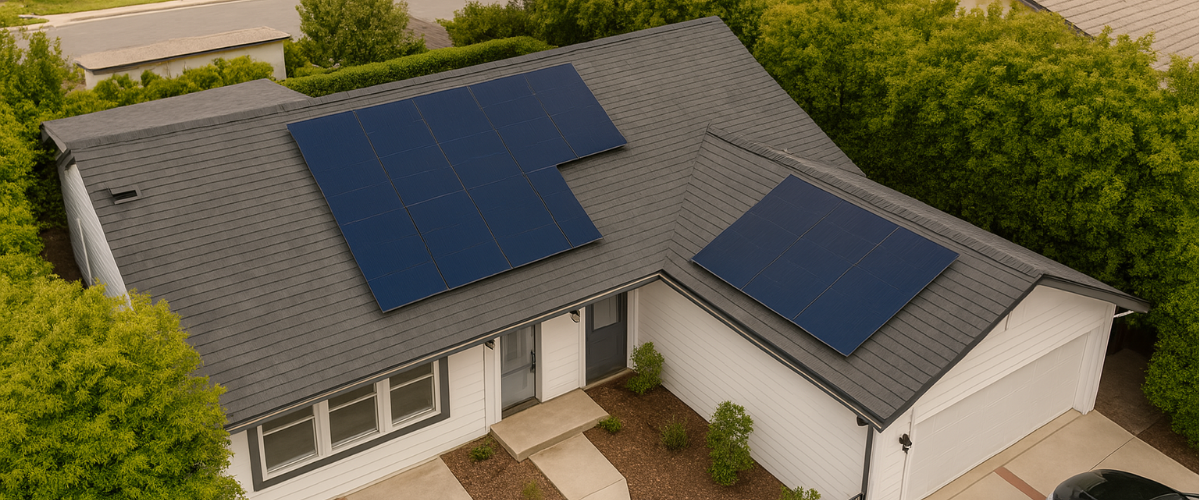
Your electricity bill has climbed again. You've seen the solar ads, talked to a neighbor who made the switch, and now you're seriously considering it. But standing between you and real savings is one question most homeowners struggle to answer: how do you actually choose the best solar panels for your home?
It's not as simple as picking the most popular brand or going with whoever knocks on your door first. The right panels depend on your roof, your usage, your state's energy policies, and who installs them. Get it right and you could cut your monthly bill by 70% or more. Get it wrong and you're locked into a system that underperforms for 25 years.
This guide gives you everything you need to make a confident, informed decision.
Not every panel is built for every home. Before you compare brands or specifications, you need to understand what drives the right choice for your specific situation.
The single most important starting point is your average monthly electricity consumption in kilowatt-hours (kWh). Pull up your last 12 months of utility bills and look at the usage column, not just the total amount due.
A home using 900 kWh per month needs a very different system than one using 1,800 kWh. Once you know your usage, you can start to understand how to size a solar system for your home accurately. Undersizing is one of the most common and costly mistakes homeowners make.
South-facing roofs with minimal shade are ideal for solar in all four of our target states. But the direction your roof faces, its pitch angle, its age, and its available unshaded square footage all factor into which panel type and how many panels will work best.
If your roof faces east or west, or has partial shading from trees or nearby structures, higher-efficiency panels become more important because you're working with less ideal conditions.
California's NEM 3.0 billing structure means new solar systems earn far less credit for energy exported to the grid than they used to. That shifts the strategy toward self-consumption, which means sizing your system to match what you actually use rather than oversizing to export excess power.
Texas homeowners operate on a deregulated energy market, where savings depend heavily on your retail electricity provider. Florida's net metering policies reward solar owners who stay connected to the grid. Illinois has the Shines program, which provides performance-based incentives that pay out over time for the solar energy your system produces.
There are three main panel technologies on the market today. Understanding the difference is critical to making the right call.
These are the gold standard for residential solar. Made from a single silicon crystal, monocrystalline panels offer the highest efficiency ratings, typically between 20% and 23%, and perform better in limited space or partial shade. They cost more upfront but produce more power per square foot.
For homeowners in California with smaller rooftop footprints, or in Texas where summer heat efficiency matters, monocrystalline panels are usually the right answer. QCells, US Power's exclusive American-made panel partner, manufactures high-performance monocrystalline panels. If you want to understand the specific differences between QCells models, see this comparison of QCells Q.PEAK vs Q.TRON panels to understand where the $1,500 price gap is actually justified.
These are made from multiple silicon fragments and carry a lower price tag. Efficiency ranges from 15% to 17%, which means you need more roof space to generate the same amount of power. They were common a decade ago but have largely been replaced by monocrystalline options as prices for the latter have come down significantly.
These are lightweight and flexible, useful in commercial applications or unconventional installations. For standard residential rooftops in California, Texas, Florida, or Illinois, thin-film is rarely the right choice. Lower efficiency and shorter lifespan make them a niche solution.
The average residential solar installation in 2026 runs between $18,000 and $40,000 before any incentives, depending on system size and location. A typical 7 to 9 kW system for a California home falls around $21,000 to $25,000 before any reductions apply.
Homeowners often assume the panels themselves are the biggest cost. In reality, panels account for only about 18% of the total installation price. The rest goes toward labor, racking hardware, inverters, permitting, and utility interconnection fees.
This is one of the reasons the solar installation cost in California can vary by $10,000 or more between quotes. Labor rates, permitting complexity, and equipment quality all differ significantly between companies. Getting at least two to three quotes is essential.
The 30% federal investment tax credit expired on December 31, 2025. Current savings focus on utility bill reduction, state programs, and long-term ROI.
For most homeowners in California, Texas, Florida, and Illinois, yes. But the answer depends on your specific situation, not the national average.
California homeowners with PG&E or SCE face electricity rates averaging $0.32 to $0.42 per kWh under tiered billing in 2026. At those rates, every kilowatt-hour your panels produce is worth nearly three times what it is in lower-rate states. Annual savings in California commonly reach $1,500 to $2,500.
Texas homeowners benefit from lower installation costs and strong sun exposure, though credits from excess solar generation vary by retail provider. Florida's year-round sun and net metering make it one of the strongest ROI states for residential solar. Illinois homeowners can layer utility bill savings on top of SREC income, which adds up meaningfully over time.
To get a realistic picture of your timeline to break even, read this breakdown of the solar payback period in 2026. For homeowners still weighing whether the math works without the old federal credit, this resource on is solar worth it without the federal tax credit is worth reading before you decide.
This is one of the most important questions homeowners face in 2026, especially in California and Texas.
Under California's NEM 3.0, excess solar power exported to the grid earns as little as $0.05 per kWh during peak production hours. That means a battery pays off faster than ever because storing that energy at home and using it in the evening is worth far more than selling it back to the utility.
Texas homeowners who experienced the 2021 grid failure and subsequent outages understand the resilience argument. Florida homeowners near the coast deal with hurricane-related outage risk that makes backup power a practical necessity.
Understanding whether the added investment makes sense for your household is worth a dedicated read: is home battery backup worth it breaks down the numbers clearly. The short answer is that in California especially, batteries are no longer optional if you want to maximize savings.
Choosing the right installer matters as much as choosing the right panels. The solar industry has a real problem with predatory contracts, underqualified installers, and companies that disappear after installation. Protecting yourself starts with knowing what to look for.
A reputable solar company will be licensed for the state they operate in (CSLB in California, for example), carry proper insurance, have a track record of completed installations you can verify, and provide a written warranty that covers panels, workmanship, and system performance separately.
Be cautious of any company that pressures you to sign the same day, quotes prices without a full site assessment, or can't clearly explain what your warranty actually covers. The full list of warning signs is detailed in this guide to solar installer red flags to watch for, which every homeowner should read before accepting any quote.
US Power's CSLB-licensed consultants work exclusively with QCells, one of the most trusted panel manufacturers in the industry. Because QCells panels are American-made and sourced factory-direct, US Power delivers pricing 15 to 20% below what most installers charge for comparable equipment.
Every installation comes backed by a 25-year comprehensive warranty that covers the panels themselves, the workmanship of the install, and the guaranteed performance of your system. The average installation timeline from approval to Permission to Operate is just 3 to 4 weeks, compared to industry averages that stretch to three to six months.
Explore the full scope of what's included with residential solar installation services from US Power.
Choosing the best solar panels for your home in 2026 is about matching the right technology, the right system size, and the right installer to your specific home and state. Panel type matters. Roof suitability matters. Your utility's billing policies matter. And who installs your system matters most of all.
US Power combines American-made QCells panels, factory-direct pricing, and a 3 to 4 week installation timeline backed by a 25-year comprehensive warranty. With 200+ five-star Google reviews and CSLB-licensed consultants serving California, Texas, Florida, and Illinois, there's a reason homeowners choose US Power when they're ready to stop overpaying on their electricity bills.
Your free consultation is one step away. Take it now before your next utility bill arrives.


Efficiency, warranty, and manufacturing stack up so you can choose with confidence.
Two solar companies. Two very different contracts. Here's who wins and why.

Experience faster, high-quality solar installations backed by QCells reliability.








Copyright © 2026 US Power - Axia by QCells. All Rights Reserved.
Get an instant solar estimate using satellite!