

The solar technology advances that matter today are 22.5%-efficient N-type panels, smart batteries, and AI energy management, while 35.5% perovskite tandem cells are still lab records. Waiting costs California homes 31 to 33 cents per kWh. Here's what to buy now and what to plan for.
You've seen the headlines: panels breaking efficiency records, batteries that carry a house through an outage, electric trucks that power a home. Then your utility bill arrives, higher again, and you wonder whether to go solar now or wait for the next breakthrough.
That hesitation has a price. California households pay roughly 31 to 33 cents per kWh in 2026 according to EIA data, close to double the U.S. average of 18.34 cents reported for June 2026. Every month spent waiting for the next solar technology advance is another bill paid at those rates.
Here's what you'll learn: which solar technology advances are on rooftops today, which are still in the lab, and how to buy a system now that won't feel outdated in five years.
The solar technology advances that matter most for homeowners in 2026 fall into three groups: more efficient N-type panels, smarter batteries, and software that decides when to store, use, or export power. Perovskite tandem cells dominate the headlines, but they are not on residential roofs yet.
Today's best mainstream residential panels use N-type TOPCon cells. Qcells' Q.TRON BLK M-G2+ reaches up to 22.5% efficiency and 440 watts, and its warranty guarantees at least 90.58% of rated power after 25 years, according to Qcells' 2026 spec sheet. If you're choosing between Qcells lines, our Q.PEAK DUO vs. Q.TRON comparison walks through the tradeoffs.
The next leap is the perovskite-silicon tandem cell, which stacks a perovskite layer on top of silicon to capture more of the light spectrum. In July 2026, LONGi announced a certified 35.5% tandem cell, a new world record verified by the European Solar Test Installation. Qcells' own tandem technology earned TÜV Rheinland certification against IEC and UL reliability standards the same month. For the longer view, see why perovskite-based solar is expected to lead the next decade.
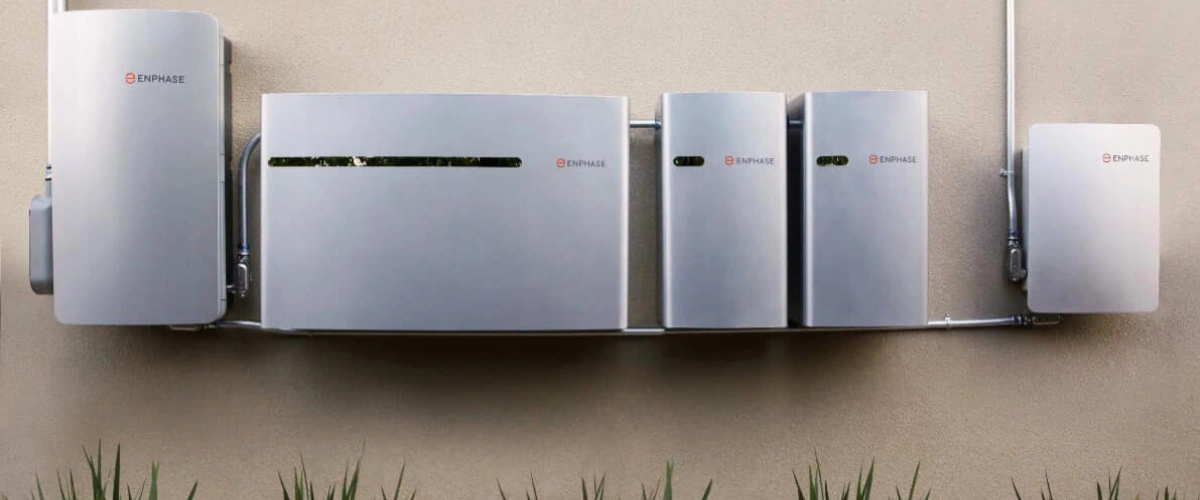
Panel gains get the attention, but the solar technology advances with the biggest effect on your bill are in storage and control. Current home batteries use long-life lithium iron phosphate chemistry, and their apps now pre-charge before peak pricing, shift loads automatically, and flag underperforming panels.
The newest frontier is vehicle-to-home (V2H) charging. In August 2026, PG&E expanded its vehicle-to-everything program to add Kia, Volvo, Polestar, and Nissan EVs, with residential incentives of up to $4,500 and enrollment open through June 30, 2027.
A record-setting lab cell is a small test device, not a product you can buy. This list separates the solar technology advances that are shipping from those still coming, as of September 2026
The gap between 35.5% in the lab and 26.9% at module scale shows why tandem panels will take years to reach typical homes at a competitive price
California is where recent solar technology advances in storage pay off fastest. Under NEM 3.0 net billing, exported solar earns roughly 5 to 8 cents per kWh, while grid power costs 31 to 33 cents. That spread is why 69% of new California residential solar systems now include a battery, according to Wood Mackenzie and SEIA's 2026 Solar Market Insight.
Two dates matter. First, the state's solar property tax exclusion only covers systems completed before January 1, 2027, and the extension bill (AB 2389) stalled in the Assembly in May 2026. Second, SCE's Solar Billing Plan tariff fixes export prices for nine years for customers who enroll before January 1, 2028. On SCE, PG&E, and SDG&E, the 4 to 9 PM peak window is where a battery earns its keep.
Texas residential power averaged about 15.9 cents per kWh in June 2026, per EIA. There's no statewide net metering, so export value depends on your retail plan. That makes batteries mainly a resilience tool for grid emergencies and summer demand spikes.
Florida homeowners paid about 15.5 cents per kWh in March 2026. Net metering still credits exports at retail value, so panels alone pay back well, and batteries are chosen mostly for hurricane-season backup.
Illinois systems connected after December 31, 2024 earn supply-only net metering credits. To offset that, ComEd pays a $300 per kWh rebate on paired battery storage plus $300 per kW of solar, per its 2026 Distributed Generation rebate terms. US Power also serves Connecticut, Pennsylvania, and New Jersey, each with its own rules.
A single-junction silicon cell cannot exceed roughly 33.7% efficiency in theory, and mass-production panels are already in the low to mid 20s. Tandem cells break that ceiling, with a theoretical limit of up to 43%, per LONGi. That's why the next wave of solar technology advances centers on stacking materials rather than refining silicon alone.
When export credits fall, homeowners store power instead of selling it cheap. Manufacturers have followed that demand with better batteries and controls. Supply chains are also moving home: Qcells began making solar cells in Cartersville, Georgia on June 9, 2026, alongside its Dalton module plant. Learn more about American-made Qcells solar panels.
Take a California home using 600 kWh a month at 32 cents. That's $192 a month, or about $2,304 a year. Waiting two years for tandem panels means sending roughly $4,600 to the utility, before any rate increase.
What would waiting for the next solar technology advance gain you? A 26.9% tandem module versus a 22.5% Q.TRON produces about 20% more power per square foot. If your roof has room, one or two extra panels today closes that gap. Miss the 2026 completion deadline, and a $25,000 system could also add about $250 a year in property tax at California's 1% base rate.
The right system depends on your real load, not a national average. That's why every US Power consultation starts with a real 12-month bill analysis. Our CSLB-licensed consultants map your peak-hour use, EV plans, and seasonal swings before recommending panel count or battery size.
Under current rules, savings depend more on self-consumption than on panel efficiency. In California, every kWh you store at noon and use at 7 PM avoids retail rates instead of earning 5 to 8 cents as an export.
As an illustration, shifting 10 kWh a day from export to evening use at a 25-cent spread is worth about $2.50 a day, or roughly $900 a year. Smart software makes that shift automatic, as covered in our guide to AI and smart scheduling for solar batteries. Run your own numbers with the US Power solar calculator.
For most California homes under NEM 3.0, yes. The 69% attachment rate reflects simple math: storing power beats selling it for pennies. In Illinois, the $300 per kWh ComEd rebate cuts the upfront cost. In Texas and Florida, the case rests more on outage protection than bill savings.
A battery can also be added later if the system is designed for it. Read whether batteries are worth it in California before you decide.
Efficiency on day one matters less than output in year 25. Look for N-type cells and a written guarantee near 90% of rated power after 25 years.
Ask for an inverter and main panel plan that can accept storage without a rewire. That keeps a future battery, or a larger one, a simple add-on as solar technology advances continue.
If an EV is in your next three years, size the system for it now and leave room for a bidirectional charger. Our rules for powering your home and EV with Qcells solar cover the details.
The solar technology advances worth acting on are already here: 22.5% N-type panels, batteries that turn 5-cent exports into 31-cent savings, and software that runs it all. Tandem panels will arrive, but not soon enough, or cheaply enough, to justify another two years of full utility bills.
US Power starts with a 12-month bill analysis, then designs around American-made Qcells panels from Dalton, Georgia at factory-direct Qcells pricing, typically 15-20% below market. Every system carries a 25-year comprehensive warranty, most installs reach PTO in 3-4 weeks, and more than 200 homeowners have left five-star Google reviews. With the property tax exclusion requiring a finished system before January 1, 2027, now is the time to book your free 12-month bill analysis.
The best solar technology is the one producing power on your roof this year.


US Power offers complimentary solar assessments tailored to your Southern California.

Buying factory-direct QCells solar panels maximizes savings and ensures top quality.
Your aging roof doesn't have to delay solar savings any longer. Work with US Power!









Copyright © 2026 US Power - Axia by QCells. All Rights Reserved.
Get an instant solar estimate using satellite!