The Difference Between Perovskite and Silicon Solar Cells

Every few months, a new solar headline grabs attention: perovskite cells hit 34% efficiency, tandem technology shatters records, the next generation is almost here. And if you're a homeowner watching your electricity bill climb, it's natural to wonder—should I hold off until this new technology arrives?

The short answer: no. And understanding why could save you thousands of dollars.

Perovskite-silicon tandem cells are genuinely exciting. But today's high-efficiency QCells silicon panels, installed by US Power, already deliver outstanding performance across California, Texas, Florida, and Illinois—with no waiting required.

☀️ Curious What the Best Solar Panels Could Save You?  

US Power installs American-made QCells panels with factory-direct pricing—no middleman, no hidden fees. Get a free consultation and find out exactly how much you could save this year.  

   Get My Free Solar Quote →  

What's Actually Happening With Solar Technology in 2026

The Perovskite Breakthrough Is Real—But Still in the Lab

Perovskite solar cells have made remarkable strides. The current NREL-certified world record for a perovskite-silicon tandem cell sits at 34.85% efficiency, set by LONGi in April 2025. That number is extraordinary—it surpasses the theoretical limit for single-junction silicon cells.

In a tandem design, a thin perovskite layer absorbs high-energy blue light while a silicon layer beneath captures red and infrared light. Together, they extract more energy from the same square footage than either material could alone.

But here's the critical distinction: that 34.85% figure comes from a small-area research cell tested under ideal lab conditions. Solar technology advances shaping 2026 confirm that commercial perovskite modules available today top out around 24–29%, and only a handful of companies are shipping them at all.

Why Perovskite Isn't on Rooftops Yet

The gap between lab records and what lands on your roof is real, and it comes down to three unsolved challenges.

Durability is the biggest one. Silicon panels routinely show less than 0.5% annual degradation over 25+ years in heat, humidity, and UV exposure. Perovskite cells degrade substantially faster under those same real-world conditions. Heat causes breakdown of the organic compounds inside the cell. Moisture penetrates the crystal lattice. UV light triggers chemical reactions that reduce output.

Scalability is the second challenge. A record-setting cell the size of a postage stamp is very different from a 2-square-meter residential module. Efficiency drops significantly as manufacturers scale up, and maintaining quality at gigawatt production volumes hasn't been solved yet.

Bankability is the third. Investors and warranty providers need 25 years of field data before they'll stand behind perovskite panels the way the industry stands behind silicon today. No company can provide that yet—because commercial perovskite panels haven't existed long enough.

Silicon Panels: Proven, High-Performing, and Available Today

What Makes Monocrystalline Silicon the Gold Standard

For residential solar, silicon is not a compromise—it's the mature technology that two decades of real-world deployment have refined into something excellent. Modern monocrystalline silicon panels, made from a single crystal structure, deliver 20–23% commercial efficiency with outstanding long-term reliability.

How QCells panels perform in real conditions shows why the Q.TRON and Q.PEAK DUO BLK ML-G10+ panels installed by US Power—reaching up to 22.5% efficiency—are built for the demands of California, Texas, and Florida climates. They include anti-reflective coatings, heat tolerance engineered for hot climates, and all-black aesthetics that homeowners consistently prefer. Every system comes backed by a 25-year comprehensive warranty covering panels, workmanship, and performance.

How QCells Is Already Bridging the Technology Gap

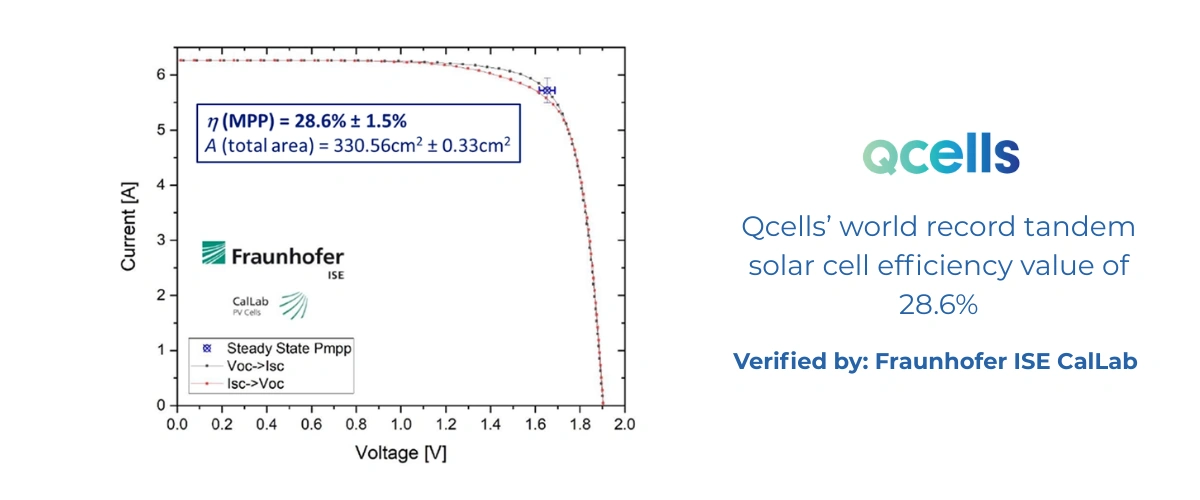
Here's what makes QCells different from a typical silicon panel brand: they're not standing still while perovskite research advances. Hanwha QCells has already demonstrated 28.6% efficiency on M10-sized tandem cells using mass-production processes—and they're on track to commercialize tandem technology within the next few years.

That means when you install QCells silicon panels today, you're buying into a brand with a clear roadmap toward the same efficiency breakthroughs that are making headlines. The comprehensive guide to QCells solar panels breaks down exactly why this matters for long-term homeowners. Your system isn't a dead end—it's step one in a scalable energy plan.

💡 Every Month You Wait Is Money Left on the Table  

Electricity rates in CA, TX, FL, and IL continue to climb. A solar system installed today starts cutting your bill immediately—with no waiting for technology that's still years from your rooftop.  

   Start Saving Now →  

Perovskite vs. Silicon: A Side-by-Side Comparison

The verdict is practical: perovskite is the future of solar—but QCells silicon is the present. And the present is where your electricity bill lives.

Should You Wait for Perovskite Panels? Here's the Real Math

What You Give Up by Waiting

Is solar worth it in 2026 without the tax credit? The answer, for most homeowners, is still yes—and the math explains why. Analysts estimate that a homeowner spending $200–$400 per month on electricity loses that money permanently while waiting for technology that's still 3–5 years from mainstream residential availability. That's $7,200 to $14,400 in utility payments over just three years—money that a solar system installed today would largely offset.

Electricity rates across California (SCE, PG&E), Texas (Oncor, CenterPoint), Florida (FPL, Duke), and Illinois (ComEd, Ameren) have all trended upward over the past decade. There's no indication that trend reverses. Understanding why battery storage matters under NEM 3.0 helps explain why pairing solar with storage today locks in your energy costs against future rate hikes.

What State Incentives Still Exist in 2026

The 30% federal residential solar tax credit expired December 31, 2025. But meaningful state and local programs still make solar financially compelling:

California: The Active Solar Energy System property tax exclusion remains in effect through 2026—meaning your home's assessed value won't increase after installation. The DAC-SASH program offers enhanced incentives for eligible households in disadvantaged communities.

Texas: A statewide property tax exemption covers the full value added to your home by solar. Many municipal utilities also offer rebate programs for residential installations.

Florida: Both sales tax and property tax exemptions apply to solar systems—an immediate discount at the point of sale with no tax hit on your home's value afterward.

Illinois: The Illinois Shines program compensates homeowners for 15 years of solar energy production through renewable energy credits—a valuable long-term income stream on top of bill savings.

Why US Power and QCells Outperform the Competition

Factory-Direct Pricing With No Middlemen

US Power is an exclusive QCells partner with factory-direct access to American-made panels. That means pricing 15–20% below market rates, with no dealer markup buried in your quote. See how QCells vs. the competition stacks up—then factor in 200+ five-star Google reviews and CSLB-licensed consultants who make the process transparent from first call to installation day.

3–4 Week Installation Timeline

While some solar companies quote 3–6 month timelines, US Power completes most installations within 3–4 weeks of approval. That matters because every week of delay is another week of full utility bills.

The 25-year comprehensive warranty covers panels, workmanship, and performance—the kind of commitment that no perovskite provider can match today.

🏆 America's #1 QCells Partner—Factory Direct to Your Roof  

US Power delivers American-made QCells panels at factory-direct pricing, backed by a 25-year comprehensive warranty and a 3–4 week installation timeline. See why 200+ homeowners gave us five stars.  

   Schedule My Free Consultation →  

What the Perovskite Future Means for Today's Solar Owners

You Won't Be Left Behind

One concern homeowners raise is whether installing silicon today means missing out on tandem technology tomorrow. The realistic picture is reassuring. As explored in perovskite-based solar and the next decade, tandem panels when they reach mainstream availability will likely be offered as upgrades or additions rather than full replacements. The inverter, racking, and electrical infrastructure installed today will remain compatible. Your roof's solar foundation holds its value.

Your System Pays for Itself Before Perovskite Goes Mainstream

The average solar payback period in California, Texas, Florida, and Illinois currently ranges from 6–10 years, depending on system size, utility rates, and financing. Perovskite panels entering mainstream residential production at scale is realistically a 2028–2030 proposition—well after most homeowners who install today have already crossed into profit.

By that point, you'll have years of bill savings in your pocket, a paid-down or paid-off system, and the option to evaluate tandem upgrades from a position of financial strength.

The Smart Move Is the One That Pays You Back Now

Perovskite-silicon tandem technology is one of the most exciting developments in renewable energy. The efficiency records are real, the science is sound, and the commercial trajectory is promising. But "promising" doesn't offset your electricity bill today.

Proven QCells silicon panels, installed by US Power with factory-direct pricing and a 25-year warranty, deliver real results right now—in California, Texas, Florida, and Illinois. Every month of waiting is another month of paying utility rates that only trend upward.

The best solar system isn't the one coming in three years. It's the one generating savings on your roof starting next month.

Frequently Asked Questions

Are perovskite solar panels available for home installation in 2026?

Will installing silicon panels now hurt my solar ROI when perovskite arrives?

How does QCells silicon compare to early tandem panels in real-world performance?

What solar incentives are still available in California, Texas, Florida, and Illinois in 2026?

How long does a US Power installation take from consultation to activation?

Solar News and Innovations

Published

November 3, 2025

Team Social Icon 04Team Social Icon 02LinkedIn Icon DarkTeam Social Icon 03

About the Author

As a specialist in solar-roofing synergy, the author focuses on the intersection of structural integrity and energy production. Their expertise lies in optimizing residential energy footprints through the use of high-performance components, including Qcells technology and sleek, all-black solar arrays. The author serves as a consultant for homeowners looking to navigate the technical complexities of modern sustainable building standards.

Related Articles

Our Related Blogs

Blog Image
US Power Logo NewSolar Panels & Technology

Why Qcells Is the Smartest Home Solar Choice in 2025

See why Qcells panels are the smartest choice for California home solar in 2025.

Read More
Blog Image
US Power Logo NewSolar Panels & Technology

Q.HOME CORE Might Be the Energy Storage Solution Your Home

Comparing Q.HOME CORE to other batteries to find the best for your CA home.

Read More
Blog Image
US Power Logo NewSolar Panels & Technology

Solar Panel Production in Los Angeles Year-Round

From summer highs to marine layer lows, here is your solar reality check guide.

Read More

Get an instant solar estimate using satellite!

FeaturePerovskite (Tandem)Silicon (Monocrystalline)
Lab Efficiency RecordUp to 34.85%~26–27%
Commercial Efficiency24–29% (limited)20–23% (widely available)
DurabilityStill being validatedExcellent (25–30 years)/td><
Residential AvailabilityExtremely limitedWidely available
Warranty CoverageMinimal25 years (QCells via US Power)
Ready for Your Roof?Not yetYes