

Southern California homeowners often wonder: can my solar installer change the panel layout after I sign? Learn when solar designs become legally binding in California and what protections you have.
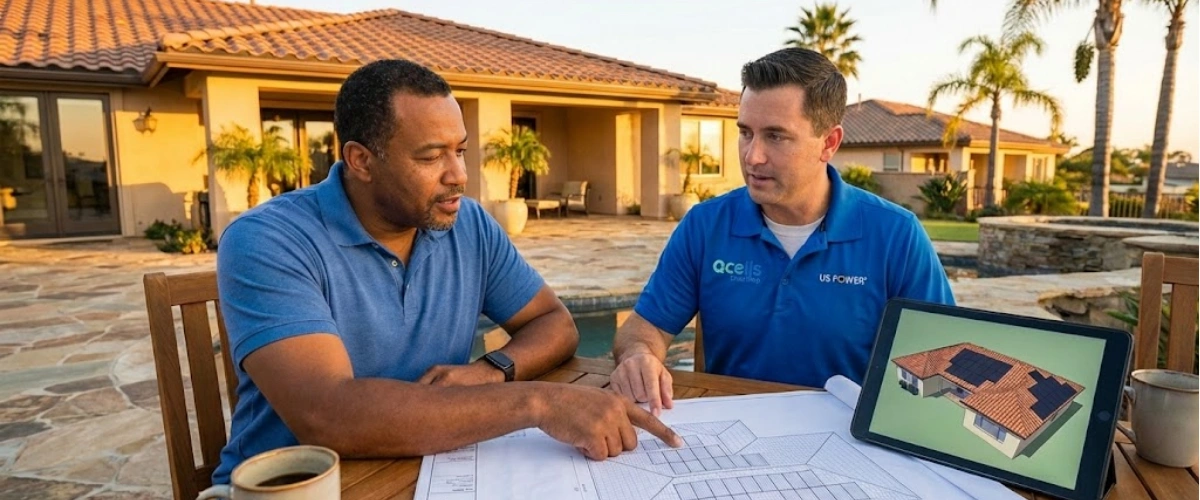
Minor panel adjustments on the same roof plane are common and don't need your approval. Moving panels to other roof sections or changing system size requires your sign-off, so confirm what your contract says.
You've been researching solar for months. You finally signed a contract with a layout that looked perfect—panels on your south-facing roof, battery near the garage, everything positioned to maximize your savings.
But then a nagging question hits you: What's stopping the installer from showing up and putting panels somewhere completely different? Can they just decide to install on the ground instead? Move everything to the shady north side? Change the system size?
If you're asking these questions, you're not alone. Hundreds of Southern California homeowners have the same concern, especially after hearing horror stories about solar companies making unauthorized changes. The good news? California has strict regulations that protect you—but only if you know when and how they apply.
The confusion starts early in the solar process. Most companies ask you to sign a contract before anyone visits your property for detailed measurements. You see a preliminary design based on satellite images, sign paperwork, and then... wait.
That gap between signing and installation creates anxiety. You've committed to spending $20,000-$40,000, but the actual design isn't finalized yet. What if the installer decides your roof won't work and switches everything around without asking?
This concern is especially common in Los Angeles, Orange County, and Ventura areas where roof complexity varies wildly. Tile roofs, HOA restrictions, shading from neighboring properties, and older electrical panels can all force design changes.
Before you move forward with any solar company, make sure you understand things you must know before going solar in California to avoid surprises during the design process.
Here's the straightforward answer: Your solar layout becomes legally binding when the installer submits it to your local Authority Having Jurisdiction (AHJ) for permit approval.
In California, this happens in a specific sequence:
You sign a contract that references a proposed layout. This design is based on satellite imagery, your electricity bills, and initial conversations about your energy goals. At this stage, the layout is not final.
The contract should clearly state that the design is preliminary and subject to engineering review. Reputable companies include language like "final layout pending site survey and engineering approval."
After contract signing, the installer sends an engineering team to your property. They measure your roof, inspect your electrical panel, check for shading, and assess structural integrity.
This is when potential issues surface. Maybe your electrical panel needs upgrading. Perhaps there's more shading than satellite images showed. The engineering team documents everything that could affect the final design.
Based on the site survey, the design team creates the official system plan. This includes exact panel placement, electrical diagrams, structural calculations, and equipment specifications.
Critical step: The installer should send you this finalized design for your written approval before moving forward. If they don't, that's a red flag.
Once you approve the final design, the installer submits it to your city or county building department for permit approval. This submission includes:
This is when your layout becomes legally binding. The AHJ stamps the plans, and those stamped drawings become the official scope of work. Any changes after this point require a formal permit revision.
California's Contractors State License Board (CSLB) has clear rules about solar contracts and installation scope. Here's what protects you:
Under CSLB regulations, every solar contract must include a clear description of work to be performed. For solar installations, this means specifying:
If your contract says "roof-mounted system" and the installer shows up to do a ground-mount, that's a violation. They can't make that switch without formal contract amendment and your written approval.
One concern from the Reddit discussion was whether installers could switch from roof to ground installation. They absolutely cannot do this without your approval.
Ground-mounted and roof-mounted systems require different:
Switching between these would require pulling a new permit, which means submitting new drawings. You'd have to sign off on the change, and it would likely affect your project cost.
Here's where it gets nuanced. Installers can make minor placement adjustments on installation day without revising permits—but only under specific conditions:
Allowed minor adjustments:
Not allowed without permit revision:
The key difference: minor adjustments maintain the same structural load and electrical configuration. Major changes require new engineering calculations and permit amendments.
Understanding the full timeline helps you know when to ask questions and what to expect. Here's how it works with professional installers in Southern California:
You meet with a solar consultant who evaluates your energy usage, discusses your goals, and creates a preliminary system design. You review a comprehensive homeowner's guide to buying solar panels in SoCal and sign a contract with this preliminary layout attached.
The contract should clearly state: "Preliminary design subject to site survey and final engineering approval."
An engineering team visits your property. They:
This typically takes 1-2 hours. Some companies do this before contract signing, others after. Either approach works if they clearly communicate when the design gets finalized.
The design team incorporates survey findings into a complete system plan. They send you:
Critical moment: You must review and approve this design in writing. Don't skip this step. Ask questions about anything that changed from the preliminary design.
The installer submits your approved design to the local building department. Processing times vary:
During this period, the building department reviews structural calculations, electrical plans, and code compliance. They may request minor revisions, which the installer handles.
Once approved, you receive stamped permit drawings. These are now the official plans.
Installation typically takes 1-3 days depending on system size. The crew follows the stamped permit drawings exactly. A city or county inspector visits to verify compliance with approved plans.
If you want to understand what to expect with a solar panel installation, including daily timeline and crew size, this guide walks through the entire installation process.
The installer submits interconnection paperwork to SCE, PG&E, or your local utility. They review the system and issue Permission to Operate (PTO). Timeline varies by utility, but typically 2-4 weeks in Southern California.
Not all solar contracts are created equal. Here's what you should insist on before signing:
Your contract should explicitly state:
"Final system design will be provided to homeowner for written approval prior to permit submission. Homeowner has right to request reasonable design modifications."
This clause ensures you see and approve the final layout before it becomes official.
The contract should outline how changes get handled:
"Any modifications to approved design requiring permit revision must be documented in writing and signed by both parties. Additional costs, if any, will be disclosed before changes are made."
This prevents installers from making unauthorized changes and charging you later.
Demand exact equipment details, not vague categories:
Bad: "Premium solar panels and inverter"Good: "QCells Q.PEAK DUO BLK ML-G10+ 400W panels, Enphase IQ8+ microinverters"
Vague specifications let installers substitute cheaper equipment without your knowledge.
Look for production guarantees tied to specific system specifications:
"System designed to produce approximately X kWh annually based on Y panels in Z configuration. Production guarantee valid only if system installed per approved design."
This ties the promised savings to the actual layout.
When choosing a solar company in California, these contract elements separate professional installers from fly-by-night operations. Understanding what essential elements every solar quote should include helps you evaluate proposals side-by-side.
At US Power, we've refined our design process specifically for Southern California's unique challenges—tile roofs, HOA requirements, and strict local codes in LA, Orange County, and Ventura.
Unlike companies that rush you into signing, we conduct thorough site evaluation during your free consultation. Our CSLB-licensed consultants:
You sign knowing what's actually feasible for your property.
After contract signing, our engineering team completes the site survey and creates final drawings. Before permit submission, we schedule a design review meeting.
You see exactly what's going on your roof. We explain why panels are positioned in specific locations, how wiring will be routed, and where equipment will be mounted. You can request adjustments if needed.
We don't submit permits until you've provided written approval of the final design. This typically happens via email with attached engineering drawings and a simple approval form.
This step protects both parties. You know exactly what you're getting. We know you're satisfied with the design before we invest in permitting.
Our installation crew arrives with stamped permit drawings in hand. They install exactly what you approved—same panel count, same locations, same equipment. Our project manager checks in during installation to ensure everything matches your expectations.
We've completed 180+ installations across Southern California with a 5-star average on Google Reviews. That consistency comes from our commitment to design transparency.
Watch out for red flags when choosing a solar company that might indicate rushed or unclear design processes.
California's NEM 3.0 policy adds another layer to solar design considerations. Under NEM 3.0, solar-only systems receive significantly lower export credit rates, making battery storage nearly essential for maximizing savings.
Battery location affects installation costs and system performance. Common options:
Garage installation: Most common, easiest access to electrical panel
Exterior wall: Works when garage isn't near main panel
Utility room: Ideal for climate protection but not always available
Your initial design should specify battery location. Changes after permit approval may require:
NEM 3.0 systems need careful sizing to maximize self-consumption. Your solar array should be sized to:
This makes design accuracy even more critical. Under-sizing means buying expensive grid power. Over-sizing wastes production during low-value periods.
Your solar layout becomes legally binding when your installer submits approved designs to your local building department for permits. At that point, the stamped drawings become the official scope of work, and changes require formal permit revisions.
Key protections you have in California:
The best protection? Work with installers who build design approval into their process from day one. Companies that rush you through preliminary designs or avoid showing final layouts before permit submission are waving red flags.
At US Power, we've installed over 180 systems across Southern California with zero complaints about unauthorized design changes. Our secret? There is no secret—just transparent communication, detailed design review, and respect for homeowner approval at every step.
Rising SCE and PG&E rates make solar more valuable every month. The question isn't whether to go solar, but whether you're working with an installer who protects your interests throughout the design process.
Get your free consultation with a CSLB-licensed solar expert who'll walk you through our entire design approval process. No pressure, no surprises, just clear answers to your layout questions.


Van Nuys homeowners slash bills and boost value—solar delivers the best ROI in 2025.
The 30% Solar Tax Credit requires installation and activation before December 31st!
SCE and SDG&E calculate net metering credits differently. Here's why it matters.








Copyright © 2026 US Power - Axia by QCells. All Rights Reserved.
Get an instant solar estimate using satellite!