

To choose a solar company in Los Angeles, verify its CSLB license, get the state disclosure document, pay no more than $1,000 upfront, and compare quotes by price per watt and annual kWh. Those checks protect a system that should last 25 years or more. This guide walks through all seven.

Choose a Los Angeles solar company by verifying its CSLB license, getting the state disclosure document, paying no more than $1,000 upfront, and comparing quotes by price per watt and annual kWh.
Three solar companies knock on your door in the same month. One promises "free solar," one wants a deposit today, and one quotes a monthly payment without ever asking for your bills. All three say they are the best in Los Angeles.
Choosing a solar company in Los Angeles is really about checking a handful of things state law already requires. This guide covers seven checks to run before you sign, the red flags that should end the conversation, and how LADWP and SCE rules change what a good design looks like.
Pick a company that passes seven checks: an active CSLB license, a registered salesperson, the state disclosure document, a legal deposit, quotes you can compare, a design built for your utility, and written warranties. The table below is a quick version you can use while you compare quotes.
| Check | What to ask for | Red flag |
|---|---|---|
| 1. CSLB license | License number on the contract; active C-46, C-10 or B | No number, or a license in another name |
| 2. Salesperson | HIS registration pocket card | Won't show ID or registration |
| 3. Disclosure document | Solar Energy System Disclosure Document on page one | Missing, or in a different language than the pitch |
| 4. Payments | Deposit of $1,000 or 10% max; cancellation terms in writing | Large deposit or same-day pressure |
| 5. Quote numbers | Price per watt and annual kWh production | Monthly payment only |
| 6. Utility fit | Design based on LADWP or SCE rules | Same design for every address |
| 7. Warranties | Product, performance and workmanship terms in writing | Verbal promises only |
California requires a contractor's license to install solar. Installers usually hold a C-46 Solar, C-10 Electrical or B General license. Ask for the license number, then look it up on the CSLB license check to confirm it is active, matches the company name on your contract, and shows any complaints or discipline.
Anyone selling home improvement work away from the contractor's office must be registered with CSLB as a Home Improvement Salesperson (HIS). A legitimate salesperson will show an HIS pocket card when asked. If someone refuses, you are not talking to an authorized seller.
State law (Business and Professions Code 7169) requires every solar sale, loan or lease to include a Solar Energy System Disclosure Document on the front page of the contract. It lists the total cost and payments, how to file complaints, and your cancellation rights, in the language used during the sales pitch. SCE customers must also receive and sign the CPUC's Solar Consumer Protection Guide before interconnection. LADWP customers do not get the CPUC guide, but the state disclosure document still applies to every contract.
California caps home improvement deposits at $1,000 or 10% of the contract price, whichever is less, unless the contractor posts an approved bond. You can cancel a solar contract within three business days, or five business days if you are 65 or older. Anyone asking for a large deposit on day one is a warning sign.
A monthly payment tells you almost nothing. Compare price per watt and estimated annual kWh production. EnergySage puts the California average at about $2.52 per watt in 2026, so quotes far above that need a clear reason, such as a battery or roof work. Run a first estimate with the US Power solar calculator before you meet anyone.
Here is why the right numbers matter. Quote A is $30,000 for an 8 kW system, or $3.75 per watt. Quote B is $22,000 for 7 kW, or $3.14 per watt. Quote B looks cheaper, but if Quote A's larger system covers your full annual usage and Quote B leaves you buying 1,500 kWh a year from the utility, the gap narrows. Our guide to how many solar panels a Los Angeles home needs shows how to size against your real usage.
Your utility decides what a good design looks like. The City of Los Angeles is served by LADWP, which still credits exported solar at the retail rate. Santa Monica, Culver City, Long Beach, Torrance and many other cities are served by SCE, where NEM 3.0 credits most exports at about 5 to 8 cents per kWh. Burbank, Glendale and Pasadena run their own utilities. A company that pitches the same design for every address is not designing for yours. For SCE homes, our breakdown of why Southern California electricity bills are so high explains how NEM 3.0 and time-of-use rates shape sizing and battery decisions.
You need three: a product warranty from the panel maker, a performance warranty on output (about 90% or more at year 25 on current Qcells and REC panels), and a workmanship warranty from the installer covering wiring, mounting and roof leaks. Ask who backs each one if the installer closes.
Inverters and batteries carry their own warranties, typically 10 to 15 years depending on the brand, so ask for those terms too. If your roof has fewer than 10 years left, consider replacing it before installing, since removing and reinstalling panels later adds cost that no warranty covers.
A complete quote names the exact panel, inverter and battery models, the system size in kilowatts, and the estimated annual production in kWh. It shows the total price, the price per watt and any separate charges for roof work, main panel upgrades, permits or interconnection.
It should also spell out the payment schedule, with each payment tied to a milestone such as installation or passed inspection, not a calendar date. Finally, it should list every warranty with its length and who backs it, plus an estimated completion date. If any of these are missing, ask for them in writing before you compare prices. Two quotes that look $3,000 apart often turn out to be similar once a panel upgrade or battery is counted on both.
Some sales companies hand the work to subcontractors you never meet. Ask whether the crew is in-house, who supervises the job, and whose license covers the installation. The answer tells you who to call if something goes wrong in year eight.
A good installer files the city permit, schedules inspections and submits the interconnection application to LADWP or SCE for you. Ask how many projects they have completed with your utility and how they will update you while you wait.
Ask what software produced the estimate, which roof faces were used, and how shade was modeled. A credible estimate uses your actual roof and 12 months of usage, not a neighborhood average.
Ask who monitors the system, how quickly they respond to a service call, and whether monitoring is included for the life of the warranty. Solar should run for decades, so the relationship does too.
Walk away from anyone who says the 30% federal tax credit still applies to a system you buy. It expired on December 31, 2025. Be wary of "free solar" or "government program" pitches, which usually describe a lease or PPA.
Same-day signing deadlines, deposits above $1,000, a contract without a license number, or a missing disclosure document are all reasons to stop. So is a quote built without looking at your electric bills.
Many Los Angeles homeowners first hear about solar from a knock on the door. That is legal, but take the salesperson's name, company and license number, then verify them yourself before sharing your utility account login or signing anything on a tablet.
Each option suits a different household. Buying with cash or a loan gives you the most long-term savings and keeps the system simple when you sell. Leases and PPAs cost less upfront. Under current rules, the provider can still claim a federal commercial credit if the system is placed in service by the end of 2027, and that value is often passed on as a lower payment. Compare the total 25-year cost of each option side by side. For a lease or PPA, ask for the annual payment escalator in writing and what happens to the agreement if you sell your home. For a loan, ask for the APR, the term and whether any dealer fee is built into the system price, since that fee can raise the real cost well above the cash price.
A typical Los Angeles project runs from design to Permission to Operate in several weeks to a few months. California's SB 379 requires cities to offer automated permits for most home systems, which can shorten the permit step. Utility review, from interconnection application to Permission to Operate, often takes the longest, and timing differs between LADWP and SCE. Our homeowner's guide to going solar in California breaks down each step.
Timing matters this year. California's solar property tax exclusion only covers systems completed before January 1, 2027, so ask any company for a realistic completion date in writing.
We are CSLB-licensed, and every consultation starts with a real 12-month bill analysis, not a guess at your usage. We design for your utility's rules, whether that is LADWP or SCE, and include a battery only when it earns its cost. We also lay out cash, loan and lease options side by side, so you can compare total cost instead of just the monthly payment. For panel options, see our guide to the best solar panels in 2026. For storage, compare the best home solar batteries in 2026.
The right solar company in Los Angeles passes all seven checks: a CSLB license, a registered salesperson, the state disclosure document, a legal deposit, comparable quotes, a utility-specific design and written warranties.
US Power builds every design from your real 12-month bill analysis and offers exclusive factory-direct Qcells pricing, roughly 15-20% below typical market pricing. Every system is backed by a 25-year comprehensive warranty and typically installs in 3 to 4 weeks once the design is approved. More than 200 five-star Google reviews come from homeowners across Los Angeles. When you are ready to compare, book your free 12-month bill analysis.
Check the license first. Everything else gets easier.


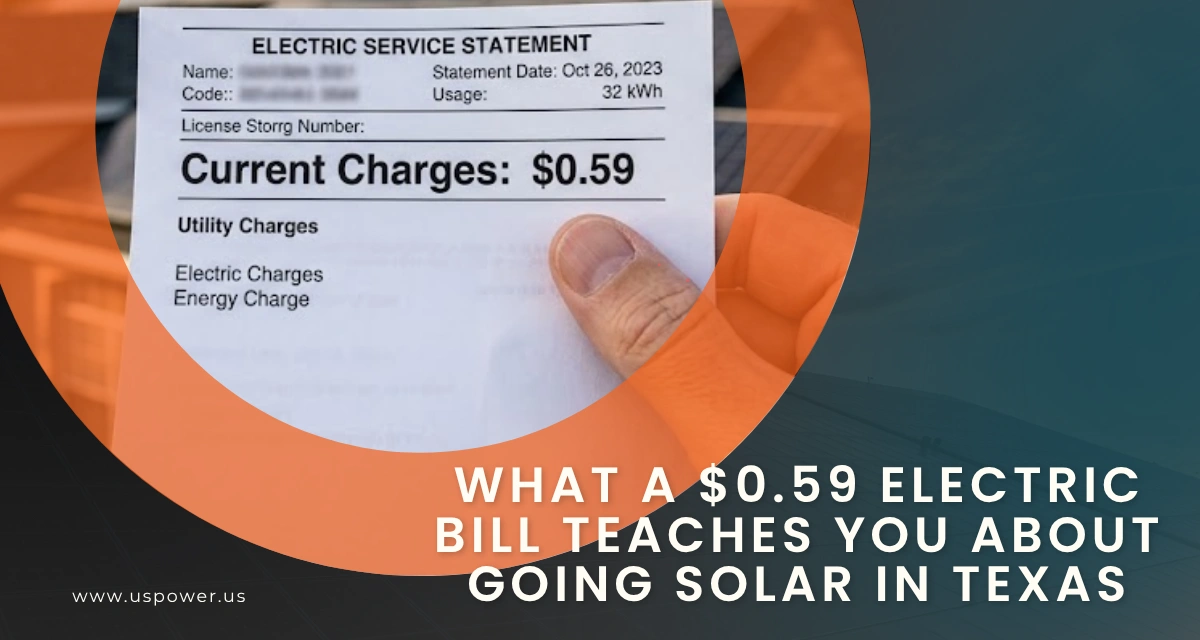
A Texas homeowner got an electric bill for $0.59. Here's what happened and learn.

Chatsworth homeowners can unlock major energy savings with today’s best solar panels.

2025 solar deadlines are near—start saving today. Act to claim your 30% savings.








Copyright © 2026 US Power - Axia by Qcells. All Rights Reserved.
Get an instant solar estimate using satellite!