
Lower than cash upfront, no lien, and the option to own it starting year 6.

California electricity rates keep climbing, and NEM 3.0 has made exporting solar power far less valuable than it used to be. At the same time, most homeowners are wary of a 25-Year lease with payments that escalate every year. A prepaid solar lease is a different structure entirely, one upfront payment that's actually lower than paying cash for the same system, no ongoing lease payments, and the option to fully own the system starting in year six.
This guide covers what a prepaid solar lease actually is, how it differs from a traditional lease, and how US Power's program works for California homeowners.
A traditional solar lease has you paying a monthly fee for years, often with a built in annual increase, while a third party keeps ownership the entire time. A prepaid solar lease flips that structure. You make a single upfront payment instead of ongoing monthly payments, and that upfront price is typically lower than what you'd pay to buy the same system with cash outright. The lease term runs 25 years, but you get the option to purchase the system at fair market value starting as early as year six, well before the term ends.
During the initial holding period, a financing partner owns the system rather than the homeowner. That structure exists because certain tax incentives, including commercial solar tax credits, are only available to the entity that owns the equipment. By having a qualified third party hold ownership during that period, those incentives get captured and used to reduce your total cost, savings that get passed to you as the homeowner rather than absorbed entirely by the financing company
It's worth being direct about this since the two are easy to confuse. The federal residential solar tax credit, the 30 percent credit homeowners used to claim directly, ended December 31, 2025. A prepaid lease structure works differently. It uses a separate commercial solar tax incentive, available to the entity that owns the equipment during the lease term, not to the homeowner directly. That's precisely why third party ownership during the initial period matters, it's what makes that incentive accessible at all now that the homeowner credit is gone.
Through its partnership with Participate Energy, announced in July 2026, US Power offers a prepaid lease structure that channels this commercial incentive back into lower upfront costs for California homeowners, delivered through the same factory-direct Axia by Qcells relationship that backs US Power's standard installations. For the full breakdown of how the partnership itself works, see US Power's prepaid lease program with Participate Energy. Understanding how Qcells, Axia, and EnFin fit together helps clarify how the factory-direct pricing stays consistent whether you're buying outright or going through this prepaid structure.
Once the upfront amount is paid, there are no additional recurring costs for the entire 25-year term, unlike a traditional lease where payments continue the whole time and typically increase every year under an escalator clause. The one exception is if you choose to finance the upfront prepayment itself through a third-party lender, in which case you'd have loan payments on that financed portion, not a separate lease payment.
Qualifying for a prepaid lease doesn't require a FICO score or credit underwriting, and the agreement doesn't place a UCC lien on your home. That's a meaningful difference from financed ownership, where a loan typically does attach a lien until it's paid off.
Unlike a traditional lease, which can leave a homeowner making payments indefinitely with no ownership at the end, a prepaid lease gives you the option to buy the system at fair market value starting in year six of the 25-year term. That option matters most when you eventually sell your home, since the agreement is fully transferable to the new buyer with no credit check or underwriting required on their end, just a simple transfer notice.
Rising SCE and PG&E rates have made a predictable, front-loaded solar cost more appealing to homeowners who want to lock in their energy costs rather than face another rate increase every year on top of a mortgage or existing bills.
Since NEM 3.0 reduced export credit rates significantly, the financial case for solar now leans heavily on using the power you generate rather than exporting it. That shift applies the same way whether you own your system outright or go through a prepaid lease structure, since either path still produces electricity you use directly instead of buying from the grid.
Homeowners planning to stay in their home for several years, who want predictable costs with no ongoing monthly solar payment, and who may not have the tax liability to benefit from owning a system outright from day one.
Ask exactly what the purchase price would be if you exercise the year-six buyout option, what property types are excluded (condos, townhouses, and mobile homes can have limitations), and how the upfront prepayment compares to simply financing a purchase. A consultant who can answer all of this clearly, in writing, is giving you what you need to compare it fairly against other options like a standard solar loan.
Whether you go through the prepaid lease structure or buy outright, US Power's installations use the same American-made, Tier 1 Qcells equipment, CSLB-licensed consultants, and a 25-year comprehensive warranty covering panels, workmanship, and performance.
Through the Participate Energy partnership, US Power's prepaid lease program is designed around California's rate structure and NEM 3.0 rules specifically, not a generic nationwide template, which is why it's worth discussing directly with a consultant rather than assuming it works the same way a national provider's version might.



PG&E wants you to choose a rate plan, and you have no idea which one won't cost you.
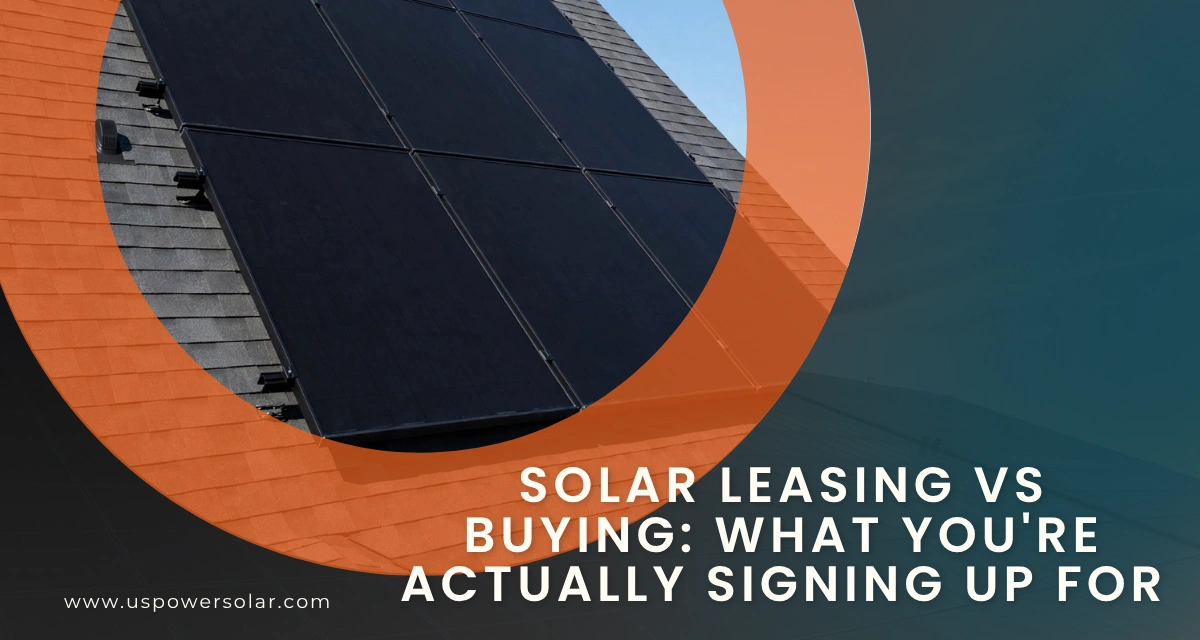
Before you sign a solar lease or buy, know what the contract really commits you to.

Learn why owning Qcells solar panels through US Power beats confusing leases and PPA.







Copyright © 2026 US Power - Axia by QCells. All Rights Reserved.
Get an instant solar estimate using satellite!