

Las promesas de recuperación solar varían de 5 a más de 12 años. Aquí están los cálculos reales.
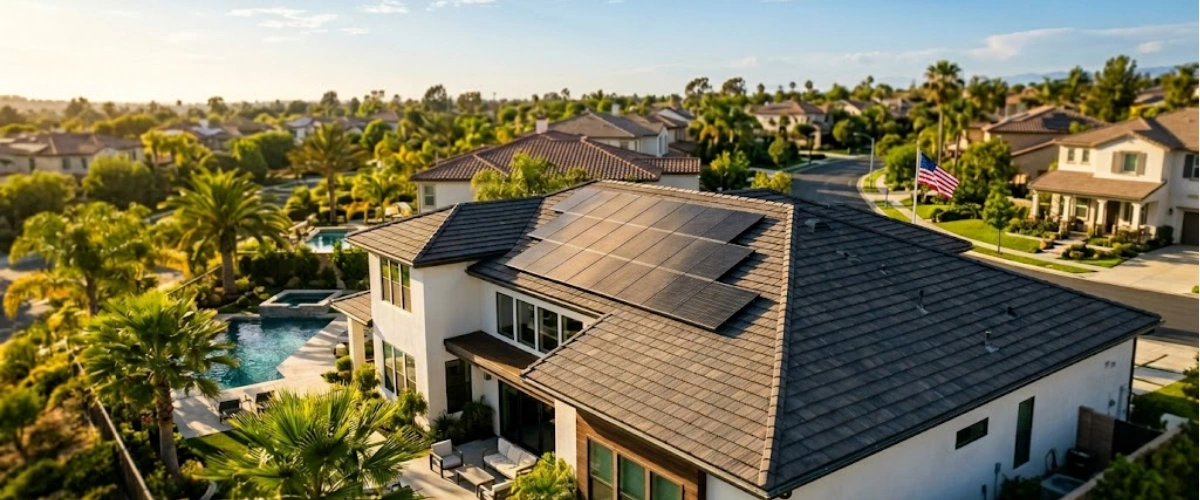
Sí, para la mayoría de los propietarios de viviendas en California, Texas, Florida e Illinois. Los periodos de recuperación son más largos que antes, pero el aumento de las tarifas eléctricas y los incentivos estatales mantienen sólidos los ahorros a largo plazo. Sus resultados dependen de su consumo.
Ya has hecho tu tarea. Has hablado con varias empresas de energía solar y ahora te enfrentas a plazos muy distintos: una dice 5 años, otra 8 y una tercera te mostró un gráfico que no terminaste de entender. ¿Te suena familiar?
La verdad es esta: todas esas cifras pueden ser correctas. El periodo real de recuperación de la inversión solar no es igual para todos. Depende de dónde vivas, cuánto pagues por la electricidad, cómo esté diseñado tu sistema y quién lo instale. En estados como California, Texas, Florida e Illinois, estas variables pueden cambiar tu plazo en años en cualquier dirección.
Esta guía desglosa lo que realmente determina tu punto de equilibrio solar —usando cifras reales de 2026— para que dejes de adivinar y empieces a tomar una decisión con confianza.
Cuando una empresa de energía solar te habla de una "recuperación en 6 años", está alimentando una fórmula con variables que solo ellos controlan. Ellos eligen qué tarifa eléctrica asumir, cuánto crédito de producción aplicar y si deben tener en cuenta el aumento de los costos de los servicios públicos.
Si cambias cualquiera de esos datos, la cifra cambia drásticamente. Eso no es engaño, es matemática. Pero es la razón por la que necesitas entender qué está impulsando realmente tu estimación antes de firmar nada.
En esencia, la recuperación solar es simplemente el resultado de dividir dos números: el costo neto total de tu sistema entre tu ahorro anual de electricidad. Si tu sistema cuesta $18,000 después de incentivos y te ahorra $2,400 al año, tu recuperación es de 7.5 años. Así de simple.
La complejidad surge al proyectar esos ahorros con precisión, especialmente cuando las tarifas de los servicios públicos siguen cambiando, las reglas de medición neta se modifican y tus patrones de consumo evolucionan con el tiempo.
Este es el factor que más importa y al que menos atención se le presta en las presentaciones de ventas. Los propietarios que pagan tarifas más altas se benefician más de cada kilovatio-hora que producen sus paneles.
Los propietarios de viviendas en California con SCE pagan tarifas que han subido un 12.9% solo en 2026, y entender por qué las facturas de electricidad siguen subiendo en el sur de California ayuda a explicar por qué esa trayectoria no se está desacelerando. En Texas, las tarifas promedian alrededor de $0.138/kWh, lo cual es más bajo que en California, pero se compensa con horas de sol excepcionales: típicamente de 5.3 a 6.1 horas pico por día. Florida se sitúa cerca de los $0.135/kWh, pero lo compensa con un alto uso de aire acondicionado, lo que genera ahorros anuales sustanciales para un sistema bien dimensionado. Los propietarios en Illinois pagan tarifas superiores al promedio del Medio Oeste, y el programa de Créditos de Energía Renovable Solar (SREC) del estado añade una fuente de ingresos significativa además del ahorro en la factura.
Si estás en California, esta es la conversación que quizás tu instalador no esté iniciando. Bajo NEM 3.0, la tasa de exportación por el exceso de energía solar enviado a la red cayó a aproximadamente $0.04–0.05 por kWh. Eso en comparación con los $0.30–0.35 por kWh que pagas para comprar energía a SCE, PG&E o SDG&E.
La implicación es significativa: un sistema diseñado para la sobreproducción y la exportación es ahora una inversión mucho más débil. Un sistema diseñado para el autoconsumo —dimensionado para cubrir su uso real y combinado con una batería— es donde reside la verdadera rentabilidad financiera en 2026. Comprender cómo funciona la facturación solar bajo NEM 3.0 es esencial antes de dimensionar cualquier sistema en California.
Texas, Florida e Illinois tienen estructuras de medición neta más favorables, lo que puede reducir considerablemente el periodo de recuperación de la inversión en comparación con los sistemas solares sin batería de California.
No todos los sistemas solares están construidos bajo el mismo estándar. Un sistema que utiliza paneles de menor eficiencia puede requerir más espacio en el techo y aun así tener un rendimiento inferior al de una instalación más pequeña y de mayor calidad. Un sistema con un precio inicial bajo puede costarle más a largo plazo debido a una menor producción durante 25 años.
El periodo real de recuperación de la inversión solar en California varía significativamente según la marca de los paneles, la calidad de la instalación y qué tan bien se ajuste el sistema al consumo real de su hogar. Estas no son preocupaciones abstractas; son la diferencia entre recuperar su inversión en 7 años o en 12.
California tiene las tarifas eléctricas más altas de los EE. UU. continentales —con un promedio de $0.30–0.47/kWh según su compañía eléctrica y nivel de consumo—, lo que sigue haciendo de la energía solar una inversión sólida a pesar de NEM 3.0. La distinción crítica en 2026 es el almacenamiento en baterías.
Los clientes de SDG&E con energía solar y batería suelen recuperar su inversión en 6–8 años. Los clientes de SCE y PG&E con almacenamiento en baterías promedian entre 8 y 10 años. Los sistemas solares sin baterías bajo NEM 3.0 a menudo extienden este plazo a 11 años o más. Comprender si las baterías solares valen la pena en su territorio específico de California puede cambiar completamente los cálculos.
La combinación en Texas de tarifas inferiores al promedio, una exposición solar excepcional y la ausencia de impuestos estatales sobre la renta crea una rentabilidad intermedia sólida. Con 5.3–6.1 horas pico de sol al día, un sistema bien dimensionado genera una producción sustancial durante todo el año. No existe una medición neta obligatoria a nivel estatal, pero muchas empresas de servicios públicos propiedad de inversores ofrecen programas de recompra que mejoran la economía del proyecto.
Florida se beneficia de una medición neta a tarifa minorista completa en todo el estado y de una de las cargas de consumo de aire acondicionado más altas del país, lo que significa que la energía solar cubre una mayor parte de su uso más rápidamente. Con 5.0–5.5 horas pico de sol diarias y un promedio estatal de $0.135/kWh, un sistema correctamente dimensionado puede compensar entre el 85% y el 100% del uso anual de electricidad.
Los propietarios de viviendas en Illinois se benefician del programa SREC del estado, que le paga por megavatio-hora generado por su sistema, generalmente entre $60 y $80 por certificado. Combinado con tarifas eléctricas superiores al promedio en el Medio Oeste, los ingresos por SREC acortan significativamente el periodo de recuperación en comparación con los estados que no ofrecen incentivos basados en el rendimiento.
Una batería cambia la ecuación financiera de dos maneras. Primero, le permite almacenar la producción solar del mediodía para usarla durante las horas pico de la tarde, aumentando drásticamente el autoconsumo. Segundo, le protege contra las bajas tasas de exportación bajo NEM 3.0 al mantener más energía dentro de su hogar.
Para los clientes de SDG&E, la diferencia puede ser de 4 a 6 años menos en su periodo de recuperación en comparación con un sistema solo solar. Para los clientes de SCE y PG&E, generalmente ahorra de 2 a 3 años. Comprender cuánto ahorran los paneles solares en California es un punto de partida útil, pero su decisión sobre la batería debe ser parte de ese mismo cálculo, no una idea de último momento.
Los cortes de energía causados por huracanes y las olas de calor del verano son preocupaciones reales en ambos estados. El retorno de inversión (ROI) financiero de una batería en Texas y Florida puede ser ligeramente más largo que en California, pero el valor de la resiliencia —mantener su hogar con energía durante cortes de varios días— añade una dimensión que los cálculos de rentabilidad pura no logran captar.
La mayoría de las empresas de energía solar compran paneles a través de distribuidores, lo que añade un margen en cada nivel antes de que el costo llegue a usted. Como socio exclusivo de QCells, US Power obtiene paneles fabricados en EE. UU. directamente de fábrica, generalmente entre un 15 y un 20 % por debajo del precio de mercado. Ese menor costo inicial reduce directamente su tiempo de recuperación de la inversión desde el primer día.
Al comparar presupuestos, los costos ocultos que afectan sus ahorros solares suelen ser invisibles hasta después de la instalación. Los precios directos de fábrica eliminan uno de los más comunes antes de que usted firme nada.
Un sistema que funciona por debajo de lo esperado en el octavo año no solo es frustrante; extiende silenciosamente su periodo de recuperación mientras usted sigue con su vida. La garantía integral de 25 años de US Power cubre paneles, mano de obra y rendimiento. Si algo no funciona según lo previsto, nosotros lo solucionamos.
Esa garantía es importante porque su cálculo de rentabilidad asume una producción constante. Sin una cobertura de rendimiento, esa suposición puede erosionarse silenciosamente con el tiempo.
Cuanto antes esté operativo su sistema, antes dejará su medidor de trabajar en su contra. Los equipos de instalación de US Power, con licencia CSLB, completan la mayoría de los proyectos en un plazo de 3 a 4 semanas tras la aprobación, más rápido que el promedio de la industria. Al buscar las formas más inteligentes de pagar por la energía solar, obtener el Permiso para Operar (PTO) rápidamente es una consideración financiera real.
Si solicita un préstamo solar, los intereses pagados durante el plazo del préstamo se suman al costo efectivo de su sistema. Un sistema de $20,000 al 7 % durante 20 años cuesta significativamente más en total de lo que sugiere el precio de etiqueta. Compare el costo total del préstamo —no solo el pago mensual— con sus ahorros anuales proyectados para ver su verdadera rentabilidad.
Instalar paneles solares en un techo que necesita ser reemplazado en 5 años es un error fácil de evitar y costoso de corregir. La retirada y reinstalación de los paneles suele costar entre $3,000 y $5,000 y añade años a su cronograma de recuperación de la inversión. Si a su techo le quedan menos de 5 a 7 años de vida útil, repárelo primero o incluya ese costo en su análisis.
Los propietarios que obtienen los mejores periodos de recuperación no son los que pasaron meses analizando promedios. Son los que obtuvieron un presupuesto transparente y personalizado de una empresa que dimensionó el sistema para su hogar, no para una plantilla de hoja de cálculo.
Para los propietarios en California, Texas, Florida e Illinois, la energía solar sigue teniendo mucho sentido financiero en 2026. El aumento de las tarifas de servicios públicos, los incentivos estatales y la vida útil de los paneles de más de 25 años hacen que los números funcionen para la mayoría de los hogares. Cuanto antes obtenga sus números reales, antes empezará su medidor a trabajar para usted en lugar de en su contra.
US Power ofrece consultas virtuales o presenciales gratuitas, sin presión y sin cargos ocultos. Más de 200 reseñas de cinco estrellas. Paneles fabricados en EE. UU. Una garantía de 25 años que cumple lo que promete. Empiece aquí.


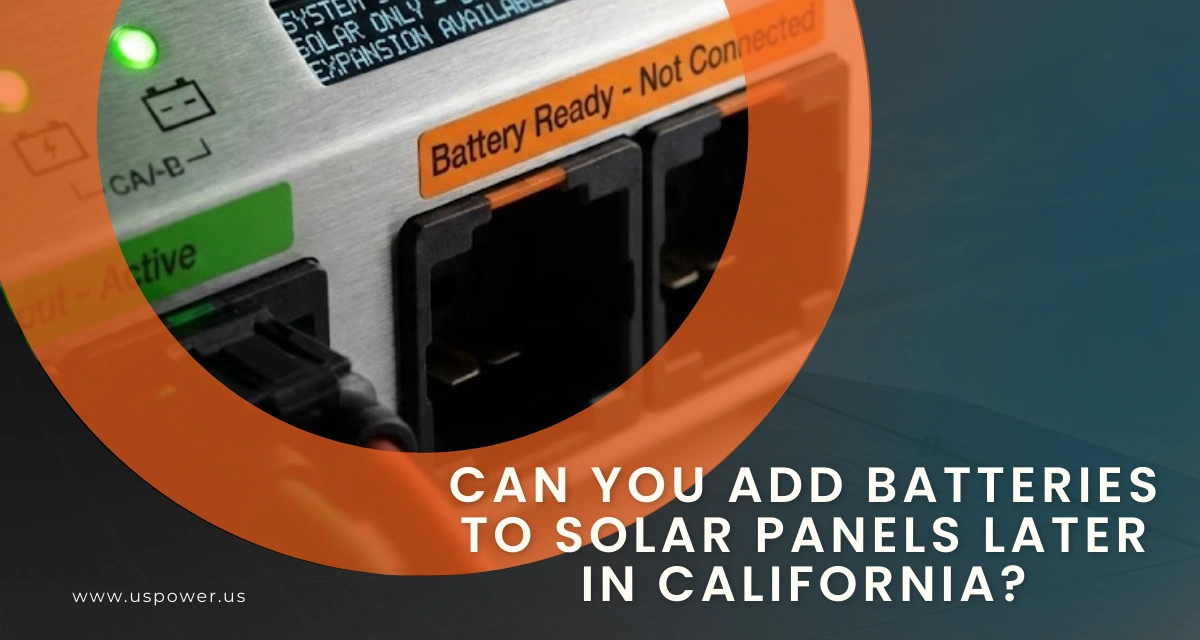
No puedo pagar 15k en baterías, pero necesito energía solar YA. ¡Llámenos hoy!

SGIP aún puede significar una batería a $0 para el hogar ideal, vea quién califica.
Reduce tus facturas en el sur de California con incentivos solares 2025 de US Power.







¿Listo para tomar el control de tu energía? ¡Llámanos hoy!
818-650-8010Licencia de contratista n.º: 1144368

Copyright © 2026 US Power - Axia by QCells. Todos los derechos reservados.
¡Obtenga un presupuesto solar al instante mediante satélite!