

Most homeowners assume going solar takes months. The Axia by Qcells installation timeline, managed by US Power, runs from your first consultation to Permission to Operate in just three to four weeks. Here is how every stage works.
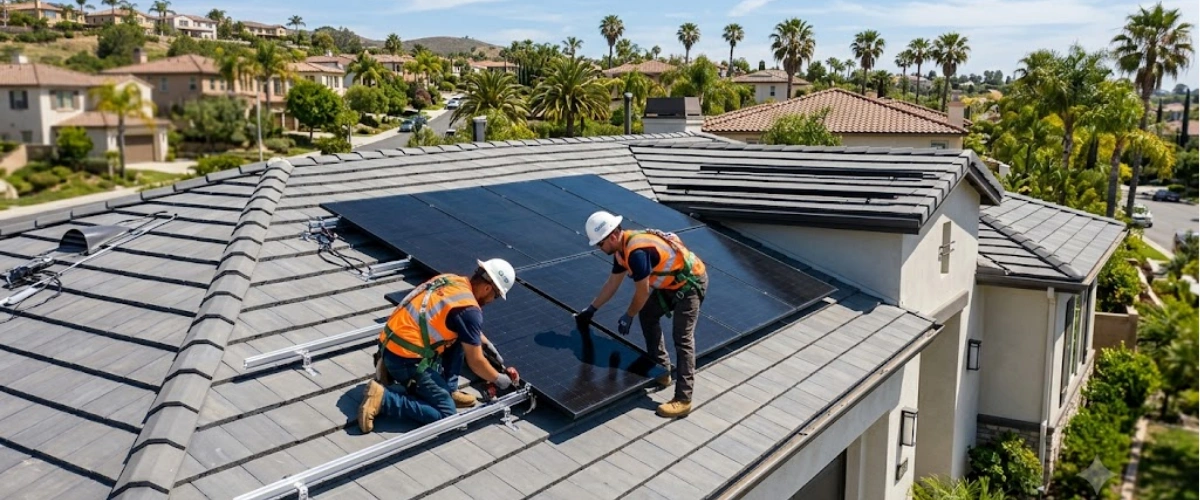
Most homeowners assume going solar is a months-long ordeal. Scheduling conflicts, permit delays, and utility backlogs can stretch the average solar project past three months before a single panel turns on. If that assumption has kept you on the sidelines, this guide is going to change your thinking.
The Axia by Qcells installation timeline, when managed by a dedicated residential solar installation service like US Power, runs from your first consultation to Permission to Operate in three to four weeks. That is not a marketing claim. It is the result of factory-direct panel access, CSLB-licensed consultants, and a permitting process refined across hundreds of installations in California, Texas, Florida, and Illinois.
Here is exactly what happens at every stage.
The national average from solar contract signing to Permission to Operate sits between six and fourteen weeks. That range reflects permit processing time of one to eight weeks depending on your city, utility interconnection review of two to eight additional weeks, and then the physical installation itself of one to three days.
What drives that wide range? Two things: installer competence and panel supply chain. Installers who source panels through distributors often wait weeks for equipment delivery. Installers without established relationships with local permit authorities routinely submit incomplete documentation packages, triggering correction cycles that add weeks to every project.
US Power manages every step in-house: design, permitting, installation, and utility coordination. There are no subcontractors passing your project between teams. There is no waiting on distributor inventory. The result is a compressed Axia by Qcells installation timeline that most competitors simply cannot match.
The Axia by Qcells installation timeline begins with a free consultation, available virtually or on-site at your home. A CSLB-licensed consultant reviews your last 12 months of utility bills, assesses your roof condition, evaluates shading and orientation, and models a system sized for your actual energy usage in California, Texas, Florida, or Illinois.
This is not a generic pitch deck. The consultation produces a detailed proposal including panel count, projected system output, estimated monthly savings against your current utility rate, and a transparent pricing breakdown with zero hidden fees. Homeowners who want to get a number before their appointment can use the Axia by Qcells estimate and system design tool to build a preliminary figure in minutes.
System design is finalized before you sign anything. By the time you say yes, the engineering documentation is already prepared and the permit application package is ready to submit the same day.
Because US Power operates as the exclusive Qcells factory-direct partner, panel availability is not a variable in your timeline. The American-made Qcells panels manufactured in Dalton, Georgia ship directly from the factory to your installation, bypassing the distributor warehouse delays that push competitor timelines back by weeks.
Financing decisions happen at this stage as well. US Power offers multiple financing paths based on your credit profile and savings goals. Homeowners who want to compare payment structures before their appointment can review the full guide to solar financing options in California and the other target states to understand what monthly payments typically look like before they sit down with a consultant.
Most homeowners complete steps one and two within the first five to seven days of contact.
Permitting is where most solar projects slow down and where US Power's established relationships create the most time savings.
Every solar installation requires a building permit and an electrical permit from your local Authority Having Jurisdiction, typically your city or county building department. California cities using the SolarAPP+ automated platform, including Los Angeles, San Diego, Sacramento, and San Jose, can issue permits in as little as one business day. Manual review jurisdictions take two to six weeks on average.
Texas permit timelines vary by municipality. Austin and Houston have established residential solar processes that typically resolve in two to three weeks. Florida's solar permitting is governed under state preemption law that limits local barriers, making the process faster than most states. Illinois is jurisdiction-dependent but well-navigated by experienced installers who know each city's requirements.
Utility interconnection, the parallel process of registering your system with your power company, is submitted at the same time as the permit application. Utilities like SCE, PG&E, LADWP, Oncor in Texas, and Duke Energy in Florida process residential interconnection applications over fifteen to forty-five business days. Submitting complete documentation on the first attempt eliminates the correction cycles that add weeks to most competitors' timelines.
The single most common reason solar installations stall is an incomplete permit application. Missing electrical diagrams, incorrect equipment model numbers, or improperly documented structural loads send the application back for corrections. Each correction round costs two to four additional weeks in jurisdictions with active review queues.
US Power's permitting team has documented every AHJ requirement across the states it serves. Applications are built to clear the first review.
Once the permit is approved, installation is scheduled within days. The physical installation of a standard Axia by Qcells residential system takes one to three days depending on system size, roof complexity, and whether battery storage is included.
The crew mounts the racking system to your roof, positions and secures the Qcells panels, runs conduit and wiring from the roof to your electrical panel, and connects the inverter. Homeowners who are adding a Qcells Home Core battery storage system have the battery installed alongside the panels in the same visit, so there is no second scheduling window to wait for.
You do not need to take the day off work. The crew works independently once they have access to your roof and electrical panel. By the end of the final installation day, your system is physically complete and staged for inspection.
After installation, a local building inspector visits your property to verify the system matches the approved permit plans and meets all safety codes. This inspection is typically scheduled within five to ten business days of installation completion.
Once the inspection is signed off, US Power submits the completion documentation directly to your utility company. The utility conducts its own verification and issues Permission to Operate, known as PTO. That is the moment your system legally connects to the grid and begins generating power.
PTO processing times vary by utility and system configuration. SCE's current residential PTO window runs fifteen to forty-five days. LADWP, operating under its own municipal structure, often moves faster than investor-owned utilities. PG&E operates on a similar fifteen to thirty day window for standard residential systems. Solar-plus-storage systems can take eight to twelve weeks for PTO through SCE under current 2026 processing volumes.
US Power tracks every open interconnection application and follows up directly with the utility on your behalf. You receive status updates throughout the wait rather than being left to chase answers on your own.
The biggest time advantage US Power holds over other Axia by Qcells installers is panel access. Because panels come directly from the Qcells factory rather than through a distributor, there are no inventory delays, no last-minute model substitutions, and no supply chain surprises after you sign a contract. Homeowners researching their installer options can compare dealers through the Axia by Qcells dealer near you resource to understand what factory-direct access means for pricing and scheduling.
Speed without accuracy does not save you time. US Power's consultants are CSLB-licensed and familiar with the specific permit requirements for every jurisdiction across California, Texas, Florida, and Illinois. Fewer correction cycles mean faster approval, and faster approval means your panels go up sooner.
Every installation is backed by a 25-year comprehensive warranty covering panels, workmanship, and performance output. If you are evaluating whether to include battery storage at the time of installation, the complete breakdown of how a solar and battery storage system performs under current net metering rules is worth reviewing before your consultation.
The Axia by Qcells installation timeline is shorter than most homeowners expect, and with US Power managing every step, it is shorter still. From your first consultation to the day your system turns on, three to four weeks is the standard, not the exception.
Electricity rates in California, Texas, Florida, and Illinois are not going down. Every week on the grid is money gone. With 200-plus five-star Google reviews, CSLB-licensed consultants, and American-made Qcells panels at factory-direct pricing, US Power gives you the fastest, most transparent path to energy independence available in your state.



Your roof can handle more than you think. Learn how you can avoid the problem!
Solar panels installed in a California home. Bills still high. What went wrong?

Your residential solar system was supposed to help so why is your home humming?









Copyright © 2026 US Power - Axia by QCells. All Rights Reserved.
Get an instant solar estimate using satellite!