

Hurricane season puts every rooftop solar system to the test, and not every installation is built to survive it. This guide breaks down how solar panels and batteries are actually rated for wind and impact, plus a practical checklist covering weeks before, 48 hours before, and the days after a storm. Professional installation, sealed roof penetrations, and whole-home battery backup are what separate a system that survives from one that needs weeks of repairs.
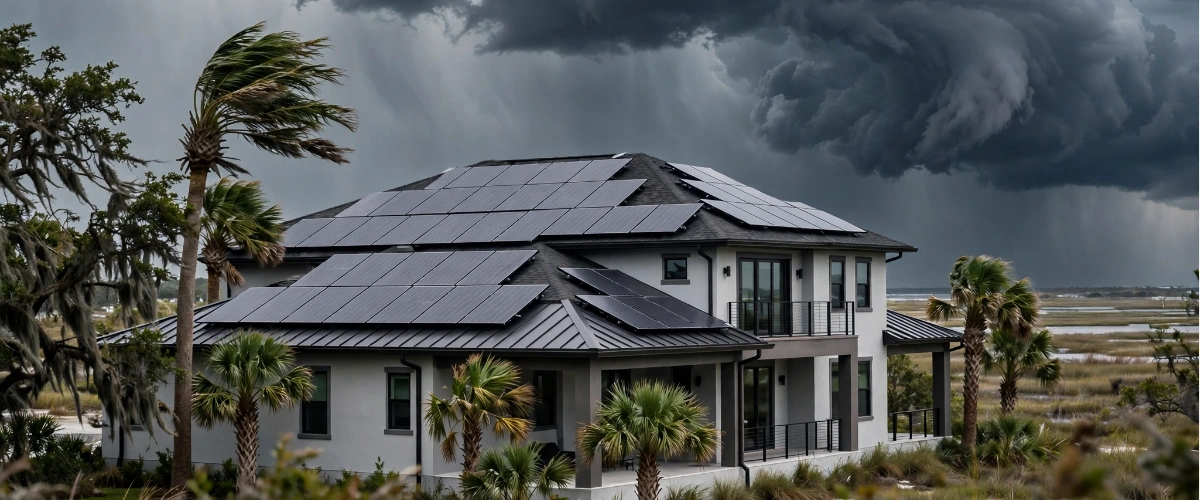
Yes, when properly installed. Quality panels are certified for wind loads well beyond 140 mph and hail impact, but the racking and mounting underneath determine whether that rating holds up in a real storm.
Hurricane season puts every rooftop system to the test, and solar is no exception. If you live in Florida, Texas, or anywhere storms threaten the Gulf Coast, you already know the stakes are higher than a normal windstorm. The good news is that a properly installed system is built to handle far more than most homeowners realize, and a little preparation closes the rest of the gap. This checklist walks you through what actually happens to solar panels and batteries in a hurricane, how your system is rated to survive one, and the specific steps to take before, during, and after the storm so your investment keeps paying you back for years.
Every June through November, homeowners in hurricane zones face the same question: will the roof, and everything mounted on it, hold up. Solar panels add a new variable to that worry, but not the one most people assume.
Sustained winds above 100 mph create uplift forces that test every fastener on your roof, not just your panels. The panels themselves are rigid and low profile, so wind rarely tears them off directly. The real risk is flying debris and a mounting system that was never rated for local wind speeds in the first place. Gusts during a Category 3 or stronger storm can also drive rain sideways under loose flashing, which is a roof problem your solar installer should catch long before hurricane season starts.
A single damaged panel or a racking failure can mean weeks without full production and an insurance claim you were not prepared to document. Homeowners who skip a pre-season check often find out about a loose mount only after a storm has already made it worse. Lost production during peak summer sun adds up fast, and a rushed emergency repair after a storm typically costs more than a scheduled inspection would have in the first place.
Most homeowners never see the engineering behind their system, but the ratings behind it are exactly what determines whether your panels stay put in a Category 3 storm.
Quality panels are certified to withstand wind loads well beyond 140 mph and hail impact up to golf ball size, tested under UL 1703 and IEC 61215 standards. What actually varies by installer is the racking and attachment method, which is where corners get cut on cheaper jobs. Ask to see the manufacturer's wind and impact certification in writing rather than taking a sales rep's word for it.
A properly engineered mount spreads wind load across multiple rafters using flashed, sealed penetrations rather than a handful of surface bolts. Ask any installer for the wind uplift rating of your specific racking system, not just the panel spec sheet, before you sign anything. Local building codes in coastal Florida and Texas counties often require a higher uplift rating than the national baseline, so a system engineered elsewhere may not actually meet the standard your county enforces.
Home batteries like the Qcells Q.Home Core are rated for outdoor installation and sealed against moisture intrusion, so a heavy rain event on its own is not a threat. What matters more is where the unit is mounted relative to expected flood levels in your area.
Preparation works best as a timeline, not a single frantic day before landfall. Here is what to handle at each stage.
Schedule a visual inspection of your racking, flashing, and wiring connections before hurricane season peaks in August and September. Confirm your battery firmware is updated and your automatic transfer switch is set to prioritize essential circuits during an outage. This is also the right time to trim overhanging branches that could snap and land on the array in high wind.
Charge your battery to full capacity so it is ready to carry your home through the outage that typically follows a direct hit. Secure loose items near the array, like patio furniture or antennas, that could become wind-driven debris. Confirm your monitoring app is working so you can check system status remotely once conditions allow.
Do a visual check from the ground before anyone climbs a ladder, and photograph any visible damage immediately for insurance purposes. Contact your installer for a professional inspection before re-energizing the system if you saw any signs of impact. Even if the system looks fine, a post-storm check confirms nothing shifted internally that would only show up as a production drop weeks later.
Not every solar installation is engineered with hurricane season in mind, and that gap shows up the first time a real storm arrives.
Every US Power system is installed by CSLB-licensed consultants and backed by a 25-year comprehensive warranty covering panels, workmanship, and performance, so storm-related defects are never something you pay to fix alone. As an exclusive Qcells partner offering factory-direct pricing 15 to 20 percent below market, you get American-made panels engineered for durability without the markup other installers charge.
Utility rates keep climbing across Florida and Texas even before a storm knocks out the grid, and systems built for multi-day blackouts keep your essentials running when utility crews are still working through a backlog. Whole-home battery backup for Florida homes means refrigeration, medical equipment, and connectivity stay online through days, not hours, of downtime. That resilience is on top of the factory-direct pricing across Florida that already makes US Power systems a stronger value than most local competitors, backed by 200+ five-star Google reviews from homeowners who have already been through a storm season with their system installed.
A storm-ready system protects more than your roof. It protects the savings you are already counting on from lower utility bills and state-level solar incentives.
A professional installation means your roof warranty stays intact, and every penetration point is properly sealed against leaks long before the first named storm of the season forms. That matters more in a hurricane zone than almost anywhere else, since a single unsealed penetration becomes a serious problem under sustained wind-driven rain.
Photograph your system, serial numbers included, before hurricane season starts each year, and keep that documentation alongside your homeowners policy. If you are in Texas, battery options built for Texas homes are worth reviewing now, since availability tightens fast once a storm is already in the forecast. The same preparation mindset that protects a Gulf Coast roof applies to how solar and battery backup protect homes during natural disasters more broadly, whether the threat is wind, flooding, or wildfire.
Hurricane season does not wait for a homeowner to get around to an inspection, and the systems that hold up best are the ones prepared months ahead, not 48 hours before landfall. A properly installed, factory-direct Qcells system with battery backup is built to survive the storm and keep your home powered after it passes. If your panels or battery have not been checked this season, get a free consultation and have a CSLB-licensed consultant walk your specific roof and mounting setup before the next named storm forms.


Your SCE bill jumped again—and it's not just you. Here's the real reason why.

Your solar company just removed your original inverter without asking. Concerned?
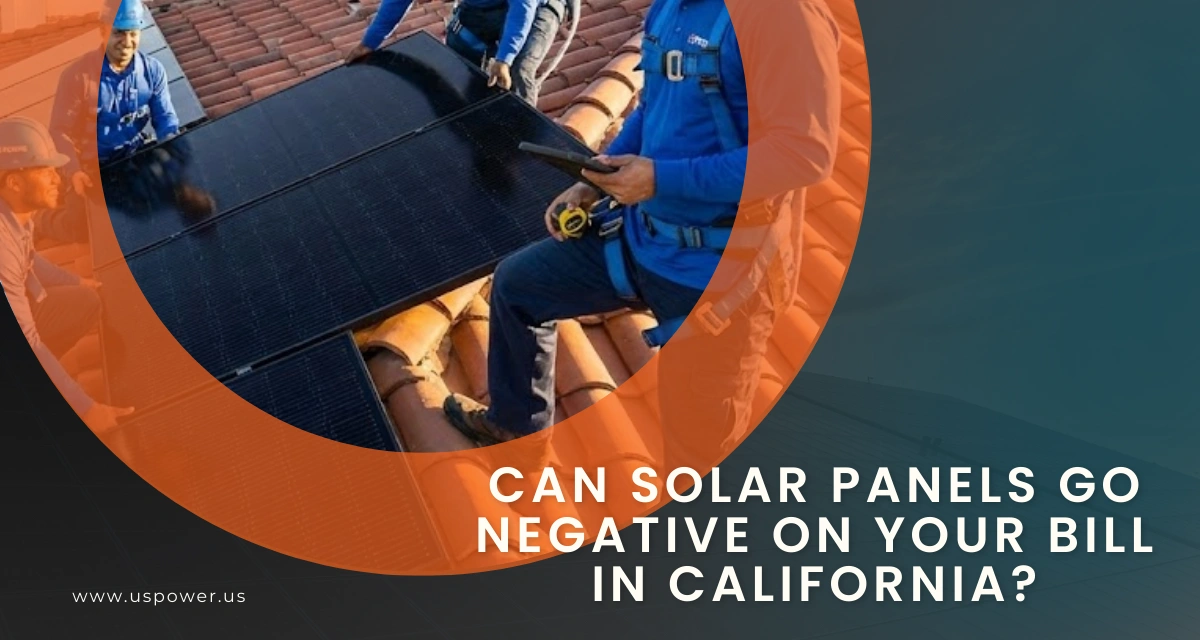
Solar panels worked great last summer. But this winter, SCE just hit you with a $90.







Copyright © 2026 US Power - Axia by QCells. All Rights Reserved.
Get an instant solar estimate using satellite!