

Home solar still pays in 2026, but the reasons have shifted. The federal credit for buyers is gone, while utility rates have roughly doubled in a decade. Here are seven benefits of residential solar panel installation, what each is worth today, and how they differ by state and utility.
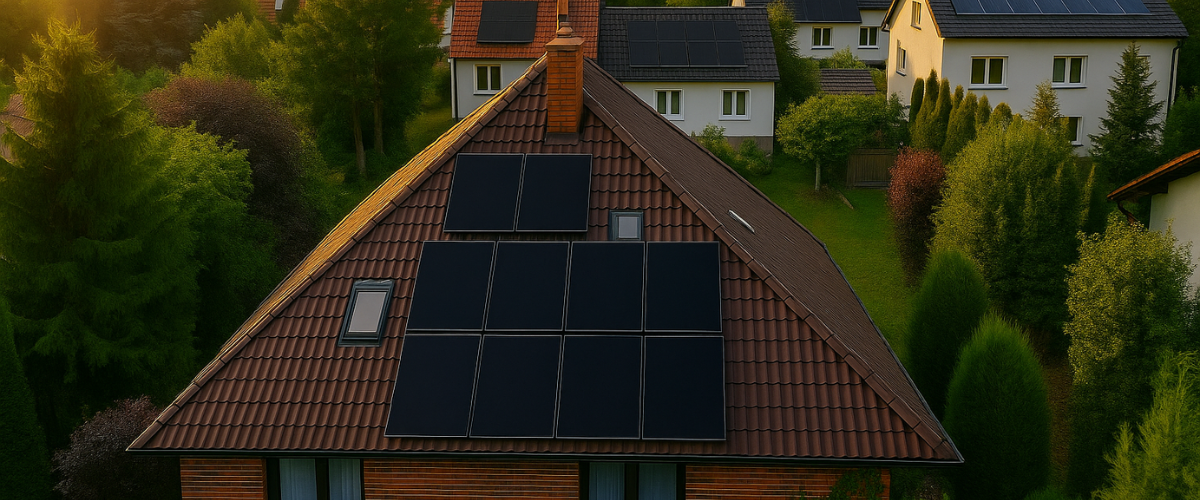
The main benefits are lower electric bills, protection from rate increases, higher home value, backup power with a battery, a smaller carbon footprint, and low maintenance. How much each is worth depends on your utility and usage.
Solar has changed a lot in the past two years. The 30% federal tax credit for homeowners who buy their system ended on December 31, 2025, and most California utility customers now earn far less for the power they send to the grid. Yet more homeowners than ever are asking whether solar still makes sense, because their electric bills keep climbing.
The short answer is yes for many homes, but the benefits of residential solar look different in 2026 than they did a few years ago. This guide walks through seven real benefits, what each is worth today, and where they apply most.
Here is a quick summary of the seven benefits covered below and the numbers behind them.
| Benefit | What it is worth in 2026 | Where it matters most |
|---|---|---|
| Lower electric bills | SCE averaged 34.4¢/kWh and SDG&E 45.5¢/kWh in June 2026; California payback averages about 7.7 years | High-usage homes on high-rate utilities |
| Protection from rate increases | SCE rates up about 101% and SDG&E about 97% since 2016, vs. 42% inflation | Southern California IOU customers |
| Higher home value | About 4.1% sale premium (Zillow, 2019); about $4 per watt (Berkeley Lab) | Owned systems |
| Property tax protection | Excluded from reassessment; systems qualifying before Jan 1, 2027 keep it until sale | California |
| Backup power | A 13.1 kWh battery can run essential circuits through an outage | Outage-prone areas and battery owners |
| Lower emissions | Up to about 6.5 metric tons of CO2 avoided per year for a 9,600 kWh system (EPA factor) | Everywhere |
| Low maintenance | Median panel degradation about 0.5% per year; 90.58% of power guaranteed at year 25 on Q.TRON | Everywhere |
The most direct benefit is a smaller bill. Every kilowatt-hour your panels produce and your home uses is a kilowatt-hour you do not buy from the utility.
In Southern California, that power is expensive. SCE's average residential rate was 34.4 cents per kWh in June 2026, and SDG&E's was 45.5 cents. A typical system that covers most of a home's usage can cut the energy portion of the bill substantially, although fixed charges remain. Across California, the average solar payback period is about 7.7 years, according to EnergySage, and the panels keep producing for decades after that.
How much you save depends on your utility's rules. SCE, PG&E and SDG&E customers on the Net Billing Tariff, often called NEM 3.0, earn only about 5 to 8 cents per kWh for exported power, so the savings come mostly from using your solar at home. LADWP customers still receive retail credit for exports, which makes the math simpler.
Solar does not just lower today's bill. It shields you from future increases.
According to the California Public Advocates Office, SCE rates rose about 101% and SDG&E rates about 97% from January 2016 to June 2026, while general inflation rose about 42%. Wildfire costs, grid upgrades and transmission spending keep pushing rates up, and there is little sign that trend will reverse.
When you generate your own power, a large share of your electricity cost is locked in at the price of your system. Every future rate increase makes that locked-in power more valuable. Our breakdown of rising electricity costs in Southern California explains what is driving the increases.
Buyers generally pay more for a home with an owned solar system. A 2019 Zillow analysis found that homes with solar sold for about 4.1% more than comparable homes without it. An earlier Lawrence Berkeley National Laboratory study of nearly 22,000 home sales found buyers paid a premium of about $4 per watt of installed solar.
The premium applies most clearly to systems you own outright. Leased systems and power purchase agreements can still help, but the buyer usually has to qualify for and take over the contract, which can add a step to the sale.
In most cases, a home improvement that raises your home's value also raises your property taxes. Solar is an exception in California.
Under Revenue and Taxation Code Section 73, a qualifying solar system is excluded from property tax reassessment. Under SB 710, signed in October 2025, systems that qualify before January 1, 2027 keep that exclusion until the property changes ownership. A proposed extension for later installations, AB 2389, stalled in committee in 2026, so systems completed after that date may not qualify under current law. Our guide to the California solar property tax exemption covers the details.
Solar panels alone shut off during a grid outage for safety reasons. Paired with a battery, they can keep your essentials running.
A home battery like the Qcells Q.HOME CORE G3, which stores 13.1 kWh of usable energy and delivers 7.6 kW of continuous power, can run lights, a refrigerator, internet and other key circuits through an outage, then recharge from your panels the next day. For SCE, PG&E and SDG&E customers, a battery also increases savings by shifting solar into the 4 to 9 PM peak. Our guide on how solar batteries maximize your savings explains when a battery pays off.
In California, some homeowners can also get help with battery costs through the Self-Generation Incentive Program (SGIP). The general-market residential budget is currently waitlisted, but the Equity and Equity Resiliency tiers are still funding qualifying SCE, PG&E and SDG&E customers, including many in areas at high risk of wildfire-related power shutoffs.
Solar power produces no emissions while it runs. The EPA's emissions factor for avoided electricity is about 0.000672 metric tons of CO2 per kWh, based on the national marginal rate. At that rate, a system producing 9,600 kWh a year avoids up to about 6.5 metric tons of CO2 annually, roughly the yearly emissions of one and a half average gasoline cars.
The actual figure in California is lower because the state's grid is already cleaner than the national average. Still, home solar reduces demand on gas plants during the hours it produces, and paired with a battery it can reduce demand in the evening too.
Solar panels have no moving parts and need very little upkeep. NREL research has found that panels lose a median of about 0.5% of their output per year. Quality panels now carry stronger guarantees: the Qcells Q.TRON BLK M-G2+, for example, guarantees at least 90.58% of its rated power after 25 years.
Most homes only need an occasional cleaning, especially in dusty inland areas, and a periodic check of the system's monitoring app. Inverters and batteries may need service or replacement during the system's life, which is why a comprehensive warranty that covers the whole system matters.
Modern systems also make problems easy to spot. A monitoring app shows your daily production, so a sudden drop from a failed panel, a tripped breaker or heavy dust shows up right away instead of on next month's bill. Catching issues early keeps your savings on track for the life of the system.
The 30% federal credit for homeowners who buy their system (Section 25D) ended on December 31, 2025. Systems purchased in 2026 do not qualify.
Leases and power purchase agreements work differently. The solar company owns the system and can still claim a commercial credit under Section 48E if the system is placed in service by the end of 2027, and some of that value may show up in lower monthly payments. Buying and leasing each have trade-offs, so compare the total 25-year cost of both before choosing.
The loss of the credit lengthens payback for buyers, but it does not erase the case for going solar. Rates are the highest they have ever been, and that is where most of the savings now come from.
The benefits above apply in every state, but their size depends on local rules.
California: High rates make bill savings large. SCE, PG&E and SDG&E customers benefit most from pairing solar with a battery, while LADWP customers still get retail credit for exports.
Texas: There is no statewide net metering, so export credits depend on your retail electricity plan or utility. Backup power has become a major reason to go solar since Hurricane Beryl knocked out power to millions of homes in July 2024.
Florida: Utilities still offer retail net metering, which makes solar savings straightforward and a battery mainly a backup tool.
Illinois: New customers now receive supply-only credit for exports, and ComEd and Ameren offer a battery rebate of $300 per kWh for customers on hourly pricing.
Connecticut, New Jersey and Pennsylvania: Net metering rules and state incentives vary by utility and change often, so make sure any quote is based on the current rules where you live.
Every benefit above depends on a system that is designed for your home and your utility.
Every US Power proposal starts with a 12-month bill analysis, so your system is sized to your real usage and rate plan. As a factory-direct Qcells partner, US Power installs Qcells panels and batteries at 15 to 20% below typical market pricing. You can see how the Qcells warranty process works before you buy.
Every system includes a 25-year comprehensive warranty covering panels, installation and workmanship. US Power is CSLB-licensed, has more than 200 five-star Google reviews, and typically completes installation within 3 to 4 weeks once your design is approved. Our homeowner's guide to going solar in California walks through each step.
For most homeowners with a good roof and high electric bills, the benefits of residential solar still add up in 2026: lower bills, protection from rate increases, higher home value, property tax protection in California, backup power and a smaller footprint. The best way to know is to run the numbers on your own home. Try our solar calculator to see what your roof could produce.
Ready to see your numbers? Get your free solar quote.


You don't need to power a crypto mine—just your home and your daily life routine.

From summer highs to marine layer lows, here is your solar reality check guide.
Paid-off solar sounds like a bonus. Sometimes it is. Sometimes it's a hidden problem.








Copyright © 2026 US Power - Axia by Qcells. All Rights Reserved.
Get an instant solar estimate using satellite!