

California's NEM 3.0 changed how homeowners are credited for solar energy and not in their favor. Export rates dropped by about 75% compared to NEM 2.0. But that doesn't mean solar is a bad investment. It means the strategy has shifted. In 2026, the homeowners winning with solar are the ones pairing panels with battery storage and working with installers who know how to design systems for the new rules.

If you've been on the fence about solar, you've probably heard something alarming: California changed the rules, and homeowners are getting far less credit for the power they send back to the grid. That's true. But the full story is more encouraging than the headlines suggest.
NEM 3.0 didn't kill solar savings—it redirected them. And for California homeowners who act with the right strategy in 2026, the opportunity to cut electricity bills significantly is very much alive. Here's everything you need to know.
Before diving into NEM 3.0, it helps to understand why solar remains attractive in the first place: California electricity rates are among the highest in the country, and they keep rising.
Southern California Edison and Pacific Gas & Electric have raised rates by roughly 5–8% annually in recent years. The average California homeowner now pays well above the national average per kilowatt-hour—and that gap keeps widening.
For a household spending $250–$350 per month on electricity, that adds up to thousands of dollars per year—money that solar can help you keep. Rising electricity costs in Southern California are one of the primary reasons homeowners in 2026 are still moving forward with solar despite the billing changes.
Every month you delay going solar is another month paying full retail rates to your utility. With no relief from rate increases on the horizon, the cost of waiting compounds over time. The conversation isn't just "is solar worth it?"—it's "how much is inaction costing me?"
NEM 3.0, officially called the Net Billing Tariff, went into effect in April 2023. It applies to new solar customers of PG&E, SCE, and SDG&E. If you understand how NEM 3.0 affects solar billing, you'll see why the strategy has shifted—not collapsed.
Under NEM 2.0, you received close to full retail credit—around 25–35 cents per kilowatt-hour—for every unit of electricity you sent back to the grid. Under NEM 3.0, that dropped to an average of 5–8 cents per kilowatt-hour, based on something called the Avoided Cost Calculator (ACC).
That's roughly a 75% reduction in export credit value. On paper, it sounds devastating. In practice, it changes the strategy—not the outcome.
Here's the key insight most homeowners miss: electricity you produce and use yourself is still worth full retail value, because you're avoiding buying it from the grid at 35–55 cents per kilowatt-hour. NEM 3.0 only reduced the value of exported power—not power you actually use.
This is exactly why battery storage changed from optional to essential under the new rules.
The homeowners who understood NEM 3.0 quickly realized something counterintuitive: the new billing structure actually rewards battery owners more than NEM 2.0 ever did. Here's why.
California's time-of-use (TOU) rate plans charge the most for electricity between 4–9 PM—precisely when solar panels stop producing. Without a battery, you'd draw from the grid at peak rates all evening. With a battery, you store your daytime solar production and discharge it during those expensive evening hours.
That shift alone can dramatically change your monthly bill. Battery attachment rates in California jumped from about 11% before NEM 3.0 to nearly 70% by the end of 2024—a clear signal that homeowners are catching on.
Research shows that solar-plus-storage systems under NEM 3.0 achieve payback periods of 5–7 years, compared to 7–9 years for solar-only systems. The battery costs more upfront, but it accelerates your return on investment by maximizing the value of every kilowatt-hour your panels produce. You can explore whether solar batteries are worth it in California in more detail to see the numbers for your household type.
This is the question every California homeowner is asking right now. The 30% federal Investment Tax Credit (ITC) ended December 31, 2025. So is solar still financially smart?
Your solar savings come primarily from avoiding expensive grid electricity, not from incentives. A well-designed 7–8 kW system for a typical Southern California home can reduce monthly bills by $130–$180 per month. That's $1,560–$2,160 in savings every year—year after year—regardless of tax credits.
The solar payback period in California is still competitive in 2026 because rising utility rates accelerate your break-even point each year. The math improves over time, not the other way around.
While the federal ITC is gone, California homeowners aren't completely without support:
The bottom line: solar is still worth it in 2026 without the tax credit for most California homeowners—especially with utility rates continuing to climb.
Choosing the right solar company matters more under NEM 3.0 than it ever did under NEM 2.0. System design, panel efficiency, and installation quality all directly affect how much you save. This is where US Power's approach stands apart.
US Power is California's exclusive QCells partner with factory-direct access—which means American-made panels priced 15–20% below typical market rates. Lower upfront cost directly shortens your payback period and improves your long-term return. Why QCells panels outperform the competition comes down to efficiency, durability, and the manufacturing standards behind every panel.
Not every installer builds systems with NEM 3.0 in mind. US Power's CSLB-licensed consultants design every system to maximize self-consumption during peak hours—which is exactly what the new billing structure rewards. That means right-sizing your battery, optimizing panel placement, and aligning your system with your specific time-of-use rate plan.
US Power backs every installation with a 25-year warranty covering panels, workmanship, and performance. With 200+ five-star Google reviews and transparent pricing, there are no hidden fees and no predatory contracts—just a straightforward path to lower bills.
If you're ready to move forward—or even just exploring—understanding the process helps you feel confident rather than overwhelmed. The solar installation timeline in California is straightforward when you work with an installer who handles everything.
US Power manages the entire journey from your first consultation to your Permission to Operate (PTO) date. That includes system design, permits, utility interconnection, and final inspection. Most homeowners are generating solar power within 3–4 weeks of approval.
SCE and PG&E rate increases happen on their schedule—not yours. Every month of delay is another month of paying full utility rates. The best time to go solar was before NEM 3.0. The second-best time is now, before rates climb further and the gap between your savings and your costs widens even more.
NEM 3.0 changed the solar playbook—it didn't end the game. The homeowners saving the most right now are the ones who paired panels with battery storage, chose a qualified installer, and stopped letting rising utility rates drain their budget month after month.
With American-made QCells panels, factory-direct pricing, and a 25-year comprehensive warranty, US Power gives California homeowners a clear path to lower bills under the new rules. The savings are real. The timeline is fast. And the consultation is completely free.


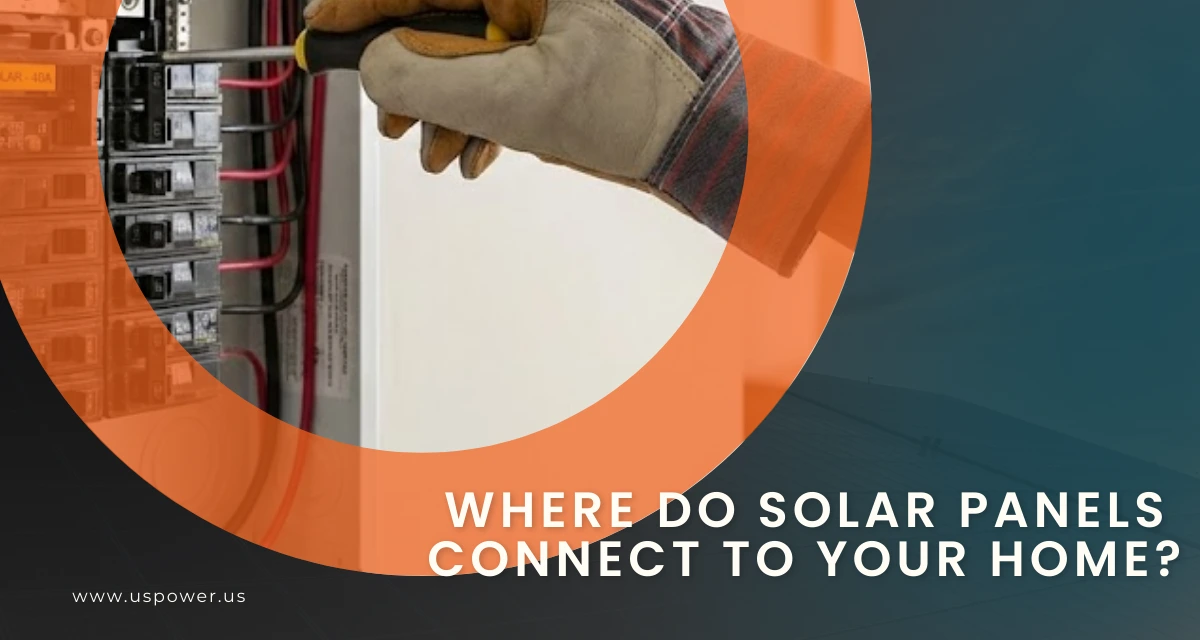
Understanding solar connection points matters more than you think. Safety First!

One wrong choice in solar installation can cost you $3,000+ and months of headaches.

Pasarse a la energía solar no tiene que tomar meses. Cronograma real con US Power.







¿Estás listo para ser dueño de tu poder? ¡Llámenos hoy mismo!
818-650-8010Contractor License #: 1144368

Derechos de autor © 2025 US POWER | Energía solar y techosUS Power - Axia by QCells. All Rights Reserved.
¡Obtenga una estimación solar instantánea usando el satélite!