

Most solar installers in California, Texas, and Florida are quietly designing systems with more panel capacity than the inverter is rated for. Here's why that's often the smart move and how US Power does it right.
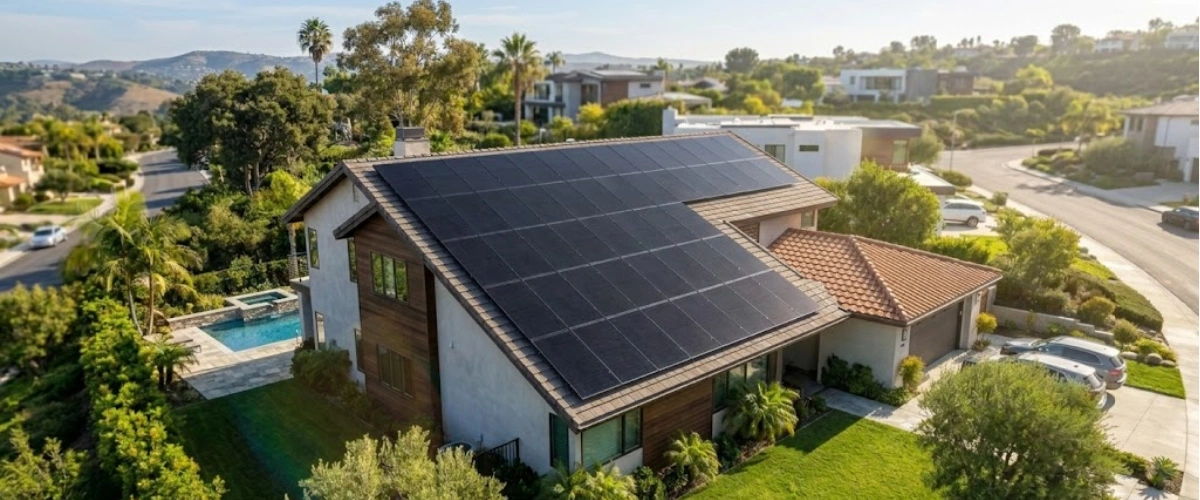
Your solar installer just quoted you a system with more panel capacity than your inverter is rated for. Should you be worried?
Probably not. In fact, what they're describing — called PV oversizing — is one of the most common design decisions in the industry right now. Panels are cheaper than ever, electricity rates in California, Texas, and Florida keep climbing, and a slightly oversized array can squeeze significantly more savings out of your system throughout the day.
But "more panels = better" isn't always true. Getting the ratio wrong can leave money on the table. Getting it right starts with understanding how solar panels and inverters work together.
Every solar system has two key components: the panels (the DC side) and the inverter (the AC side). The inverter converts the raw solar energy your panels collect into usable household electricity.
Oversizing means installing more panel capacity than the inverter's maximum output. A common example: pairing a 10 kW array with an 8 kW inverter. That gives you a DC/AC ratio of 1.25.
This isn't a design flaw. It's a deliberate strategy.
Understanding AC vs DC power in your solar system is the key to seeing why this works — your panels produce DC power, which the inverter caps and converts. When there's more DC input than the inverter can output, the excess is simply not converted. The inverter doesn't break. It just hits its limit and holds steady.
Here's something most homeowners don't realize: your panels almost never produce their rated maximum output in real-world conditions.
Clouds, morning haze, heat, seasonal sun angles, and typical California or Texas weather all reduce production. An 8 kW array on a slightly overcast afternoon in Houston might only push 5 kW through the inverter.
So oversizing is really about designing for the real world — not the spec sheet.
Most solar professionals design to a DC/AC ratio of 1.2 to 1.3. That means for every 8 kW of inverter capacity, you'd install 9.6 to 10.4 kW of panels.
At these ratios, the math typically works in the homeowner's favor. You gain more production during morning hours, late afternoons, and overcast days than you lose during those rare midday peaks when the inverter "clips" — or caps — its output.
Learning the right solar system size for your home goes hand-in-hand with choosing the right ratio. Both decisions affect how much you save.
Clipping sounds alarming. In practice, it's usually minor.
Think of it like a funnel: you're pouring more water in the top than can flow out the bottom. Yes, some gets "wasted" during peak sun hours. But you've also made the funnel wider, which means it catches water much earlier in the morning and much later in the afternoon.
Research from the National Renewable Energy Laboratory (NREL) consistently shows that for ratios around 1.3, clipping losses are typically offset by the gains in off-peak production. Most homeowners end up generating more total energy, not less.
There's no universal right answer. The same panels and inverter can perform better at different ratios depending on:
The best argument for oversizing is simple: solar panels still produce on cloudy days, and they produce something every single morning and evening.
If your inverter is sized exactly to your panel capacity, you're leaving production on the table during those shoulder hours. A slightly larger array wakes up your system earlier and keeps it producing longer — and with electricity rates in Southern California regularly exceeding $0.40/kWh, every extra kWh matters.
One of the biggest concerns homeowners raise is whether oversizing puts thermal stress on the inverter.
Reputable inverter brands are built to handle this. SolarEdge specifies up to 150–200% oversizing on most models. Enphase microinverters have no enforced DC/AC limit — they simply cap at their rated AC output and hold steady. A quality inverter running at its rated output continuously is doing exactly what it was designed to do.
The key is working with an installer who checks the manufacturer's specifications and designs within them. Voltage limits are hard limits. Power and current limits are managed by the inverter itself.
Battery storage changes the economics of oversizing in a significant way. With a standard grid-tied inverter, any production above the inverter's AC output limit is clipped — gone.
With a hybrid inverter and battery storage, that story changes. When your panels are producing more than your inverter can export, the excess can charge your battery instead of being clipped. That means a higher DC/AC ratio becomes even more valuable when paired with storage.
For California homeowners on NEM 3.0, this is especially important. The export rates utilities pay for excess solar have dropped significantly. Storing that excess and using it in the evening — when rates are highest — is the smarter financial move.
Adding a battery to your solar system is worth evaluating alongside any panel sizing decision. The two go hand in hand.
MPPT — Maximum Power Point Tracking — is the algorithm that constantly adjusts how much current the inverter draws from your panels to maximize output.
When you oversize, MPPT doesn't get confused. It simply operates within the inverter's power limits. It tracks the best operating point on the panel's voltage-current curve, stops at the inverter's ceiling, and holds there cleanly. In a well-designed system from a reputable brand, you won't see erratic behavior or efficiency drops.
US Power is California's exclusive QCells partner, and that relationship goes beyond just getting good panels. It means our consultants work directly with the manufacturer's engineering data to design systems that perform as promised — not just on paper, but on your roof, in your climate, through your utility's billing structure.
Our American-made QCells panels are engineered for real-world conditions. High-efficiency output in heat. Strong low-light performance. Solar panel warranties that actually cover you — 25 years on panels, workmanship, and performance.
And because we're factory-direct, you're not paying the markups that flow through distributors. That's typically 15–20% below market pricing, which often means a larger array is within reach at the same budget.
Oversizing is not one-size-fits-all. The right ratio for a south-facing roof in San Diego is different from an east-west split roof in Dallas or a partially shaded home in Orlando.
Our CSLB-licensed consultants run your specific numbers before making any recommendations. We use site-specific solar production modeling, not generic estimates. And with a 3–4 week installation timeline after permit approval, you're not waiting months to see the results.
Not every solar company will give you a straight answer on system design. Before you sign anything, learn how to compare solar quotes in California — and ask these questions:
If an installer can't explain their system design rationale, that's a red flag.
PV oversizing isn't something to fear — it's a strategy. When done correctly, it extends your production window, improves performance on imperfect days, and can meaningfully increase your total energy savings over the life of the system.
The key word is correctly. The right ratio depends on your specific roof, location, utility, and whether battery storage is part of the picture. A generic 1.3 ratio applied without analysis isn't a strategy — it's a guess.
US Power's CSLB-licensed consultants take the guesswork out of the equation. With exclusive access to factory-direct QCells panels, 200+ five-star reviews, and a 25-year comprehensive warranty, we build systems designed to perform — not just impress on paper.
The next utility bill that arrives is going to be whatever it is. The one after that doesn't have to be.


Important solar system facts and tips from US Power for smart energy choices in 2025.
Your residential roof type in CA should not stop you from saving on electricity.
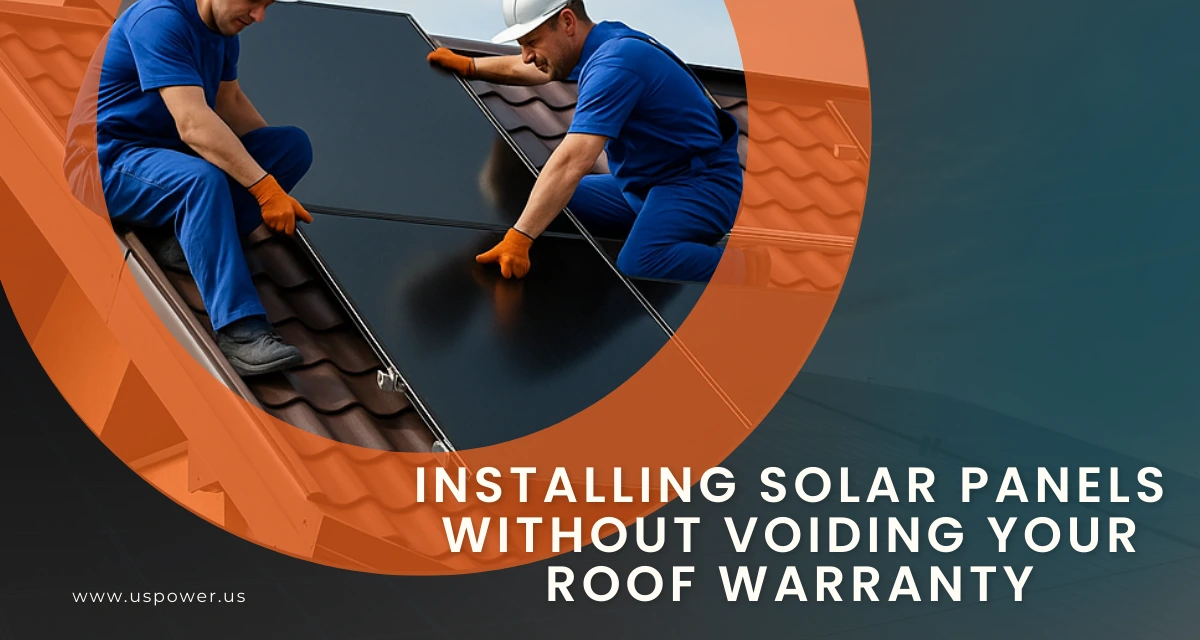
Safeguard your roof warranty during solar installation. Work with US Power!







¿Estás listo para ser dueño de tu poder? ¡Llámenos hoy mismo!
818-650-8010Contractor License #: 1144368

Derechos de autor © 2025 US POWER | Energía solar y techosUS Power - Axia by QCells. All Rights Reserved.
¡Obtenga una estimación solar instantánea usando el satélite!