
Miles de propietarios en California, Texas, Florida e Illinois están descubriendo, cuando ya es demasiado tarde, que su sistema solar fue mal instalado. Aquí le explicamos cómo identificar a un mal instalador antes de que sea tarde.
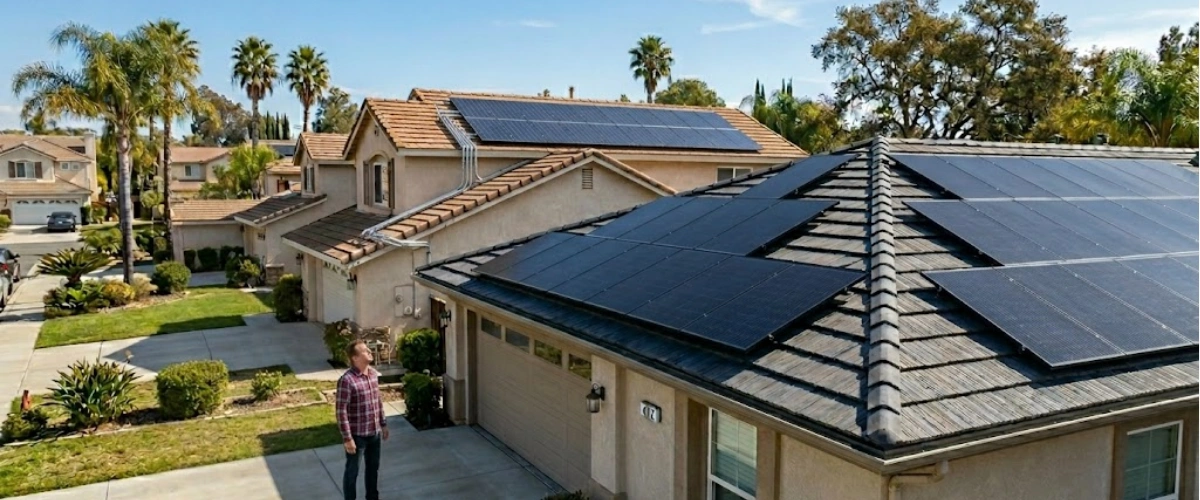
Las señales de alerta de una mala instalación incluyen conductos a la vista, paneles mal ubicados, espacios vacíos en el sistema de montaje y la falta de permisos o registros de inspección verificables. Una instalación de calidad oculta los conductos y cuenta con una documentación impecable.
Ya ha investigado. Ha comparado presupuestos. Está listo para dejar de pagarle a PG&E o SCE cada mes. Pero antes de firmar nada, hay una decisión más que podría ahorrarle —o costarle— decenas de miles de dólares: quién instala su sistema solar.
La cruda realidad es que no todas las empresas solares operan de la misma manera. Algunas apresuran el trabajo para terminar en un solo día. Otras permiten que los vendedores diseñen sistemas que los equipos de ingeniería rechazarían de inmediato. Y los propietarios a menudo no se dan cuenta hasta que los paneles ya están colocados, el conducto está expuesto y el instalador ha desaparecido.
Esta guía le muestra las señales de alerta más importantes al contratar instaladores solares; aquellas que los propietarios en California, Texas, Florida e Illinois pasan por alto constantemente hasta que es demasiado tarde.
Cuando los propietarios hablan de sus arrepentimientos con la energía solar, la historia casi siempre comienza igual. Un vendedor puerta a puerta hizo que los números sonaran fantásticos. La instalación fue rápida. Y luego comenzaron los problemas: una gotera en el techo, un sistema con bajo rendimiento, una inspección fallida o una factura de una empresa que ya no existe.
La FTC recibió más de 7,000 quejas por fraude solar solo en 2025, lo que la convierte en una de las categorías de fraude al consumidor de más rápido crecimiento en el país, y esa cifra sigue aumentando en 2026. Las quejas abarcan California, Texas, Florida e Illinois, con propietarios que reportan sistemas que no producen lo prometido, mano de obra deficiente y contratos con tarifas ocultas en la letra pequeña.
¿Una de las señales de advertencia más comunes? Un instalador que presume de terminar en un solo día. La rapidez suena atractiva, pero los profesionales solares experimentados saben que tomar atajos para cumplir con un plazo de un día generalmente significa atravesar su ático, o evitarlo por completo.
Instalar conductos en el exterior de su techo en lugar de guiarlos correctamente a través del ático es una señal clara de una instalación apresurada. Es más barato para la empresa, más rápido de ejecutar y deja su hogar con el aspecto de una obra en construcción durante los próximos 25 años.
Otro problema grave: sistemas solares diseñados por vendedores que trabajan a comisión en lugar de ingenieros certificados. La ubicación de los paneles, la orientación del techo, el análisis de sombras: estas decisiones requieren una verdadera experiencia técnica. Cuando un vendedor diseña su sistema con un solo objetivo (máximos paneles, máxima venta), puede terminar con paneles orientados en la dirección incorrecta y un sistema que nunca rinde como se prometió. Estos son algunos de los errores de instalación solar más comunes que cometen los propietarios en California, y casi siempre se pueden evitar.
La mayoría de los propietarios no pueden distinguir una buena instalación de una mala a simple vista, y eso es exactamente con lo que cuentan las empresas deshonestas. Esto es lo que buscan los profesionales solares cuando evalúan la calidad de una instalación.
El conducto (el tubo de metal o plástico que protege el cableado) debe pasar por el ático siempre que sea posible. Cuando un instalador coloca conductos directamente sobre la superficie del tejado en zigzag, casi siempre es señal de que ha evitado el método más difícil (pero correcto). Más allá de la estética, los conductos expuestos en el tejado pueden generar problemas de calor, complicar futuras reparaciones del tejado y ser un indicio de una mala ejecución general en todo el sistema.
Una instalación limpia oculta el cableado. No debería quedar a la vista.
No todas las partes de su tejado producen la misma energía. En California, Texas y Florida, los paneles orientados al sur con la inclinación adecuada generan la mayor cantidad de energía. Los paneles orientados al norte en un tejado muy inclinado producen una fracción de ese rendimiento. Un sistema diseñado para maximizar el número de paneles, en lugar de maximizar la producción de energía, está diseñado para maximizar el beneficio del instalador, no su ahorro. Saber cómo comparar presupuestos de energía solar en California puede ayudarle a detectar esto antes de firmar.
En California, por lo general se requiere el sello de un ingeniero estructural para sistemas de tejado que superen los 10 kW. Florida exige sellos de ingeniero profesional (PE) para prácticamente todas las instalaciones, especialmente debido a los requisitos de carga de viento por huracanes. Si un instalador no puede mostrarle un conjunto de planos sellados que coincidan con el diseño de su sistema, es una señal de alerta grave. Sugiere que el sistema nunca fue diseñado correctamente, lo que puede provocar fallos en los permisos, rechazos en las inspecciones y un riesgo estructural real para su tejado. Para profundizar en qué debe tener en cuenta, revise estas señales de alerta en instalaciones solares en California antes de comprometerse con cualquier empresa.
Saber qué es un mal trabajo es solo la mitad de la ecuación. Esto es lo que debe hacer antes de comprometerse con cualquier empresa de energía solar.
Antes de que cualquier instalador pise su tejado, pregúntele directamente: ¿Tienen sus consultores licencia de la CSLB en California? ¿Utilizan planos sellados? ¿Quién diseña el sistema: un vendedor o un ingeniero? ¿Cuánto tiempo tarda la instalación después de la aprobación del permiso? ¿Qué sucede si hay una filtración en el tejado después de la instalación?
Cualquier empresa que merezca su confianza responderá a estas preguntas de forma clara y segura. Las respuestas vagas, las evasivas o la presión para firmar antes de que haya tenido tiempo de revisar son señales de advertencia. También es útil saber qué debe incluir un presupuesto de energía solar para que pueda detectar lo que falta antes de comprometerse.
Una garantía solar sólida cubre tres aspectos: los paneles en sí, la mano de obra y las garantías de rendimiento. Muchas empresas ofrecen garantías del fabricante de los paneles, pero no dicen nada sobre la mano de obra, lo que le deja desprotegido si la instalación causa una filtración en el tejado o un problema estructural a largo plazo. Antes de firmar, asegúrese de entender exactamente qué explican las garantías de los paneles solares para los propietarios de viviendas en el sur de California, y qué exigir a su instalador.
No confíe solo en los testimonios de la propia empresa. Compruebe su número de licencia de la CSLB en el sitio web de la Junta Estatal de Licencias de Contratistas de California. Mire las reseñas de Google; no solo la calificación de estrellas, sino el patrón de las quejas. Las empresas con temas recurrentes de retrasos en las instalaciones, llamadas no devueltas o bajo rendimiento del sistema le están diciendo algo importante. Nuestra guía sobre cómo elegir un instalador solar detalla exactamente qué buscar en cada paso.
Es fácil para cualquier empresa afirmar que ofrece calidad. Esto es lo que separa una instalación genuinamente profesional de un trabajo apresurado que prioriza los ingresos.
US Power utiliza consultores con licencia (no representantes a comisión que van de puerta en puerta) para diseñar su sistema. Cada instalación comienza con una evaluación adecuada del tejado, un análisis de sombras y un sistema dimensionado según su consumo real de energía. Los paneles se colocan donde producirán más energía, no donde sean más fáciles de montar.
Algunas empresas prometen plazos rápidos para cerrar la venta y luego tardan meses en aparecer. US Power completa las instalaciones en 3 o 4 semanas tras la aprobación del permiso; un plazo realista y alcanzable respaldado por un proceso de gestión de proyectos optimizado y un suministro de paneles directo de fábrica. Si desea saber exactamente en qué consiste ese proceso, lea sobre qué esperar durante la instalación solar desde el inicio hasta la obtención del permiso de interconexión (PTO).
Como socio exclusivo de QCells, US Power obtiene paneles de fabricación estadounidense directamente del fabricante, eliminando los márgenes de los distribuidores que inflan su presupuesto en la mayoría de las empresas solares. Esa ventaja de precios directos de fábrica suele traducirse en un ahorro del 15 al 20 % respecto a las tarifas estándar del mercado, sin comprometer la calidad de los paneles ni la cobertura de la garantía.
Esta es la parte de la que los propietarios casi nunca oyen hablar antes de firmar. Los paneles solares están diseñados para permanecer en su techo durante más de 25 años. Pero su techo no es eterno. Cuando finalmente necesite reemplazarlo, primero habrá que retirar los paneles y, después, volver a instalarlos.
Si su sistema fue instalado por una empresa que ha cerrado (y el sector solar vio un número significativo de cierres de contratistas entre 2023 y 2025), ese costo de retirada y reinstalación recaerá totalmente sobre usted. Sin garantía. Sin una empresa original a la que llamar. Solo un gasto de su bolsillo que se suma a un reemplazo de techo ya de por sí costoso.
Una empresa con una garantía integral de 25 años —y la estabilidad financiera para cumplirla— no es solo algo deseable. Es una protección esencial para una de las mayores inversiones que hará en su vida.
Los propietarios que se arrepienten de pasarse a la energía solar casi nunca se arrepienten de la tecnología. Se arrepienten de la empresa que eligieron. Un mal instalador no solo le deja un techo con mal aspecto; le entrega un sistema que no rinde, una garantía que se evapora y un resultado financiero que no se parece en nada a lo prometido.
El instalador adecuado hace lo contrario. Diseña su sistema correctamente desde el principio, lo instala con la mano de obra que su hogar merece, lo respalda con una garantía que realmente significa algo y sigue en el negocio cuando usted los necesite dentro de 15 años.
Las tarifas de los servicios públicos en California, Texas, Florida e Illinois no van a bajar. Pasarse a la energía solar sigue siendo una de las decisiones financieras más inteligentes que puede tomar un propietario en 2026, pero solo si lo hace bien a la primera.
Los consultores autorizados de US Power están listos para explicarle exactamente cómo es una instalación de calidad para su hogar. Sin presiones. Sin cargos ocultos. Solo las respuestas directas que necesita para tomar una decisión con confianza.


Conozca los elementos clave de toda cotización solar antes de firmar un contrato.
Evita problemas con permisos e instala tus paneles solares. US Power te ayudará.
Los dueños de casas en Los Ángeles comparan paneles. Deben comparar empresas.


¿Listo para tomar el control de tu energía? ¡Llámanos hoy!
818-650-8010Licencia de contratista n.º: 1144368

Copyright © 2026 US Power - Axia by QCells. Todos los derechos reservados.
¡Obtenga un presupuesto solar al instante mediante satélite!