

A solar panel warranty is a promise from a company, and since 2024 SunPower, Panasonic and Maxeon have each gone bankrupt, left the market or entered restructuring. This guide compares the brands LA homeowners actually get quoted on the numbers that decide 25-year value.

Qcells and REC stand out for long-term value in Los Angeles because both pair strong warranties with large parent companies and real manufacturing capacity. Qcells has the deepest U.S. production.
Every solar quote in Los Angeles comes with a 25-year warranty. The catch is that a warranty is a promise from a company, and a promise only holds if the company is still around to keep it. Since 2024, three well-known panel makers have gone bankrupt, walked away from solar or entered court-supervised restructuring.
So the best solar brands in LA are not simply the ones with the highest efficiency on a spec sheet. They pair solid hardware with a company that is likely to answer the phone in 2045. This guide compares the brands LA homeowners are most often quoted on the factors that decide long-term value: financial stability, warranty terms, heat performance and local support.
A panel will sit on your roof for 25 to 30 years, which is longer than most companies stay in any one business. Four questions separate a brand that holds its value from one that only looks good on the quote.
Will the manufacturer still exist? Look for a large parent company, real manufacturing capacity and a long track record in the US residential market.
What does the warranty actually cover? Most brands split coverage into a product warranty for defects and a performance warranty for power output. Check the number of years on each and the percentage of original power guaranteed at year 25. Labor to remove and replace a failed panel is often not included.
How does it handle heat? Summer roofs in the San Fernando and San Gabriel Valleys run far hotter than the 77°F lab test, and every panel loses output as it heats up.
Who services it locally? When a panel fails, your installer files the claim. A national brand with no local installer behind it can still leave you waiting. Our guide on how to choose a solar company in Los Angeles covers how to vet that side.
The last two years were a stress test for solar warranties, and several big names did not pass.
SunPower, one of the best-known residential brands in California, filed for bankruptcy in August 2024, leaving many owners unsure who would honor their workmanship coverage. Panasonic, known for premium heterojunction panels, stopped selling solar panels in April 2025.
Maxeon, the company that made SunPower's high-efficiency panels, applied for judicial management in Singapore in April 2026. According to pv magazine, US Customs had detained its modules, it had dropped plans for a New Mexico factory and it was facing more than $70 million in contract claims. Its 40-year warranty is the longest on paper, but its value now depends on how the restructuring ends.
Even strong brands have had disruptions. A June 2025 fire at REC's Singapore factory stopped cell production for about a month before deliveries got back on track. That is a normal manufacturing setback, not a sign of failure, but it shows why supply depth matters.
Here is how the five brands most often quoted in Los Angeles compare on their flagship residential panels. Figures come from each manufacturer's product and warranty pages.
| Brand and panel | Efficiency | Product warranty | Power at year 25 | 2026 company status |
|---|---|---|---|---|
| Qcells Q.TRON BLK M-G2+ | Up to 22.5% | 25 yr | At least 90.58% | Hanwha Group; Georgia ingot-to-panel production since June 2026 |
| REC Alpha Pure-RX | Up to 22.6% | 25 yr with ProTrust (20 yr otherwise) | 92% | Owned by Reliance Industries; Singapore factory |
| Silfab Prime | Up to 22.6% | 25 yr | 30-yr performance warranty | North American manufacturing |
| Canadian Solar TOPHiKu6 | Up to 22.5% | 12 yr | 30-yr performance warranty | Global top-tier manufacturer |
| Maxeon 7 | 24.1% | 40 yr | 40-yr performance warranty | In judicial management in Singapore since April 2026 |
Qcells, part of South Korea's Hanwha Group, has the deepest US manufacturing footprint of any residential brand. Its Georgia plants can produce 8.6 GW of modules a year, and in June 2026 its Cartersville factory began making ingots, wafers and cells, the first US plant to handle every step from ingot to finished panel. The Q.TRON BLK M-G2+ reaches 22.5% efficiency, carries a 25-year product and performance warranty and guarantees at least 90.58% of its rated power at year 25.
REC was founded in Norway in 1996 and has been owned by Reliance Industries, India's largest listed company, since 2021. Its Alpha Pure-RX panels use heterojunction cells, reach 22.6% efficiency and guarantee 92% of rated power at year 25. The ProTrust warranty adds 25 years of labor coverage on homes up to 25 kW, but only when an REC Certified installer does the job. Without one, the product warranty drops to 20 years.
Silfab builds its panels in North America and offers a 25-year product warranty with a 30-year performance warranty. The Silfab Prime line tops out at 22.6% efficiency. It is a smaller company than Qcells or REC, but it has made panels for the US market for well over a decade.
Canadian Solar is one of the world's largest panel makers, and its TOPHiKu6 all-black residential panel handles heat well at -0.29%/°C. The weak spot is the warranty: 12 years on the product, against 25 for most competitors, though power output is covered for 30 years.
Maxeon 7 panels lead the table at 24.1% efficiency with a 40-year warranty. Until the restructuring is resolved and US supply is steady, treat any Maxeon quote with care and ask the installer how warranty claims will be handled.
Panels are rated at a cell temperature of 25°C (77°F). On a 95°F day in Van Nuys or Pasadena, cells on a dark roof can reach about 60°C. The temperature coefficient tells you how much power you lose for each degree above 25°C.
At -0.29%/°C, which covers Qcells and Canadian Solar, a panel at 60°C loses about 10.2% of its output. REC's -0.24%/°C cuts that loss to about 8.4%. On a 7 kW system that is roughly a 125-watt difference during the hottest afternoon hours. It adds up over a summer, but it is a smaller swing than the gap between a well-sized system and a poorly sized one.
Near the coast in Santa Monica or Venice, where summer highs rarely reach 80°F, the difference nearly disappears. Neighborhood guides like our Sherman Oaks solar panel breakdown show how this plays out in the Valley.
Yes, in one important way. Los Angeles homes are served by either LADWP or Southern California Edison, and the two credit your solar very differently.
LADWP still uses retail net metering, so exported power earns close to what you pay for it. Here, cost per watt and warranty strength matter most, because every kilowatt-hour has roughly the same value whether you use it or export it.
SCE customers are on NEM 3.0, where exports earn only about 5 to 8 cents per kWh while SCE's average rate was 34.4 cents in June 2026. That makes a battery much more valuable, so it pays to choose a panel brand with a strong storage lineup and a single warranty for the whole system. Our 2026 home battery comparison covers the leading options, and rising Southern California electricity costs explains why the savings math keeps shifting.
Two quotes with the same system size can carry very different long-term risk. Before you sign, ask the installer these five questions about the panel brand on the proposal and get the answers in writing.
Who is the parent company? Ask how long the brand has sold panels in the US and where the panels on your quote are made. A large parent and domestic or diversified manufacturing lower the risk of supply gaps and orphaned warranties.
What power is guaranteed at year 25? Look for the exact percentage on the datasheet, not just "25-year warranty." The difference between 84% and 92% at year 25 is real production you either get or lose.
Who pays for labor on a claim? Many manufacturer warranties replace the panel but not the labor to remove and reinstall it. Ask whether the brand or the installer covers that cost.
Who files the claim? Your installer usually handles diagnosis and paperwork, so their warranty and their staying power matter as much as the brand's.
Is this the exact model on the datasheet? Brands sell several product lines with different warranties, so confirm the model number on the contract matches the one you compared.
The 30% federal credit for homeowners who buy their system (Section 25D) ended on December 31, 2025. Systems purchased now do not qualify. For leases and power purchase agreements, the solar company owns the system and can still claim the commercial credit under Section 48E if the system is placed in service by the end of 2027. Some of that value may show up in lower monthly payments. Buying and leasing each have trade-offs, so compare both on total 25-year cost.
Without the federal credit, long-term value matters even more. A panel that is still producing 90% or more of its rated power in year 25, from a company that still exists, is where the savings come from.
US Power is a factory-direct Qcells partner, which means Los Angeles homeowners get Qcells panels at 15 to 20% below typical market pricing with no distributor markup. Every system comes with a 25-year comprehensive warranty that covers the panels, the installation and the workmanship, so you have one company to call no matter what goes wrong.
Every proposal starts with a review of your last 12 months of utility bills, so the system is sized to your actual usage on LADWP or SCE rather than a rough estimate. US Power is CSLB-licensed, has earned more than 200 five-star Google reviews, and typically completes installation within 3 to 4 weeks once the design is approved. You can learn more on our Los Angeles service page, see the full best solar panels comparison, or check how Qcells warranty claims work.
The best solar brands in LA share three traits: a manufacturer with the size and staying power to honor a 25-year promise, a warranty with clear numbers for year 25, and an installer close enough to act on it. Efficiency and heat tolerance matter, but they come after stability. Run your address through our solar calculator to see what a system could produce on your roof.
Ready to see the numbers for your home? Get your free solar quote.


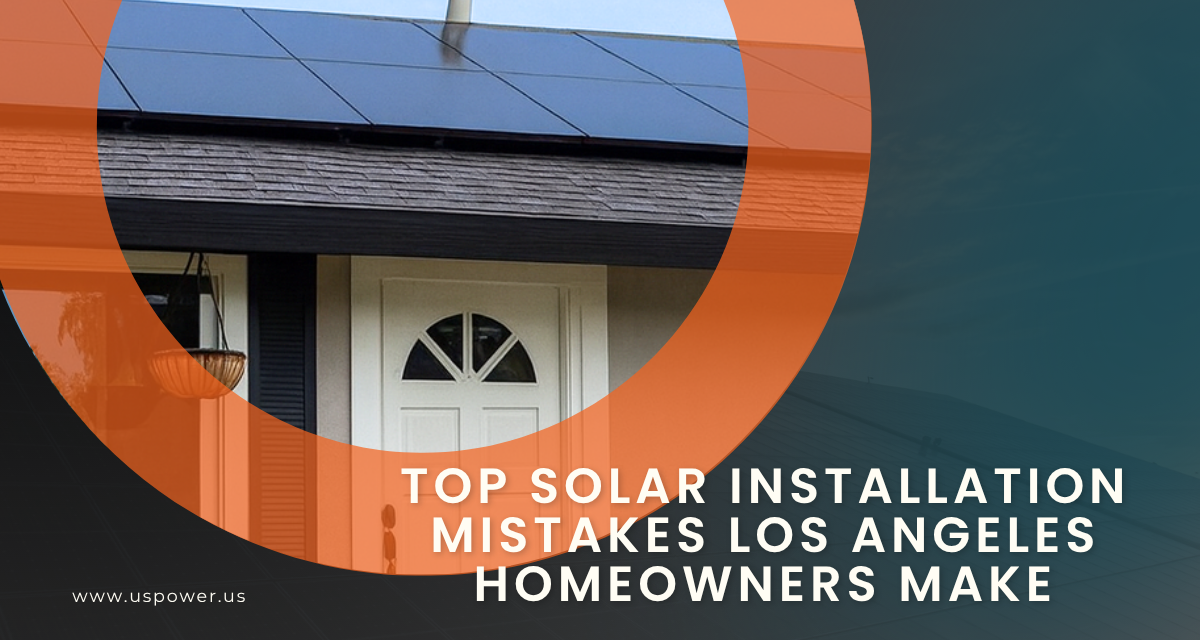
Before signing a solar contract, make sure you know the risks. Read to learn more.

Check if your roof qualifies for solar panels to save on energy bills today.
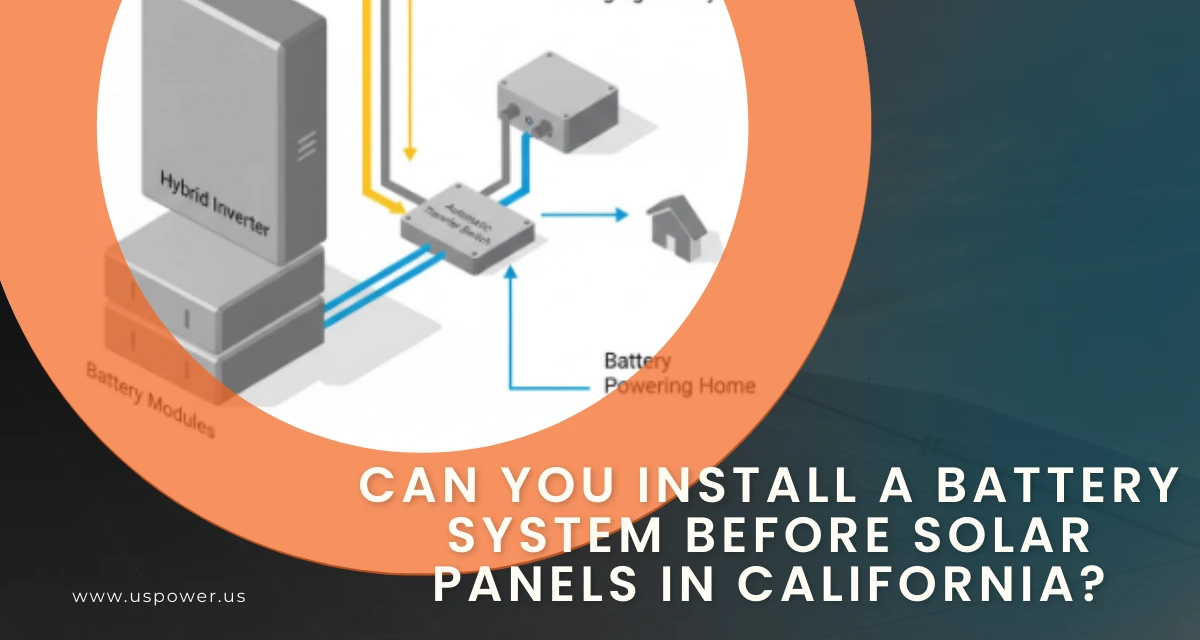
Here's what you need to know about battery-first installations and hybrid inverters.







Copyright © 2026 US Power - Axia by Qcells. All Rights Reserved.
Get an instant solar estimate using satellite!