

Residential rooftop solar panels remain the most direct way for a homeowner to cut an electric bill, but how much a rooftop solar power system actually saves depends on your roof, your utility, and your state's export rules. This guide breaks down how residential rooftop solar panels work, what determines real 2026 savings, and how to tell if your roof qualifies, across California, Texas, Florida, Illinois, and Connecticut.
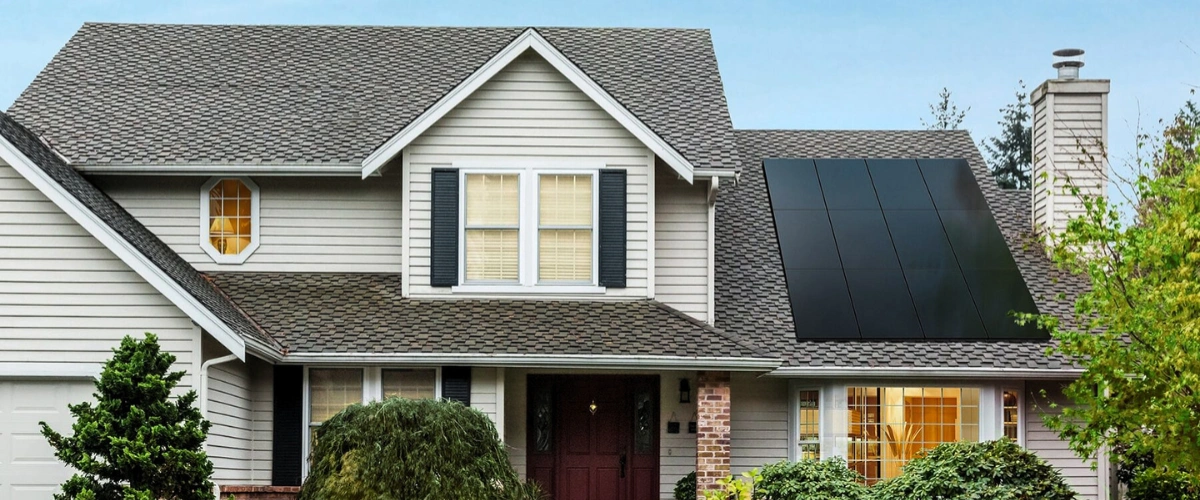
Residential rooftop solar panels turn a home's own roof into a power source, cutting how much electricity a household has to buy from the grid every month. That's the whole idea behind rooftop solar power, and it's still the most direct savings tool available to most homeowners, more direct than any rebate, any rate plan switch, or any community program. But not every roof is a good candidate, and not every rooftop solar power system is sized correctly for the home it sits on. This guide covers how residential rooftop solar panels actually work, what determines real savings in 2026, and how to tell if your roof qualifies, whether you're in California, Texas, Florida, Illinois, or Connecticut.
A residential rooftop solar system has four main parts: the panels themselves, which convert sunlight into direct current electricity; an inverter, which converts that direct current into the alternating current your home actually uses; the mounting hardware that secures panels to your roof structure; and, increasingly, a battery that stores excess production for use after the sun goes down. Every kilowatt-hour those panels generate and your home uses directly is a kilowatt-hour you don't buy from your utility, which is the mechanism behind every dollar of rooftop solar savings.
Output depends on system size, panel efficiency, roof orientation, and local sun hours, but a properly sized residential system typically offsets 70 to 100 percent of a household's annual electricity use. American-made Tier 1 panels like Qcells hold their rated output longer over a 25-year lifespan than cheaper imported alternatives, which matters more the longer you own the system.
Utility rates are climbing in every state US Power serves. California's average residential rate now sits around 34.5 cents per kWh, with SCE customers seeing a 13% increase in October 2025 alone and statewide rates up roughly 32% since 2020. Texas, Florida, Illinois, and Connecticut homeowners are watching similar trends as grid upgrades and infrastructure costs get passed through to ratepayers. A rooftop solar power system installed today locks in your production cost against every rate increase that follows, no matter which of these five states you call home.
What changes your rooftop payback more than anything else is how your state and utility credit the power you send back to the grid. California's Net Billing Tariff, commonly called NEM 3.0, cut export credits by roughly 75% compared to the old system, which is exactly why battery storage has become essential there rather than optional. Illinois still offers full retail-rate net metering for most systems, Florida currently requires 1:1 net metering for investor-owned utilities, Connecticut runs its own netting tariff through its major utilities, and Texas has no statewide net metering mandate at all, so buyback rates vary by which retail electricity provider you choose. Whatever state you're in, understand your specific utility's export credit, including how PG&E and SCE currently handle solar buyback if you're in California, before you size a system, because that number decides whether a battery pays for itself in years or in decades.
Four things determine whether a roof is a strong candidate for rooftop solar power. Structural condition matters most: a roof that needs replacement within the next 10 to 15 years should generally be redone before panels go on, since removing and reinstalling a system to fix a roof underneath it adds real cost. Orientation and pitch matter next, since south and west-facing roof sections with a moderate slope generally produce the most usable energy. Shading from trees or neighboring structures can meaningfully cut output even on an otherwise ideal roof. And usable roof area has to be enough to fit a system sized for your actual usage, not a generic package. If your roof needs work before it can support panels, that's worth resolving first rather than working around it. Residential roof solar panels come in different mounting profiles for different roof types too: asphalt shingle, tile, metal, and flat roofs each use different racking hardware, so an installer who has actually worked with your specific roof type matters as much as the panels themselves.
The process for putting residential roof solar panels on a home follows a fairly consistent sequence regardless of state. It starts with a consultation and roof assessment, where a consultant reviews your electric bills, your usage patterns, and your roof's condition and orientation to size a system correctly. From there, the system gets designed and submitted for permitting, which varies by city and can take anywhere from a few days to a few weeks depending on local processing times. Once permits clear, installation itself typically takes one to three days for a standard residential system, after which the local building department performs a final inspection. The last step is interconnection approval from your utility, sometimes called permission to operate, which is when the system is legally allowed to send power to the grid and you actually start seeing savings. Most US Power installations reach that final approval within three to four weeks of permit approval, though timelines can run longer in cities with heavier permitting backlogs.
For homeowners whose roof isn't a good fit right now, whether from shading, an HOA restriction, a rental situation, or a roof that needs replacing, community solar programs exist in most of the states US Power serves, from California's Community Choice Aggregators to Illinois's state-run Illinois Shines program to utility-run programs like FPL's SolarTogether in Florida. These programs change where your electricity comes from without reducing what you actually buy, so they save less than a properly sized rooftop system, but they're a legitimate bridge option while a roof issue gets resolved.
US Power's factory-direct partnership with Qcells keeps pricing 15 to 20 percent below typical market rates for the same American-made, Tier 1 equipment, since there is no reseller markup between you and the manufacturer's Dalton, Georgia facility.
Every US Power consultant is licensed for the state they serve, and every install is backed by a 25-year comprehensive warranty covering panels, workmanship, and performance, along with 200+ five-star Google reviews from homeowners across California, Texas, Florida, Illinois, and Connecticut. Most installations reach permission to operate within three to four weeks of approval.
For most homeowners with a roof that qualifies, yes. Utility rates are not reversing course, and a properly sized rooftop solar power system, matched to your state's specific net metering and export rules, still delivers real, compounding savings. The math has held up even as specific rebate programs have changed, because the underlying driver is rising rates, not government incentives.
Residential rooftop solar panels remain the most direct way to lower what you pay your utility every month, but only when the system is sized around your actual roof, your actual usage, and your state's specific rules. If your roof qualifies, rooftop solar power is worth pursuing now while utility rates keep climbing across California, Texas, Florida, Illinois, and Connecticut. Talk to a licensed US Power consultant to find out what your roof qualifies for.


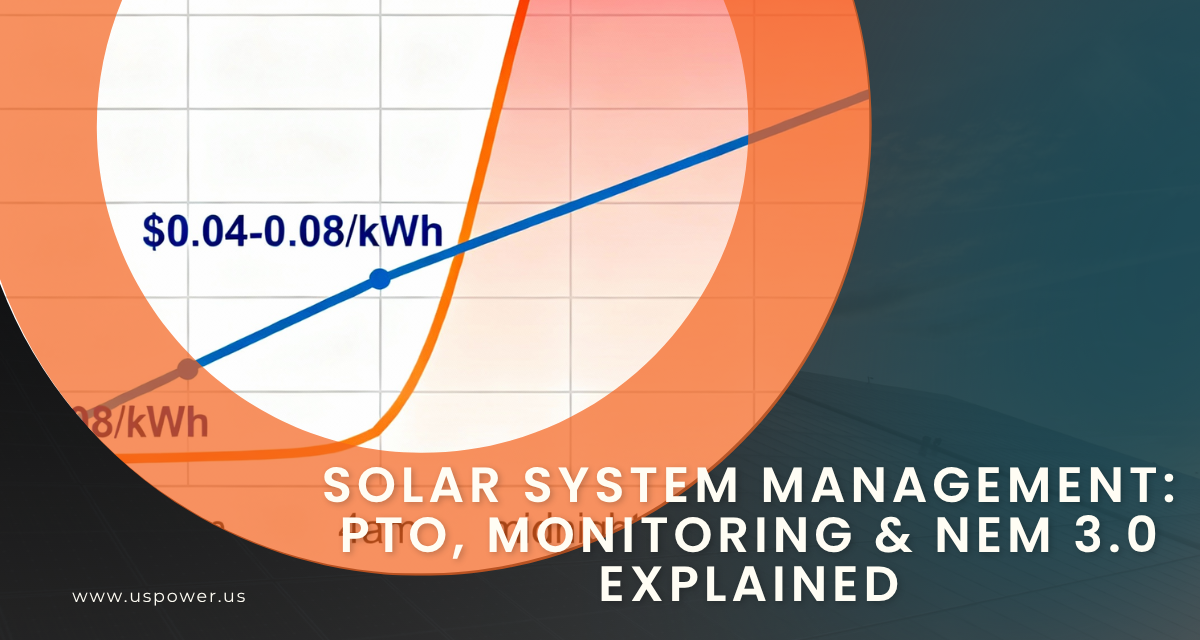
Before receiving PTO, your utility has no obligation to track export credits or pay y

See current electricity costs and what California homeowners has to pay monthly.

Learn how solar panels in 2025 can save homeowners significant utility costs.








Copyright © 2026 US Power - Axia by QCells. All Rights Reserved.
Get an instant solar estimate using satellite!