
Solar panel distribution adds a distributor and an installer between the factory and your roof, and each takes a margin. US Power's factory-direct Qcells route runs 15-20% below market in Los Angeles and six other states. Here is how to compare suppliers.
You search for a solar panel supplier and the results read like a wholesale catalog: pallets, container minimums, distributor logins. What you actually want to know is simpler. Who is the Qcells distributor for your roof, who marks the panels up along the way, and who answers the phone when something breaks in year 12?
Picture two quotes for the same 20-panel system that differ by several thousand dollars. Same brand, same size, same roof. The gap usually is not the panels. It is the number of hands they passed through in solar panel distribution before reaching you.
This guide explains how solar panel distribution works, how to buy Qcells panels factory-direct, who supplies Los Angeles, and what to ask any supplier before you sign.
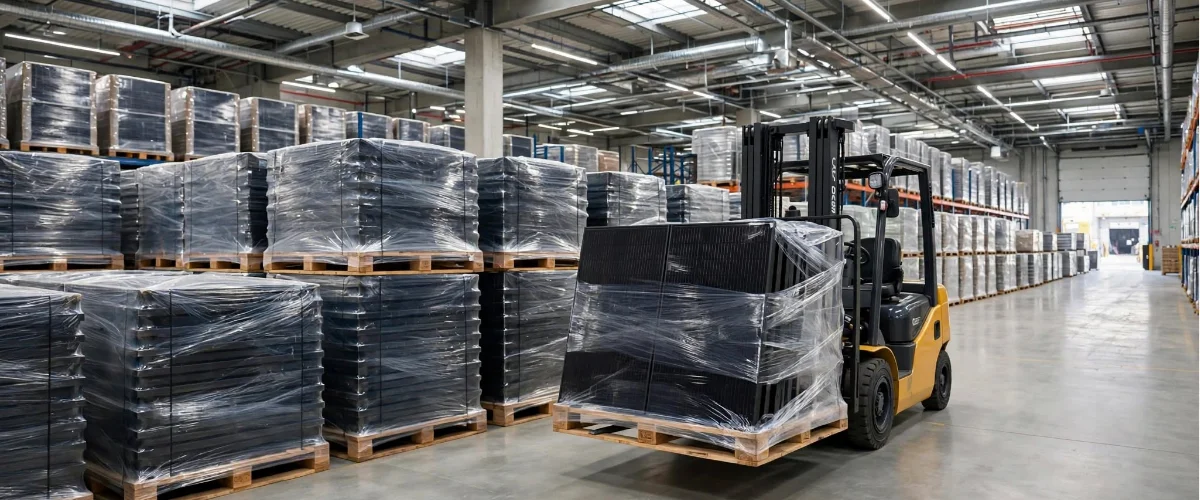
Solar panel distribution is the chain that moves panels from the factory to the crew that mounts them. In most U.S. markets it runs manufacturer, distributor, installer, homeowner. Each step adds handling, inventory risk and margin, which is why the same 400-watt panel can carry very different prices depending on the route it took.
Distributors are a core part of solar panel distribution for good reasons. Sunhub's June 2026 supplier overview explains that they aggregate inventory and provide logistics, financing and technical support, so installers do not have to source every module, inverter and battery themselves. PVFinder's 2026 index adds that local stock typically ships in days, while a factory order can take weeks.
The catch is that solar panel distribution is crowded. RevenueBase matched 1,429 U.S. companies to the solar panel distributor description as of September 2026, though that count is broad and includes installers who describe themselves that way. Sunhub also notes that consolidation among distributors is increasing.
Solar panel distribution vocabulary gets used interchangeably online, which adds to the confusion. Here is how the roles differ.
Solar energy equipment suppliers also stock inverters, racking and batteries, not just panels. If a quote lists parts by brand, ask where each one came from. US Power appears in two rows because we source Qcells factory-direct and also install for homeowners ourselves.
If you searched for a Qcells distributor, here is the direct answer: Qcells does not sell panels straight to homeowners. A July 2026 review from Solar Energy Gadgets notes that Qcells panels reach roofs through a nationwide network of certified installers, and some of those installers buy through distributors.
US Power is an exclusive Qcells partner, so our consultants source panels factory-direct. That removes a link most homeowners never see.
Production is concentrated in Georgia, and the U.S. Department of Energy describes Qcells' Cartersville plant as the first factory in America in at least eight years to make ingots, wafers, cells and panels under one roof. Our posts on American-made Qcells panels and whether Qcells panels are made in the USA cover the manufacturing details, and you can review factory-direct Qcells pricing on our sister site.
Homeowners who search for solar panel distributors in Los Angeles usually find national wholesale catalogs and installer ads. Neither tells you who actually stands behind the panels on your roof.
Southern California has short supply lines. HD Hyundai's U.S. arm is in Irvine, and at least one online equipment supplier lists a Simi Valley warehouse with local pickup. US Power's office is at 16255 Ventura Blvd in Encino, in the San Fernando Valley, so crews and Qcells stock are close by.
Local stock usually means days instead of weeks. Our Los Angeles solar page covers what we install across the city, and our comparison of the best solar companies in Los Angeles shows how to vet local installers.
Several 2026 guides say LADWP customers are outside NEM 3.0, which applies to investor-owned utilities such as SCE. Confirm your utility first, because it changes battery sizing and payback, and therefore the equipment list you should be quoted.
Qcells is only one brand. REC and Hyundai reach homeowners differently.
REC was founded in 1996 and lists San Luis Obispo, California as its U.S. base, according to its EnergySage profile. It runs a distribution partner locator for trade buyers and an installer locator for homeowners who want a REC Certified Solar Professional. Start with the installer locator, then ask which distributor stocks the exact model in your quote, and which warranty terms apply through that installer.
HD Hyundai Energy Solutions America is a California-based module wholesaler headquartered in Irvine, according to Unisco's importer profile. Regional distributors such as Greentech Renewables list Hyundai alongside REC. The catch is residential availability: an August 2026 installer review says Hyundai's visible U.S. activity leans utility-scale, citing an $85 million supply deal announced in April 2026, and it could not verify who processes homeowner warranty claims. Get the claim route in writing before you buy.
Solar panel distribution matters most where local stock and local warranty support are strongest. Here is how it plays out in the seven states US Power serves.
Beyond Los Angeles, California has the shortest local supply lines for all three brands, with REC's U.S. base in San Luis Obispo. NEM 3.0 net billing makes battery pairing central to most quotes, and storage lead times can stall a project. Size your system with the US Power solar calculator first so you can spot padded equipment lists.
Texas buyers should care about hail. REC states that its Alpha Pure-RX line is rated for 45 mm hail, the kind of spec-sheet number to compare across brands. Houston is also a solar panel distribution hub, with RevenueBase counting 24 distributor-matched companies headquartered there as of September 2026.
Wind load is the number to watch. REC lists a 10,000 Pa maximum load on the Alpha Pure-RX line, so ask for the same figure on any panel quoted for a Florida roof. Then confirm the installer stocks the exact model before storm season, not after.
Winter weather makes snow-load ratings and delivery timing worth confirming. Ask your installer where the panels ship from and how long that takes. A supplier who cannot answer clearly is a warning sign.
The Northeast shares Illinois' snow-load concerns, and dense roofs make exact equipment lists matter. In all three states, ask whether panels ship from a regional warehouse or straight from the factory, and get the model number and warranty terms in writing.
Every extra hand in solar panel distribution adds margin, and margin ends up in your quote. Two things change most: price and accountability.
Here is an illustrative example. Say a market-rate quote for your system comes in at $24,000. US Power's factory-direct Qcells pricing runs 15-20% below market, so the same class of system lands between $19,200 and $20,400. That is $3,600 to $4,800 less, without changing the panel brand. Our guide to avoiding overpriced solar quotes shows where the extra dollars usually hide.
The manufacturer covers the panel and the installer covers workmanship. When panels pass through a distributor and a third-party installer, a failure can turn into a game of who owns the problem. With US Power, one company designs, installs and stands behind the system with a 25-year comprehensive warranty. Most installations reach permission to operate in 3-4 weeks, and our Axia by Qcells installation timeline walks through each stage.
You do not need a wholesale account to navigate solar panel distribution. You need three questions.
Ask whether the installer buys direct from the manufacturer or through a distributor. Neither answer is wrong, but the price and timeline should reflect it.
Get the warranty contact for the panel, inverter and workmanship in writing. Our list of red flags when choosing a solar company covers the rest.
A quote that says "premium panels" is not a quote. Demand the brand, model number, wattage and warranty term for every component, including the battery.
Solar panel distribution puts a distributor and an installer between the factory and your roof, and each takes a share. Buying through a factory-direct Qcells distributor route removes a link, and that is where the 15-20% gap comes from.
US Power is a CSLB-licensed, exclusive Qcells partner with 200+ five-star Google reviews. Every consultation starts with a real 12-month bill analysis, and every install carries a 25-year comprehensive warranty. If you want to see what a shorter supply chain saves on your roof, book your free 12-month bill analysis.
Fewer hands, fewer markups, one warranty to call.


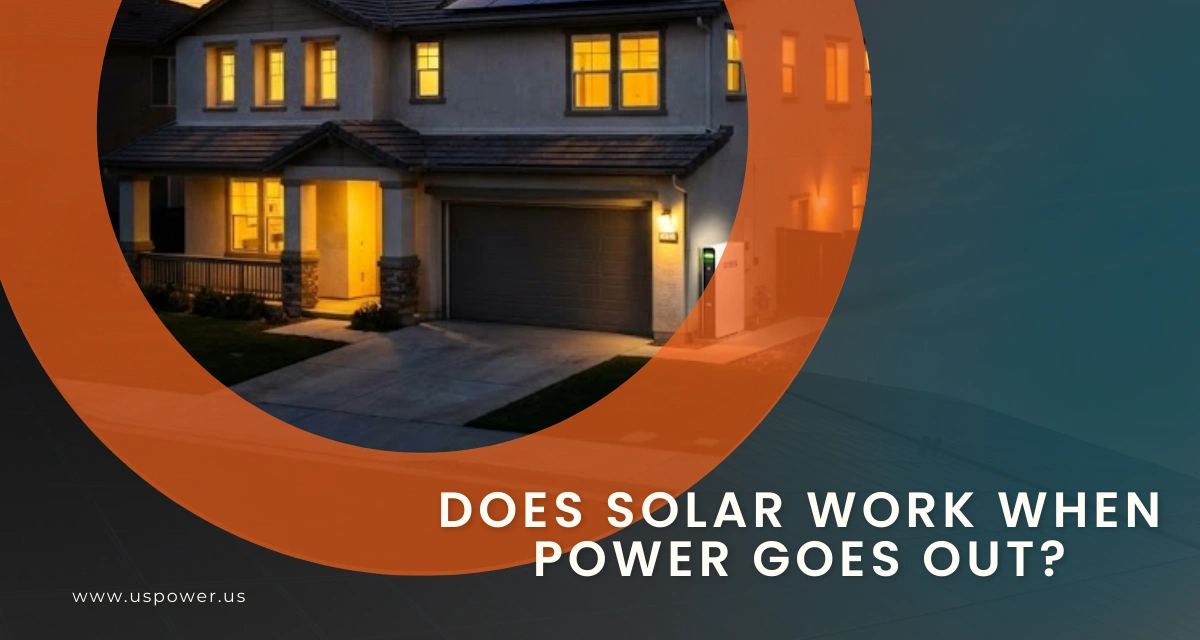
Your solar panels won't save you during the next blackout—unless you do this first.

Find out which inverters and batteries will work best with Qcells solar panels.
Before you buy solar, get the facts and save more with expert installation.







Copyright © 2026 US Power - Axia by QCells. All Rights Reserved.
Get an instant solar estimate using satellite!