

Northridge is one of the best places in Los Angeles to go solar. LADWP still credits the power your panels export at retail rates, Valley summers push bills into the top rate tier, and August skies are clear 91% of the time. Here is what a system costs in 2026 and how to pick the right installer.

Northridge is a strong solar location. LADWP still credits exported power at retail rates, Valley summers push bills into higher tiers, and skies are clear 91% of August. US Power installs Qcells systems locally.
Northridge homeowners get a better deal on solar than most of California. While SCE and PG&E customers now earn only a few cents for the power their panels send to the grid, LADWP still credits those exports at the same rate you pay for electricity. Add long, clear Valley summers and air conditioning that pushes bills into the highest rate tier, and solar in Northridge pays back faster than in much of the state.
This guide covers what LADWP's rules mean for your system, what a typical Northridge installation costs in 2026, whether you need a battery, how permitting works in the City of Los Angeles, and what to look for in an installer.
Northridge is part of the City of Los Angeles, so your electricity comes from the Los Angeles Department of Water and Power, not Southern California Edison. That one fact changes the math.
Under LADWP's net energy metering program, power your panels export is credited at the energy price on your rate schedule, the same price you would have paid to buy it. Credits carry forward on your bill to cover the evenings and cloudy months.
Customers of SCE, PG&E and SDG&E moved to California's Net Billing Tariff, often called NEM 3.0, in April 2023. Their exports typically earn about 5 to 8 cents per kWh. LADWP is a city-owned utility and was never part of that change. For a Northridge home, every kilowatt-hour your panels make is worth close to full retail value, whether you use it at noon or send it to the grid.
LADWP rates are also rising. Base rates have not changed since 2019, but quarterly pass-through adjustments for fuel, renewable energy and grid replacement raised residential prices by about 2 to 2.5 cents per kWh year over year. Solar locks in a large share of your power at today's cost.
Here are the numbers that matter most for a Northridge rooftop in 2026.
| Factor | Northridge in 2026 |
|---|---|
| Electric utility | LADWP (Zone 2, San Fernando Valley) |
| Summer tier rates (Jul to Sep 2026) | 26.41¢ / 32.27¢ / 40.97¢ per kWh |
| Time-of-use peak | 1 to 5 PM on weekdays |
| Credit for exported solar | Retail energy price (LADWP net metering, not NEM 3.0) |
| Typical yearly production | About 1,650 kWh per installed kW |
| Hot season | Late June to late September; August averages 90°F |
| Permits | LADBS online express permit for eligible rooftop systems |
Northridge sits in LADWP's Zone 2, the inland zone that covers the San Fernando Valley. The hot season runs from late June to late September, with average daily highs above 86°F, and August averages 90°F. Heat waves regularly push past 100°F.
That heat affects your system in two ways.
It raises your bill. Air conditioning pushes summer usage into LADWP's higher tiers, where power cost up to 40.97 cents per kWh in July through September 2026. Every kilowatt-hour solar replaces in those months is worth the most.
It lowers panel output. Panels lose a little power as they heat up. On a 95°F day, cells on a dark roof can reach about 60°C. A panel with a temperature coefficient of -0.29%/°C loses roughly 10% of its rated output at that temperature. That is normal and already built into good system designs, but it is why brand and heat rating matter here. Our guide to the best solar brands in LA for long-term value compares heat performance and warranties across the main brands.
The good news is that the Valley's clear skies more than make up for it. A well-oriented system in Northridge typically produces around 1,650 kWh per installed kW each year, well above coastal Los Angeles.
California's average installed price was about $2.52 per watt in 2026, according to EnergySage data. Your price depends on roof type, panel choice, electrical panel condition and system size.
Here is a worked example for a typical Northridge home that uses 800 kWh a month, or 9,600 kWh a year:
System size: about 6 kW, producing roughly 9,900 kWh a year at 1,650 kWh per kW.
Installed cost: about $15,100 at $2.52 per watt, before any incentives.
Annual bill savings: about $2,700, assuming a blended LADWP rate of around 28 cents per kWh across the year.
Simple payback: about 5 to 6 years.
These are estimates. LADWP's fixed charges stay on your bill, and your blended rate depends on your tier and season. Our guide on how many solar panels a Los Angeles home needs walks through sizing in more detail.
What about the federal tax credit? The 30% credit for homeowners who buy their system (Section 25D) ended on December 31, 2025, so it is not included above. Leases and power purchase agreements can still carry a commercial credit under Section 48E if the system is placed in service by the end of 2027, and some of that value may show up in lower payments. Buying and leasing each have trade-offs, so compare total 25-year cost before choosing.
Most homes are a good fit for solar in Northridge, but four things decide how well a system performs and how long it lasts.
Roof age. Panels stay on your roof for 25 years or more. If your roof is near the end of its life, replacing it before installation costs far less than removing and reinstalling panels later.
Roof type. Composition shingle is the simplest and least expensive to work on. Clay and concrete tile, common on Mediterranean and Spanish-style homes in the area, can hold solar well but take more labor because tiles must be lifted, flashed and replaced around each mount.
Direction and shade. South- and west-facing roof planes produce the most. West-facing panels are especially useful in the Valley because they keep producing into the late afternoon, when air conditioning runs hardest. Mature trees over part of the roof can cut output, so a good design places panels around the shade instead of under it.
Electrical panel. As covered in the permitting section below, older homes may need an electrical panel upgrade. Finding that out during the design stage prevents surprise costs later.
A site assessment covers all four before you get a final price, so the number on your proposal is the number you actually pay.
For most Northridge homes, a battery is about backup power, not bill savings. Because LADWP credits exports at retail rates, storing your midday solar to use at night saves little compared with simply exporting it.
A battery makes sense if you want to keep the lights, refrigerator and internet running during an outage, if you work from home, or if someone in your household relies on powered medical equipment. It can also help if you choose LADWP's time-of-use plan, where the peak runs from 1 to 5 PM on weekdays. Our 2026 home solar battery comparison covers capacity, backup power and warranties if backup matters to you.
Permitting in Northridge goes through the Los Angeles Department of Building and Safety (LADBS), not LA County. California's SB 379 requires large cities to offer automated online permitting for standard residential solar systems, and LADBS offers an online express pathway for eligible rooftop systems that can issue permits the same day. Battery systems and non-standard designs may still need plan review.
After installation, LADBS inspects the system, and then LADWP reviews it and grants permission to operate. That final LADWP step often takes a few weeks after inspection. Many older Northridge homes have 100 to 125 amp electrical panels, and some need an upgrade to 200 amps, which adds a separate permit and cost. A good installer checks this before you sign.
Choosing an installer matters as much as choosing panels. Our guide on how to choose a solar company in Los Angeles covers license checks and contract red flags. Here is what US Power brings to a Northridge project.
Sized to your real usage. Every proposal starts with a review of your last 12 months of LADWP bills, including your summer tier usage, so the system matches how your home actually uses power.
Factory-direct Qcells pricing. As a factory-direct Qcells partner, US Power installs Qcells panels at 15 to 20% below typical market pricing, with no distributor markup. You can see how the Qcells warranty claim process works before you buy.
One warranty for the whole system. Every system comes with a 25-year comprehensive warranty covering the panels, installation and workmanship, so you have one company to call.
Licensed and reviewed. US Power is CSLB-licensed and has earned more than 200 five-star Google reviews.
Fast installation. Once your design is approved, installation is typically complete within 3 to 4 weeks. You can learn more on our Northridge service page.
Solar in Northridge still has one of the strongest cases in Los Angeles: retail credit for your exports, rising LADWP rates and some of the sunniest skies in the city. The right system is sized to your real bills, built with panels that handle Valley heat, and backed by an installer who will be around for the next 25 years. Run your address through our solar calculator to see what your roof could produce.
Ready to see your numbers? Get your free solar quote.


More panels than your inverter can handle? That might actually be the plan.
Here's how the Backup Switch and Gateway 3 actually compare on cost, speed, and fit.
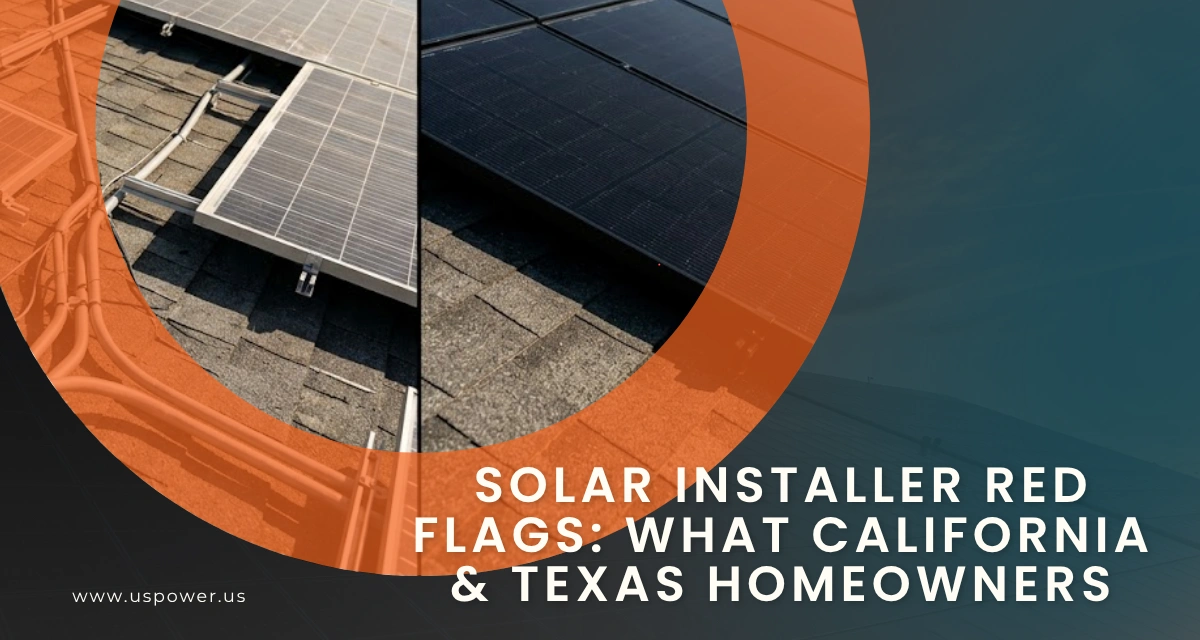
Is your solar installer cutting corners on your roof? CA or Texas Homeowners Warning.









Copyright © 2026 US Power - Axia by QCells. All Rights Reserved.
Get an instant solar estimate using satellite!