
Tanto Axia by Qcells como Sunrun instalan paneles en tu tejado. Sin embargo, el modelo de propiedad, las condiciones del contrato y el resultado financiero a 25 años son completamente diferentes. Esta es la comparativa honesta que los propietarios en California, Texas, Florida e Illinois necesitan antes de firmar nada.
Has investigado un poco, te han aparecido algunos anuncios y ahora hay dos nombres que no dejan de salir: Axia by Qcells y Sunrun. Ambos prometen facturas de electricidad más bajas. Ambos instalarán paneles en tu tejado. Y, aun así, los contratos, los costes y los resultados a largo plazo son tan diferentes como puede serlo la energía solar.
Esta no es una comparación de logotipos o discursos de venta. Es un análisis comparativo de lo que cada opción significa realmente para tu bolsillo a lo largo de 25 años, qué sucede cuando quieres vender tu casa, quién es el dueño del equipo instalado en tu tejado y si puedes aprovechar al máximo el almacenamiento en baterías bajo las normas actuales de las empresas eléctricas en California, Texas, Florida e Illinois.
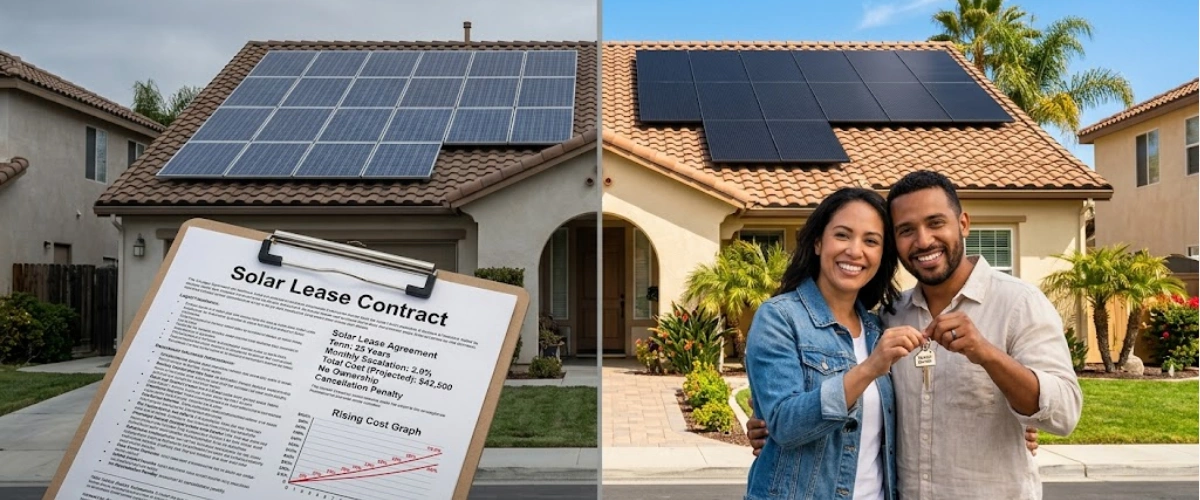
Esto es lo más importante que debes entender antes de seguir leyendo. Axia by Qcells, a través de US Power, es un modelo de propiedad. Compras el sistema, los paneles son tuyos y te quedas con cada dólar que genera tu sistema. Sunrun es principalmente una empresa de alquiler. Su plan estrella, BrightSave Monthly, instala paneles en tu tejado, pero mantiene la propiedad a nombre de Sunrun durante todo el contrato de 25 años.
Esa única distinción determina casi todas las demás diferencias en esta comparativa.
Cuando eres dueño de tu sistema, tú decides qué equipo instalar en tu tejado, cuándo añadir almacenamiento en baterías y qué hacer con los paneles cuando vendes tu casa. Cuando alquilas, Sunrun toma esas decisiones por ti. Estás pagando mensualmente por la energía que produce tu propio tejado, bajo condiciones que una corporación estableció antes de que entraras por la puerta.
Los propietarios que han analizado las cifras completas sobre la comparación entre PPA solar y propiedad en el sur de California descubren sistemáticamente que la propiedad resulta más rentable en cuanto al coste total en cualquier periodo de 25 años cuando se tiene en cuenta la cláusula de incremento anual de forma honesta.
Sunrun no publica precios estándar. Cada presupuesto se personaliza según tu tejado y ubicación. Lo que muestran los datos del sector de 2026 es que el alquiler BrightSave Monthly para un sistema típico de 8 kW en California oscila entre 90 y 160 dólares al mes durante el primer año.
La cifra que toma desprevenidos a la mayoría de los propietarios está oculta en el lenguaje del contrato: el incremento anual. Sunrun incluye un aumento de tarifa del 0% al 2,9% anual, dependiendo de tu acuerdo. Con un 2,9%, un pago mensual de 110 dólares en el primer año se convierte en aproximadamente 183 dólares o más para el año 25. Durante todo el contrato, un propietario con un incremento del 2,9% paga un total estimado de 44.000 dólares, lo que supone más del doble del coste neto de un sistema equivalente comprado al contado.
El argumento de Sunrun es que las tarifas de las empresas eléctricas subirán más rápido que su cláusula de incremento anual. Puede que eso sea cierto en algunos años. Lo que no cambia es el hecho de que, tras 25 años de pagos, Sunrun sigue siendo el dueño del equipo.
Como socio exclusivo de venta directa de fábrica de Qcells en California, Texas, Florida e Illinois, US Power obtiene los paneles directamente de la planta de fabricación estadounidense de Qcells en Dalton, Georgia. Sin distribuidores. Sin márgenes de intermediarios. Esa relación permite ofrecer precios entre un 15 y un 20% por debajo de lo que cobran los canales minoristas de energía solar habituales por los mismos paneles.
Cuando financias a través de US Power, eres dueño del equipo desde el primer día. Tu pago mensual es fijo. No existe una cláusula de incremento que aumente tu costo cada enero. Una vez liquidado el préstamo, tu electricidad es prácticamente gratuita durante el resto de la vida útil de los paneles.
Sunrun instala paneles de varios fabricantes, incluidos REC, Qcells, inversores SolarEdge y Canadian Solar. La marca que se coloca en tu techo depende de lo que Sunrun tenga disponible en el momento de tu instalación. Puedes expresar una preferencia, pero como Sunrun es el dueño del sistema, Sunrun toma la decisión sobre el equipo. Esto también significa que las garantías de los paneles físicos se gestionan a través de Sunrun en lugar de directamente del fabricante hacia ti.
Algunas de esas marcas son productos de calidad. El problema es la consistencia y el control, no solo la calidad.
Los paneles solares Qcells fabricados en EE. UU. se producen en Dalton, Georgia, lo que les otorga una de las únicas cadenas de suministro nacionales totalmente trazables en el mercado solar residencial. Qcells ocupa el primer lugar en cuota de mercado de energía solar residencial en EE. UU., estando instalados en aproximadamente uno de cada tres techos solares estadounidenses.
Cuando eliges US Power, el modelo específico de panel Qcells que figura en tu contrato es el que se instala en tu techo. Sin sustituciones. Sin cláusulas de "o equivalente" después de firmar. El modelo que aprobaste en la propuesta es el que se instala.
Para los clientes de arrendamiento (lease) y PPA, Sunrun incluye mantenimiento, monitoreo y una garantía de producción durante el plazo de 25 años. Si el sistema rinde por debajo de un umbral de producción anual definido, Sunrun acredita la diferencia. Ese respaldo de producción es una ventaja real para los clientes de arrendamiento que no desean gestionar el sistema por sí mismos.
Para los clientes que compran directamente en lugar de arrendar, la garantía de mano de obra de Sunrun es de 10 años. Las garantías de los equipos varían según el fabricante y se gestionan por separado.
La garantía integral de 25 años de US Power cubre paneles, mano de obra y rendimiento bajo un mismo contrato y un único punto de contacto. No hay garantías de fabricante separadas que rastrear, no hay brechas entre quién cubre la mano de obra y quién el equipo, y no hay dudas sobre la responsabilidad dentro de 18 años.
Revisar las opciones de financiamiento solar en California y en los otros estados objetivo ayuda a los propietarios a estructurar una compra que se ajuste a su presupuesto mientras aseguran esa cobertura desde el primer día. Más de 200 reseñas de cinco estrellas en Google en California, Texas, Florida e Illinois reflejan la consistencia de esa experiencia.
Bajo la política actual NEM 3.0 de California, los paneles solares sin almacenamiento en baterías obtienen créditos de exportación significativamente más bajos que bajo NEM 2.0. Esto hace que el almacenamiento en baterías sea esencial para los propietarios que desean maximizar sus ahorros con las reglas actuales. Sunrun ofrece opciones de baterías, incluyendo Tesla Powerwall y su propio producto Brightbox, pero añadir almacenamiento a un contrato de arrendamiento existente generalmente requiere renegociar los términos de tu contrato.
Esa es una limitación real. Los arrendatarios que no incluyeron una batería al firmar a menudo se encuentran sin acceso a la ruta de actualización que maximiza los ahorros de NEM 3.0, o enfrentan un proceso de modificación de contrato que no es ni rápido ni transparente.
Cuando usted es dueño de su sistema Axia de Qcells a través de US Power, la decisión sobre el almacenamiento en baterías es suya y la toma según sus propios plazos. Puede incluir una unidad de almacenamiento en batería Qcells Home Core en la instalación original o añadirla más tarde cuando su presupuesto lo permita. Sin renegociación de contrato. Sin aprobación de terceros. Solo una actualización programada bajo sus propios términos.
El proceso de diseño de sistemas solares Axia con tecnología de IA integra el almacenamiento en baterías desde la primera consulta, en lugar de tratarlo como una venta adicional posterior. Esto significa que su inversor, su conjunto de paneles y su batería están diseñados conjuntamente desde el principio.
Este es el problema que toma por sorpresa a la mayoría de los clientes de Sunrun. Cuando usted vende una casa con un contrato de arrendamiento de Sunrun, el comprador debe calificar para asumir el contrato restante o usted debe pagar el precio de compra antes del cierre.
Sunrun afirma que el proceso de transferencia toma de 5 a 10 días hábiles. Una parte significativa de las reseñas de clientes en Trustpilot y el BBB describe esperas de cuatro a seis semanas en California y Texas. Los agentes inmobiliarios en esos estados informan que los arrendamientos solares adjuntos complican ocasionalmente los cierres, porque algunos compradores no aceptan heredar una obligación financiera de 25 años como condición de compra. Si no puede encontrar un comprador dispuesto, usted mismo debe absorber el costo de la compra.
Cuando usted es dueño de su sistema a través de US Power, los paneles se transfieren con la propiedad de la misma manera que los electrodomésticos de la cocina. Las investigaciones del Laboratorio Nacional de Energías Renovables muestran que la energía solar propia aumenta constantemente el valor de reventa de las viviendas, ya que los compradores están dispuestos a pagar más por casas con facturas de servicios públicos reducidas o eliminadas. No hay un arrendador al que notificar, ni verificación de crédito para el comprador, ni una compra que complique su cronograma de cierre.
Entender lo que realmente cuesta esa propiedad frente a lo que cuestan los arrendamientos de Sunrun comienza con una comparación de precios honesta. Los precios directos de fábrica de Qcells reflejan lo que cuesta el equipo cuando no hay margen de distribuidor incluido en la cotización.
Sunrun es una empresa legítima con más de un millón de instalaciones y un producto de arrendamiento que realmente funciona para los propietarios que no pueden calificar para financiamiento o prefieren una experiencia totalmente gestionada sin costo inicial. Esa es la versión honesta de esta comparación. Obtenga su mejor presupuesto solar aquí o contáctenos.
Para la mayoría de los propietarios en California, Texas, Florida e Illinois en 2026, los números apuntan claramente a la propiedad. Un pago mensual fijo de préstamo que tiene fin. Control total sobre el almacenamiento en baterías bajo NEM 3.0. Una venta de vivienda limpia sin complicaciones de arrendamiento. Una garantía integral de 25 años que cubre paneles, mano de obra y rendimiento bajo un solo acuerdo. Y precios directos de fábrica de Qcells entre un 15 y un 20% por debajo del mercado, de la mano de un equipo con licencia CSLB y más de 200 reseñas de cinco estrellas en Google que respaldan cada instalación.


Learn methods to accurately measure sunlight for optimal solar panel placement.
Conoce las normas de tu HOA y tus derechos al instalar paneles solares en California.

Sus paneles solares se apagan si cae la red. Aquí le explicamos qué puede hacer.







¿Listo para tomar el control de tu energía? ¡Llámanos hoy!
818-650-8010Licencia de contratista n.º: 1144368
Copyright © 2026 US Power - Axia by QCells. Todos los derechos reservados.
¡Obtenga un presupuesto solar al instante mediante satélite!