

Los propietarios de viviendas en el sur de California están descubriendo que los paneles solares no siempre eliminan las facturas de electricidad, especialmente bajo NEM 3.0. Aquí te explicamos por qué tu sistema podría generar un saldo negativo y qué puedes hacer al respecto.
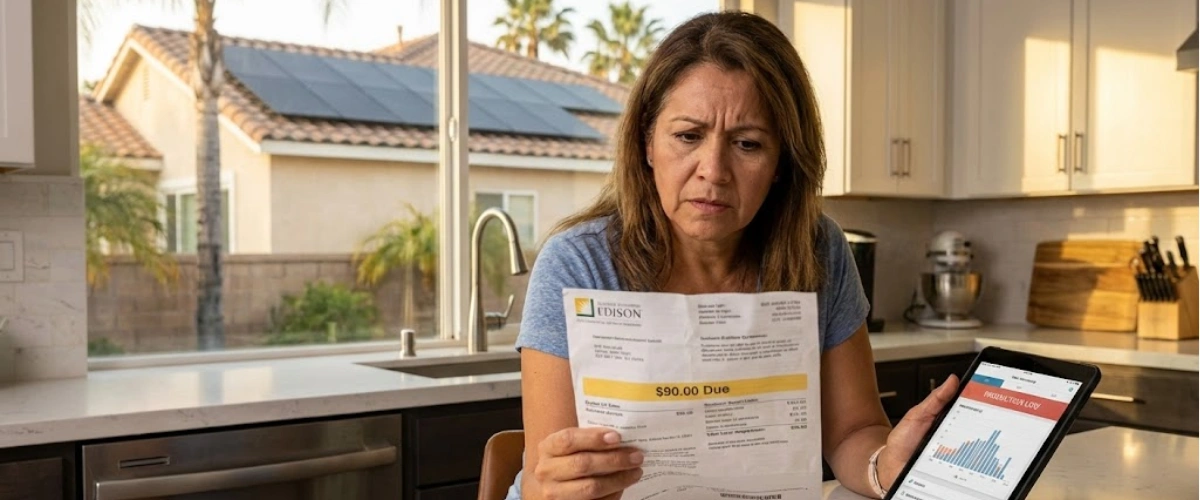
Sí, todavía puede recibir una factura. La energía solar solo se produce cuando brilla el sol, por lo que el consumo durante la noche o en días nublados proviene de la red eléctrica. Con NEM 3.0, los créditos por el excedente de energía son menores, por lo que las facturas de invierno pueden aumentar.
Instalaste paneles solares para eliminar tu factura de electricidad. Durante meses, todo funcionó a la perfección: generabas más de lo que consumías, acumulabas créditos con SCE o PG&E y apenas pagabas algo más allá de la tarifa de conexión mensual.
Entonces llegó el invierno. Días nublados, menos horas de luz y calefactores funcionando constantemente. De repente, recibes facturas de 70, 90 e incluso 150 dólares. Tu sistema solar generó un saldo negativo y te preguntas si algo se ha estropeado.
La verdad es esta: tus paneles solares funcionan perfectamente. El problema es cómo la política NEM 3.0 de California calcula los créditos de energía y por qué la mayoría de los hogares del sur de California ahora necesitan almacenamiento en baterías para evitar estas facturas sorpresa.
Los paneles solares generan electricidad según la exposición a la luz solar. En verano, con días de 14 horas y un sol intenso, tu sistema produce mucho más de lo que consume tu hogar. Bajo las antiguas normas de medición neta (NEM 2.0), ese exceso de energía te otorgaba créditos de valor total, básicamente un intercambio 1:1 con tu compañía eléctrica.
La política NEM 3.0 de California, que entró en vigor en abril de 2023, redujo las tasas de crédito por exportación en aproximadamente un 75%. Ahora, cuando envías el exceso de energía solar a la red durante el día, SCE o PG&E te pagan a precios mayoristas, a menudo solo entre 0,05 y 0,08 dólares por kilovatio-hora (kWh).
¿Pero qué pasa cuando consumes energía de la red por la noche o en días nublados? Pagas tarifas minoristas, que pueden alcanzar entre 0,50 y 0,65 dólares por kWh durante las horas punta (de 4 p. m. a 9 p. m.).
El resultado: tu excedente de verano ya no cubre tu déficit de invierno.
Los Ángeles tiene unas 14 horas de luz solar en junio, pero solo 10 horas en diciembre. Si a esto le sumamos la frecuente nubosidad durante los meses de invierno, tu producción solar puede caer entre un 30% y un 40% en comparación con los picos de verano.
Mientras tanto, tu consumo de energía suele aumentar en invierno:
Una propietaria de Pasadena con la que hablamos generó 450 kWh en julio, pero solo 280 kWh en enero, mientras que su consumo se mantuvo en torno a los 350 kWh ambos meses. Ese déficit de 70 kWh supuso una factura de 45 dólares en lugar del cargo mínimo habitual de 16 dólares.
Muchos propietarios asumen que la medición neta significa "factura de luz cero". Eso estaba más cerca de la realidad bajo NEM 2.0, pero NEM 3.0 funciona de manera muy diferente.
Bajo NEM 3.0, sus créditos por exportación y cargos por importación se calculan utilizando estructuras de tarifas diferentes:
Cuando exporta el exceso de energía solar (durante el día):
Cuando importa energía de la red (por la noche/días nublados):
Esto significa que necesita exportar de 4 a 6 veces más de lo que importa solo para cubrir los costos.
Un propietario en Van Nuys nos dijo: "Generé 400 kWh y solo consumí 350 kWh el mes pasado. Debería haber recibido un crédito, ¿verdad?"
No exactamente. Esto es lo que probablemente sucedió:
Resultado neto: A pesar de producir 50 kWh más de los consumidos, el propietario debía $66.50.
Incluso cuando su producción solar coincide perfectamente con su consumo, seguirá pagando cargos por distribución: las tarifas de infraestructura que SCE y PG&E cobran por el mantenimiento de la red. Estos cargos no eludibles suelen sumar entre $15 y $25 al mes, independientemente de su producción solar.
La solución para no salir perdiendo no son paneles solares más grandes, sino el almacenamiento en baterías. Descubra por qué el almacenamiento en baterías es esencial bajo NEM 3.0 para obtener ahorros óptimos.
Este es el problema fundamental: sus paneles solares generan la mayor potencia entre las 10 a. m. y las 3 p. m., pero su hogar consume la mayor parte de la electricidad entre las 5 p. m. y las 10 p. m. Sin baterías, se ve obligado a exportar energía solar barata durante el día e importar energía cara de la red por la noche.
Las baterías rompen este patrón. En lugar de enviar el exceso de energía solar a la red por $0.08 por kWh, usted lo almacena en su batería. Luego, cuando las tarifas de hora punta de la tarde alcanzan los $0.55 por kWh, utiliza su energía solar almacenada en lugar de la energía de la red.
Ejemplo real en Sherman Oaks:
Una casa de 2,400 pies cuadrados con un sistema solar de 7 kW y una batería de 13 kWh:
Bajo NEM 3.0, consumir tu propia energía solar vale entre 5 y 6 veces más que exportarla. Una batería con el tamaño adecuado garantiza que utilices prácticamente toda tu producción solar en lugar de regalarla a precios mayoristas.
Piénsalo de esta manera: ¿preferirías vender algo por $5 o usarlo para evitar comprar lo mismo por $30? Esa es la lógica que permiten las baterías.
Muchas personas piensan que las baterías son solo para cortes de energía. Es una función útil, pero bajo NEM 3.0, el valor real es la reducción diaria de la factura. Tu batería realiza ciclos todos los días, cargándose con energía solar y descargándose durante las costosas horas pico.
A lo largo de un año, esta optimización diaria ahorra a los propietarios de viviendas en el sur de California entre $600 y $1,200 en comparación con los sistemas solares sin batería.
¿La razón principal por la que los sistemas solares resultan insuficientes? El tamaño insuficiente. Muchos propietarios instalaron sistemas basados en su consumo promedio sin tener en cuenta las variaciones estacionales o las necesidades futuras.
Si tu mes de mayor consumo es de 500 kWh pero tu promedio es de 350 kWh, diseña tu sistema para 500 kWh. Bajo NEM 3.0, no hay penalización financiera por sobredimensionar ligeramente; la generación excedente durante los meses de alta producción genera créditos mínimos de todos modos, por lo que no pierdes mucho.
La verdadera penalización es el tamaño insuficiente. Cada kWh que necesitas importar te cuesta entre $0.30 y $0.65, mientras que los kWh excedentes que podrías exportar solo generan entre $0.05 y $0.12.
¿Planeas comprar un vehículo eléctrico en los próximos años? Añade entre 300 y 400 kWh/mes a tu cálculo de tamaño ahora. Instalar más paneles después implica lidiar con permisos, trabajos en el techo y posibles complicaciones con el estado de NEM. Entiende cuánto cuestan los paneles solares en California para planificar tu inversión correctamente.
¿Esa oficina en casa que estás construyendo? ¿La piscina que instalarás el próximo verano? ¿El sistema de climatización mejorado? Todo esto aumenta la demanda eléctrica. Es mucho más fácil y económico calcular el tamaño correcto desde el principio que ampliar tu sistema más adelante.
No todas las empresas solares entienden las implicaciones de NEM 3.0. Algunas todavía diseñan sistemas como si estuviéramos en 2022, dejando a los propietarios con instalaciones pequeñas y facturas inesperadas.
Los consultores de US Power comienzan cada proyecto analizando sus facturas de SCE o PG&E de los últimos 12 meses, no solo su consumo promedio. Identificamos sus meses de mayor consumo, sus patrones de uso según el horario y sus variaciones estacionales.
Luego, diseñamos un sistema de paneles solares residencial dimensionado para cubrir su demanda real, no mediante cálculos genéricos. Si sus facturas muestran un alto consumo nocturno, recomendaremos una mayor capacidad de batería. Si tiene una alta demanda de refrigeración en verano, dimensionaremos los paneles para cubrir sus necesidades de producción máxima.
Como socio exclusivo de venta directa de fábrica de Qcells, US Power ofrece precios entre un 15 y un 20 % por debajo de las tarifas habituales del mercado. Esto significa que puede permitirse el sistema del tamaño adecuado con almacenamiento en batería suficiente, en lugar de un sistema insuficiente que ahorra dinero al principio pero le cuesta más cada mes en cargos de la red.
Nuestros precios directos de fábrica de QCells también incluyen garantías integrales de 25 años que cubren los paneles, la mano de obra y el rendimiento. Sin tarifas ocultas ni costos sorpresa.
La mayoría de las empresas solares estiman de 8 a 12 semanas para la instalación. El proceso optimizado de US Power, con instaladores locales experimentados, suele completar los proyectos en 3 a 4 semanas después de la aprobación de los permisos.
¿Por qué es importante esto? Cada mes que espera es otro mes de facturas elevadas de SCE/PG&E. Nuestras más de 180 reseñas de cinco estrellas en Google mencionan constantemente nuestra rapidez y eficiencia.
Con tanto hablar de la reducción de créditos por exportación y facturas negativas, algunos propietarios se preguntan si todavía vale la pena instalar paneles solares. La respuesta es absolutamente sí, pero solo si diseña su sistema correctamente para las condiciones de 2026.
SCE y PG&E aumentaron sus tarifas entre un 8 y un 13 % en 2024 y otro 5-9 % en 2025. Las tarifas en horas punta superan ahora los $0.60 por kWh en muchas áreas. Para 2030, los analistas proyectan que las tarifas podrían alcanzar entre $0.75 y $0.85 por kWh durante las horas de mayor demanda.
Los paneles solares fijan sus costos de energía. Una vez instalados, su electricidad solar cuesta esencialmente cero centavos por kWh durante más de 25 años. A medida que las tarifas de los servicios públicos siguen subiendo, sus ahorros se acumulan año tras año.
Un sistema solar con batería correctamente dimensionado en el sur de California suele amortizarse en 6 a 8 años gracias al ahorro en la factura de la luz. Después de eso, básicamente obtiene electricidad gratuita durante los siguientes 17 a 19 años de vida útil garantizada de los paneles.
Compare eso con no hacer nada: un hogar que paga $180 al mes actualmente ($2,160 al año) podría pagar fácilmente más de $250 al mes para 2030 (más de $3,000 al año) con los continuos aumentos de tarifas.
Aunque el crédito fiscal federal del 30 % finalizó el 31 de diciembre de 2025, California sigue ofreciendo varios incentivos estatales y locales:
Los consultores de US Power le ayudan a identificar y solicitar todos los incentivos para los que califica.
Si está cansado de las sorpresas en su factura de electricidad o está considerando instalar paneles solares por primera vez, así es como US Power simplifica el proceso.
Comparta con nuestro equipo sus facturas de electricidad de los últimos 12 meses. Analizaremos sus patrones de consumo, identificaremos sus periodos de máxima demanda y calcularemos el tamaño óptimo de su sistema. Esta consulta solar gratuita no conlleva ningún compromiso.
Nuestros consultores con licencia CSLB diseñan un sistema específicamente para su hogar, la disposición de su techo y sus necesidades energéticas. Le mostraremos exactamente cuánto ahorrará con diferentes configuraciones de baterías y le ayudaremos a elegir el equilibrio adecuado entre el costo inicial y el ahorro a largo plazo.
Obtenga un presupuesto detallado sin cargos ocultos. Ofrecemos opciones de financiamiento flexibles, incluyendo $0 de pago inicial para propietarios que califiquen, haciendo que los sistemas solares con batería sean accesibles sin necesidad de un gran desembolso inicial.
Una vez que apruebe el diseño, nos encargamos de los permisos, la interconexión con la compañía eléctrica y la instalación, que generalmente se completa en 3 o 4 semanas tras la aprobación. Nuestros instaladores experimentados minimizan las molestias en su rutina diaria.
Tras la instalación, tendrá acceso a herramientas de monitoreo que muestran su producción, consumo y ahorros en tiempo real. Nuestra garantía de 25 años significa que estamos comprometidos con el rendimiento a largo plazo de su sistema.
Que sus paneles solares no reduzcan su factura a cero no es un fallo del sistema, es un problema de diseño. Cómo cambió todo con NEM 3.0 requiere un dimensionamiento adecuado del sistema y almacenamiento en baterías para maximizar los ahorros.
¿La buena noticia? Con el diseño adecuado de US Power, puede eliminar las facturas sorpresa, fijar costos de energía predecibles y protegerse contra los aumentos de tarifas de las empresas eléctricas durante los próximos 25 años.
No espere a recibir su próxima factura de electricidad elevada. Programe una consulta gratuita con US Power hoy mismo y vea exactamente cuánto podría ahorrar con un sistema solar con batería diseñado correctamente.


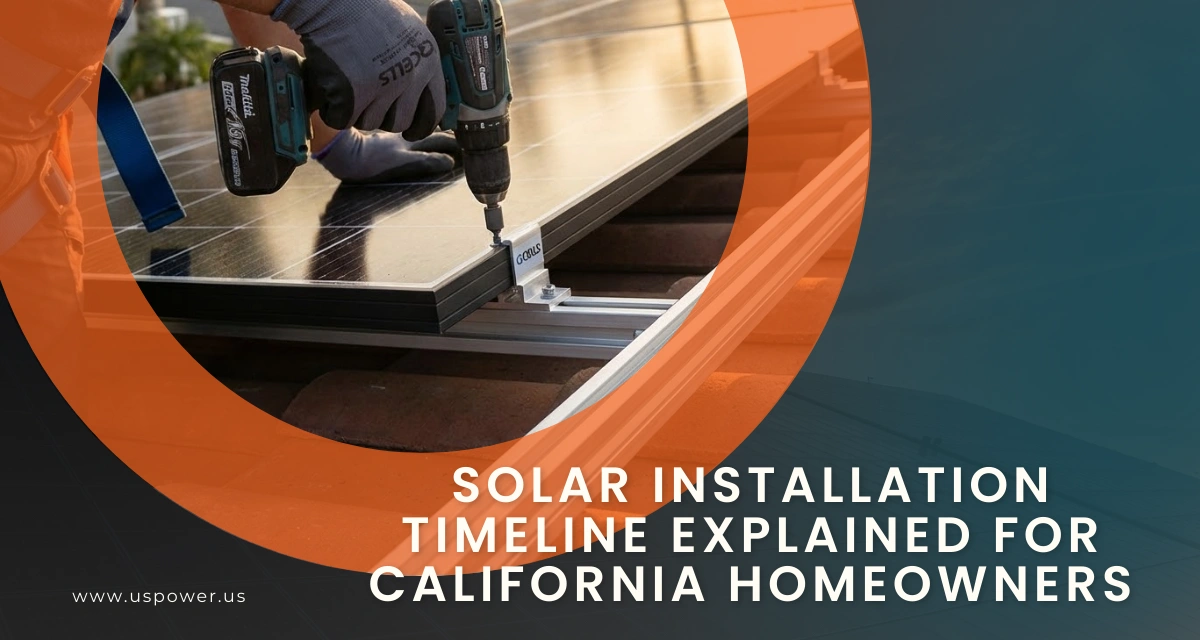
Del contrato a la conexión: US Power ofrece plazos reales de instalación solar.
%20Thumbnail.png)
Descubre si comprar o alquilar paneles solares en 2025 te ofrece el mejor valor hoy.

Siete razones reales para instalar paneles solares en 2026 y cuánto vale cada una.






¿Listo para tomar el control de tu energía? ¡Llámanos hoy!
818-650-8010Licencia de contratista n.º: 1144368

Copyright © 2026 US Power - Axia by QCells. Todos los derechos reservados.
¡Obtenga un presupuesto solar al instante mediante satélite!