
Glendale Water & Power is developing a citywide Virtual Power Plant that could pay residents for stored battery energy. Here's what it means for your electricity bill — and why acting now matters.

Glendale homeowners have watched GWP rates climb for years. Rising summer demand, an aging grid, and the ongoing question of the Grayson gas plant expansion have made energy costs a persistent frustration.
Now there's a development worth paying attention to. Glendale Water & Power is actively exploring what could become one of the largest municipal Virtual Power Plant initiatives in the country — a program that would pay residents with solar and batteries to support the local grid during peak demand.
This isn't a distant policy idea. Local advocacy groups, city planners, and GWP itself are all aligned around the same vision: replace costly fossil-fuel infrastructure with energy already stored in homes across Glendale. The opportunity for homeowners who move now is real.
If you're a GWP customer, you already know the trend. Electricity costs in Glendale have climbed steadily alongside infrastructure upgrades, peak demand increases, and the ongoing cost of grid modernization. Understanding why electricity bills are so high in Southern California helps explain why city planners are searching for alternatives to expensive centralized power solutions.
At the center of Glendale's energy debate is the Grayson Power Plant. For years, the city has weighed costly expansion of this gas-burning facility to meet rising summer demand. The challenge: new fossil-fuel peaker capacity costs hundreds of millions of dollars, takes years to build, and locks Glendale into carbon-heavy infrastructure at exactly the wrong moment.
The VPP concept is the clean alternative. Instead of building one large new plant, GWP could tap energy already sitting in residential batteries across the city during peak hours, between 4 p.m. and 9 p.m. on hot summer evenings.
Southern California's peak demand hours are the most expensive hours on the grid. Utilities pay the highest rates to generate or purchase power during these windows — and those costs flow directly into your monthly bill.
Every homeowner with a charged battery during peak hours holds something valuable: stored energy that the grid needs most. The VPP model turns that into a direct financial relationship between you and GWP.
A Virtual Power Plant connects hundreds or thousands of residential batteries into a single coordinated energy resource. When GWP signals the network during a high-demand event, participating batteries discharge stored solar energy back to the local grid.
Local advocacy groups have branded this initiative "People Powering Glendale" — and the concept is exactly what it sounds like. Residents become active participants in the city's energy system, not just passive ratepayers.
From the current program framework, single-family homeowners who participate would receive monthly payments applied directly to their GWP utility bill, plus backup power from their battery during outages. The more residents who join, the more grid capacity GWP can build without new gas infrastructure.
Understanding Virtual Power Plant battery benefits is the first step toward positioning your home as a grid asset, not just a power consumer.
Centralized infrastructure is slow, expensive, and fragile. A single power plant failure can affect thousands of customers at once. A distributed network of residential batteries doesn't have a single point of failure — and it can be deployed incrementally as more homeowners install systems.
The DOE has identified VPPs as capable of providing peaking capacity at roughly half the net cost of alternatives like utility-scale batteries or natural gas peaker plants. Glendale's approach aligns with exactly this logic: leverage what residents already want (lower bills, backup power) to solve what the city needs (affordable, clean peak capacity).
The financial case for going solar and battery in Glendale has never been stronger — whether or not you participate in a future VPP program. Understanding how solar batteries maximize your savings reveals why battery storage is the key to real bill reduction under current GWP rate structures.
Before any VPP payments begin, a battery system saves Glendale homeowners money through self-consumption. Your solar panels charge your battery during the day. When peak rates kick in during the evening, you draw from stored power instead of buying from GWP at peak prices.
That offset alone — avoiding peak-rate imports every evening — is where most of the financial benefit comes from in 2026.
When GWP's VPP program formalizes, participating homeowners are expected to earn monthly credits on their utility bills. The more battery capacity you contribute during peak events, the higher your potential credit.
This is why system sizing matters. A battery installed today with demand-response capability is a battery positioned to earn from GWP tomorrow. Getting this right from the start means not having to upgrade later.
Not every battery qualifies for utility programs. GWP's VPP framework, like Burbank Water and Power's existing battery rebate, is expected to require demand-response capability — meaning GWP must be able to remotely signal your battery to discharge during peak events.
Demand-response compatibility is a software and hardware specification. Your battery's inverter must be able to receive and act on utility signals without manual intervention from you. Some lower-cost systems lack this capability entirely.
Knowing how to choose the right backup power for your home before you buy protects you from installing a system that looks good on paper but fails to qualify for the GWP programs offering real financial returns.
The VPP model rewards capacity. A 10 kWh battery contributes meaningfully to the grid but a 20–30 kWh system — sized for a larger home or EV charging needs — contributes more and earns proportionally higher credits.
US Power's consultants analyze your actual GWP usage profile to recommend the right system size. That means your battery earns from the grid without leaving your home short on backup power during an outage.
The permitting process is where most Glendale homeowners run into trouble. GWP interconnection approvals, city building permits, and HOA requirements each have their own timelines and documentation standards. Missing one requirement means delays — sometimes months of them.
GWP is a municipal utility, which means its interconnection process operates independently from Southern California Edison's system. Understanding how solar permitting works in California gives you a foundation, but GWP has its own specific documentation requirements and inspection protocols that catch unprepared installers off guard.
Installers who primarily work in SCE territory often submit incorrect or incomplete GWP paperwork, triggering correction cycles that add weeks to your timeline.
US Power manages Glendale's permitting process end-to-end. That means coordinating directly with GWP on interconnection documentation, pulling city building permits, scheduling inspections, and handling any corrections before they become delays.
The result: most Glendale homeowners reach Permission to Operate in 3–4 weeks after approval — one of the fastest timelines available in the market. Learning how US Power delivers solar faster explains the process that makes this possible consistently.
US Power is Southern California's exclusive QCells partner, delivering American-made solar panels at factory-direct pricing — typically 15–20% below what other installers charge for comparable equipment.
QCells panels are manufactured in the United States and are built for high-temperature performance — critical in Glendale's inland climate where summer temperatures regularly exceed 95°F. High-efficiency panels produce more energy per square foot, which matters when sizing a system to support both home use and VPP participation.
Every US Power system comes with a 25-year comprehensive warranty covering panels, workmanship, and performance. That warranty matters when your battery system is expected to serve as a grid asset for the next two decades.
Going solar and battery in Glendale involves more moving parts than most homeowners expect. A look at solar and battery installations in Southern California shows how many steps are involved — and how many can go wrong without an experienced team managing the process.
US Power handles every step: system design, rebate identification, GWP interconnection documentation, city building permits, utility inspection coordination, and final system activation. You don't chase paperwork. You just watch your bill drop.
While GWP's VPP payment program is still being finalized with the city, Glendale homeowners can already stack multiple financial benefits today.
California's Self-Generation Incentive Program (SGIP) provides rebates for qualifying battery storage systems regardless of your utility. Reviewing available solar battery rebates in California identifies which programs stack with GWP interconnection and which require specific system certifications.
SGIP funding is allocated in steps, and higher incentive levels go fast. Getting your application submitted early — before funding steps down — is one of the clearest financial wins available to Glendale homeowners right now.
GWP currently offers a grid-connected solar program that allows homeowners to sell excess power back to the utility under an interconnection agreement. Battery storage adds a second layer — storing what you produce rather than exporting it at low rates.
The combination of self-consumption savings, SGIP rebates, and future VPP participation payments creates a financial case that improves the longer you wait to go solar. Every month of delay is another month of full GWP rates.
Glendale Water & Power is building something genuinely significant — a citywide energy network powered by homes like yours. The residents who position themselves now, with properly sized, demand-response-ready battery systems, will be first in line when VPP enrollment opens and first to see the financial benefits.
Every month you wait is another month of full GWP rates, and another month closer to the rebate funding running out. US Power's CSLB-licensed consultants are ready to design a system built for Glendale's grid — and for your long-term savings.


Burbank is paying homeowners to add a battery. Here's how to get your share.
.webp)
Ninguno de los cuales coincide con la cita que aparece en tu bandeja de entrada.
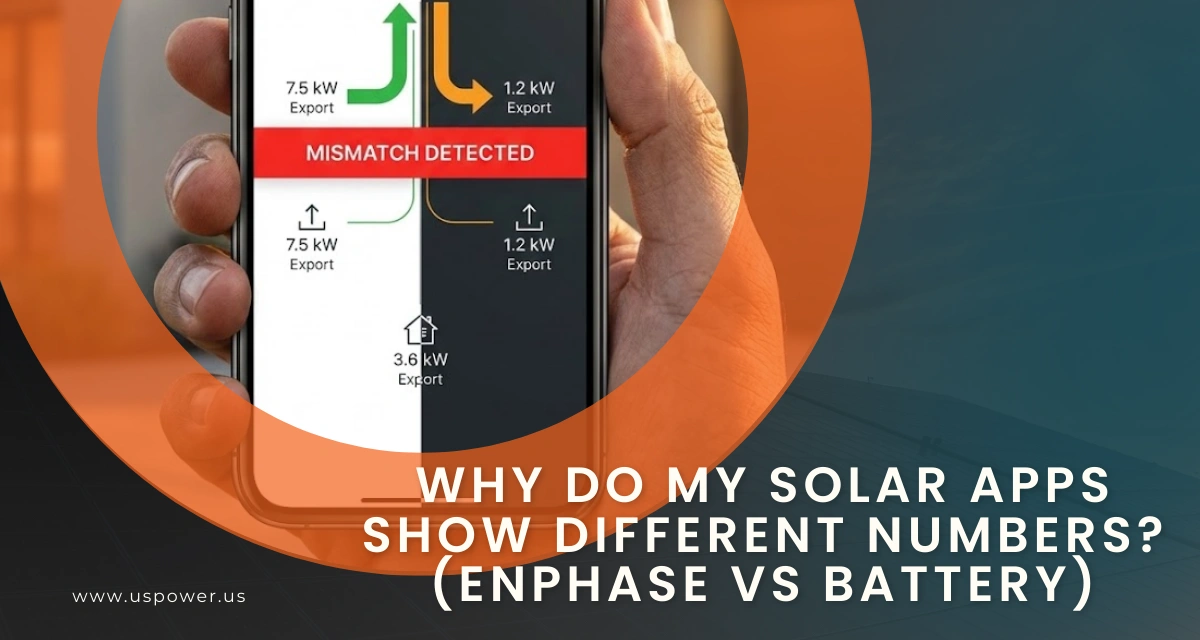
Your apps don't agree on how much solar you're exporting. Here's the real problem.







¿Estás listo para ser dueño de tu poder? ¡Llámenos hoy mismo!
818-650-8010Contractor License #: 1144368

Derechos de autor © 2025 US POWER | Energía solar y techosUS Power - Axia by QCells. All Rights Reserved.
¡Obtenga una estimación solar instantánea usando el satélite!