

How 1000+ SoCal Homeowners transformed their energy habits after going solar. Learn why behavior changes matter under NEM 3.0 and how batteries maximize savings.

You just got solar panels installed. The first morning, you tap open the monitoring app on your phone. The panels are already producing — 3.2 kW and climbing. By noon, you check again: 7.8 kW, and your battery is charging fast.
Then something unexpected happens.
You start thinking about when you run laundry. Whether to pre-cool the house before 4 PM. Suddenly, electricity isn't just a bill that shows up every month — it's something you're actively managing. And under California's NEM 3.0 rules, where utilities pay you 75% less for exported power, these behavior shifts aren't just interesting. They're the difference between a great ROI and a mediocre one.
This article covers how real Southern California homeowners changed their habits after going solar, why those changes matter more than ever in 2026, and how US Power's QCells systems help you capture every dollar of savings.
When you pay a flat electricity bill every month, energy use is abstract. The moment solar panels go live, everything changes. You can see real-time production, track which appliances drain the most power, monitor your battery level, and know exactly when you're drawing from the grid versus generating your own power.
Why are electricity bills so high in Southern California to begin with? Rising SCE rates, Time-of-Use pricing, and fixed charges add up fast. Solar gives you the visibility to fight back — and that visibility changes behavior.
The first few weeks after installation are eye-opening. Homeowners discover their 15-year-old refrigerator is the biggest energy drain. The dishwasher's heated dry cycle adds significant kWh for no real reason. Pool pumps running during off-peak solar hours are costing money every day.
One US Power customer in Riverside discovered her video amplifier was pulling 200 watts around the clock. She replaced it immediately and saw an instant drop on her monitoring app. These early discoveries are where the top appliances that use the most electricity become very real, very fast.
Before solar, most homeowners run the dishwasher after dinner. After solar, they run it at 11 AM when panels are cranking. Understanding SCE Time-of-Use rates and the cheapest hours to use power makes this shift obvious: SCE charges $0.30 to $0.50 per kWh during evening peak hours (4 to 9 PM) but only credits $0.05 to $0.08 per kWh for exported solar. Using your own solar during the day instead of exporting it saves you 5 to 6 times more money.
US Power's QCells panels produce more power per square foot than most competitors, which means you can run more appliances simultaneously during peak production without draining your battery reserves.
Drop the AC to 71°F at 1 PM when solar is maxed out, then raise it to 75°F at 4 PM before the sun drops and rates spike. Well-insulated homes act like thermal batteries — pre-cooling stores cold energy in your walls and furniture that keeps you comfortable for hours after production drops.
One US Power customer in Orange County reported saving $40 to $60 per month just by shifting their HVAC schedule two to three hours earlier. They're also more comfortable because they're no longer fighting the hottest part of the day.
Under NEM 3.0, overnight electricity from SCE still costs $0.15 to $0.25 per kWh. But solar power from your own roof is essentially free after system payback. The smarter move is charging your EV with solar panels during peak production hours — 11 AM to 3 PM — especially if your battery is already full.
A Los Angeles homeowner with a Tesla Model 3 and a US Power QCells system cut his fuel costs from $120 per month in gas to nearly zero. His only remaining electric cost is the unavoidable SCE grid connection fee.
Pool pumps don't care when they run — only that they run long enough to cycle the water. Reprogramming the timer to run from 10 AM to 6 PM instead of the default 6 AM schedule captures peak solar production and cuts grid imports immediately. A San Bernardino customer with a heated spa switched their heating cycle from 5 PM to 1 PM. The water stays warm through dinner without paying SCE's peak rates.
Induction cooktops boil water faster than gas, have no open flame, and when you cook between 11 AM and 2 PM, you're running on 100% solar. Multiple US Power customers now prep dinner ingredients at midday during peak solar hours, then quickly finish cooking in the evening using battery-stored power.
This is part of a broader electrification shift where homeowners replace gas appliances with electric versions powered by solar — and every switch amplifies the overall savings.
Before solar, most homeowners thought about electricity only when the bill arrived. After solar, they check the app three to five times a day to watch production curves, spot consumption spikes, and track battery state of charge.
US Power provides lifetime monitoring access with every QCells installation. After 6 to 12 months, most homeowners stop checking obsessively because they've optimized their routines. Boosting solar savings with smart monitoring becomes second nature — the system runs in the background, delivering savings automatically.
Under California's previous net metering policy (NEM 2.0), homeowners received 1:1 credit for exported solar power. Send 10 kWh to the grid at noon, get credited 10 kWh to use at 8 PM. Simple, generous, and no strategy required.
NEM 2.0 ended April 15, 2023. Understanding how NEM 3.0 billing works in California is now essential for any homeowner considering solar.
Under NEM 3.0, exported solar power earns you roughly $0.05 to $0.08 per kWh. Meanwhile, SCE charges $0.30 to $0.50 per kWh during evening peak hours. Export solar at noon and earn $0.06. Buy it back at 7 PM and pay $0.45. That's a $0.39 per kWh loss on every exported kilowatt-hour.
This is exactly why time-shifting your usage to peak solar production hours is now the single most powerful thing you can do to maximize your ROI.
Without a battery, you export excess solar at low rates and buy power back at high rates. With a battery, you capture 100% of your solar production, use stored power during the 4 to 9 PM peak rate window, and gain backup power during outages. Learning how solar batteries maximize your savings under NEM 3.0 is the key to making solar work in 2026.
A solar-only system under NEM 3.0 might save $720 per year. Add a battery, and savings jump to $1,600 to $1,800 per year for the same household. That's a 122% increase in annual savings just from adding storage.
US Power doesn't just sell panels — we design systems optimized for California's current billing rules. That means American-made QCells panels from Dalton, Georgia, right-sized battery storage based on your actual usage patterns and SCE rate schedule, and smart inverters that automatically prioritize solar to home to battery to grid.
As QCells' factory-direct partner in Southern California, US Power offers 15 to 20% below market pricing on the same premium panels other installers charge full price for.
Before solar, SCE bills were a source of stress — $280, $340, sometimes $450 during summer. US Power customers report monthly bills under $50 (just the grid connection fee), with many going completely net-zero for 9 to 10 months per year. Electricity goes from an expense you dread to a resource you control.
One Orange County homeowner laughed when she realized she'd started scheduling her day around solar production. She sets an alarm for 11 AM because the panels are maxed out. Her husband thinks she's overcautious — but they're saving $60 a month, so there are no complaints.
A Ventura couple shared that before solar, they kept the house at 77°F in summer to save money. Now they set it to 72°F during the day because it's free solar power, then raise it to 75°F at night. They're more comfortable, and their bills are still lower than before solar. That's the difference between sacrifice and optimization.
With the federal tax credit now expired, many homeowners are asking whether solar still pencils out. Find out if solar is worth it in 2026 without the tax credit — the answer depends on your current SCE bills, your system size, and whether you pair panels with battery storage.
The short answer: yes, solar + battery is still a strong investment in 2026 for most SoCal homeowners, especially with SCE rates continuing to climb. The payback math shifts, but it doesn't disappear.
US Power offers transparent pricing with no hidden fees, factory-direct QCells equipment at 15 to 20% below market, and a 3 to 4 week installation timeline after permits. Our 200+ five-star Google reviews and CSLB-licensed teams make us Southern California's most trusted solar partner.
Most people go solar to save money. That's reason enough — especially with SCE rates climbing and NEM 3.0 making smart energy use more valuable than ever.
But the unexpected benefit is control. You stop being a passive consumer paying whatever the utility charges and start being an active participant who generates, stores, and deploys your own energy strategically. You run the dishwasher at noon. Pre-cool the house before peak rates hit. Charge your EV on sunshine. And one day you open your SCE bill and see $11 — just the grid connection fee.
Solar didn't just lower your bill. It changed your relationship with energy entirely.
US Power is booking consultations now. Our CSLB-licensed teams, factory-direct QCells pricing, and 200+ five-star Google reviews mean you're working with Southern California's most trusted solar partner. Schedule your free consultation today — virtual or on-site, zero pressure, fully transparent pricing.


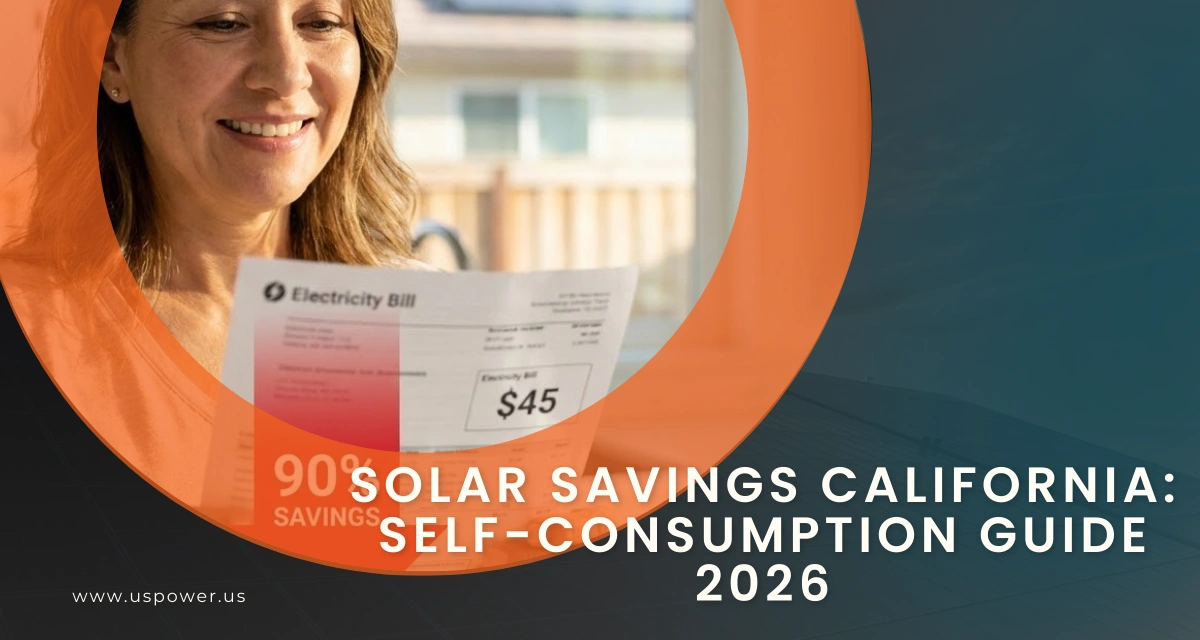
Your solar panels could be worth twice as much if you stop selling power back to SCE.

Solar Payback Period CA: Break even on solar 33% faster as SCE rates surge 12.9%.

Why solar companies want you to lease in 2026 and why ownership still wins!







¿Estás listo para ser dueño de tu poder? ¡Llámenos hoy mismo!
818-650-8010Contractor License #: 1144368
Derechos de autor © 2025 US POWER | Energía solar y techosUS Power - Axia by QCells. All Rights Reserved.
¡Obtenga una estimación solar instantánea usando el satélite!