

Are 550W solar panels worth the size challenge for ground mount systems?
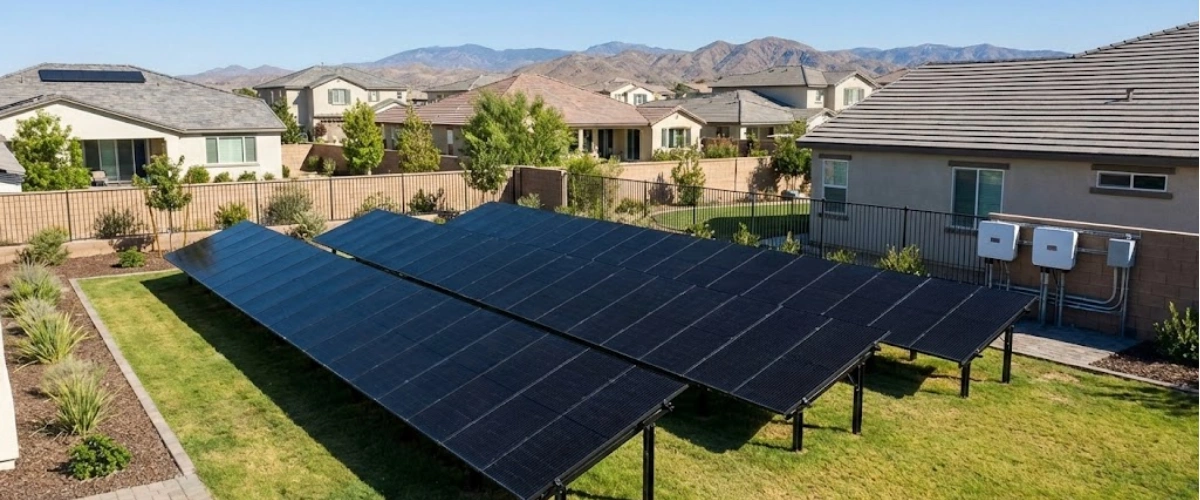
No, 550W panels are not too big for ground mounts. Standard Unirac SolarMount and IronRidge XR rails support them when posts follow manufacturer span tables, typically with shorter spans of about 6-7 feet maximum.
You've found a great deal on 550-watt solar panels for your ground mount system. The price per watt is significantly lower than smaller 350W panels, but there's a catch—these panels are massive, nearly 90 inches tall. You're wondering if standard mounting rails can handle them, whether they'll survive Santa Ana winds, and if the size creates more problems than it solves.
Here's the truth: 550W panels aren't too big for ground mounts—they're actually becoming the standard for residential ground mount installations across Southern California. The real question isn't about panel size; it's about proper engineering, correct rail spacing, and choosing quality components that match our region's wind and seismic requirements.
Ground mount solar systems offer advantages that rooftop installations simply can't match. You get better sun exposure, easier maintenance access, and the flexibility to angle panels optimally without being constrained by roof pitch or direction.
Many homeowners in Riverside and San Bernardino counties have large properties with open land that's perfect for ground mounts. Instead of dealing with roof penetrations, shading from trees, or tile roof complications, you can build a dedicated solar array that maximizes every ray of California sunshine. Understanding rising SCE electricity rates makes it clear why thousands are taking control of their energy costs right now.
A 550W panel produces 57% more power than a 350W panel, but it's only about 15-20% larger in physical size. This means you need fewer panels, fewer mounting clamps, fewer ground anchors, and less total installation labor to achieve the same system capacity.
For a typical 10kW ground mount system, you'd need 29 panels at 350W each versus just 19 panels at 550W. That's 10 fewer panels to mount, wire, and maintain over 25 years. The reduction in hardware and labor often offsets any perceived complexity from handling larger panels.
Let's address the elephant in the room: wind. Southern California experiences Santa Ana winds that can gust to 60-80 mph in inland valleys. The City of Los Angeles requires wind load calculations based on 110 mph winds for most residential areas. Ventura County uses 120 mph design standards for coastal zones.
What matters isn't the panel wattage; it's the total sail area of your array and how it's anchored. A properly engineered 550W panel array is no more vulnerable than a 350W array of the same total wattage.
The decision between 550W and 350W panels comes down to three factors: your available space, your budget, and your long-term expansion plans.
Smaller 350W panels (approximately 79 inches tall) are easier for a two-person crew to maneuver. Larger 550W panels (approximately 89 inches tall) typically require three people during installation—two to carry and position, one to guide and secure.
If you're maximizing a constrained area or want the most power per square foot, 550W panels deliver better results. Most professional installers in Southern California now default to high-wattage panels because they reduce total installation time despite the awkward size. For guidance on choosing the right solar panels for your home, you'll find factors beyond just wattage matter significantly.
Here's the good news: standard Unirac and IronRidge rails handle 550W panels just fine when support spacing is correct. You don't need specialized heavy-duty rails. What you do need is proper engineering that accounts for span distances between posts.
A typical 550W panel weighs 62-68 pounds compared to 48-52 pounds for a 350W panel. The 15-pound difference isn't the issue—it's the increased moment force from the longer panel length. Your racking system needs posts spaced closer together (typically 6-8 feet instead of 8-10 feet) to prevent rail deflection.
You cannot install a ground mount system in California without permits. Every jurisdiction in Los Angeles, Orange County, Ventura, San Bernardino, and Riverside counties requires structural engineering stamps, electrical permits, and final inspections.
Your permit application must include wind load calculations sealed by a California-licensed structural engineer. This isn't optional. The engineering calculations determine your foundation requirements—whether you need concrete piers, helical anchors, or driven posts.
In Los Angeles County, typical ground mount foundations require 7-foot deep by 2-foot diameter concrete piers. Orange County coastal areas often require deeper foundations (8-9 feet) due to sandy soil conditions. If you're planning a ground mount installation, understanding how to get a solar permit for your home saves you time and prevents costly mistakes.
Unlike rooftop systems that ride with your home's structure during earthquakes, ground mount systems need independent seismic engineering. Southern California sits on active fault zones, and your solar array needs to survive a 6.0+ magnitude earthquake without catastrophic failure.
This typically means additional cross-bracing between posts and flexible wire management that allows limited movement without breaking connections. Seismic requirements add 10-15% to your foundation costs compared to installations in non-seismic zones.
Under NEM 3.0, the value you receive for excess solar production exported to SCE or PG&E has dropped by 75% compared to the old NEM 2.0 rates. This makes battery storage nearly essential for maximizing your solar investment in 2026.
Ground mount systems offer a significant advantage: adding battery storage later is dramatically easier than with rooftop installations. Your electrical connections are accessible at ground level, and you can site your battery enclosure right next to your inverter and main service panel. To understand how solar batteries can maximize your savings, you'll see the financial benefits under current utility rates.
Here's an advanced tip: bifacial solar panels capture reflected light from the ground beneath them, boosting total production by 5-15% compared to standard monofacial panels. This technology works best on ground mounts where light can bounce off white gravel, concrete, or light-colored ground cover.
QCells offers bifacial versions of their 550W panels that deliver 575-595W effective output in optimal conditions. It's the closest thing to "free" energy you'll find.
Most solar companies in Southern California subcontract ground mount installations because they lack in-house expertise. US Power employs CSLB-licensed installers who specialize in ground mount systems and have completed hundreds of installations across Los Angeles, Orange County, and the Inland Empire.
As the exclusive QCells partner in Southern California, US Power sources 550W panels directly from the factory at 15-20% below typical distributor pricing. You're not paying middleman markups that other companies build into their quotes.
These aren't off-brand panels from questionable overseas suppliers. QCells manufactures in Georgia with American labor, rigorous quality control, and full UL certification. Every panel carries a 25-year comprehensive warranty covering product defects, workmanship, and 85% minimum performance guarantee. The factory-direct QCells pricing advantage explains exactly how much you save.
Other companies quote 8-12 weeks for ground mount installations. US Power completes most ground mount projects from permit submission to Permission to Operate in 3-4 weeks—including all inspections and utility interconnection.
We maintain direct relationships with building departments in every Southern California county. Our permit packages are pre-approved templates that sail through review. Want to understand the typical solar installation timeline in California and avoid delays?
Not every Southern California home is a good candidate for ground mount solar. You need adequate yard space (at least 400-500 square feet of unshaded area), and your property must allow accessory structures under local zoning.
Choose a ground mount if you have: a complex roof with multiple angles, Spanish tile or delicate roofing materials, significant tree shading on your roof but open yard space, plans to re-roof in the next 3-5 years, or an HOA that restricts visible rooftop panels.
Ground mounts also make sense if you want flexibility to expand your system later. Adding panels to a rooftop array often means re-permitting the entire system. With ground mounts, you simply extend your existing rail structure. Before making the decision, review things you must know before going solar to understand all factors you should evaluate.
Panel quality matters more for ground mounts than rooftop systems because ground-level installations face different environmental stresses: dust accumulation, ground moisture, potential impact from yard equipment, and easier access for animals.
QCells 550W Q.PEAK DUO BLK-G10+ panels feature 3.2mm anti-reflective tempered glass (thicker than budget panels), triple-layer Tedlar protection against moisture intrusion, 35mm anodized aluminum frame with reinforced corners, and IP68-rated junction boxes that are submersion-proof.
These aren't marketing buzzwords—they're engineering specifications that determine whether your panels survive 25 years in Southern California conditions. Wondering how QCells panels versus other brands stack up and why homeowners choose QCells for long-term reliability?
QCells manufactures these panels in Dalton, Georgia, with automated production lines that eliminate quality inconsistencies common in imported panels. Every panel undergoes electroluminescence testing to detect micro-cracks, temperature cycling to verify solder joint integrity, and mechanical load testing that simulates 25 years of wind pressure.
Here's what Southern California homeowners often miss: while you're debating whether 550W panels are "too big," you're paying SCE $200-400 every month for electricity you could be producing yourself.
The typical US Power ground mount customer with a 10kW system (19 QCells 550W panels) saves $2,800-3,600 annually at current electricity rates. That's $70,000-90,000 over 25 years—not accounting for future rate increases, which will only accelerate your savings.
The size concern is valid, but it's solved with proper engineering—something US Power provides as standard for every installation. The price-per-watt advantage of 550W panels is undeniable. The proven reliability of QCells panels is documented across millions of installations worldwide.
Contact US Power today for your free ground mount assessment. Get a transparent quote, see exactly what your system will produce, and make an informed decision based on facts—not fear about panel size. Your Southern California property has incredible solar potential. Let's put it to work.


Get the real performance & realistic savings with Qcells panels in California.
Choosing between QCells' Q.PEAK DUO and Q.TRON panels? The $1,500 price gap isn't jus
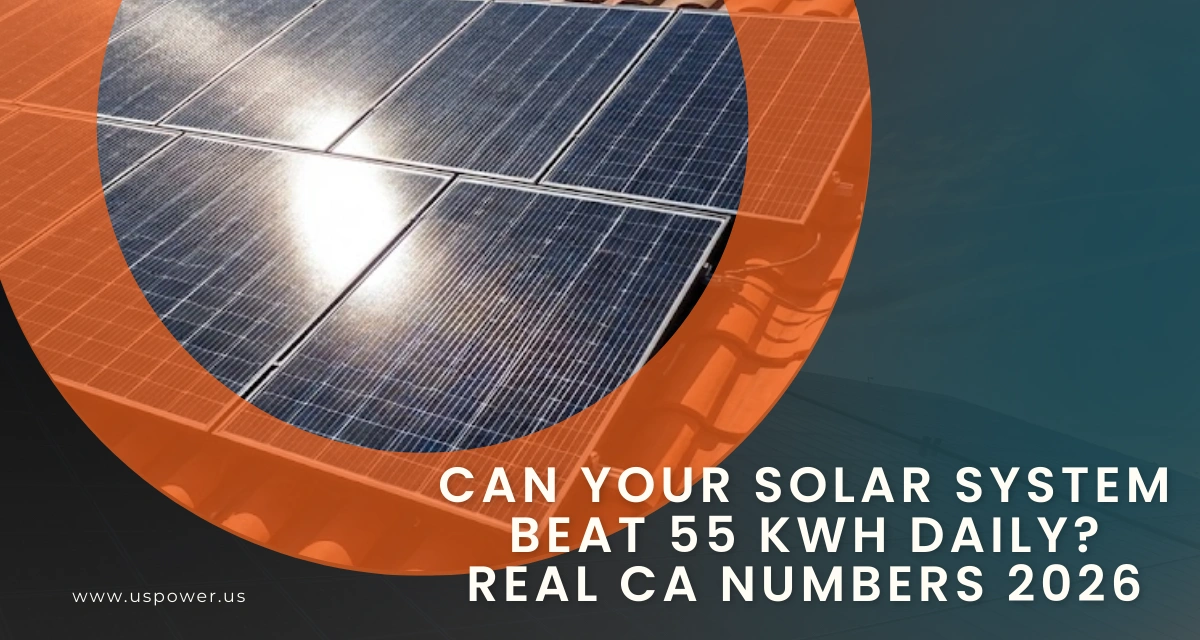
SF Bay Area hits 55 kWh from 8kW—Learn and find out if you're underperforming.









Copyright © 2026 US Power - Axia by QCells. All Rights Reserved.
Get an instant solar estimate using satellite!