

¿Valen la pena los paneles solares de 550W a pesar del desafío que supone su tamaño para los sistemas de montaje en suelo?
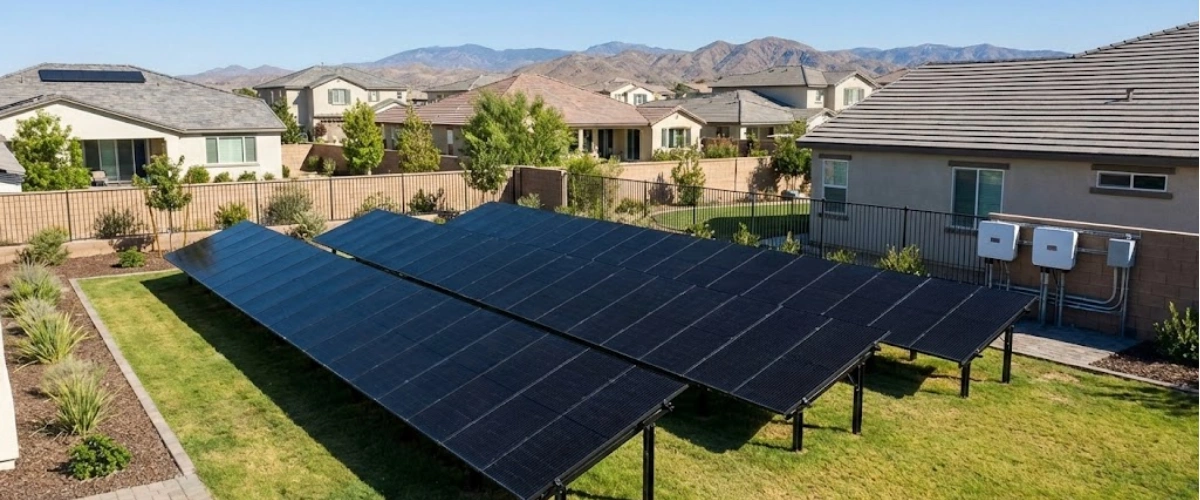
No, los paneles de 550 W no son demasiado grandes para los soportes de suelo. Los rieles estándar Unirac SolarMount e IronRidge XR los admiten siempre que los postes sigan las tablas de distancias del fabricante, normalmente con distancias más cortas de unos 6-7 pies como máximo.
Ha encontrado una excelente oferta en paneles solares de 550 vatios para su sistema de montaje en suelo. El precio por vatio es significativamente menor que el de los paneles más pequeños de 350W, pero hay un inconveniente: estos paneles son enormes, miden casi 230 centímetros de altura. Se pregunta si los rieles de montaje estándar pueden soportarlos, si resistirán los vientos de Santa Ana y si su tamaño crea más problemas de los que resuelve.
La verdad es esta: los paneles de 550W no son demasiado grandes para los montajes en suelo; de hecho, se están convirtiendo en el estándar para las instalaciones residenciales en suelo en todo el sur de California. La verdadera cuestión no es el tamaño del panel, sino la ingeniería adecuada, el espaciado correcto de los rieles y la elección de componentes de calidad que cumplan con los requisitos sísmicos y de viento de nuestra región.
Los sistemas solares de montaje en suelo ofrecen ventajas que las instalaciones en tejados simplemente no pueden igualar. Obtiene una mejor exposición solar, un acceso más fácil para el mantenimiento y la flexibilidad de inclinar los paneles de forma óptima sin estar limitado por la inclinación o la orientación del tejado.
Muchos propietarios en los condados de Riverside y San Bernardino tienen grandes propiedades con terrenos abiertos que son perfectos para montajes en suelo. En lugar de lidiar con perforaciones en el tejado, sombras de árboles o complicaciones con tejados de tejas, puede construir una matriz solar dedicada que aproveche al máximo cada rayo de sol de California. Entender el aumento de las tarifas eléctricas de SCE deja claro por qué miles de personas están tomando el control de sus costos energéticos en este momento.
Un panel de 550W produce un 57% más de energía que uno de 350W, pero es solo entre un 15% y un 20% más grande en tamaño físico. Esto significa que necesita menos paneles, menos abrazaderas de montaje, menos anclajes al suelo y menos mano de obra total de instalación para lograr la misma capacidad de sistema.
Para un sistema típico de montaje en suelo de 10kW, necesitaría 29 paneles de 350W cada uno, frente a solo 19 paneles de 550W. Son 10 paneles menos que montar, cablear y mantener durante 25 años. La reducción en hardware y mano de obra a menudo compensa cualquier complejidad percibida al manejar paneles más grandes.
Abordemos el elefante en la habitación: el viento. El sur de California experimenta los vientos de Santa Ana, que pueden alcanzar ráfagas de 95 a 130 km/h en los valles interiores. La ciudad de Los Ángeles exige cálculos de carga de viento basados en vientos de 177 km/h para la mayoría de las áreas residenciales. El condado de Ventura utiliza estándares de diseño de 193 km/h para las zonas costeras.
Lo que importa no es el vataje del panel, sino el área total de superficie de su matriz y cómo está anclada. Una matriz de paneles de 550W diseñada correctamente no es más vulnerable que una de 350W con el mismo vataje total.
La decisión entre paneles de 550W y 350W se reduce a tres factores: el espacio disponible, su presupuesto y sus planes de expansión a largo plazo.
Los paneles más pequeños de 350W (aproximadamente 200 centímetros de altura) son más fáciles de maniobrar para un equipo de dos personas. Los paneles más grandes de 550W (aproximadamente 226 centímetros de altura) suelen requerir tres personas durante la instalación: dos para transportar y colocar, y una para guiar y asegurar.
Si busca aprovechar al máximo un área limitada o desea obtener la mayor potencia por metro cuadrado, los paneles de 550 W ofrecen mejores resultados. La mayoría de los instaladores profesionales en el sur de California optan actualmente por paneles de alta potencia, ya que reducen el tiempo total de instalación a pesar de su tamaño poco manejable. Para obtener orientación sobre cómo elegir los paneles solares adecuados para su hogar, descubrirá que hay factores mucho más importantes que solo la potencia.
Aquí tiene una buena noticia: los rieles estándar de Unirac e IronRidge funcionan perfectamente con paneles de 550 W siempre que el espaciado de los soportes sea el correcto. No necesita rieles especiales de alta resistencia. Lo que sí necesita es una ingeniería adecuada que tenga en cuenta las distancias entre los postes.
Un panel típico de 550 W pesa entre 28 y 31 kg, en comparación con los 22-24 kg de un panel de 350 W. El problema no son los 6-7 kg de diferencia, sino el mayor momento de fuerza debido a la mayor longitud del panel. Su sistema de montaje requiere postes más cercanos entre sí (normalmente de 1,8 a 2,4 metros en lugar de 2,4 a 3 metros) para evitar que el riel se flexione.
No puede instalar un sistema montado en suelo en California sin los permisos correspondientes. Todas las jurisdicciones de los condados de Los Ángeles, Orange, Ventura, San Bernardino y Riverside exigen sellos de ingeniería estructural, permisos eléctricos e inspecciones finales.
Su solicitud de permiso debe incluir cálculos de carga de viento sellados por un ingeniero estructural con licencia en California. Esto no es opcional. Los cálculos de ingeniería determinan los requisitos de sus cimientos, ya sea que necesite pilares de concreto, anclajes helicoidales o postes hincados.
En el condado de Los Ángeles, los cimientos típicos para sistemas en suelo requieren pilares de concreto de 2,1 metros de profundidad por 0,6 metros de diámetro. Las zonas costeras del condado de Orange a menudo requieren cimientos más profundos (2,4 a 2,7 metros) debido a las condiciones de suelo arenoso. Si está planeando una instalación en suelo, comprender cómo obtener un permiso solar para su hogar le ahorrará tiempo y evitará errores costosos.
A diferencia de los sistemas en techos que se mueven junto con la estructura de su hogar durante los terremotos, los sistemas montados en suelo necesitan una ingeniería sísmica independiente. El sur de California se encuentra en zonas de fallas activas y su matriz solar debe ser capaz de resistir un terremoto de magnitud 6.0 o superior sin sufrir daños catastróficos.
Esto suele implicar refuerzos transversales adicionales entre los postes y una gestión de cables flexible que permita un movimiento limitado sin romper las conexiones. Los requisitos sísmicos añaden entre un 10% y un 15% a los costos de cimentación en comparación con las instalaciones en zonas no sísmicas.
Bajo el esquema NEM 3.0, el valor que recibe por el exceso de producción solar exportado a SCE o PG&E ha disminuido un 75% en comparación con las antiguas tarifas NEM 2.0. Esto hace que el almacenamiento en baterías sea casi esencial para maximizar su inversión solar en 2026.
Los sistemas montados en suelo ofrecen una ventaja significativa: añadir almacenamiento en baterías más adelante es mucho más sencillo que en las instalaciones en techos. Sus conexiones eléctricas son accesibles a nivel del suelo y puede ubicar el gabinete de la batería justo al lado de su inversor y panel de servicio principal. Para comprender cómo las baterías solares pueden maximizar sus ahorros, verá los beneficios financieros bajo las tarifas eléctricas actuales.
Aquí tiene un consejo avanzado: los paneles solares bifaciales capturan la luz reflejada desde el suelo debajo de ellos, aumentando la producción total entre un 5% y un 15% en comparación con los paneles monofaciales estándar. Esta tecnología funciona mejor en montajes en suelo donde la luz puede rebotar en grava blanca, concreto o cubiertas de suelo de colores claros.
QCells ofrece versiones bifaciales de sus paneles de 550 W que proporcionan una salida efectiva de 575-595 W en condiciones óptimas. Es lo más parecido a energía "gratuita" que encontrará.
La mayoría de las empresas solares en el sur de California subcontratan las instalaciones montadas en suelo porque carecen de experiencia interna. US Power emplea instaladores con licencia CSLB especializados en sistemas montados en suelo que han completado cientos de instalaciones en Los Ángeles, el condado de Orange y el Inland Empire.
Como socio exclusivo de QCells en el sur de California, US Power obtiene los paneles de 550W directamente de fábrica, entre un 15% y un 20% por debajo del precio habitual de los distribuidores. Usted no paga los márgenes de intermediarios que otras empresas incluyen en sus presupuestos.
No se trata de paneles de marcas desconocidas de proveedores extranjeros cuestionables. QCells fabrica en Georgia con mano de obra estadounidense, un riguroso control de calidad y certificación UL completa. Cada panel cuenta con una garantía integral de 25 años que cubre defectos de producto, mano de obra y una garantía de rendimiento mínimo del 85%. La ventaja de precios directos de fábrica de QCells explica exactamente cuánto ahorra.
Otras empresas estiman de 8 a 12 semanas para instalaciones en suelo. US Power completa la mayoría de los proyectos en suelo, desde la presentación del permiso hasta el permiso de operación, en 3 a 4 semanas—incluyendo todas las inspecciones y la interconexión con la red eléctrica.
Mantenemos relaciones directas con los departamentos de construcción de cada condado del sur de California. Nuestros paquetes de permisos son plantillas preaprobadas que superan la revisión sin problemas. ¿Quiere conocer el cronograma típico de instalación solar en California y evitar retrasos?
No todas las viviendas del sur de California son aptas para paneles solares en suelo. Necesita suficiente espacio en el patio (al menos 400-500 pies cuadrados de área sin sombra) y su propiedad debe permitir estructuras accesorias según la zonificación local.
Elija un montaje en suelo si tiene: un tejado complejo con múltiples ángulos, tejas españolas o materiales de cubierta delicados, mucha sombra de árboles en su tejado pero espacio abierto en el patio, planes de renovar el tejado en los próximos 3-5 años, o una asociación de propietarios (HOA) que restringe los paneles visibles en el tejado.
Los montajes en suelo también son una buena opción si desea flexibilidad para ampliar su sistema más adelante. Añadir paneles a una instalación en tejado a menudo implica volver a tramitar los permisos de todo el sistema. Con los montajes en suelo, simplemente extiende la estructura de rieles existente. Antes de tomar una decisión, revise lo que debe saber antes de instalar energía solar para comprender todos los factores que debe evaluar.
La calidad del panel es más importante en los sistemas en suelo que en los de tejado porque las instalaciones a nivel del suelo enfrentan diferentes tensiones ambientales: acumulación de polvo, humedad del suelo, posibles impactos de equipos de jardín y un acceso más fácil para los animales.
Los paneles QCells 550W Q.PEAK DUO BLK-G10+ cuentan con vidrio templado antirreflectante de 3.2 mm (más grueso que los paneles económicos), protección de triple capa Tedlar contra la entrada de humedad, marco de aluminio anodizado de 35 mm con esquinas reforzadas y cajas de conexiones con clasificación IP68 a prueba de inmersión.
No son solo términos de marketing; son especificaciones de ingeniería que determinan si sus paneles sobrevivirán 25 años en las condiciones del sur de California. ¿Se pregunta cómo se comparan los paneles QCells frente a otras marcas y por qué los propietarios eligen QCells por su fiabilidad a largo plazo?
QCells fabrica estos paneles en Dalton, Georgia, con líneas de producción automatizadas que eliminan las inconsistencias de calidad comunes en los paneles importados. Cada panel se somete a pruebas de electroluminiscencia para detectar microfisuras, ciclos de temperatura para verificar la integridad de las soldaduras y pruebas de carga mecánica que simulan 25 años de presión del viento.
Esto es lo que los propietarios del sur de California suelen pasar por alto: mientras debate si los paneles de 550W son "demasiado grandes", le está pagando a SCE entre $200 y $400 cada mes por electricidad que podría estar produciendo usted mismo.
El cliente típico de US Power con un sistema de montaje en suelo de 10 kW (19 paneles QCells de 550 W) ahorra entre 2800 y 3600 dólares al año con las tarifas eléctricas actuales. Eso supone entre 70 000 y 90 000 dólares en 25 años—sin contar los futuros aumentos de tarifas, que solo acelerarán sus ahorros.
La preocupación por el tamaño es válida, pero se resuelve con una ingeniería adecuada, algo que US Power ofrece de serie en cada instalación. La ventaja del precio por vatio de los paneles de 550 W es innegable. La fiabilidad probada de los paneles QCells está documentada en millones de instalaciones en todo el mundo.
Contacte hoy mismo con US Power para obtener su evaluación gratuita de montaje en suelo. Reciba un presupuesto transparente, vea exactamente lo que producirá su sistema y tome una decisión informada basada en hechos, no en temores sobre el tamaño de los paneles. Su propiedad en el sur de California tiene un potencial solar increíble. Pongámoslo a trabajar.


Distribuidores Qcells, proveedores en LA y cómo evitar sobrecostes en tus paneles.

Descubre por qué los clientes de US Power eligen QCells para energía solar duradera.
Comparamos el Backup Switch y el Gateway 3 en cuanto a coste, velocidad y ajuste.







¿Listo para tomar el control de tu energía? ¡Llámanos hoy!
818-650-8010Licencia de contratista n.º: 1144368

Copyright © 2026 US Power - Axia by QCells. Todos los derechos reservados.
¡Obtenga un presupuesto solar al instante mediante satélite!