

Real case study: Solar + smart appliances = 82% savings on SCE bills.
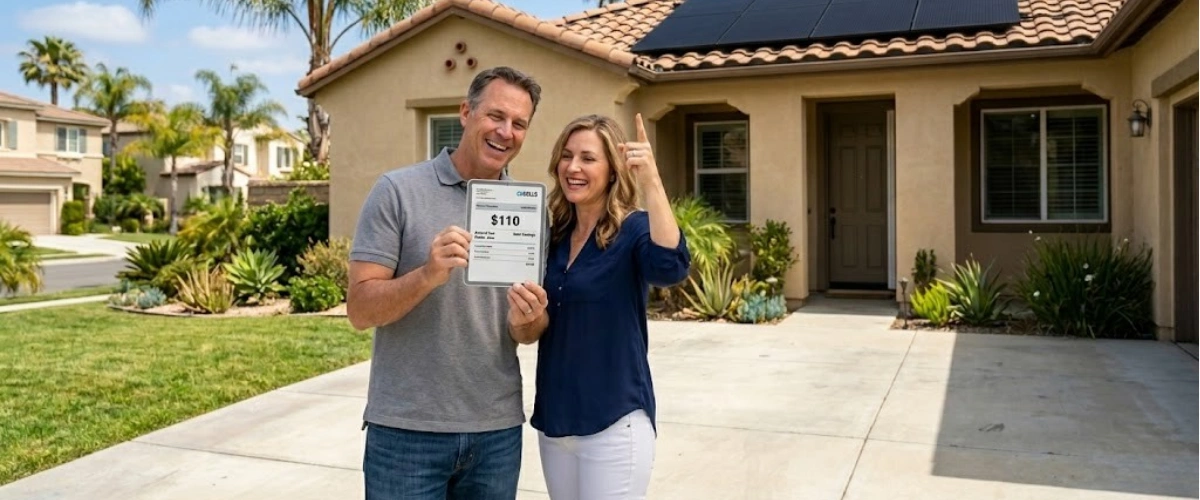
In this real case study, a homeowner combined solar with smart, energy-efficient appliances and cut their SCE bill by 82 percent. Results vary by home, but pairing solar with efficiency upgrades can help.
Rising electricity rates in Southern California have homeowners searching desperately for relief. But what if the answer isn't just solar panels—it's pairing them with the right home upgrades?
One Los Angeles County homeowner recently shared how they transformed their annual electric bill from $600 down to just $110 by combining solar with strategic energy-efficient appliance replacements. That's an 82% reduction that keeps compounding year after year.
Here's exactly how they did it, and how you can replicate these results in your own home.
If you've noticed your SCE or PG&E bill creeping higher each month, you're not imagining things. Understanding why electricity bills are so high in Southern California has become one of the most searched questions among homeowners.
Southern California Edison increased rates by over 30% between 2020 and 2025. The average household now pays $150-250 monthly during peak summer months. With inflation and infrastructure costs, those numbers aren't going down.
Many homeowners don't realize their biggest energy drain isn't their lights or TV—it's outdated HVAC systems and water heaters from the 1990s or early 2000s.
Older air conditioning units can use 50-70% more electricity than modern high-efficiency models. When temperatures hit 95°F+ in the San Fernando Valley or Inland Empire, these old systems run constantly, driving up bills.
Even with solar, SCE charges a mandatory grid connection fee of approximately $10-15 per month. You'll never completely eliminate your utility relationship, but you can minimize what you pay beyond that baseline charge.
California's Net Energy Metering 3.0 policy changed the solar game completely when it took effect in 2023. Unlike the previous system, NEM 3.0 pays significantly less for excess solar energy you send back to the grid.
This means the old strategy of "oversize your system and sell power back" doesn't work anymore. Now, solar batteries can maximize your savings by storing your excess energy for use during expensive evening hours.
Under NEM 3.0, electricity you use from the grid between 4-9 PM costs the most. That's exactly when solar panels produce the least. A battery lets you use your own stored solar power during these peak-rate hours instead of buying expensive grid power.
The homeowner in our case study didn't initially have a battery but built up enough solar credits during spring and summer to offset their minimal winter usage. For most SoCal homeowners, though, adding battery storage accelerates payback and maximizes savings.
Before making any decisions, understand where your power actually goes. The typical Southern California home uses 600-900 kWh monthly, but homes with old HVAC systems or pool pumps can easily hit 1,200-1,500 kWh.
Track your usage for 3-6 months to identify patterns. You might discover your air conditioning accounts for 40-50% of your total consumption during summer—a clear target for efficiency improvements.
Here's where the real magic happens. The homeowner who achieved 82% savings didn't just install solar panels. They strategically replaced energy-hungry appliances at the same time.
There are things you must know before going solar that can dramatically impact your results, and appliance efficiency is near the top of that list.
Replacing a 1990s-era air conditioning system with a modern high-efficiency heat pump can cut cooling costs by 30-50%. In Southern California's climate, that's substantial.
Modern systems also include smart thermostats that learn your patterns and optimize runtime. Some homeowners report their new AC uses half the electricity while keeping their home more comfortable.
Traditional electric water heaters are energy hogs, especially in larger households. Heat pump water heaters use 50-60% less electricity by moving heat instead of generating it.
The homeowner in our example switched to heat pump water heaters and runs them in "heat pump only" mode—never touching the expensive electric resistance backup. This simple change saved them an estimated $15-25 monthly.
If you have a pool, your pump likely runs 6-8 hours daily. Variable-speed pool pumps use 65-75% less energy than single-speed models and often qualify for utility rebates.
Combined with solar, you can essentially run your pool "for free" while building credits that offset other household usage.
Let's break down the actual math from this Los Angeles County success story.
Before Solar + Upgrades:
After Solar + Upgrades:
Want to know how much money solar panels save for your specific situation? The calculation depends on your current usage, roof characteristics, and local utility rates.
That $490 annual savings compounds over 25 years—the length of US Power's comprehensive warranty. Without accounting for inflation or future rate increases, that's over $12,000 in savings.
Factor in SCE's historical 3-5% annual rate increases, and the real savings could easily exceed $20,000 over the system's lifetime.
From March through October, Southern California gets exceptional sun exposure. The homeowner's system generated enough excess power during these months to build up substantial credits.
Those credits then offset the grid connection fee and minimal winter usage when solar production dips slightly. The result? Nearly zero annual electricity costs.
While cutting your electric bill is the primary motivator, there are top benefits of residential solar panel installation that often surprise new solar owners.
Studies show homes with solar sell for 4-6% more than comparable homes without it. In Southern California's real estate market, that can mean $30,000-60,000 in added value.
Buyers increasingly prioritize homes with lower operating costs, especially in areas with high electricity rates like LA, Orange County, and the Inland Empire.
While solar alone won't power your home during outages (safety requirement), pairing it with battery storage provides backup power during Public Safety Power Shutoffs (PSPS) or grid failures.
This became critical during recent wildfire seasons when utilities proactively shut off power to reduce fire risk.
A typical residential solar system in Southern California offsets 3-4 tons of CO2 annually—equivalent to planting 100+ trees or not driving 7,500 miles.
For homeowners who care about their carbon footprint, this tangible impact matters.
Not all solar installations deliver the same results. The equipment quality, installation expertise, and warranty support matter tremendously.
US Power's exclusive partnership with QCells means you get American-made panels at factory-direct pricing—typically 15-20% below market rates. QCells panels deliver superior performance even in Southern California's intense heat and sun exposure.
Most solar companies offer separate warranties for panels, inverters, and workmanship. US Power's 25-year comprehensive warranty covers everything under one umbrella.
If anything goes wrong—panel defects, installation issues, performance degradation—you have one point of contact, not multiple vendors pointing fingers at each other.
The homeowner in our case study highlighted another frustration many solar buyers face: endless delays. Some companies take 3-6 months from signing to installation.
US Power's streamlined process with QCells typically gets systems installed and activated within 3-4 weeks after permits are approved. That means you start saving faster.
Beyond the major upgrades already discussed, there are simple ways to reduce electricity bills quickly that complement your solar investment.
If you haven't already, replace all incandescent and CFL bulbs with LEDs. They use 75-80% less energy and last 15-25 times longer.
This might only save $10-15 monthly, but it's money that doesn't need to come from solar production—freeing up that power for other uses.
Phantom loads from TVs, computers, and chargers in standby mode can account for 5-10% of your electric bill. Smart power strips automatically cut power to devices when not in use.
Don't rush out and replace working appliances, but when your refrigerator, dishwasher, or washing machine needs replacement, choose Energy Star models. They typically use 10-50% less energy than standard models.
The homeowner in our case study mentioned they're planning additional upgrades as appliances naturally reach end-of-life. This measured approach makes financial sense.
Ready to replicate these results? Here's exactly what to do next.
First, gather 12 months of electricity bills to understand your usage patterns. This helps US Power's CSLB-licensed consultants design a system sized perfectly for your needs—not oversized, not undersized.
Second, walk around your home and note the age and condition of major appliances. Are you running a 20-year-old AC? A water heater from 2005? These are opportunities to stack savings.
Third, schedule a free consultation—virtual or on-site. US Power's team will analyze your roof, calculate your solar potential, and provide transparent pricing with no hidden fees.
Understanding the solar installation timeline in California helps you plan appropriately. Most homeowners are surprised how quickly they can start generating their own power and seeing immediate bill reductions.
The Southern California homeowner who achieved 82% savings didn't do anything you can't replicate. They combined smart solar sizing with strategic appliance upgrades and locked in decades of savings.
With SCE and PG&E rates continuing to climb, waiting only means paying more to the utility companies. Every month you delay is another month of unnecessary bills.
US Power's factory-direct QCells pricing, 25-year comprehensive warranty, and fast 3-4 week installation timeline remove the traditional barriers that kept homeowners stuck in analysis paralysis.
The best time to install solar was five years ago. The second-best time is today.


Explore why investing in solar technology remains financially advantageous in 2025.
Learn how to decode your California electric bill to maximize solar savings.

Most Los Angeles homes need 10 to 19 solar panels. Your utility changes the math.









Copyright © 2026 US Power - Axia by QCells. All Rights Reserved.
Get an instant solar estimate using satellite!