

Qcells now makes solar panels in Georgia from raw ingot to finished module, the first company to do so in the US. Add 22.5% efficiency, a 25-year warranty, a matching home battery and a parent company that is not going anywhere, and you have a strong long-term choice for 2026.
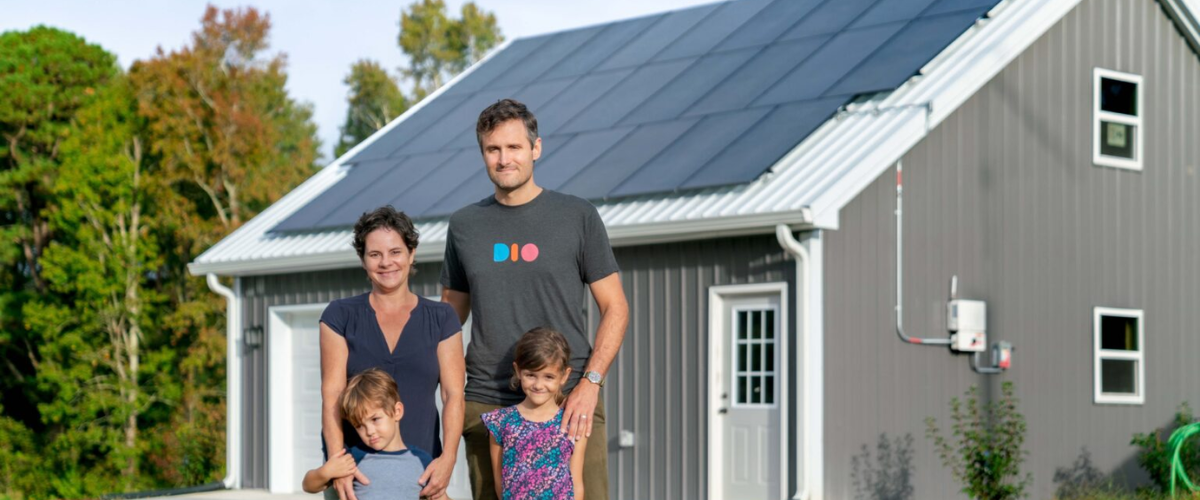
Yes. Qcells assembles modules in Dalton, Georgia, and in June 2026 its Cartersville plant began producing ingots, wafers and cells. Panels offer 22.5% efficiency and a 25-year warranty, with a matching home battery.
Choosing a solar panel brand used to be mostly about efficiency and price. In 2026, a third question matters just as much: will the company still be around to honor your warranty 20 years from now? Since 2024, well-known brands have gone bankrupt, left the solar market or entered restructuring, leaving homeowners with warranties that are hard to claim.
That is a big part of why Qcells solar panels have become the default choice for many California homeowners. Qcells builds its panels in the US, backs them with a 25-year warranty, and pairs them with its own home battery, all under one large, stable parent company. This guide covers what makes Qcells different, where it fits and where it may not, and how the numbers work now that the federal tax credit for buyers has ended.
Qcells is part of Hanwha, one of South Korea's largest business groups, and has sold solar panels in the US residential market for more than a decade. Three things set it apart this year: where the panels are made, how they hold up over time, and how the whole system fits together. Here is how each one plays out for a typical California home.
Here is what a typical Qcells home system looks like on paper, based on Qcells' published specifications.
| Component | Key specs | Warranty |
|---|---|---|
| Q.TRON BLK M-G2+ panel | 415 to 440 W; up to 22.5% efficiency; -0.29%/°C | 25-yr product and performance; at least 90.58% of rated power at year 25 |
| Q.HOME CORE G3 battery | 13.1 kWh usable (expands to 26.2 kWh); 7.6 kW continuous; 89.7% round-trip efficiency | 15 years or 68 MWh throughput |
| Manufacturing | Dalton and Cartersville, Georgia; 8.6 GW of modules a year; ingot-to-panel since June 2026 | Not applicable |
| Independent testing | Kiwa PVEL Top Performer nine consecutive years through 2024; listed again in 2026 | Not applicable |
| US Power installation | Factory-direct pricing, 15 to 20% below typical market | 25-year comprehensive warranty on panels, installation and workmanship |
Qcells runs two factories in Georgia. Its Dalton plant assembles solar modules, and its Cartersville plant began producing ingots, wafers and cells in June 2026. Together, they can build 8.6 gigawatts of modules a year, and Cartersville is the first US plant to handle every step from raw silicon ingot to finished panel.
For homeowners, US manufacturing is less about patriotism and more about supply. Panels made domestically are less exposed to tariffs, customs detentions and shipping delays, all of which have disrupted other brands in the past two years. It also means Qcells has billions of dollars invested in the US market, which is a strong signal that it plans to stay.
The Qcells Q.TRON BLK M-G2+, a common residential panel, produces 415 to 440 watts with up to 22.5% efficiency. Its temperature coefficient is -0.29% per degree Celsius, which means it loses about 10% of its output on a hot roof at 60°C. That is typical for high-quality panels and already factored into a good system design.
The warranty covers the panel for 25 years and guarantees at least 90.58% of its rated power at year 25. After a quarter century on your roof, a Q.TRON panel should still produce roughly nine-tenths of what it did on day one.
Kiwa PVEL, an independent lab, puts solar panels through accelerated tests for heat, humidity, hail, mechanical load and degradation. Qcells was named a Top Performer for nine consecutive years through 2024, and Qcells modules appear again as Top Performers in the 2026 Scorecard.
That track record matters more than ever. According to pv magazine's summary of the 2026 Scorecard, a record 87% of manufacturers had at least one failure during testing this year, and delamination and breakage failures reached new highs as cost-cutting put pressure on quality. A long testing history is one of the few independent ways to separate reliable brands from cheap ones. Ask your installer for the exact model number on your quote so you can check its test results yourself.
A solar system is more than panels. Most homes on SCE, PG&E or SDG&E now benefit from a battery, because under the Net Billing Tariff, often called NEM 3.0, exported solar earns only about 5 to 8 cents per kWh. Storing midday solar and using it in the evening peak is where much of the savings comes from.
Qcells makes its own home battery, the Q.HOME CORE G3. It stores 13.1 kWh of usable energy, expands to 26.2 kWh, delivers 7.6 kW of continuous power and carries a 15-year or 68 MWh warranty. Because the panels, battery and monitoring app come from one company, there is one manufacturer standing behind the whole system instead of three brands pointing at each other when something goes wrong.
Our 2026 home solar battery comparison compares the Q.HOME CORE G3 with other leading batteries, and our guide to how solar batteries maximize your savings explains when a battery pays off. If you are served by LADWP, which still credits exports at the retail energy price, a battery is mainly for backup rather than savings.
A 25-year warranty is a promise from a company. If the company disappears, the promise can become very hard to use.
The last two years proved the point. SunPower filed for bankruptcy in August 2024. Panasonic stopped selling solar panels in April 2025. Maxeon, which made SunPower's panels, entered court-supervised restructuring in Singapore in April 2026. Each left some homeowners unsure who would honor their coverage.
Before you sign with any installer, ask three questions about the warranty. First, does it transfer to the next owner if you sell your home? A transferable warranty can be a selling point for buyers. Second, who pays for labor if a panel or battery has to be replaced? Many manufacturer warranties cover the part but not the work to swap it. Third, who files the claim? In most cases your installer handles the diagnosis and paperwork, so the installer's own staying power matters as much as the brand's.
Qcells' size, US factories and large parent company make it one of the lower-risk choices for a system you plan to keep for decades. Our guide to the best solar brands in LA for long-term value compares Qcells with REC, Silfab, Canadian Solar and Maxeon on warranties and company status.
California's average installed solar price was about $2.52 per watt in 2026, according to EnergySage. Your price depends on system size, roof type, electrical panel condition and whether you add a battery.
The 30% federal credit for homeowners who buy their system (Section 25D) ended on December 31, 2025, so systems purchased now do not qualify. Leases and power purchase agreements work differently. The solar company owns the system and can still claim a commercial credit under Section 48E if the system is placed in service by the end of 2027, and US-made equipment can help those companies qualify for additional bonus credits. Some of that value may show up in lower monthly payments. Buying and leasing each have trade-offs, so compare the total 25-year cost of both before choosing.
Without the federal credit, equipment price and long-term output matter more than ever, which is where factory-direct pricing and a strong year-25 guarantee pay off.
Qcells is a strong all-around choice, but it is not the only good option, and the right panel depends on your roof and priorities.
If roof space is very tight, a higher-efficiency panel can squeeze more power from each square foot. Maxeon's panels reach about 24% efficiency, though the company's restructuring makes its long-term warranty support less certain.
If your roof runs very hot, panels with a lower temperature coefficient lose a little less output in summer. REC's Alpha Pure-RX, at -0.24% per degree Celsius, loses about 8.4% at 60°C, compared with about 10% for Q.TRON.
If you want the lowest upfront price, some budget brands cost less but carry shorter product warranties, sometimes 12 years instead of 25.
For most homes, Qcells solar panels hit the best balance of price, performance, warranty strength and company stability. Our full best solar panels comparison covers the trade-offs in more detail.
US Power is a factory-direct Qcells partner, which means homeowners get Qcells panels and batteries at 15 to 20% below typical market pricing, with no distributor markup in between.
Every proposal starts with a review of your last 12 months of utility bills, so the system is sized to your real usage and your utility's rules, whether you are on SCE, SDG&E or LADWP. Every system includes a 25-year comprehensive warranty covering panels, installation and workmanship, so you have one company to call. You can also see how the Qcells warranty claim process works before you buy.
US Power is CSLB-licensed, has earned more than 200 five-star Google reviews, and typically completes installation within 3 to 4 weeks once your design is approved.
The smartest solar choice in 2026 is one that will still be performing, and still be covered, in 2050. Qcells solar panels combine US manufacturing, a 90.58% power guarantee at year 25, a long record of independent testing and a matching home battery, all from a company with deep roots in the US market. Run your address through our solar calculator to see what a Qcells system could produce on your roof.
Ready to see your numbers? Get your free solar quote.


Avoid solar regret with expert planning for panels, battery, and future needs.
Learn how to decode your California electric bill to maximize solar savings.
Your electric bill keeps rising. The right choice of solar panels can stop that.







Copyright © 2026 US Power - Axia by Qcells. All Rights Reserved.
Get an instant solar estimate using satellite!