

Understand the difference between series, parallel, and series-parallel solar wiring and why it matters for your home's energy output, safety, and future expansion.

Installing solar panels is one of the smartest moves a California, Texas, Florida, or Illinois homeowner can make in 2026. But before your panels ever touch the roof, there's a decision that quietly shapes your system's efficiency, safety, and long-term performance: how they're wired.
Series or parallel? It sounds like an electrician's trivia question. In reality, it's the difference between a system that handles shading well and one that loses output every time a cloud passes overhead. Understanding how solar panels connect to your home helps you ask smarter questions, plan for future upgrades, and make sure your installer is building the system your home actually needs.
This guide breaks down each wiring method in plain language—so you can walk into your consultation with confidence.
Most homeowners focus on panel brand and system size. Wiring rarely comes up in early conversations—and that's a problem. The configuration your installer chooses affects everything from how much energy you produce on a partly cloudy day to whether your main electrical panel needs an upgrade before installation can begin.
Every solar panel produces two things: voltage (electrical pressure) and current (the flow of electricity). How you wire panels together controls how those two outputs combine.
Wiring in series adds voltage while current stays the same. Wiring in parallel adds current while voltage stays the same. Wiring in series-parallel does both—and that's why most modern home installations use a combination of the two.
Your solar panels produce DC electricity. Your home runs on AC. The solar panel inverter is the device that converts one to the other—and it has specific voltage and current requirements it needs to operate efficiently.
Getting the wiring wrong means the inverter either underperforms or can't accept the electricity your panels are generating. That's lost production, every single day.
In a series connection, the positive terminal of one panel connects to the negative terminal of the next—like links in a chain. Each panel you add increases the system's total voltage.
Series wiring is efficient when your roof gets consistent, unobstructed sunlight throughout the day. It requires fewer wires and works well with standard string inverters, which are the most common (and most affordable) inverter type.
For homeowners in sunny climates with minimal shading—think clear California desert or inland Texas—series wiring can deliver excellent results at a lower installation cost.
Here's the catch: in a series string, all panels are electrically connected in a line. If one panel is shaded—by a tree branch, a chimney, or even a neighbor's structure—it restricts current flow for the entire string. Think of it like a water hose with a kink: the kink slows everything down, not just what's past it.
In real-world terms, a single shaded panel can reduce your entire string's output by 30–50% during peak hours. If your roof has any shading at all, this is a critical factor in your wiring decision.
In a parallel connection, all positive terminals connect together and all negative terminals connect together. Each panel operates independently, so shading on one panel doesn't drag down the rest.
Parallel wiring is ideal for rooftops with multiple orientations, irregular shapes, or partial shading from nearby structures. It also reduces the overall system voltage, which can be a safety advantage and sometimes eliminates the need for electrical panel upgrades.
AC solar panels with microinverters take this concept even further—each panel gets its own inverter, making shading effects almost negligible. If your roof has significant shading challenges, this is worth exploring.
The downside of parallel wiring is that it requires heavier-gauge wire to handle the higher current, which increases material and labor costs. It can also be more complex to troubleshoot if performance issues arise.
For most homeowners, pure parallel wiring is less common in large systems—it's more often combined with series wiring to balance both voltage and current.
Understanding how electricity flows from your panels to your house is crucial. Here’s a step-by-step solar panel wiring guide:
Solar Panels → Combiner Box
Panels’ series or parallel connections feed into a combiner box.The box safely merges electricity from multiple panels.
Combiner Box → Inverter
DC electricity from the panels is converted into AC electricity for home use.
Inverter → Electrical Panel
AC electricity enters your house circuits.
Sometimes, rewiring parts of your house is necessary to safely integrate solar power.
Diagram:
[Panel]─┬─[Panel]─┬─[Panel] → Series connection
         │          │
         └─[Panel]─┴─[Panel] → Parallel connections
             │
          Combiner Box → Inverter → House Panel
This simplified diagram shows why understanding solar panel connections is important. Your home may need minor electrical upgrades to accommodate solar safely.
The majority of residential solar installations in California, Texas, Florida, and Illinois use a series-parallel configuration. Panels are grouped into series strings to build voltage, and those strings are then connected in parallel to increase current capacity.
This approach lets your installer match the system's output precisely to what how to choose the right solar panels requires—balancing performance, safety, and cost.
Series-parallel wiring allows for flexibility in system design. Strings can be configured around roof sections that get consistent sun, while parallel connections ensure the overall system keeps producing even if one string underperforms.
It also makes solar batteries and NEM 3.0 savings integration more straightforward. Battery systems like the Tesla Powerwall or Enphase have specific voltage requirements—proper series-parallel design ensures compatibility from day one.
If you're thinking about adding more panels down the road, your initial wiring layout matters. Series-parallel configurations are generally easier to expand because you can add additional strings without redesigning the entire system. A licensed installer will account for this when building your system, leaving room to add more panels to your home as your energy needs grow.
Most solar companies send a salesperson who quotes you a system size and calls it a day. At US Power, our CSLB-licensed consultants start with a thorough evaluation of your home before recommending anything.
We analyze your roof's orientation, shading patterns, and available space. Then we match the wiring configuration to what what to expect during solar installation requires—not just what's cheapest or easiest to install.
Our exclusive factory-direct partnership with QCells means you're getting American-made panels with some of the lowest degradation rates in the industry. Combined with our 25-year comprehensive warranty covering panels, workmanship, and performance, you're protected for the long haul.
We explain every aspect of your system design before you sign—including the wiring configuration and why we chose it for your home. Over 200 five-star Google reviews reflect what happens when homeowners feel genuinely informed rather than pressured.
Understanding wiring configurations also helps you prepare for the installation process. Depending on which setup your system uses, your home's electrical panel may need minor upgrades before your installer can complete the job.
High-voltage series configurations sometimes require additional breakers or upgraded wiring to safely handle the electricity entering your home. Most homes built in the last 20 years handle this without issue, but older homes in areas like Los Angeles, Chicago, or Houston may need a panel evaluation first.
A reputable installer will flag this upfront—not as an upsell, but as a code compliance requirement. At US Power, we include a full electrical assessment as part of our free consultation so there are no surprises on installation day.
California, Texas, Florida, and Illinois each have specific electrical codes governing solar installations. Wiring configurations must meet local and national electrical code (NEC) standards, and all work must be permitted and inspected. This is another reason to work only with licensed residential solar installation professionals—not every company pulls the right permits, and that creates problems when you sell your home.
The difference between series, parallel, and series-parallel solar wiring isn't just technical—it directly affects how much energy your system produces over 25 years, how well it handles real-world conditions like shading, and how easily you can expand it later.
Getting it right starts with a thorough roof assessment and an honest conversation with a licensed professional. With SCE, PG&E, and other utility rates continuing to climb, every percentage point of lost production adds up to real money over the life of your system.
US Power's consultants are ready to evaluate your home, explain every design decision, and build a system that performs the way you expect—for the next 25 years.


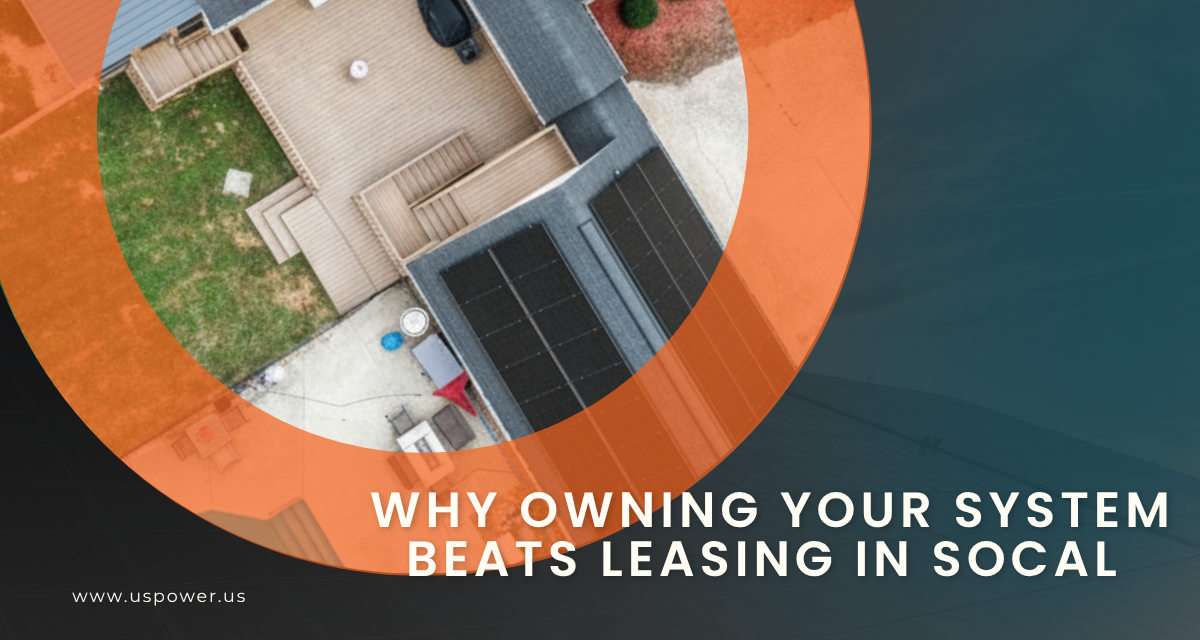
Learn more about why owning solar beats leasing in Southern California 2025.
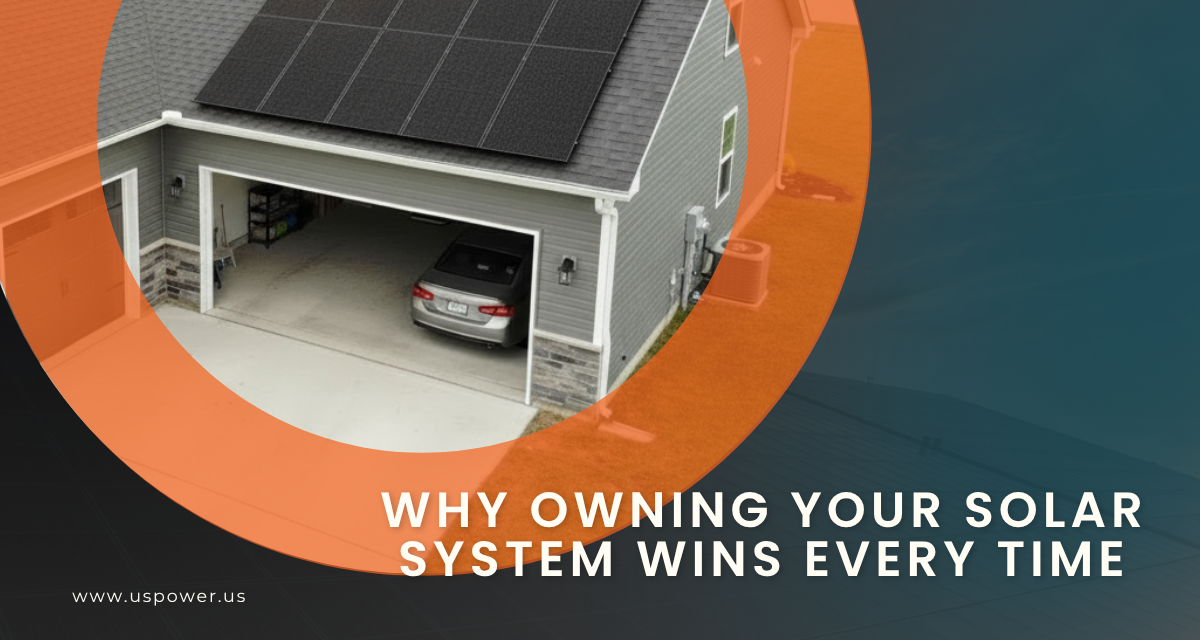
Stop renting power—own it with Qcells solar panels + battery through US Power.
Compare real costs of leasing vs buying solar panels for California homeowners.







Copyright © 2026 US Power - Axia by QCells. All Rights Reserved.
Get an instant solar estimate using satellite!