

Thinking about going solar but worried about your roof type? Most California homes are already solar-ready. Here's everything you need to know about asphalt, tile, metal, and flat roofs before your installation.

If you've been thinking about solar but wondering whether your roof can handle it, you're not alone. It's one of the first questions California homeowners ask—and the answer is almost always yes.
Most roofs in California work well with solar panels. Whether you have classic asphalt shingles, Spanish clay tile, sleek standing seam metal, or a flat modern rooftop, there's a solar solution designed specifically for your home. What matters most isn't the material—it's having an experienced installer who knows how to work with each roof type.
This guide breaks down everything you need to know about roof compatibility before you go solar in California.
Asphalt shingle roofs are the most common in California, and for good reason—they're also the simplest to work with during a solar installation. Standard mounting hardware attaches directly and securely, keeping labor time and overall cost lower than other roof types.
With the right flashing and sealing techniques, your roof stays completely watertight while supporting decades of solar production. There's no complicated prep work, and the installation timeline tends to move faster. If you've been researching solar panel roof mounts in California, asphalt shingle homes have the most straightforward options.
Roof condition matters more than roof type. If your asphalt shingles are curling, cracking, or showing wear, it's worth addressing that before panels go on top. Installing solar on a compromised roof adds removal and reinstallation costs down the road.
Best for: Homeowners looking for the fastest, most cost-effective installation with minimal complications.
Many homes in Southern California feature clay, barrel tile, or slate roofs—especially Spanish-style and Mediterranean designs. These roofs look stunning, but they require extra care during solar installation.
Installers typically remove individual tiles around mounting points, insert flashing or brackets underneath, then replace the tiles on top. Done correctly, this process preserves both your roof's appearance and its structural integrity. Done incorrectly, it can lead to cracked tiles or water intrusion. If you want the full picture on installing solar on clay and terracotta roofs, US Power has a dedicated resource covering the process in detail.
Tile roof installs typically take a bit more time and can run slightly higher in labor costs compared to asphalt shingle homes. That gap narrows significantly when you work with an installer who has direct experience with California's most common tile profiles.
Best for: Spanish-style and Mediterranean homes where curb appeal is just as important as energy production.
Metal roofs—especially standing seam designs—are among the most solar-compatible roof types available. Mounting clamps attach directly to the seams without drilling a single hole, which means no penetrations, no new leak points, and no compromised waterproofing.
This non-penetrating approach simplifies installation significantly and preserves the roof's long-term integrity. For homeowners with corrugated or ribbed metal roofs, additional sealing hardware is used to achieve the same watertight result.
One overlooked advantage of metal roofs: they tend to last 40–70 years, which lines up well with a solar system's productive life. You're unlikely to face the expense of removing and reinstalling panels for a roof replacement mid-ownership.
Best for: Long-lasting, energy-efficient homes that want a solar system built to match their durability.
Flat roofs are common on modern California homes, ADUs, and multi-unit buildings. Solar panels can absolutely be installed on them—installers use specialized tilt racking systems that angle panels toward the sun for maximum output throughout the year.
The flexibility is a real advantage. Without a fixed roof slope, installers can optimize panel direction and tilt angle based on your specific location and energy goals. For a complete look at the pros and cons, the truth about flat roof solar in California is worth reading before your consultation.
For flat roofs, ballasted (non-penetrating) racking systems are often available. These use weighted bases to hold panels in position without drilling into the roof membrane—a major benefit for homes where waterproofing is a priority.
California's year-round sunshine makes flat roofs surprisingly productive solar environments, even without a traditional south-facing slope.
Best for: Contemporary homes and buildings where flexible panel placement and battery integration are priorities.
The single most important pre-solar checklist item is your roof's current condition. If your roof is within five to seven years of needing replacement, it's almost always smarter to replace your roof before going solar. Removing and reinstalling solar panels later adds unnecessary cost and scheduling delays.
During a US Power consultation, we assess your roof's condition as part of the process—at no charge.
South-facing roofs produce the most energy in California, but east- and west-facing roofs can still deliver strong returns with today's high-efficiency panel technology. Heavy shading from trees or neighboring buildings has a bigger impact on output than roof angle, so it's worth evaluating your property's sun exposure realistically.
California building codes require solar systems to be engineered for both wind loads and seismic activity. Every installation requires permits, inspections, and structural sign-off. Many homeowners have discovered too late that a less experienced installer cut corners here—leading to solar installation failures at final inspection. Working with a CSLB-licensed installer eliminates this risk from the start.
US Power is California's exclusive QCells partner, which means factory-direct pricing on American-made panels—typically 15–20% below market rate. That pricing advantage applies regardless of your roof type, and it doesn't change based on the complexity of your installation.
Many homeowners worry about whether solar panels cause roof leaks. With US Power's installation process—proper flashing, professional sealing, and experienced crews—roof integrity is protected from day one.
There's no one-size-fits-all approach to solar installation. A flat roof in Culver City needs a different design than a clay tile home in Pasadena or a metal roof in the Inland Empire. US Power's engineers create custom system designs for every roof type, optimizing for production, aesthetics, and long-term performance.
The US Power warranty covers panels, workmanship, and performance for 25 years. That's not three separate warranties from three different vendors—it's one comprehensive guarantee from the company that installs your system. If something needs attention, one call resolves it.
From permit approval to Permission to Operate (PTO), most US Power installations are completed within three to four weeks. That's faster than the industry average, and it matters when you're watching electricity rates climb while waiting to get online.
The vast majority of California homes are compatible with solar panels. Asphalt, tile, metal, and flat roofs all have proven installation methods that protect your roof while maximizing energy production.
What determines whether solar works well for your home isn't the roof material—it's the quality of the installer, the design of the system, and the equipment used. Before committing to anything, make sure you're looking at the best solar panels for your home so you're comparing apples to apples across quotes.
With SCE and PG&E rates continuing to rise in 2026, every month without solar is another month paying full utility prices. US Power's 3–4 week installation timeline means you could be producing your own energy sooner than you think.


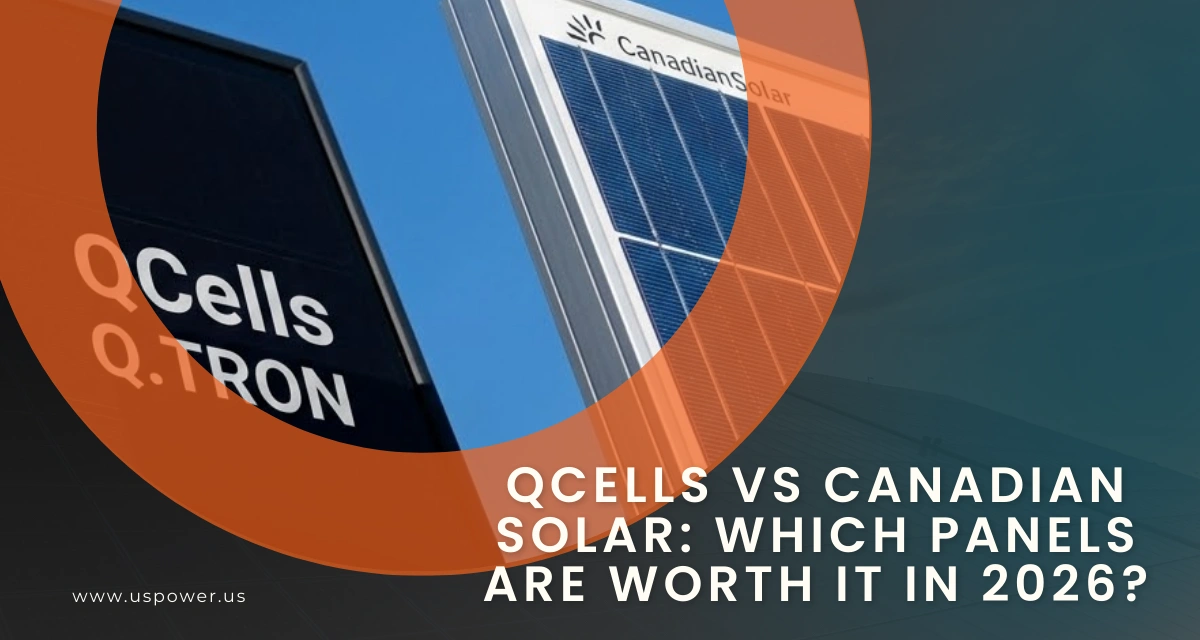
Both have great reviews, the other cost more. Which solar panel is actually worth it?
Choosing between QCells' Q.PEAK DUO and Q.TRON panels? The $1,500 price gap isn't jus

Una garantía de 25 años vale lo que la empresa que la respalda. Vea quién cumple.








¿Estás listo para ser dueño de tu poder? ¡Llámenos hoy mismo!
818-650-8010Contractor License #: 1144368

Derechos de autor © 2025 US POWER | Energía solar y techosUS Power - Axia by QCells. All Rights Reserved.
¡Obtenga una estimación solar instantánea usando el satélite!