

Most California homeowners know solar is supposed to save money — but calculating the real number is harder than anyone told them. Fluctuating bills, confusing utility credits, and NEM 3.0 export rates make it easy to underestimate (or overlook) what your system is actually doing. Here's how to find your real savings number and make sure you're getting everything your investment promised.
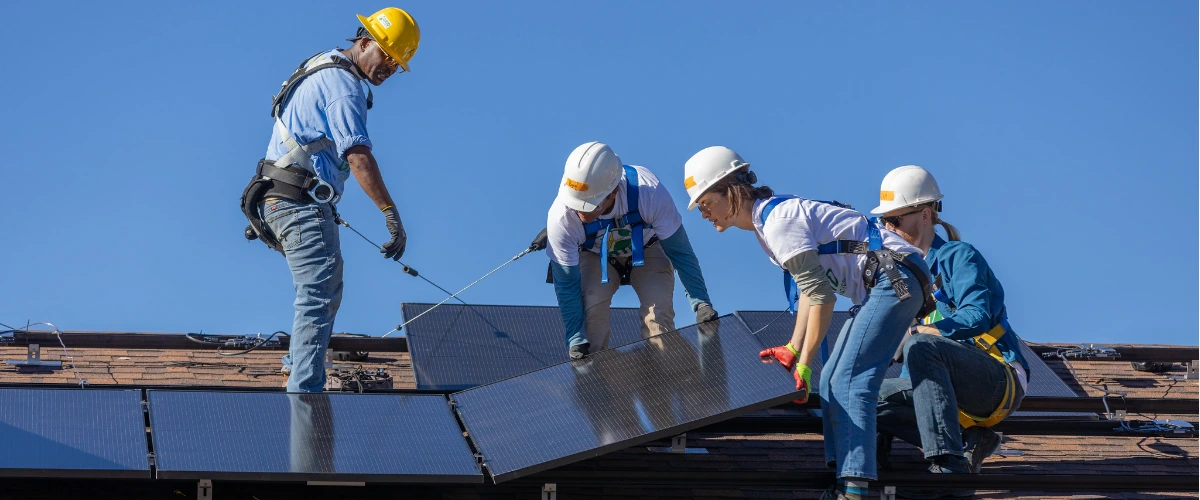
You installed solar panels expecting your electricity bill to drop. And it probably did — but maybe not as dramatically as you expected. Or maybe the savings look real but you're not sure how to verify them. Either way, a lot of California homeowners reach the same point: panels on the roof, monitoring app on the phone, and a nagging question about whether the numbers actually add up.
This guide helps you answer that question. You'll learn how to calculate what your solar system actually saved you, why the number often looks different from what you were quoted, and how to make sure you're capturing every dollar of savings available to you in 2026.
The savings are real — but the way they show up on your bills is almost never what homeowners anticipate. Two things cause most of the confusion.
Your monitoring app tracks every kilowatt-hour your panels generate from the moment the sun hits them. Your utility bill only tracks electricity crossing the property line — what you imported from or exported to the grid.
Here's the part most installers never explain: the majority of your solar energy gets consumed inside your home the moment it's produced. It powers your appliances, your AC, your refrigerator — and it never touches the meter. So your app might show 450 kWh produced last month while your bill credits you for 80 kWh exported. That's not a malfunction. That's solar production vs. your utility bill working exactly as it should. The gap is self-consumption, and it's actually a good sign.
SCE and PG&E rates have increased an average of 4 to 6% annually over the past decade. That matters for your savings calculation because the value of the electricity your panels produce goes up every year alongside those rates — even if your system generates the exact same amount of power. A homeowner saving $2,000 this year will likely save more next year simply because the electricity they're not buying costs more. That compounding effect is one of the strongest financial arguments for solar, and it's rarely factored into the original quote homeowners received.
You don't need a consultant to get your real number. Here's the method that works.
Add up your electricity costs for the 12 months before your system was activated. That total is your baseline — what you would have paid without solar. If you don't have those old bills, your utility's online account portal typically stores 24 months of billing history.
Total your actual electricity costs for the equivalent 12-month window after going solar. Include every charge on the bill — even the minimum connection fees that remain regardless of how much your panels produce.
Your Solar Savings = Pre-Solar Annual Cost minus Post-Solar Annual Cost
If your pre-solar bills totaled $3,200 and your post-solar bills came to $750, your system saved you $2,450 last year. That's your real number — not a projection, not a marketing estimate.
California electricity rates have risen 4 to 6% per year on average. Every year that rate climbs, the value of your solar production increases. A system that saved you $2,400 this year may save you $2,500 or more next year — even without any changes to your panels. That's the compounding benefit most homeowners never account for when they evaluate their solar payback period in California.
Real numbers from California homeowners give us a clear range to work with.
Most California homeowners with a properly sized solar system saved between $1,400 and $2,800 in electricity costs last year, depending on system size, roof orientation, utility territory, and usage patterns. Over a 25-year system lifetime, that compounds to $55,000 to $130,000 in total avoided utility costs — and that estimate grows every time SCE or PG&E raises rates.
The payback period for most Southern California homeowners sits between 5 and 8 years for purchased systems. That's well ahead of the national average of 11 years, driven almost entirely by California's above-average electricity rates.
Here is what the numbers look like for a typical Southern California home:
These figures assume a south-facing roof with minimal shading and no battery storage. Add a battery, and the savings picture improves considerably — especially for homeowners on NEM 3.0.
If your system was installed after April 2023 in SCE or PG&E territory, your savings are calculated under NEM 3.0 — and that changes things meaningfully.
Under NEM 2.0, excess solar power sent to the grid earned credits at the full retail rate, sometimes 28 to 35 cents per kWh. Under NEM 3.0, those export rates dropped to an average of 4 to 8 cents per kWh during midday hours — exactly when most solar systems produce the most power.
Understanding SCE's Solar Billing Plan makes the math clear: homeowners exporting power at 6 cents and buying it back at 45 cents during the 4 to 9 PM peak window are losing significant value on every kilowatt-hour that leaves their property.
A solar battery solves this directly. Instead of exporting low-value daytime power, your battery stores it and discharges during the expensive evening peak window — letting you use your own solar energy rather than buying grid electricity at peak rates. For most NEM 3.0 homeowners, adding a solar battery increases annual savings by $800 to $1,500 compared to solar alone.
The California SGIP rebate can also reduce the upfront cost of battery storage depending on your utility and income level. Learn more about how solar batteries maximize your savings under the current rate structure.
If your actual savings came in below what you were quoted, a few consistent patterns explain the gap.
Some installers use best-case production estimates during the sales process — south-facing, zero shading, peak efficiency at all times. Real-world shading, roof angles, and seasonal variation often reduce actual output by 10 to 20% below those figures. This is one of the most important reasons to know how to compare solar quotes before signing and to ask for a production guarantee in writing.
Even with a perfectly performing solar system, SCE and PG&E both charge unavoidable minimum connection fees regardless of how much your panels produce. These non-bypassable charges are real and will always appear on your bill — but they're not a sign your system is underperforming.
A system sized for your 2022 or 2023 usage may no longer match what your home needs today. Adding an electric vehicle, a home office, a pool heater, or new appliances increases your consumption without increasing your system's output. If your usage grew after installation, your system isn't underperforming — it's just undersized for who you are now.
Most solar companies quote you a system, install it, and move on. US Power is built for the long relationship — and the difference shows up in your actual savings.
As California's exclusive QCells factory-direct partner, US Power eliminates the layers of markup that most installers build into their proposals. That means American-made, Tier-1 QCells panels at 15 to 20% below typical market pricing — the same premium equipment, at a price that gives your ROI a head start from day one.
Every system includes a 25-year comprehensive warranty covering panels, workmanship, and performance. Your savings are protected for the full lifetime of the system, not just until the warranty card gets lost in a drawer. Explore our residential solar installations or review our financing options to get started with low upfront cost.
US Power's CSLB-licensed consultants build every system around your real electricity usage — not regional averages. That means a savings projection you can trust, a system size that fits your current consumption, and no gap between what you were promised and what your bills reflect.
Your solar system is producing energy every day. Whether it's saving you $1,200 a year or $2,800 a year comes down to system size, usage patterns, NEM status, and whether battery storage is part of the equation.
If the number feels lower than it should be — or you're not sure how to read it at all — US Power's CSLB-licensed consultants can walk through your actual bills with you, identify what's driving the gap, and show you what a properly optimized system looks like. No pressure. No guesswork.


Learn how solar pool heaters work and keep your pool warm year-round. Read more.

Step-by-step guide to securing solar permits for your California home property.
PTO delayed into 2026? Your system may still qualify for 30% solar tax credit.








¿Estás listo para ser dueño de tu poder? ¡Llámenos hoy mismo!
818-650-8010Contractor License #: 1144368

Derechos de autor © 2025 US POWER | Energía solar y techosUS Power - Axia by QCells. All Rights Reserved.
¡Obtenga una estimación solar instantánea usando el satélite!