

Which appliances eat up your electricity? Find out and start saving.
If your electricity bill keeps climbing despite no major changes at home, your appliances are likely the culprit. Most homeowners have no idea that a handful of devices are quietly responsible for the bulk of their monthly charges. Understanding which electricity your home uses most gives you real power to cut waste, lower costs, and make smarter decisions about your energy future. This guide breaks down the six biggest energy hogs in your home and what you can actually do about them.
Most homeowners look at their bill and see one number. What they don't see is which devices are responsible for the majority of it. SCE and PG&E rates have increased significantly in recent years, and understanding the average electric bill in California makes it clear why more people are searching for solutions.
The answer isn't always cutting back on convenience. It's knowing where your energy actually goes.
Your utility company charges you per kilowatt-hour (kWh). One kWh equals 1,000 watts running for one hour. A simple way to estimate any appliance's daily cost is to multiply its wattage by the hours you use it, divide by 1,000, then multiply by your rate per kWh.
For example, a 150-watt refrigerator running 24 hours uses 3.6 kWh per day. At California's current rates, that adds up fast.
With rising electricity rates in 2026, every kWh your appliances consume costs more than it did last year. That's why understanding which devices use the most electricity isn't just interesting. It's financially important.
Knowing which appliances consume the most energy is the first step toward managing your household electricity usage. Here's where the power is really going.
Your HVAC system is by far the single largest energy consumer in most homes. Air conditioning, heating, and ventilation can account for nearly half of your total electricity use. In California, Texas, and Florida, where summers run hot and long, that number can push even higher.
The fix doesn't require a new system. Simply setting your thermostat back 7 to 10 degrees for eight hours a day, such as while you're at work or asleep, can cut your annual heating and cooling costs by up to 10%. Smart thermostats like Nest or ecobee do this automatically based on your routine.
Water heaters are the second largest energy consumer in most homes. They run around the clock to keep water ready for showers, dishwashing, and laundry. Most homeowners never think about them because they're out of sight.
Setting your water heater to 120°F (49°C) hits the sweet spot between safety and efficiency. It's hot enough for daily needs while preventing the energy waste that comes with overheating. Washing clothes in cold water also dramatically reduces how hard your water heater has to work, since heating water accounts for the majority of your washing machine's energy draw.
Refrigerators and freezers run continuously, every hour of every day. That constant draw adds up, especially in older models that weren't built with efficiency in mind. Upgrading to an Energy Star-rated appliance can lead to meaningful savings over time without any change in your daily habits.
Dryers generate significant heat and run for extended periods, making them one of the more power-intensive appliances in your home. Running your dryer during off-peak hours, or line-drying when weather permits, are simple ways to trim this cost. If you're in the market for a new one, heat pump dryers use considerably less electricity than traditional models.
Lighting is often underestimated as an energy cost. Homes still using incandescent bulbs are paying far more than necessary. Switching to LED bulbs cuts lighting energy use dramatically, and maximizing natural daylight during the day adds to the savings without any recurring cost.
TVs, computers, gaming consoles, and chargers are quietly draining your electricity even when you think they're off. This is called "vampire power" or standby power, and it can account for up to 20% of your electricity bill across an entire home.
Devices with indicator lights, digital clocks, or remote-control functions are almost always drawing power in standby. Unplugging rarely used devices, grouping electronics on smart power strips, and shutting computers down completely rather than leaving them in sleep mode are simple habits that add up to real savings.
You don't need a renovation or a big investment to start lowering your bill. These habits work immediately and cost nothing.
Run your dishwasher and washing machine only with full loads. Skip the heated dry cycle on your dishwasher and let dishes air dry instead. That one change reduces electricity use with zero impact on how clean your dishes get.
Cook smaller meals in a microwave or toaster oven instead of a full conventional oven. These appliances use a fraction of the energy for everyday cooking tasks.
Unplug chargers when devices are fully charged. Group your entertainment system on a single smart power strip so you can cut power to everything with one switch. Shut your laptop down completely at night instead of leaving it in sleep mode.
These small actions are part of a broader strategy for 4 ways to lower your demand charges that California homeowners often overlook.
Most modern homes have smart meters, and SCE and PG&E both offer online dashboards where you can view your usage by day or even by hour. Monitoring tools like Sense or Emporia can break down consumption by individual appliance, helping you zero in on the devices that are quietly racking up your bill.
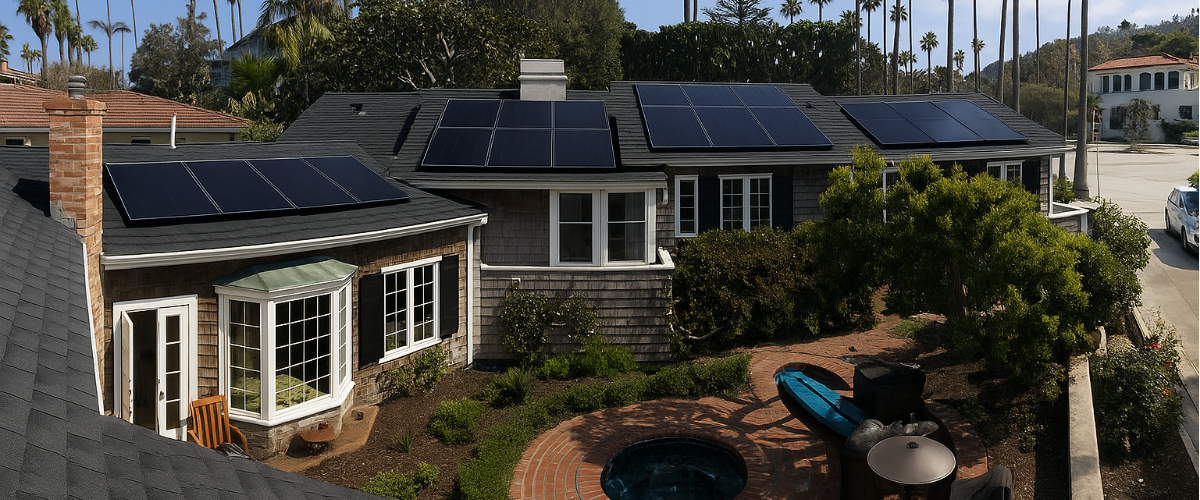
Reducing waste helps, but the bigger shift comes from changing where your electricity comes from. When your solar panels for your home generate power during the day, your HVAC, refrigerator, and other high-draw appliances run on clean energy you produced. That directly replaces grid electricity you'd otherwise pay for at SCE or PG&E rates.
Under California's NEM 3.0 rules, pairing solar with solar battery storage options is more valuable than ever. Your battery stores excess solar energy produced during peak sun hours and releases it in the evening when grid rates are highest. That means your home runs on your own stored power instead of expensive peak-rate electricity.
This is especially impactful for high-consumption appliances like HVAC systems that often run hardest during the same evening hours when utility rates spike.
You can explore are solar panels worth it in 2026 for a detailed breakdown of current costs and payback timelines in Southern California.
Most solar companies sell whatever panels they can source at the highest margin. US Power operates differently as an exclusive QCells partner, which means factory-direct pricing on American-made panels typically 15 to 20% below market rates.
Every US Power installation comes with a 25-year comprehensive warranty covering the panels, workmanship, and performance. There are no hidden fees and no predatory contract terms. What you're quoted is what you pay.
Your CSLB-licensed consultant walks through your actual energy usage, identifies which appliances are driving your bill highest, and designs a system sized to offset your real consumption, not just a generic estimate.
The residential solar installation services at US Power are designed for speed and simplicity. From your free consultation to permission to operate, most homeowners are generating their own power within 3 to 6 weeks of approval. Flexible solar financing options are available so you can start saving without a large upfront payment.
Your appliances aren't going to use less electricity on their own, and utility rates in California aren't going down. Understanding which electricity your household uses most is the first step. Taking action is what actually changes your bill.
Smarter daily habits can trim the edges, but solar eliminates the underlying problem entirely by generating the power your home already needs. US Power makes that transition straightforward, honest, and backed by a warranty that lasts 25 years.


Save on energy and gain shade—here’s why solar carports are trending in SoCal.
Los costos reales de la energía solar en 2026 por estado, solo las cifras. Lee más.
Your residential solar panels may be working. Your wallet might not be. Here's why.







¿Estás listo para ser dueño de tu poder? ¡Llámenos hoy mismo!
818-650-8010Número de licencia de contratista: 1144368
Derechos de autor © 2025 US POWER | Energía solar y techosUS Power - Axia by QCells. All Rights Reserved.
¡Obtenga una estimación solar instantánea usando el satélite!