
Si eres propietario de una vivienda en el sur de California y estás considerando la energía solar, pero te preocupa que la sombra de los árboles reduzca a la mitad el rendimiento de tu sistema, no eres el único. Con las tarifas de SCE en 34.5 centavos por kWh y en aumento, la cuestión no es solo la sombra, sino si una producción solar reducida sigue teniendo sentido financiero. Esto es lo que necesitas saber sobre la instalación de paneles solares en un tejado con sombra parcial en 2026.

Sí, pero con una capacidad reducida. Un TSRF del 50% significa que su sistema produce aproximadamente la mitad de la energía que generaría a pleno sol, por lo que su rentabilidad dependerá de los costes de electricidad, el precio del sistema y el almacenamiento en baterías.
Has visto cómo tu factura de SCE sube mes tras mes. Estás listo para tomar el control con energía solar, hasta que el instalador te da la mala noticia: "Los árboles de tu vecino reducirán la producción de tu sistema en aproximadamente un 50 por ciento".
¿Tu primer pensamiento? ¿Realmente vale la pena?
Es una pregunta justa. Con un tejado con sombra, básicamente estás pagando el precio completo por la mitad de la producción. Pero esto es lo que la mayoría de los propietarios no saben: en el panorama energético de 2026 en el sur de California, incluso una producción solar del 50% puede generar ahorros importantes, si se aborda correctamente.
La respuesta no es un simple sí o no. Depende de tu situación específica, las tarifas de SCE, las realidades de NEM 3.0 y si estás dispuesto a combinar la energía solar con almacenamiento en baterías. Analicemos los números reales.
Los paneles solares necesitan luz solar directa para funcionar al máximo. Cuando la sombra de árboles, chimeneas o estructuras vecinas bloquea tu tejado, la producción cae, a veces de forma drástica.
Los instaladores solares profesionales utilizan una métrica llamada TSRF para medir el impacto de la sombra. Un TSRF del 100% significa cero sombra. Un TSRF del 50% significa que tus paneles producirán aproximadamente la mitad de lo que producirían a pleno sol.
Esta es la guía del sector:
Si tu evaluación muestra un 50% de producción (aproximadamente un 50% de TSRF), estás justo en el límite de la viabilidad. Aquí es donde cómo medir la exposición solar para paneles solares se vuelve fundamental.
No todas las sombras son iguales. La sombra de la mañana afecta a la producción de forma distinta a la de la tarde. En el sur de California, la sombra de la tarde es especialmente problemática porque:
Un tejado con mucha sombra por la mañana pero despejado por la tarde podría funcionar mejor de lo que sugiere una puntuación TSRF. Por el contrario, la sombra de la tarde agrava tus desafíos bajo NEM 3.0.
Algunos propietarios confunden la sombra con el clima nublado. Son cosas completamente distintas. Los paneles solares en el sur de California siguen ahorrando dinero en días nublados, pero la sombra física constante de árboles o estructuras genera una pérdida de producción permanente.
Las nubes son temporales e impredecibles. ¿La sombra del roble de tu vecino? Eso está ahí todos los días y empeora a medida que el árbol crece.
Antes de descartar la energía solar por culpa de la sombra, considera lo que realmente te cuesta seguir con SCE.
A enero de 2026, la tarifa residencial promedio de SCE se sitúa en 34.5 centavos por kWh. Pero eso es solo el promedio. Las tarifas por tiempo de uso oscilan entre 24 centavos (fuera de hora punta) y 74 centavos (horas punta en las tardes de verano).
Un propietario que consume 1,000 kWh al mes paga alrededor de $345 mensuales, o $4,140 al año. Por qué las facturas de electricidad son tan altas en el sur de California explica detalladamente por qué estas tarifas siguen aumentando: costos de mitigación de incendios forestales, mejoras en la red e inversiones en infraestructura que se trasladan directamente a ti.
En 20 años a las tarifas actuales (sin contar futuros aumentos), estarás pagando $82,800 en costos de electricidad. Y SCE ha subido las tarifas 14 veces desde 2020, con solo 4 reducciones.
Supongamos que un sistema solar con un 50% de rendimiento cuesta $35,000 y te ahorra $150 al mes ($1,800 al año). Tu periodo de recuperación es de aproximadamente 19.4 años; no es ideal, pero tampoco está mal si consideras que:
La pregunta es: ¿es mejor pagarle a SCE $4,140 al año que invertir $35,000 una sola vez para reducir esa factura a la mitad para siempre?
La política NEM 3.0 de California, que entró en vigor en abril de 2023, cambió fundamentalmente la economía de la energía solar, especialmente para los techos con sombra.
Bajo el antiguo NEM 2.0, el exceso de energía solar exportada a la red generaba créditos a precios minoristas (alrededor de 30+ centavos por kWh). Con NEM 3.0, esas tarifas de exportación cayeron a aproximadamente 8 centavos por kWh durante el mediodía, una reducción del 75%.
Esto es importante para los techos con sombra porque produces menos energía total, lo que significa que tienes menos para exportar de todos modos. El valor reducido de la exportación duele menos cuando ya estás produciendo al 50%.
La estructura de NEM 3.0 hace que el almacenamiento en baterías sea más valioso para los hogares con sombra. He aquí por qué:
En lugar de exportar energía solar de baja producción a 8 centavos por kWh, puede almacenarla en una batería y utilizarla durante las horas pico de 4 a 9 p. m., cuando SCE cobra entre 50 y 74 centavos por kWh. La oportunidad de arbitraje es enorme, incluso con una producción reducida.
Un techo con sombra que produce al 50% de su capacidad, combinado con almacenamiento en baterías, aún puede compensar entre el 60% y el 70% de su factura eléctrica. Sin almacenamiento, ese mismo sistema con sombra podría compensar solo entre el 30% y el 40%. Las baterías solares pueden maximizar sus ahorros explica exactamente cómo funciona esto bajo NEM 3.0.
Seamos sinceros: a veces la sombra realmente arruina el proyecto solar.
No siga adelante con la energía solar si:
Si se encuentra en esta categoría, existen alternativas. Algunas empresas de servicios públicos del sur de California ofrecen programas de energía solar comunitaria donde usted compra participaciones en un parque solar. Obtiene la mayoría de los beneficios de la energía solar sin necesidad de una instalación en su techo sombreado.
Esto es incómodo pero necesario: si los árboles que causan la sombra están en su propiedad, eliminarlos o podarlos podría tener más sentido financiero que aceptar una producción solar reducida.
Un servicio de poda de árboles de $2,000 que aumenta su producción solar del 50% al 80% añade esencialmente entre $10,000 y $15,000 al valor del sistema a lo largo de 20 años. Las cuentas son claras.
Si los árboles están en la propiedad de un vecino, sus opciones son limitadas. Por lo general, la ley de California no le permite forzar la eliminación de árboles para obtener acceso solar, aunque algunas ciudades tienen ordenanzas sobre sombras solares que vale la pena investigar.
Antes de rendirse por completo, considere si su techo es adecuado para la instalación de paneles solares podría revelar otras opciones:
Cuando cada kilovatio-hora cuenta, la calidad del panel se vuelve fundamental.
No todos los paneles solares manejan la sombra de la misma manera. US Power instala exclusivamente paneles QCells, que cuentan con la tecnología Q.ANTUM diseñada específicamente para condiciones de sombra parcial.
Los paneles QCells incluyen:
Cuando trabaja con una producción limitada debido a la sombra, estas ventajas técnicas se suman. Elegir los mejores paneles solares para su hogar explica por qué la selección de paneles es más importante en instalaciones con sombra.
US Power se especializa en instalaciones desafiantes, incluidos los techos con sombra. Nuestros consultores con licencia CSLB:
Como socio exclusivo de QCells en el sur de California, ofrecemos precios directos de fábrica (15-20% por debajo del mercado) con paneles fabricados en EE. UU. Nuestra garantía integral de 25 años cubre paneles, mano de obra y rendimiento.
Si su situación de sombra es marginal, podría tener sentido cambiar el enfoque tradicional.
Algunos propietarios instalan primero el almacenamiento en baterías y luego añaden paneles solares a medida que el presupuesto lo permite o si las condiciones de sombra mejoran. ¿Valen la pena las baterías para la energía solar en California? explora esta estrategia a fondo.
Los beneficios incluyen:
Para un presupuesto de $35,000 con un 50% de sombra, considere:
Este sistema combinado podría superar a un sistema solar más grande en un techo con sombra, ya que la batería permite la reducción de picos de consumo y energía de respaldo incluso con una producción solar reducida.
Antes de comprometerse con la energía solar en un techo con sombra, asegúrese de entender las cosas que debe saber antes de instalar energía solar:
Obtenga un análisis profesional de sombras
Calcule su verdadero retorno de inversión (ROI)
Explore todas las opciones
Compare varias cotizaciones
La energía solar con un 50% de rendimiento por sombra no es automáticamente una mala inversión, pero requiere una planificación más inteligente que una instalación perfecta y sin sombras.
Los factores clave:
Si está indeciso debido a la sombra, la peor decisión es no hacer nada mientras las facturas de SCE siguen subiendo. Obtenga una evaluación profesional, analice los números reales y tome una decisión informada basada en su situación específica.
Con los precios directos de fábrica de QCells de US Power, consultores con licencia CSLB y una garantía integral de 25 años, incluso las instalaciones difíciles reciben la atención experta que merecen. Hemos ayudado a cientos de propietarios de viviendas en el sur de California a manejar situaciones de sombra complicadas, y le daremos respuestas honestas sobre si la energía solar es adecuada para su techo.
Los árboles no van a desaparecer. La pregunta es si tomará el control de sus costos de energía a pesar de ellos.


Tu factura de SCE confunde. Vamos a aclararla: entendiendo kW frente a kWh.
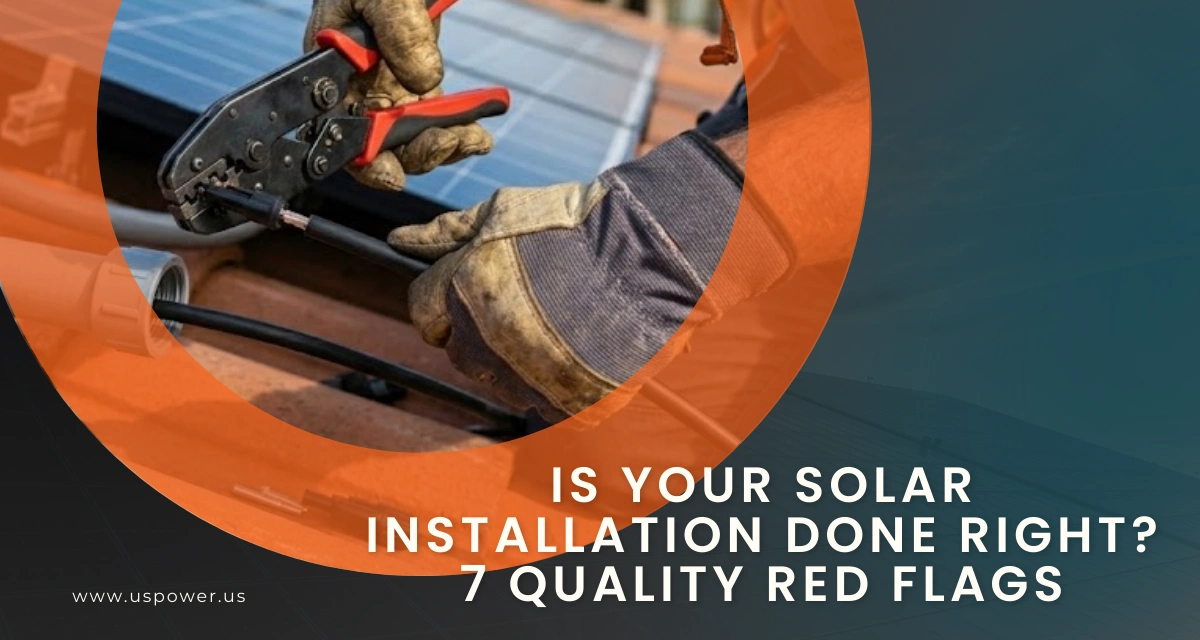
Un conector suelto puede anular la garantía solar y dañar su hogar. ¡Cuidado!
¿Retraso en la conexión a 2026? Aún puede optar al crédito fiscal solar del 30%.



¿Listo para tomar el control de tu energía? ¡Llámanos hoy!
818-650-8010Licencia de contratista n.º: 1144368
Copyright © 2026 US Power - Axia by QCells. Todos los derechos reservados.
¡Obtenga un presupuesto solar al instante mediante satélite!